Birthstone Charms for Necklace Settings: Material Durability Guide
Discover the material properties of birthstone charms for necklace layering. Compare gemstone hardness, lab vs. natural stones, and metal settings.

The Mohs Scale Reality: Why Your Birthstone Charm Might Scratch
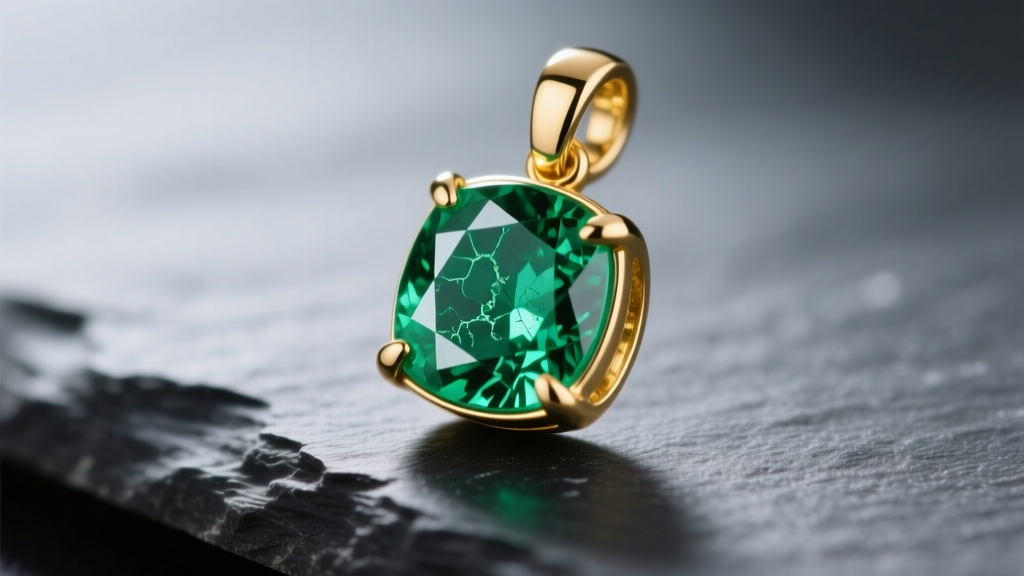
When curating a personalized jewelry stack, adding birthstone charms for necklace layering is a highly popular choice. However, the aesthetic appeal of a gemstone often masks its structural vulnerabilities. As jewelry specialists, we must look beyond the calendar month and examine the mineralogical properties that dictate how a charm will survive daily wear. The Mohs scale of mineral hardness is the standard baseline, but it is frequently misunderstood. The scale is relative, not linear; a diamond (10) is not twice as hard as a topaz (8), but rather exponentially harder. Furthermore, hardness only measures scratch resistance, not toughness.
To truly understand durability, we must evaluate cleavage and tenacity. Cleavage refers to how a gemstone breaks along structural planes. For example, topaz (November's birthstone) ranks a respectable 8 on the Mohs scale, but it has perfect basal cleavage. A single hard knock against a metal zipper or a granite countertop can cause a topaz charm to split cleanly in half. Conversely, jade (often used for March or alternative green stones) ranks only 6.5 to 7, but its interlocking fibrous structure gives it exceptional toughness, making it highly resistant to chipping.
High-Risk vs. Low-Risk Gemstones by Month
When selecting birthstone charms for necklace pendants that will rest against the collarbone and swing with movement, you must account for environmental hazards. High-risk stones include opal (October), which contains up to 20% water. If exposed to extreme heat or rapid temperature changes, opals can suffer from 'crazing'—a network of internal cracks that destroys the stone's structural integrity and its signature play-of-color. Emerald (May) is another high-risk candidate; despite a hardness of 7.5 to 8, natural emeralds are heavily included (known as 'jardin'). These internal fractures make them notoriously brittle and prone to chipping at the girdle if set in exposed prongs.
| Month | Traditional Stone | Mohs Hardness | Cleavage / Tenacity | Ideal Setting |
|---|---|---|---|---|
| April | Diamond | 10 | Perfect cleavage in 4 directions | Prong or Bezel |
| May | Emerald | 7.5 - 8 | Brittle, highly included | Full Bezel |
| July | Ruby | 9 | No true cleavage, tough | Prong or Bezel |
| October | Opal | 5.5 - 6.5 | Brittle, sensitive to heat/shock | Bezel with backing |
| November | Topaz | 8 | Perfect basal cleavage | Protective Bezel |
Natural vs. Lab-Created vs. Crystal: Optical & Structural Differences
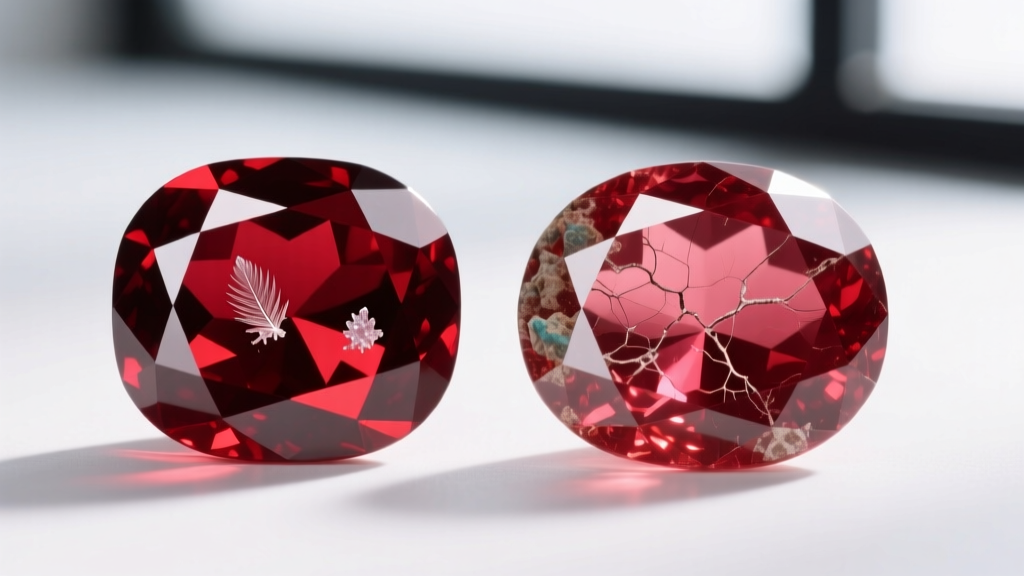
The market for birthstone charms is saturated with three distinct material tiers: natural earth-mined gems, lab-created gems, and lead-glass crystals. Understanding the structural differences is critical for both longevity and light performance. According to the GIA Gem Encyclopedia, lab-created gemstones possess the exact same chemical, physical, and optical properties as their natural counterparts. The primary difference lies in their formation environment.
The Refractive Index (RI) and Inclusion Factor
Natural gemstones form under chaotic geological conditions, resulting in internal inclusions, color zoning, and structural strain. While these inclusions prove a stone's natural origin, they act as structural weak points. Lab-created stones, particularly those grown via the Verneuil (flame fusion) or flux-growth methods, are cultivated in controlled environments. A flux-grown lab emerald, for instance, lacks the severe internal fracturing of a natural emerald, making it significantly more durable for a daily-wear charm while maintaining the exact same refractive index (RI of 1.577 to 1.583) and specific gravity.
Conversely, crystal charms (often marketed as 'Swarovski' or Austrian crystal) are not gemstones at all. They are lead-oxide glass with a Mohs hardness of roughly 5 to 6. While they are cut with high precision to maximize light dispersion, they are highly susceptible to scratching from everyday dust, which contains quartz particles (Mohs 7). Over a few years of daily wear, a crystal birthstone charm will develop a foggy, abraded surface, whereas a lab-created sapphire (Mohs 9) will remain pristine.
Metal Settings: Matching the Prong to the Stone's Properties
The metal holding your birthstone charm is just as vital as the stone itself. The setting must act as a shock absorber and a protective cage. In 2026, the most common metals for charm pendants are 14k solid gold, 18k solid gold, gold vermeil, and sterling silver. Each has distinct mechanical properties that dictate how well they hold a stone.
Expert Rule of Thumb: Never use standard 4-prong settings for gemstones with a Mohs hardness below 7 or those with known cleavage planes. The localized pressure of a prong pressing against a brittle girdle during setting—or during a sudden impact—will fracture the stone. Always opt for a bezel setting for emeralds, opals, and topaz.
14k Solid Gold (58.5% Gold): This is the optimal choice for prong settings. The alloy metals (usually copper, silver, and zinc) provide excellent tensile strength and spring-back, ensuring the prongs grip the stone securely over decades of wear.
18k Solid Gold (75% Gold): Softer and more malleable than 14k. While it offers a richer color and is highly hypoallergenic, 18k gold prongs can bend or pull back if caught on clothing, risking stone loss. It is better suited for bezel settings where the metal is rubbed over the stone's edge.
Sterling Silver (92.5% Silver): Silver is relatively soft and prone to sulfide tarnishing. More importantly, silver prongs can suffer from metal fatigue over time. If you choose a silver birthstone charm, ensure the setting is a heavy cast bezel rather than thin, stamped prongs.
Maintenance Protocols Based on Material Porosity
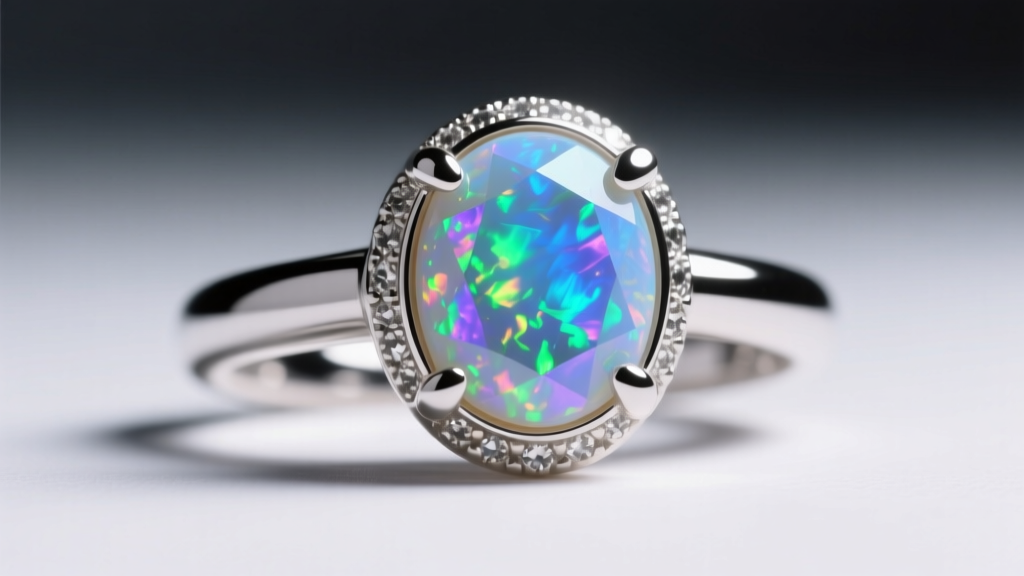
The longevity of birthstone charms for necklace layering depends heavily on proper maintenance, which varies wildly by material. A common and catastrophic mistake is placing all jewelry into an ultrasonic cleaner. Ultrasonic waves create microscopic cavitation bubbles that implode against the stone. While this is excellent for removing sebum and lotions from diamonds and solid gold, it will shatter fragile stones.
- Never use ultrasonics on: Opals (can cause crazing), Emeralds (will strip the cedar oils used to fill surface-reaching fractures, leaving the stone opaque and white), and Tanzanite (highly sensitive to thermal shock).
- Avoid chemical dips on: Pearls (March alternative) and Coral. These are organic, porous materials composed of calcium carbonate. Acidic jewelry cleaners or even prolonged exposure to human sweat will dissolve the nacre, destroying the luster permanently.
- Safe cleaning protocol for fragile charms: Use a mild, phosphate-free dish soap diluted in lukewarm (not hot) water. Gently agitate with a baby-hair brush, rinse under a slow stream of room-temperature water, and pat dry with a microfiber cloth. Never air-dry opals or pearls, as water spots can etch the surface.
Final Verdict: Building a Generational Charm Necklace
Selecting the right birthstone charms for necklace configurations requires balancing sentimental value with material science. If your goal is to create a generational piece that can be worn daily without anxiety, prioritize lab-created rubies, sapphires, and spinels, which offer Mohs 8+ hardness and exceptional toughness. If you prefer the romantic allure of natural, included stones like emeralds or the watery depths of opals, you must compensate with protective bezel settings in 14k gold and commit to strict, gentle maintenance protocols. By respecting the mineralogical realities outlined by institutions like Mindat.org and the Jewelers of America, you ensure your personalized necklace remains as structurally sound as it is deeply meaningful.


