The Ultimate Guide to Cleaning Your Pewter Necklace
Learn how to safely clean, polish, and store your pewter necklace. Discover expert tips to prevent oxidation, scratches, and chemical damage.

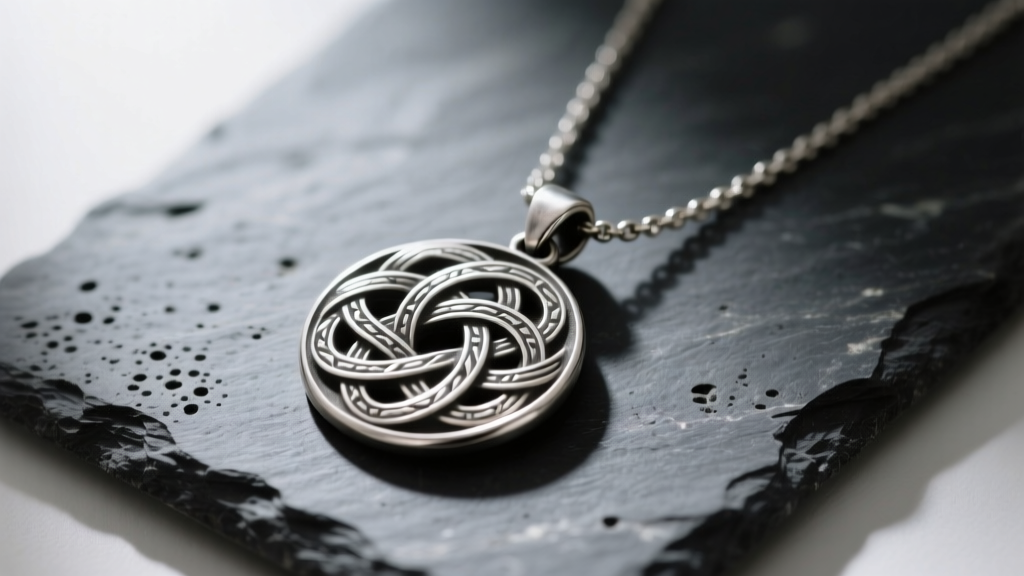
The Metallurgy of Pewter: Why It Requires Special Care
To properly maintain a pewter necklace, you must first understand its metallurgical composition. Modern pewter is primarily an alloy of tin (91% to 99%), hardened with trace amounts of copper and antimony. As of 2026, virtually all commercial jewelry-grade pewter is strictly lead-free, often referred to as 'Britannia metal.' However, tin is remarkably soft, registering at just 1.5 on the Mohs hardness scale. For context, a copper penny is a 3.5, and a steel jewelry clasp is a 6.5. This extreme softness means your pewter necklace is highly susceptible to micro-scratches, denting, and abrasive damage from standard jewelry cleaning methods.
Unlike sterling silver, which develops a dark, easily removable silver sulfide tarnish, pewter oxidizes slowly, forming a dull, mottled gray patina. While some collectors prize this antique look, everyday wearers usually prefer a soft, satin-like luster. Achieving this without destroying the metal's surface requires a departure from standard jewelry care routines.
Daily Wear and Environmental Hazards
Pewter is highly reactive to acidic environments and prolonged moisture exposure. The natural pH of human sweat (which ranges from 4.5 to 7.0) can cause localized pitting and accelerate dulling if the necklace is worn during exercise or in high-humidity environments. Furthermore, everyday cosmetics—such as aerosol hairsprays, perfumes containing alcohol, and lotions with exfoliating acids—can leave a stubborn, cloudy film on the metal that mimics oxidation but is actually a chemical residue.
The Moisture and pH Factor
Never wear your pewter necklace in the shower, swimming pool, or hot tub. Chlorine and bromine are exceptionally harsh on tin alloys and can cause irreversible surface etching and white, powdery oxidation spots. If your necklace gets wet, immediately pat it dry with a lint-free microfiber cloth; air-drying allows water minerals to deposit on the surface, creating hard water spots that require aggressive (and potentially damaging) polishing to remove.
Step-by-Step Pewter Necklace Cleaning Protocol
When your necklace loses its luster due to skin oils and environmental dust, follow this safe, conservation-grade cleaning method endorsed by metallurgical experts.
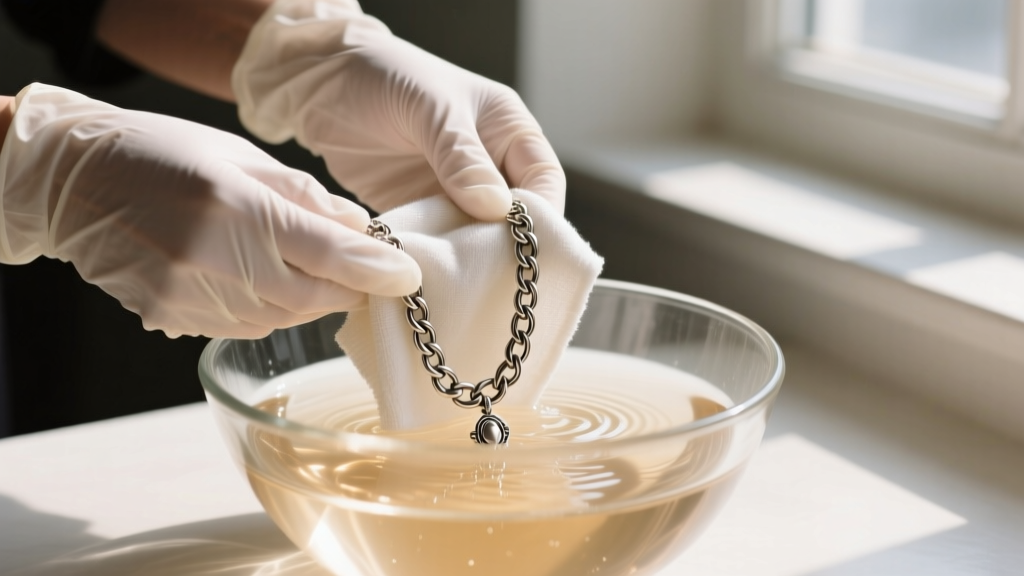
- Step 1: Prepare a Mild Bath. Fill a glass bowl with lukewarm (never hot) water. Add two drops of a pH-neutral, dye-free dish soap (such as Dawn Free & Clear). Avoid soaps with added moisturizers or citrus degreasers.
- Step 2: Gentle Agitation. Submerge the pewter necklace for no more than 3 to 5 minutes. This loosens sebum and cosmetic buildup without risking prolonged water exposure.
- Step 3: Targeted Swabbing. Do not use a toothbrush, even one labeled 'extra-soft.' The bristles can trap microscopic grit that will scratch the tin. Instead, use a 100% cotton swab to gently dislodge dirt from crevices, chain links, and pendant settings.
- Step 4: Rinse and Dry. Rinse the necklace under a gentle stream of distilled water (tap water contains minerals that can spot the metal). Immediately dry it by pressing it between two layers of a clean, lint-free microfiber cloth. Never rub vigorously.
What to Absolutely Avoid (The Damage Chart)
The internet is full of DIY jewelry cleaning hacks that will permanently ruin a pewter necklace. Below is a breakdown of common household cleaners and their catastrophic effects on tin alloys.
| Cleaning Agent / Method | Chemical / Physical Effect on Pewter | Verdict |
|---|---|---|
| Toothpaste | Contains hydrated silica (Mohs 7). Acts like sandpaper, permanently stripping the finish and leaving deep micro-scratches. | NEVER USE |
| Baking Soda Paste | Highly alkaline and abrasive. Causes localized pitting and strips away intentional antiquing in carved details. | NEVER USE |
| Silver Dip / Ammonia | Ammonia reacts with tin and antimony, causing rapid, irreversible darkening and structural brittleness. | NEVER USE |
| Ultrasonic Cleaners | High-frequency cavitation vibrations can shatter brittle antique pewter and loosen glued gemstone settings. | NEVER USE |
| Mild Dish Soap & Water | Safely lifts oils and dust without chemical reaction or abrasive scratching. | SAFE & RECOMMENDED |
Polishing vs. Preserving Patina
There is a distinct difference between cleaning a pewter necklace and polishing it. Cleaning removes dirt; polishing removes a microscopic layer of the metal itself to reveal fresh, unoxidized tin. Because pewter is so soft, frequent polishing will eventually wear down intricate cast details, soften sharp edges, and diminish the value of the piece.
If you desire a higher shine, use only an untreated, high-pile microfiber cloth or a dedicated pewter polishing cloth. Never use chemically treated 'silver polishing cloths' (like those from Sunshine or Connoisseurs). The mild jeweler's rouge and chemical tarnish-removers embedded in silver cloths are formulated for harder metals and will aggressively strip the soft surface of your pewter, leaving it uneven and overly bright.
Dealing with Vintage and Antique Pewter
If you own a vintage or antique pewter necklace (pre-1970s), it likely possesses a dark, mottled patina. According to the Smithsonian Museum Conservation Institute, this patina is a historical record of the object's age and environment. Stripping an antique piece to a bright, mirror-like shine is considered destructive in the conservation community and will drastically reduce its monetary and historical value. Furthermore, older pewter may contain lead. While wearing it over intact skin is generally safe, you should wash your hands after handling antique pewter and never attempt to polish it with bare hands or heat it in any way.
Long-Term Storage and Anti-Tarnish Strategies
Proper storage is the most effective way to minimize the need for cleaning. Pewter is prone to galvanic corrosion if stored in direct contact with dissimilar metals like sterling silver, copper, or brass. The electrochemical reaction between the metals, facilitated by ambient humidity, will cause rapid deterioration of the softer pewter.
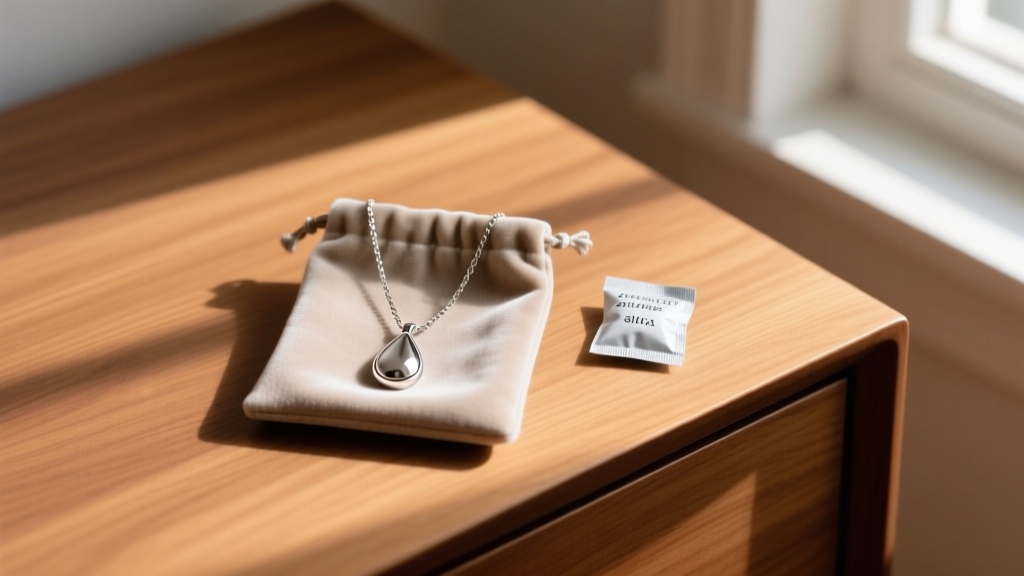
- Isolate the Piece: Store your pewter necklace in its own soft, acid-free tissue paper or a dedicated flannel jewelry bag.
- Control Humidity: Tarnish and oxidation require moisture. Place a small, jewelry-safe silica gel desiccant packet inside the storage bag or jewelry box to maintain a dry microclimate.
- Avoid Sulfur: Keep the necklace away from cardboard boxes, rubber bands, and wool fabrics, all of which emit sulfur gases that accelerate metal oxidation.
- Hang or Lay Flat: Because pewter chains can kink and weaken at the links if tangled, lay the necklace perfectly flat in a lined drawer, or hang it from a padded, non-metallic hook.
Expert Troubleshooting: Deep Scratches and White Oxidation
Despite your best efforts, accidents happen. If your pewter necklace develops a deep scratch, do not attempt to sand it out with emery boards or sandpaper. The Jewelers of America recommends taking heavily scratched or dented pewter to a professional jeweler who specializes in soft metals and casting. They can use specialized burnishing tools to gently massage the surrounding metal back into the scratch, rather than removing material.
If you notice a chalky, white powder forming on the surface of your necklace, this is 'tin pest' or white oxidation, often caused by prolonged exposure to extreme cold or high acidity. This cannot be wiped away with soap. It requires professional chemical stabilization. By understanding the unique vulnerabilities of tin alloys and adhering to these strict, conservation-minded care protocols, your pewter necklace will retain its soft, elegant luster for generations to come.


