Cornicello Necklace Deep Dive: Materials, Sizing & Authenticity
Discover the anatomy of the cornicello necklace. Our expert guide covers material grades, precise sizing, chain pairings, and authentic craftsmanship.

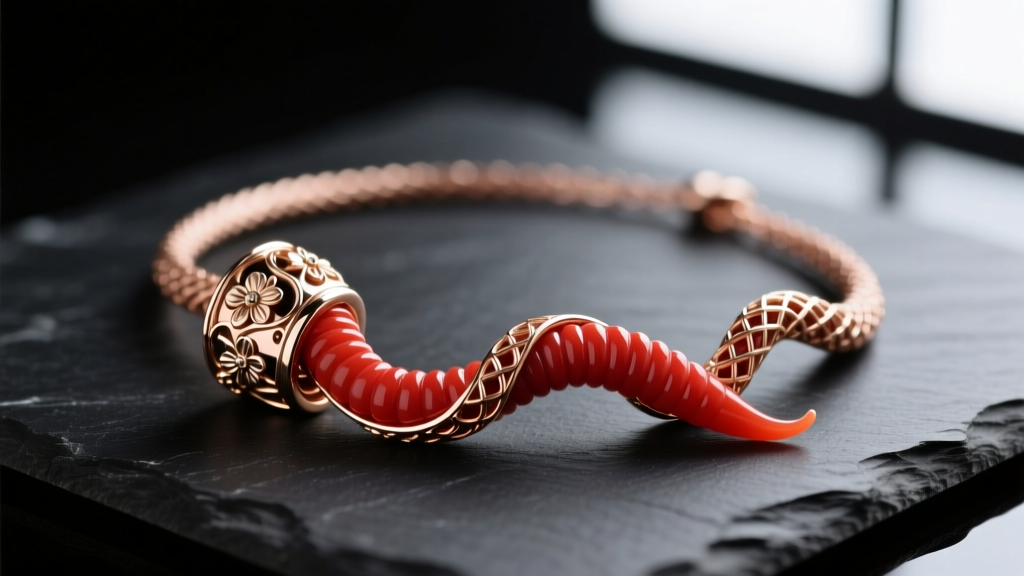
The Anatomy of a Traditional Cornicello Pendant
The cornicello (Italian horn) is far more than a passing jewelry trend; it is an ancient talisman designed to ward off the malocchio (evil eye). However, as global demand for this iconic symbol surges, the market has become saturated with poorly proportioned mass-produced molds and synthetic resin casts. For the discerning collector or stylist, understanding the precise anatomy and technical specifications of a genuine cornicello necklace is essential to making an informed investment.
Proportions and the Signature Twist
A common misconception is that any chili-pepper-shaped pendant qualifies as a cornicello. True Italian craftsmanship dictates a specific morphology. The pendant must mimic the twisted horn of the eland antelope, featuring a distinct, asymmetrical spiral twist. This spiral is not merely decorative; historically, it represents the cyclical nature of life and the horns of the ancient lunar goddess. Furthermore, the base of the horn must taper to a sharp, slightly curved point, while the top is crowned with a corona (cap or coronet). In cheap castings, the twist is often uniform and symmetrical, resembling a straight chili pepper rather than an organic, twisted horn. Authentic artisans carve the twist to follow the natural grain of the material, ensuring structural integrity at the narrowest points.
Material Grades: Beyond Basic Red Gold
While 14k and 18k yellow gold are standard for the metal components, the body of the cornicello dictates its value, durability, and cultural authenticity. The material choice directly impacts the pendant's specific gravity, Mohs hardness, and long-term wearability.
Mediterranean Red Coral (Corallium rubrum)
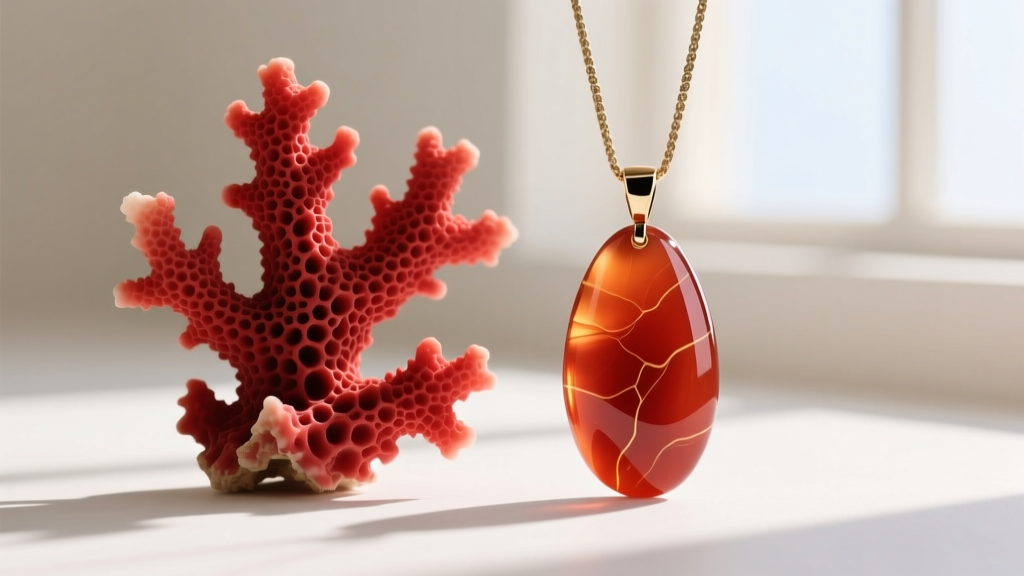
The undisputed gold standard for a traditional cornicello is Mediterranean red coral. Prized for its deep, oxblood hue, natural Corallium rubrum has a specific gravity of 2.6 to 2.7 and a Mohs hardness of just 3.5. This relative softness makes it highly susceptible to scratching and chemical degradation from perfumes or acidic sweat. According to the Gemological Institute of America (GIA), genuine red coral will exhibit subtle natural pitting, growth lines, and a waxy luster when polished. Due to strict CITES Appendix II regulations protecting coral reefs, ethically sourced, vintage, or pre-ban Mediterranean coral commands a premium price, often exceeding $150 per gram for high-grade, un-dyed specimens.
Alternative Gemstones and Metals
For daily wearers who require a harder, more durable material, carnelian agate (Mohs 7) is the premier alternative. It offers a similar translucent red-orange hue but is entirely resistant to everyday chemical exposure. Another modern iteration is the solid 18k rose gold horn, often pavé-set with microscopic rubies or diamonds. When evaluating gemstone alternatives, avoid dyed howlite or glass imitations; these materials lack the thermal properties of natural stone and will feel instantly warm to the touch, whereas genuine coral and carnelian remain cool.
Technical Sizing and Chain Pairings
A critical failure mode in cornicello necklaces is the mismatch between the pendant's weight and the chain's tensile strength. The bail (the loop connecting the pendant to the chain) on a coral horn is typically integrated into the gold corona. If the chain is too heavy, it will warp the bail; if it is too thin, it will kink and snap under the pendulum effect of the swinging horn.
| Pendant Length | Category | Ideal Chain Width | Recommended Chain Style | Best Neckline Pairing |
|---|---|---|---|---|
| 12mm - 18mm | Micro / Delicate | 0.8mm - 1.2mm | Cable, Snake, or Thread | V-Neck, Scoop, Bridal |
| 20mm - 30mm | Standard / Classic | 1.5mm - 2.2mm | Box, Rope, or Wheat | Crew, Boat, Button-down |
| 35mm - 50mm+ | Statement / Bold | 2.5mm - 4.0mm | Cuban, Figaro, or Curb | Open Collar, Plunging, Outerwear |
For a standard 25mm coral cornicello weighing approximately 4 to 6 grams, a 1.8mm 14k gold rope chain provides the optimal balance of visual weight and structural support, offering a tensile strength well above the 15-pound threshold required for heavy pendants.
Identifying Authentic Craftsmanship vs. Mass Production
Distinguishing a hand-carved Italian heirloom from a factory-poured resin mold requires a trained eye and an understanding of jewelry manufacturing techniques. Here is a technical framework for authentication:
- The Drill Hole Inspection: Natural coral is drilled from the top down to accommodate the metal cap's post. Under a 10x jeweler's loupe, a natural drill hole will show slight deviations and a matte, chalky interior. Resin or glass fakes are cast in molds, resulting in perfectly centered, laser-straight holes with glossy interiors.
- The Cap Integration (Corona): High-end Italian artisans use a friction-fit metal sleeve that is soldered directly to the bail, protecting the soft coral from the stress of the chain's movement. Mass-produced pendants often rely on toxic cyanoacrylate glues or cheap prongs that crush the coral. If you see glue residue around the gold cap, avoid the piece; the horn will eventually snap at the neck.
- Thermal Conductivity: Hold the pendant against your cheek or the inside of your wrist. Genuine coral and carnelian have low thermal conductivity and will feel distinctly cool for several seconds before warming to your body temperature. Resin and plastic composites will feel room-temperature or warm instantly.
- Hallmark Verification: Authentic Italian gold caps will bear the 750 (18k) or 585 (14k) stamp, alongside the maker's mark (a geometric symbol and registration number).
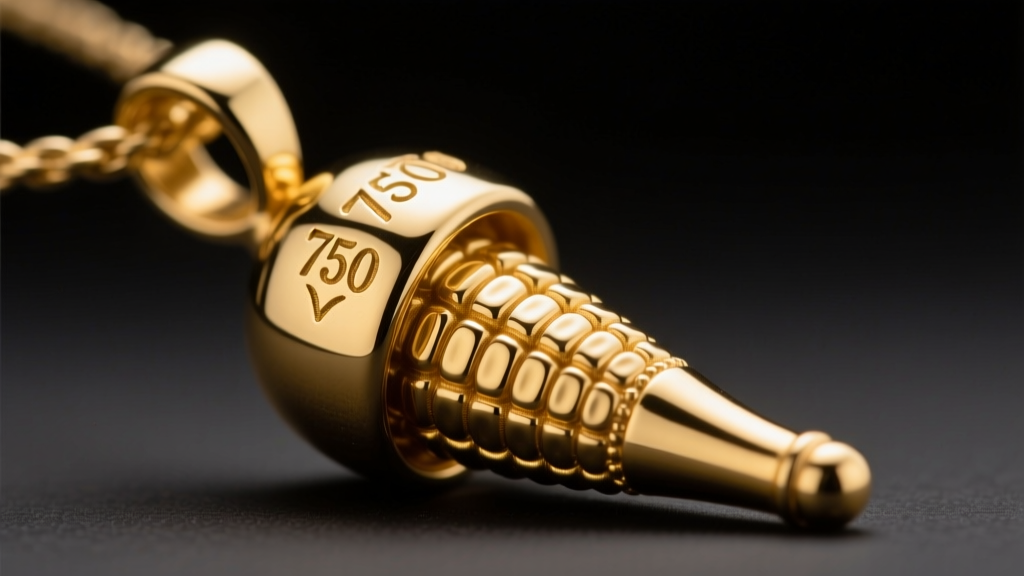 Cast fakes often feature shallow, blurred stamps that lack the crisp depth of a laser or steel-punch hallmark.
Modern Styling and Layering Frameworks
The cornicello has transcended its traditional roots to become a staple in contemporary layering. However, because of its asymmetrical, elongated shape, it requires strategic placement to avoid tangling and visual clutter.
Expert Styling Rule: Never layer a cornicello with other asymmetrical or elongated pendants (like crosses or evil eye coins). The twisting motion of the horn will cause it to wrap around adjacent chains, leading to severe kinking and potential bail failure.
For a modern, curated look, utilize the 3-Point Layering Framework. Start with a 14-inch choker (such as a 2mm gold herringbone chain) sitting at the collarbone. Follow with your 18-inch standard cornicello necklace resting on the upper sternum. Finally, anchor the layer with a 22-inch or 24-inch heavy Cuban link chain. This spacing ensures the cornicello remains the focal point while allowing each chain to move independently without friction.
Conclusion
Investing in a cornicello necklace is an exercise in cultural appreciation and material science. By prioritizing ethically sourced Corallium rubrum or durable carnelian, verifying the structural integrity of the gold corona, and pairing the pendant with a structurally sound chain, you ensure that your talisman is not only visually striking but engineered to last generations. Demand transparency from jewelers, inspect the drill holes, and respect the ancient craftsmanship that gives the Italian horn its enduring power.


