Expert Care Guide: Cleaning Your Large Locket Necklace
Learn how to safely clean a large locket necklace, polish its metal, lubricate stubborn hinges, and protect interior photos from moisture damage.

The Unique Maintenance Challenges of Oversized Lockets
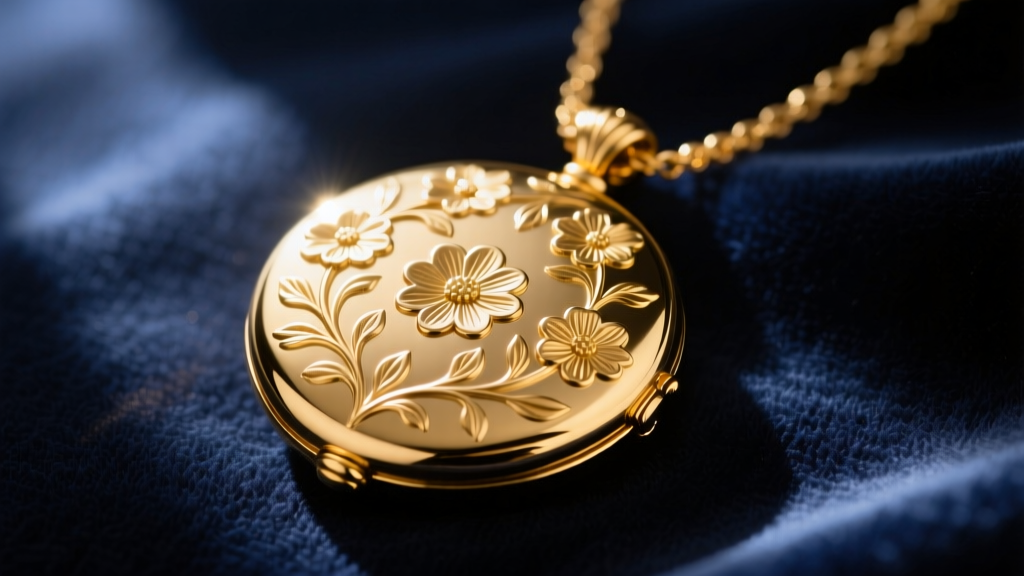
A large locket necklace is more than just a striking fashion statement; it is a complex piece of mechanical jewelry that houses deeply personal keepsakes. Unlike standard pendants, an oversized locket—typically weighing between 15 and 40 grams—features moving parts, delicate interior bezels, and heavy chain stress points. Because of their larger surface area, these pieces are highly susceptible to uneven tarnishing, environmental moisture ingress, and hinge degradation. According to conservation guidelines from the Smithsonian Institution, the combination of skin oils, cosmetic residues, and atmospheric sulfur creates a corrosive micro-environment inside the locket cavity that can destroy both the metal and the photographs within if left unchecked.
Maintaining a large locket requires a departure from standard jewelry cleaning routines. Submerging the piece in liquid or using high-frequency ultrasonic cleaners can trap moisture behind the photo bezels, leading to irreversible water damage and mold growth on your keepsakes. This comprehensive guide details the exact protocols for polishing the exterior, lubricating the mechanics, and preserving the interior archives of your oversized pendant.
Step-by-Step Exterior Metal Cleaning
The exterior of a large locket necklace requires a gentle, methodical approach to remove grime without scratching the finish or stripping intentional patinas. The cleaning agent you choose must be strictly matched to the base metal of your piece.
Matching Cleaners to Metal Types
Different alloys react uniquely to chemical cleaners. For instance, using a harsh thiourea-based silver dip on an oxidized or enameled locket will instantly strip the darkened antiquing and cloud the glass enamel. The Gemological Institute of America (GIA) recommends using neutral pH cleaners for mixed-metal or gemstone-set lockets to prevent localized corrosion.
| Metal Type | Primary Tarnish Cause | Recommended Safe Cleaner | Cleaners to Strictly Avoid |
|---|---|---|---|
| 925 Sterling Silver | Sulfur compounds in the air | Mild dish soap + warm water, or a specialized silver polishing cloth (e.g., Sunshine Cloth) | Thiourea liquid dips (Tarn-X), abrasive toothpaste |
| 14k / 18k Yellow Gold | Soap scum, skin oils, lotions | Warm water with a single drop of ammonia and mild detergent | Chlorine bleach, harsh ultrasonic solutions |
| Solid Brass / Bronze | Oxidation and moisture | Lemon juice and baking soda paste, or specialized brass cream | Steel wool, ammonia-based glass cleaners |
To clean the exterior, apply your chosen mild solution using a soft-bristled baby toothbrush. Gently work the bristles into the engraved crevices of the locket's face. Rinse quickly under lukewarm distilled water—avoiding the hinge area—and immediately pat dry with a lint-free microfiber cloth. Never let a large locket air dry, as water spots will permanently etch into softer metals like high-karat gold.
Hinge and Clasp Mechanics: Lubrication and Repair
The hinge is the most critical failure point on any large locket necklace. The sheer weight of the front and back covers places immense lateral torque on the hinge pin every time the piece is opened. Over time, friction causes the pin to wear down, resulting in a loose, wobbly closure that fails to protect the interior contents.
The Dangers of Standard Lubricants
Never use WD-40 or standard household oils on a locket hinge. These petroleum-based products attract microscopic dust particles, which eventually turn into a grinding paste that will seize the hinge entirely. Furthermore, they can degrade the adhesives used in the interior photo bezels.
The Museum-Standard Lubrication Technique
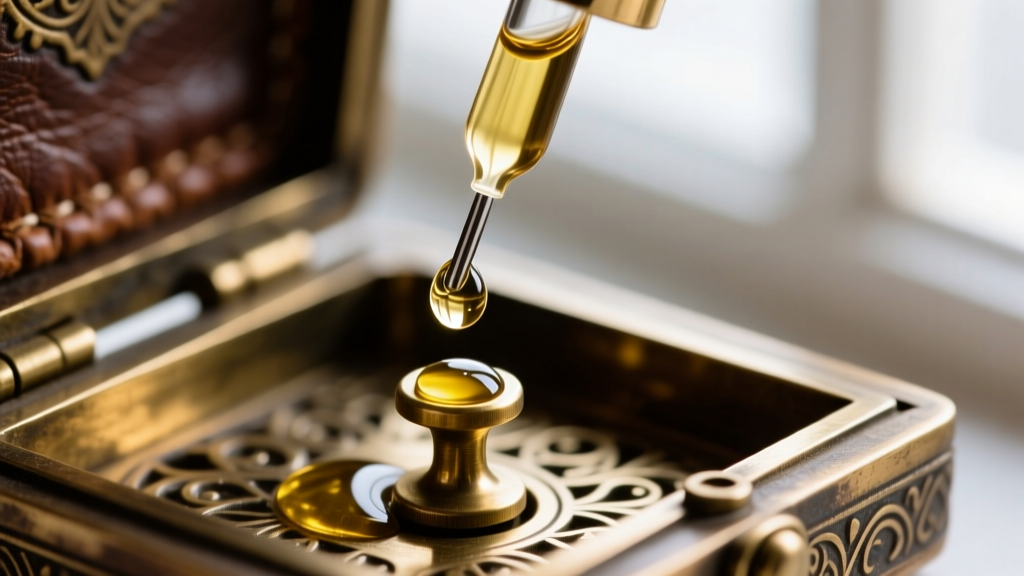
For a stiff or squeaky hinge, use a synthetic watch oil or a microcrystalline wax like Renaissance Wax. Apply a microscopic drop of synthetic oil to the hinge pin using a fine needle oiler. Open and close the locket repeatedly to work the lubricant into the barrel. Wipe away any excess oil immediately with a cotton swab to prevent it from migrating onto the exterior metal or interior photos. If the hinge is loose, do not attempt to squeeze the barrels with pliers; take the piece to a jeweler to have the hinge pin re-swaged or replaced.
Expert Bail Loop Check: The bail (the loop connecting the locket to the chain) on a heavy locket must be inspected monthly. Look for wear grooves where the chain rubs against the metal. If the bail is thinner than 0.8mm, it is at risk of snapping under the pendant's dynamic weight.
Protecting the Interior: Photos, Hair, and Keepsakes
The interior of a large locket necklace is a vulnerable archive. Silver sulfide—the black tarnish that forms on sterling silver—can easily transfer onto paper photographs, causing permanent dark staining. Additionally, the glass or acrylic covers protecting the photos are often held in place by delicate friction bezels or water-soluble hide glues.
Creating Archival Barriers
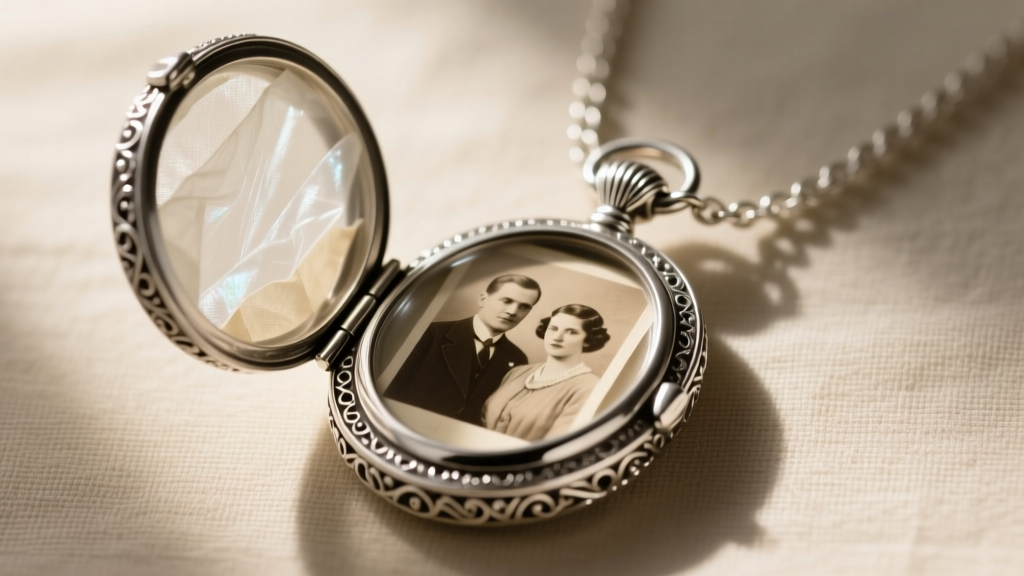
To protect your photographs, never place them directly against raw metal. Instead, use archival-grade glassine paper or acid-free tissue paper. Cut the paper slightly larger than the photo, place it over the image, and then secure the bezel. This creates a breathable, pH-neutral barrier that prevents chemical transfer while allowing you to view the image clearly. If your locket houses a lock of hair, ensure the hair is completely dry and free of modern hair sprays or oils before sealing it inside, as trapped volatile organic compounds (VOCs) will accelerate interior metal corrosion.
Chain Maintenance for Heavy Pendants
A large locket demands a robust chain. Delicate chains (under 1.5mm in width) will inevitably stretch, kink, or snap under the pendulum-like motion of a heavy locket. For lockets weighing over 20 grams, opt for a solid cable, wheat, or Figaro chain with a minimum width of 2.5mm. Ensure the chain's clasp is a sturdy lobster claw with a reinforced soldered jump ring, rather than a hollow spring ring. Once a month, clean the chain by soaking it in a shallow bowl of warm water and mild dish soap, agitating it gently to dislodge trapped dead skin cells and lotion from the links, then hang it vertically to dry.
Storage and Wear Best Practices
How you store and wear your large locket necklace drastically impacts its lifespan. Follow these actionable rules to minimize maintenance needs:
- Apply Cosmetics First: Always apply perfume, hairspray, and lotions at least five minutes before putting on your locket. Alcohol and aerosols can cloud enamel and degrade metal finishes.
- Avoid Humidity: Never wear a large locket in the shower, sauna, or swimming pool. Chlorine and heat will warp the metal and destroy the interior keepsakes.
- Proper Storage: Store the necklace flat in a velvet-lined jewelry box with anti-tarnish silica strips. Hanging a heavy locket for long periods can cause the chain links to permanently elongate due to gravity.
- Friction Management: If you wear the locket over wool or rough textiles, be aware that the fabric will act as a mild abrasive, slowly wearing down high-polish finishes and intricate engravings over time.
By treating your large locket necklace not just as jewelry, but as a mechanical archive, you ensure that both the precious metals and the irreplaceable memories inside remain pristine for generations.


