Beginner Guide to Choosing a Black Glass Bead Necklace
Discover how to choose, style, and care for a black glass bead necklace. Learn about glass types, stringing materials, and neckline pairings.

The Timeless Appeal of Black Glass
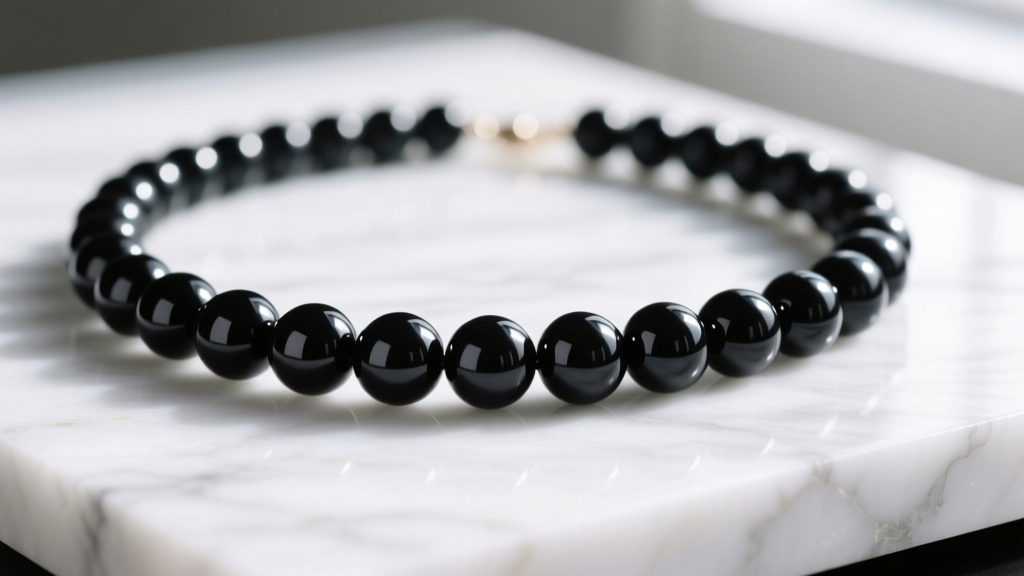
When building a foundational jewelry wardrobe, few pieces offer the versatility and understated elegance of a black glass bead necklace. Often mistaken for onyx, obsidian, or jet, black glass provides a brilliant, high-gloss finish at a fraction of the weight and cost of carved gemstones. As we navigate the jewelry trends of 2026, minimalist and 'quiet luxury' aesthetics continue to dominate, making the sleek, light-absorbing qualities of black glass a staple for both everyday wear and formal evening styling.
Historically, black glass was popularized during the Victorian era as 'French Jet'—an affordable and lighter alternative to genuine Whitby jet, which was heavily demanded for mourning jewelry. Today, modern manufacturing techniques have elevated black glass from a mere imitation to a highly sought-after material in its own right, prized for its uniform color, smooth texture, and satisfying drape.
Decoding Glass Types: A Comparison Chart
Not all glass beads are created equal. The manufacturing process drastically affects the bead's weight, luster, and price point. Understanding these differences is crucial when shopping for a quality black glass bead necklace.
| Glass Type | Origin | Characteristics | Price Range |
|---|---|---|---|
| Czech Pressed | Czech Republic | Machine-pressed, highly uniform, durable, exceptional polish | $15 - $45 |
| Murano | Venice, Italy | Handcrafted, often features gold or silver foil inclusions | $80 - $250+ |
| Lampwork | Global Artisan | Torch-melted, organic shapes, unique internal swirls or bubbles | $45 - $120 |
| Dichroic | Modern Labs | Coated with micro-layers of quartz and metal oxides, iridescent shifts | $60 - $150 |
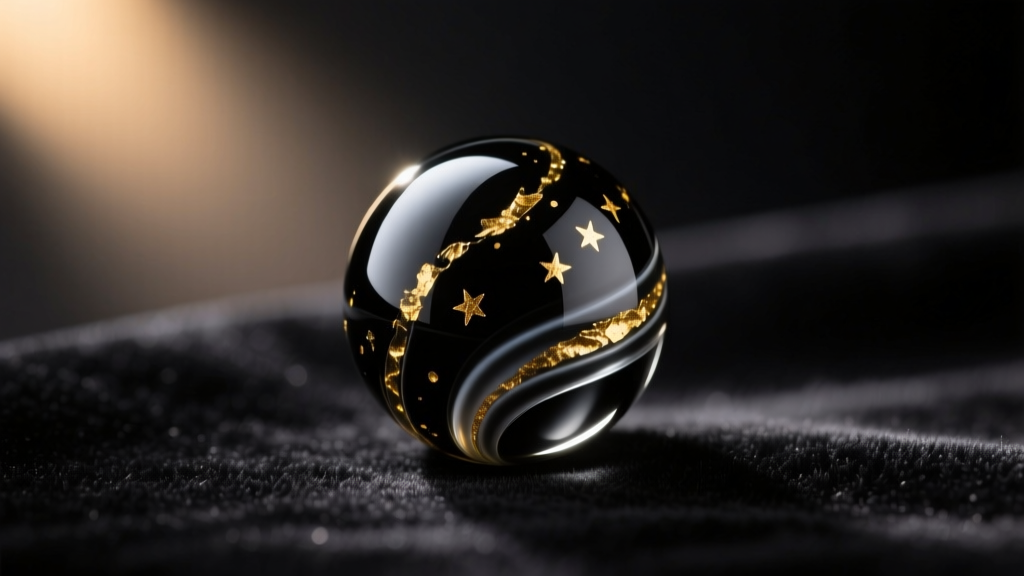
For a classic, uniform strand, Czech pressed glass is the gold standard. The beads are tumbled and polished to a mirror-like finish. If you prefer a statement piece with artisanal flair, look for Murano or Lampwork beads, which often incorporate metallic foils that catch the light from within the dark glass matrix.
The Science of Identification: Glass vs. Onyx vs. Jet
According to the GIA Gem Encyclopedia, glass is an amorphous solid, meaning it lacks the crystalline structure found in gemstones like onyx (a variety of quartz) or obsidian (volcanic glass). This structural difference gives black glass distinct physical properties:
- Thermal Conductivity: Glass feels noticeably warmer to the touch than crystalline quartz. If you press a black glass bead against your cheek, it will warm up much faster than an onyx bead.
- Weight: Glass is less dense than stone. A heavy 12mm black glass bead necklace will sit comfortably on the collarbone without pulling the neckline of your garment, whereas a同等-sized onyx necklace would feel cumbersome.
- The 'Clink' Test: When gently tapped together, glass beads emit a higher-pitched, sharper 'clink' compared to the duller 'thud' of jet or the resonant ring of crystalline quartz.
Stringing Materials: The Hidden Foundation
The longevity of your black glass bead necklace depends entirely on what holds it together. Glass beads, particularly those that are machine-drilled, can have microscopic sharp edges inside the bead hole that will eventually fray weak threads. According to the experts at Fire Mountain Gems, selecting the right stringing material is non-negotiable for heavy bead strands.
Best Choices for Glass Beads
- 49-Strand Micro-Wire (0.018-inch diameter): This is the industry standard for medium-to-heavy glass beads (8mm to 12mm). The 49-strand construction provides a fluid, thread-like drape while offering a tensile strength of up to 20 pounds. Always use 2x2mm sterling silver or gold-filled crimp tubes to secure the clasp.
- Griffin Silk Cord (Size 6, 0.8mm): If you prefer a knotted necklace (where a small knot sits between each bead to prevent them from grinding together), 100% silk is required. However, silk is susceptible to stretching and water damage over time and must be re-strung every 3 to 5 years.
- Nylon Beading Thread (Size D or F): Ideal for smaller seed beads or delicate 4mm black glass rondelles. Nylon offers superior abrasion resistance compared to silk but lacks the natural drape of wire.
Pro Tip: Always use a 'wire guard' (also known as French wire) at the clasp connection point. This horseshoe-shaped metal finding prevents the clasp ring from rubbing against and eventually sawing through your stringing wire.
How to Style a Black Glass Bead Necklace for Every Neckline
The beauty of black glass lies in its high-contrast adaptability. It frames the face beautifully and anchors chaotic patterns. Here is a practical framework for pairing necklace lengths with specific garment necklines.

16-Inch Choker: The Crew Neck Companion
A 16-inch black glass choker sits snugly at the base of the throat. This length is perfect for crew neck t-shirts, boat necks, and off-the-shoulder tops. The stark contrast of glossy black beads against bare skin or a crisp white cotton tee creates an immediate focal point. For a modern 2026 aesthetic, layer the 16-inch glass choker with a delicate 18-inch gold paperclip chain to mix textures.
18-Inch Princess: The V-Neck Standard
The 18-inch princess length is the most versatile option in a jewelry box. It rests perfectly on the collarbone and naturally follows the geometric lines of a V-neck blouse or a wrap dress. When wearing a black glass bead necklace at this length with a V-neck, ensure the pendant or central bead cluster sits roughly half an inch above the garment's hemline to avoid visual clutter.
24-Inch Opera: The Button-Down Elongator
Opera-length necklaces (24 to 30 inches) are designed to elongate the torso. Wear a 24-inch black glass strand over a button-down shirt, leaving the top three buttons undone. The vertical line of the necklace draws the eye downward, creating a slimming, elegant silhouette. This length is also ideal for doubling up into a layered lariat style for evening wear.
Care, Cleaning, and Storage
While glass is relatively hard (ranking around 5.5 to 6.5 on the Mohs scale), it is brittle and susceptible to specific environmental hazards. Proper care will ensure your necklace retains its mirror-like polish for decades.
- Avoid Thermal Shock: Glass expands and contracts with temperature changes. Never wear your necklace into a sauna, hot tub, or extremely cold environment, as rapid temperature shifts can cause internal stress fractures or shatter the beads.
- Safe Cleaning Solutions: To remove body oils and lotions, mix lukewarm water with a single drop of mild, phosphate-free dish soap. Gently wipe the beads with a microfiber cloth. Avoid soaking the necklace, as water can degrade the stringing material or cause metal clasps to tarnish.
- Ultrasonic Warnings: While plain black glass can safely withstand an ultrasonic cleaner, never use ultrasonic waves on Murano or Lampwork beads that contain metallic foil inclusions or glued bead caps. The high-frequency vibrations will delaminate the foil or shake the glue loose.
- Storage: Store the necklace flat or hung on a padded jewelry stand. If tossing it into a jewelry box, place it inside a soft flannel pouch to prevent the glass beads from scratching softer materials like pearls or amber.
Where to Buy and What to Expect
When shopping for a black glass bead necklace, provenance matters. For authentic Czech glass, look for retailers that source directly from manufacturers like Preciosa or Jablonex. For Murano glass, seek out certified Venetian artisans or reputable galleries that provide a certificate of origin, as the market is flooded with mass-produced imitations from overseas. Expect to pay between $20 and $50 for a high-quality, hand-strung Czech glass strand, and upwards of $150 for verified, artisan-crafted Murano pieces featuring precious metal foils. Investing in quality glass ensures you receive a piece that mimics the depth and luxury of fine gemstones while remaining distinctly modern and wearable.


