Delicate Heart Initial Necklace: Budget & Value Guide
Discover the true value of a delicate heart initial necklace. We break down materials, chain gauges, and pricing tiers to help you buy smart.

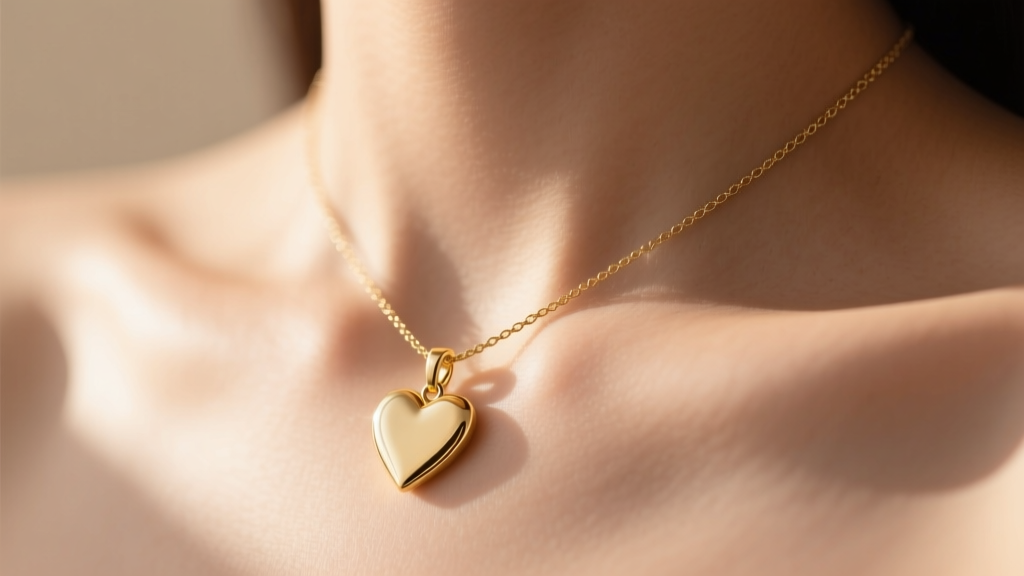
The True Cost of Personalization: Market Overview
The delicate heart initial necklace has transcended seasonal trends to become a staple of modern personalized jewelry. However, as you browse the 2026 market, you will notice a staggering price disparity. A seemingly identical heart pendant with a single initial can cost anywhere from $28 at a fast-fashion retailer to over $450 at a luxury boutique. For the budget-conscious consumer, this raises a critical question: what are you actually paying for, and where is the true value?
Assessing the value of personalized jewelry requires looking past the aesthetic and examining the structural integrity, material purity, and manufacturing techniques. A low upfront cost often translates to a high cost-per-wear if the piece tarnishes, snaps, or loses its engraving within months. This guide deconstructs the anatomy of the delicate heart initial necklace to help you allocate your budget toward pieces that offer genuine longevity and material worth.
The Material Matrix: What You Are Actually Paying For
The foundation of any necklace's value lies in its base metal and plating. When evaluating a delicate heart initial necklace, you will primarily encounter three material categories. Understanding the legal and gemological definitions of these metals is crucial for avoiding inflated prices for subpar materials.
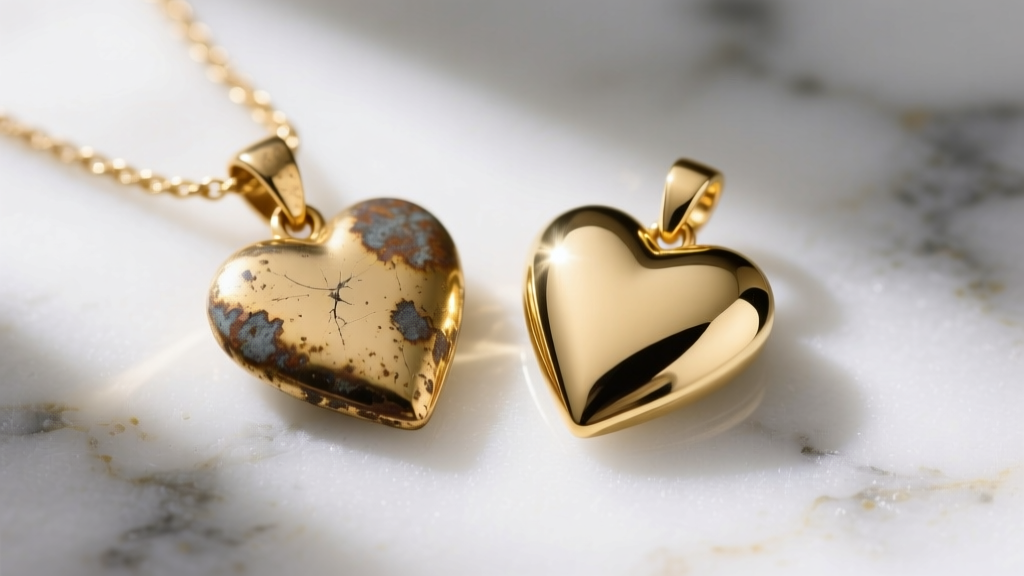
According to the Federal Trade Commission's Jewelry Guides, the term 'vermeil' is strictly regulated. To be legally sold as gold vermeil in the United States, the piece must have a sterling silver base and be plated with gold that is at least 10k purity and a minimum of 2.5 microns thick. Many budget brands sell 'gold plated' jewelry, which typically features a brass or copper base with a mere 0.5-micron flash of gold. This thin layer will wear away rapidly, exposing the reactive base metal to your skin's natural oils and causing severe tarnishing.
Material Comparison Chart
| Material Type | Average Price Range | Lifespan | Tarnish Risk | Value Verdict |
|---|---|---|---|---|
| Gold Plated (Brass) | $25 - $45 | 6 - 12 Months | High | Poor (High cost-per-wear) |
| Gold Vermeil (Silver) | $60 - $110 | 2 - 5 Years | Low/Medium | Good (Best budget option) |
| Solid 10k Gold | $120 - $180 | Lifetime | Very Low | Excellent (Entry fine jewelry) |
| Solid 14k Gold | $200 - $450+ | Lifetime | None | Premium (Heirloom quality) |
For a delicate heart initial necklace, solid 14k gold remains the gold standard for value retention. As noted by the Gemological Institute of America (GIA), 14k gold (58.3% pure gold) offers the ideal balance between the rich color of pure gold and the structural durability required for delicate, everyday chains. If your budget is strict, high-quality gold vermeil is the smartest alternative, provided you verify the 2.5-micron thickness with the retailer.
Chain Gauge and Clasp Mechanics: The Hidden Value Indicators
The pendant is only half the equation. The chain and clasp dictate the physical survival of your necklace. In the realm of 'delicate' jewelry, brands often push the boundaries of thinness to save on gold weight and reduce manufacturing costs. This results in structural vulnerabilities.
Understanding Chain Gauge
Chain thickness is measured in millimeters. A true delicate cable chain typically ranges from 0.8mm to 1.0mm. However, some ultra-budget brands utilize 0.5mm or 0.6mm chains. While these look incredibly dainty, they lack the tensile strength to support even a lightweight heart pendant. A 0.6mm chain is highly prone to kinking and will easily snap if caught on a sweater or pulled during sleep. For optimal value, insist on a chain gauge between 0.9mm and 1.2mm. This provides the delicate aesthetic without sacrificing structural integrity.
The Clasp Bottleneck
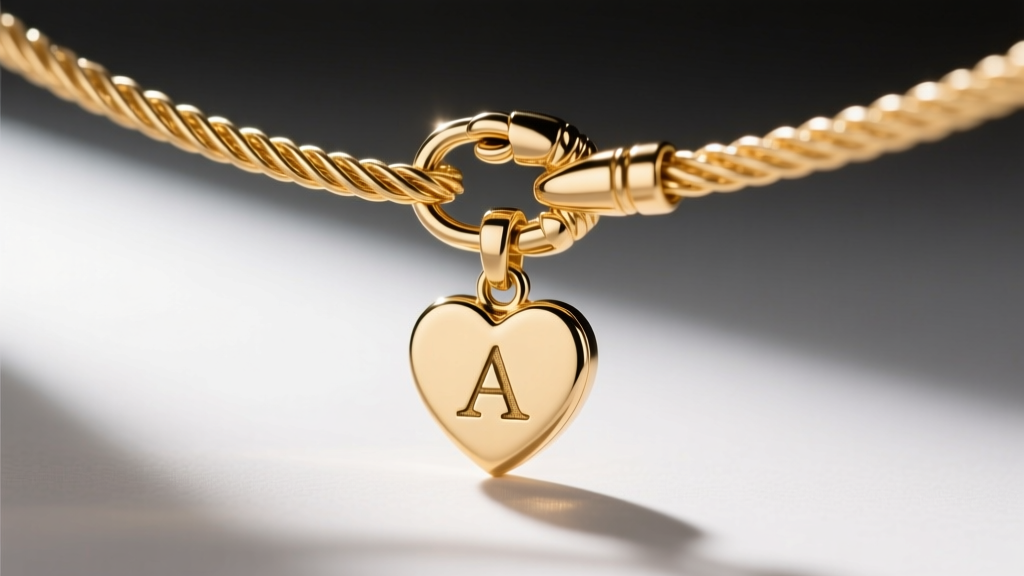
The clasp is the most common point of failure on any necklace. Budget manufacturers frequently use spring-ring clasps to cut costs. Spring rings are notoriously difficult to operate with one hand and feature a thin internal spring that degrades over time, leading to accidental unclasping and lost pendants. A high-value delicate heart initial necklace will always feature a lobster clasp. Lobster clasps are slightly more expensive to produce but offer a secure, self-closing mechanism that significantly reduces the risk of losing your personalized piece.
Engraving Quality: Laser vs. Hand-Stamped Initials
The method used to apply the initial to the heart pendant drastically affects both the aesthetic and the longevity of the personalization. There are two primary techniques used in the modern jewelry market:
- CNC Laser Engraving: This method uses a focused laser beam to burn away the top layer of metal. It results in a perfectly crisp, uniform, and highly precise font. However, laser engraving is inherently shallow. On gold-plated or vermeil pieces, the laser often burns completely through the gold layer, exposing the silver or brass underneath. Over time, this exposed metal can oxidize, turning the initial black or green.
- Hand-Stamping (Metal Stamping): A traditional technique where a jeweler uses a steel die and a heavy hammer to physically displace the metal, creating a deep, organic impression. Hand-stamped initials have slight variations in depth and alignment, giving the piece an artisanal, bespoke feel. More importantly, because the metal is displaced rather than removed, the gold layer remains intact (if plated), and the deep grooves hold polish and patina beautifully over decades of wear.
When assessing value, hand-stamped initials on solid gold offer the highest heirloom potential, while laser engraving is perfectly acceptable for budget-friendly vermeil pieces where deep grooves are not necessary.
Pricing Tiers: Where to Spend and Where to Save
To maximize your budget, it helps to understand how different market segments price their delicate heart initial necklaces. Here is a breakdown of what to expect in the current market:
The Fast-Fashion Tier ($25 - $50)
Brands in this tier typically use brass bases with thin gold plating and spring-ring clasps. The chains are often under 0.7mm. Value Assessment: Buy only for short-term trend experimentation. Expect tarnishing and chain breakage within the first year. The cost-per-wear is actually quite high if the piece degrades quickly.
The Demi-Fine Tier ($75 - $150)
This is the sweet spot for most consumers. Reputable demi-fine brands utilize sterling silver bases with 2.5-micron gold vermeil, 0.9mm cable chains, and secure lobster clasps. Value Assessment: Excellent value for everyday wear. With proper care (removing before showering and swimming), these pieces will maintain their beauty for 3 to 5 years.
The Fine Jewelry Tier ($250 - $500+)
At this level, you are paying for solid 14k gold, ethically sourced materials, and superior craftsmanship, often featuring hand-stamped initials and custom-designed heart silhouettes. Value Assessment: The highest upfront cost, but the lowest cost-per-wear over a lifetime. Solid 14k gold will not tarnish, can be worn in the shower, and can be easily repaired or polished by any local jeweler if the chain snaps.
Final Verdict: The Cost-Per-Wear Framework
Ultimately, the value of a delicate heart initial necklace is determined by how often you will wear it and how long it will survive your lifestyle. If you are buying a piece to wear daily, never taking it off, and exposing it to water, sweat, and lotions, investing in solid 14k gold is non-negotiable. The $300 price tag divided by five years of daily wear equals roughly $0.16 per day—an exceptional value for a piece of fine, personalized jewelry.
Conversely, if you view jewelry as a seasonal accessory and prefer to rotate your styles every few months, a $60 gold vermeil piece from a reputable demi-fine brand offers the best balance of aesthetic appeal and financial prudence. By scrutinizing the chain gauge, demanding a lobster clasp, and verifying the metal purity, you can confidently navigate the market and secure a personalized necklace that truly reflects its price tag.


