How to Select and Style Your Ideal December Birthstone Necklace
Learn how to choose, style, and care for a December birthstone necklace. Expert tips on turquoise, tanzanite, and zircon settings, chains, and necklines.

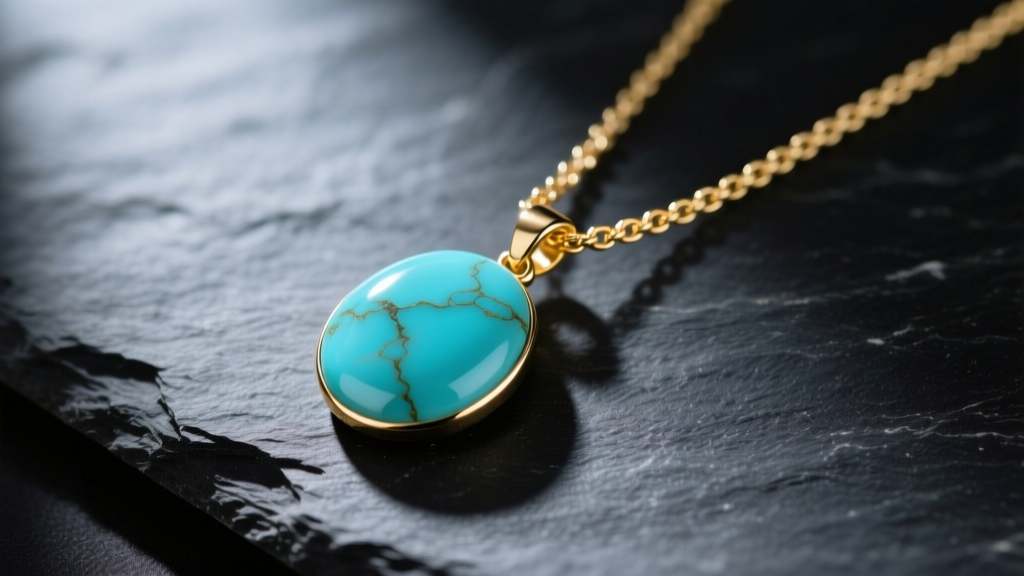
The Ultimate Guide to December Birthstone Necklaces
December is one of the few months blessed with three distinct, officially recognized birthstones: turquoise, tanzanite, and zircon. For jewelry enthusiasts and gift-givers alike, this variety offers a spectrum of colors, hardness levels, and styling possibilities. However, selecting the perfect december birthstone necklace requires more than just picking a pretty color. Each stone possesses unique gemological properties that dictate how it should be set, what chain it requires, and how it must be maintained. In this step-by-step guide, we break down the technical and aesthetic considerations to help you choose, style, and preserve a December birthstone pendant that will last a lifetime.
Step 1: Decode the December Birthstones
Before purchasing a necklace, you must understand the physical limitations and visual traits of your chosen stone. While all three represent December, their durability varies wildly, directly impacting their suitability for daily wear.
| Gemstone | Mohs Hardness | Toughness & Cleavage | Best Metal Pairing | Ideal Use Case |
|---|---|---|---|---|
| Turquoise | 5.0 - 6.0 | Poor (Highly porous, brittle) | Sterling Silver, 14k Yellow Gold | Statement pendants, occasional wear |
| Tanzanite | 6.5 - 7.0 | Fair (Perfect cleavage in one direction) | 14k/18k White Gold, Platinum | Elegant evening wear, protected daily wear |
| Blue Zircon | 6.5 - 7.5 | Fair to Good (Brittle facet edges) | 14k Rose Gold, White Gold | High-brilliance pendants, vintage styles |
According to the Gemological Institute of America (GIA), turquoise is a porous phosphate mineral that can easily absorb oils and chemicals, while tanzanite is a pleochroic gem that displays different colors (blue, violet, and burgundy) depending on the viewing angle. Blue zircon, not to be confused with synthetic cubic zirconia, offers exceptional brilliance due to its high refractive index and birefringence.
Step 2: Match the Setting to the Stone's Toughness
The setting of your december birthstone necklace is the primary line of defense against physical damage. A beautiful stone will quickly degrade if mounted in an inappropriate setting.
Setting Turquoise: The Bezel Imperative
Because turquoise is relatively soft and porous, prong settings are highly discouraged. Prongs leave the edges of the cabochon exposed to knocks and abrasion. Always opt for a full bezel or semi-bezel setting. A bezel features a continuous metal rim that wraps around the girdle of the stone, protecting its most vulnerable edges. For a modern 2026 aesthetic, look for oxidized sterling silver bezels with a matte finish, which contrasts beautifully with the bright, sky-blue matrix of stabilized turquoise.
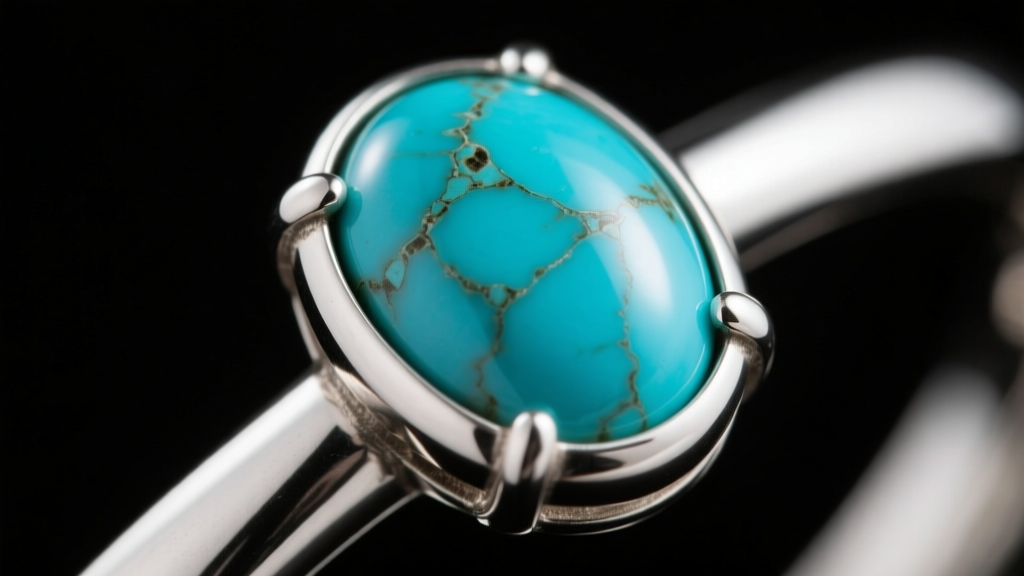
Setting Tanzanite and Zircon: Prongs and V-Tips
Tanzanite and zircon are typically faceted to maximize light return. While standard four-prong or six-prong settings are acceptable, tanzanite's perfect cleavage makes it susceptible to splitting if struck at the wrong angle. If your tanzanite pendant is cut into a pear, marquise, or princess shape, ensure the jeweler uses V-prongs at the pointed corners to shield them from chipping. Zircon is highly birefringent, meaning facet edges can appear doubled under magnification; a delicate 14k white gold basket setting will allow maximum light to enter the pavilion without obscuring this unique optical effect.
Step 3: Select the Chain Gauge and Length
The chain is the structural foundation of your necklace. Pairing a heavy stone with a delicate chain is a common mistake that leads to broken links and lost pendants.
- 16-Inch Choker/Collar: Sits tightly against the base of the neck. Best for off-the-shoulder tops or boat necklines. Ideal for lightweight zircon solitaires (under 2 carats) on a 0.9mm cable chain.
- 18-Inch Princess: The most versatile length, resting on the collarbone. Perfect for V-necks and scoop necks. Use a 1.2mm box chain for medium-sized tanzanite pendants (3-5 carats) to provide adequate tensile strength.
- 20 to 24-Inch Matinee: Falls on the chest or upper bust. Excellent for business attire, turtlenecks, and bohemian layering. Heavy, oversized turquoise cabochons (10+ carats) require a robust 1.5mm to 2.0mm rope chain to support the weight without stretching the links.
Always check the clasp mechanism. Lobster clasps are standard, but for heavier turquoise pendants, a reinforced spring ring or a toggle clasp provides superior security.
Step 4: Master the Layering Formula
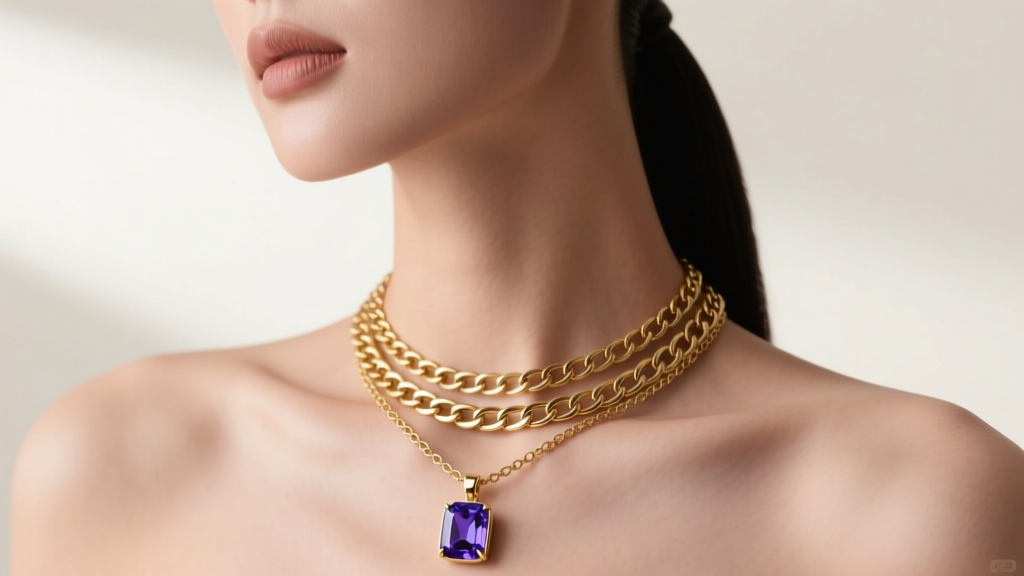
Layering a december birthstone necklace requires a strategic approach to prevent the softer stones from scratching against harder metals or adjacent gems. The golden rule of layering is maintaining a minimum two-inch gap between chains.
The 2026 Layering Blueprint:
- Base Layer (14 inches): A simple, 1.0mm gold or silver herringbone chain that sits flush against the skin.
- The Focal Point (16 to 18 inches): Your december birthstone pendant. If it is a turquoise piece, let it stand alone on this tier to prevent harder gold chains from scratching its polished dome.
- The Anchor (20 inches): A heavier, textured chain, such as a 2.5mm paperclip or curb link, which adds visual weight to the bottom of the stack without competing with the birthstone.
When mixing metals, ensure that the chain holding the turquoise does not rub directly against the turquoise itself, as gold and silver alloys (Mohs 2.5-3) can still cause micro-abrasions on highly polished turquoise over years of friction.
Step 5: Verify Treatments and Authenticity
The market is saturated with treated and simulated stones. Knowing what to ask the jeweler is critical for making an informed purchase.
Turquoise Stabilization
Natural, untreated turquoise is rare and incredibly fragile. Over 90% of turquoise on the market is stabilized—a process where clear epoxy or polymer is forced into the stone's pores under pressure to harden it and enhance its color. This is an accepted industry practice, provided it is disclosed. However, avoid dyed or reconstituted turquoise (where turquoise dust is glued together), as these lack structural integrity and value. The American Gem Society (AGS) recommends always asking for a disclosure report regarding polymer impregnation.
Tanzanite Heat Treatment
Virtually all tanzanite is heat-treated to remove brownish hues and bring out the signature velvety blue-violet color. This treatment is permanent, stable, and universally accepted. Untreated, naturally blue tanzanite is exceptionally rare and commands a massive premium.
Step 6: Implement a Strict Care Protocol
Proper maintenance ensures your necklace retains its structural integrity and visual appeal. The care routines for December's three stones are vastly different.
Cleaning Turquoise
Never use ultrasonic cleaners, steam cleaners, or commercial jewelry dips on turquoise. The heat and harsh chemicals will destroy the stabilization polymers and permanently discolor the stone. To clean a turquoise pendant, simply wipe it gently with a soft, damp microfiber cloth and dry it immediately. Apply perfumes, lotions, and hairsprays before putting on your turquoise necklace, as the stone will absorb these chemicals and alter its hue.
Cleaning Tanzanite and Zircon
While harder than turquoise, tanzanite should still be kept out of ultrasonic cleaners due to its cleavage planes, which can fracture under high-frequency vibrations. Instead, use a bowl of warm water with a few drops of mild, phosphate-free dish soap. Soak the pendant for five minutes, then gently agitate it with a baby-soft toothbrush. Rinse with distilled water to prevent hard water spots and pat dry with a lint-free cloth. Blue zircon can withstand slightly more rigorous cleaning but should also be protected from hard knocks to prevent facet-edge abrasion.
Final Thoughts on Your December Selection
Choosing the perfect december birthstone necklace is an exercise in balancing gemological science with personal style. By respecting the physical limitations of turquoise, tanzanite, and zircon, and by pairing them with the correct settings, chain gauges, and maintenance routines, you ensure that your jewelry remains a stunning, wearable heirloom. Whether you are drawn to the earthy, opaque matrix of a Sleeping Beauty turquoise cabochon or the electric, pleochroic flash of a precision-cut tanzanite, the right technical choices will protect your investment for decades to come.


