Material Guide: Buying a Vintage Blue Topaz Necklace
Learn how to evaluate the gemological and metallurgical properties of a vintage blue topaz necklace to avoid simulants and overpriced settings.

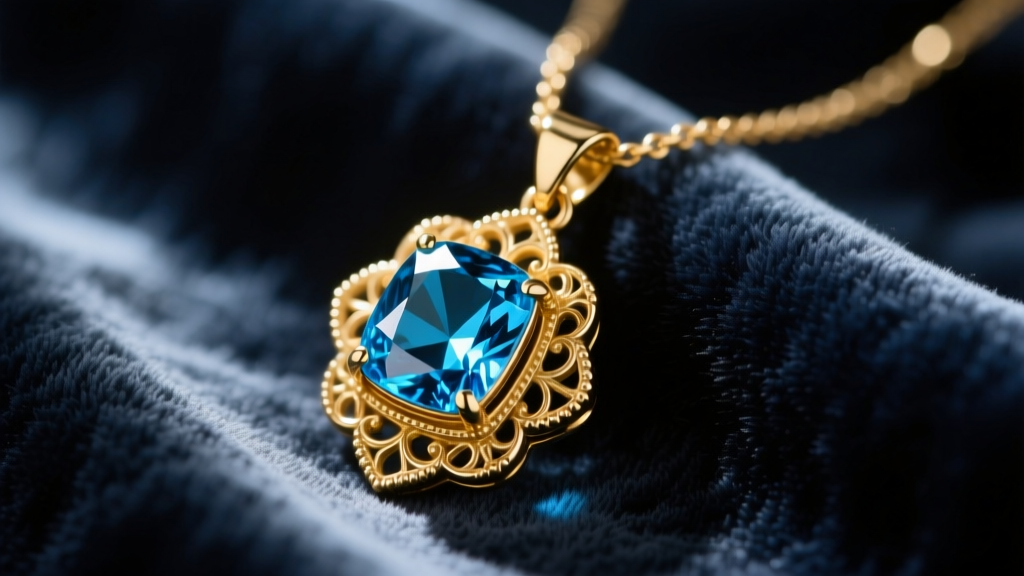
The secondary market for colored gemstones has surged in recent years, with collectors and everyday buyers alike seeking out unique, historically significant pieces. Among the most highly sought-after items is the vintage blue topaz necklace. However, the term "vintage" in the context of blue topaz requires a nuanced understanding of gemological treatments, metal fatigue, and simulant identification. Unlike diamonds or sapphires, the blue topaz market underwent a radical transformation in the late 1970s and 1980s due to the advent of stable irradiation treatments. Consequently, a genuine vintage piece from this era presents unique material properties that buyers must carefully evaluate.
This comprehensive material guide breaks down the exact gemological specifications, metallurgical realities, and structural vulnerabilities you need to know before investing in a vintage blue topaz necklace.
The Gemological Profile: Natural vs. Treated Topaz
To authenticate and evaluate a vintage blue topaz necklace, you must first understand the baseline mineralogy of topaz. Topaz is a nesosilicate mineral with the chemical formula Al₂SiO₄(F,OH)₂. According to the Mindat mineralogy database, it crystallizes in the orthorhombic system, which directly dictates its optical and physical behavior.
Naturally occurring blue topaz is exceptionally rare and typically presents as a very pale, almost icy blue. The vivid, saturated blues seen in vintage jewelry—specifically London, Swiss, and Sky blue—are almost universally the result of human intervention. In the 1970s, gemologists discovered that bombarding colorless topaz with neutrons or electrons, followed by controlled heating, produced stable, permanent blue hues. Therefore, if you are examining a vintage blue topaz necklace from the 1980s or 1990s with a deep, saturated color, you are looking at a treated stone. This is an industry-standard practice and does not inherently devalue the piece, provided it is disclosed.
Comparative Material Data: Topaz vs. Common Simulants
When assessing a vintage piece, you must rule out common simulants that were frequently used in mid-century and retro costume jewelry. Below is a comparative matrix of the physical properties you should test for.
| Material | Mohs Hardness | Refractive Index (RI) | Specific Gravity (SG) | Optical Character |
|---|---|---|---|---|
| Blue Topaz (Treated) | 8.0 | 1.610 - 1.644 | 3.53 | Biaxial (+) |
| Aquamarine (Beryl) | 7.5 - 8.0 | 1.577 - 1.583 | 2.72 | Uniaxial (-) |
| Synthetic Spinel | 8.0 | 1.728 | 3.63 | Isotropic (Singly Refractive) |
| Blue Glass / Paste | 5.0 - 6.0 | 1.50 - 1.70 | 2.20 - 4.00 | Isotropic |
| Blue Zircon | 6.5 - 7.5 | 1.925 - 1.984 | 4.60 - 4.70 | Uniaxial (+) |
Testing Tip: Because vintage settings can make specific gravity testing difficult without removing the stone, gemologists rely heavily on the refractometer. A reading of 1.61-1.64 with distinct birefringence (double refraction) strongly indicates topaz, whereas a single shadow edge at 1.728 points to synthetic spinel, a common 1980s simulant.
Metallurgical Analysis of Vintage Settings
The value and durability of a vintage blue topaz necklace are inextricably linked to its metal setting. Vintage topaz was predominantly set in 14k yellow gold, 10k white gold, or 925 sterling silver. Understanding the material fatigue of these alloys is critical for long-term wear.
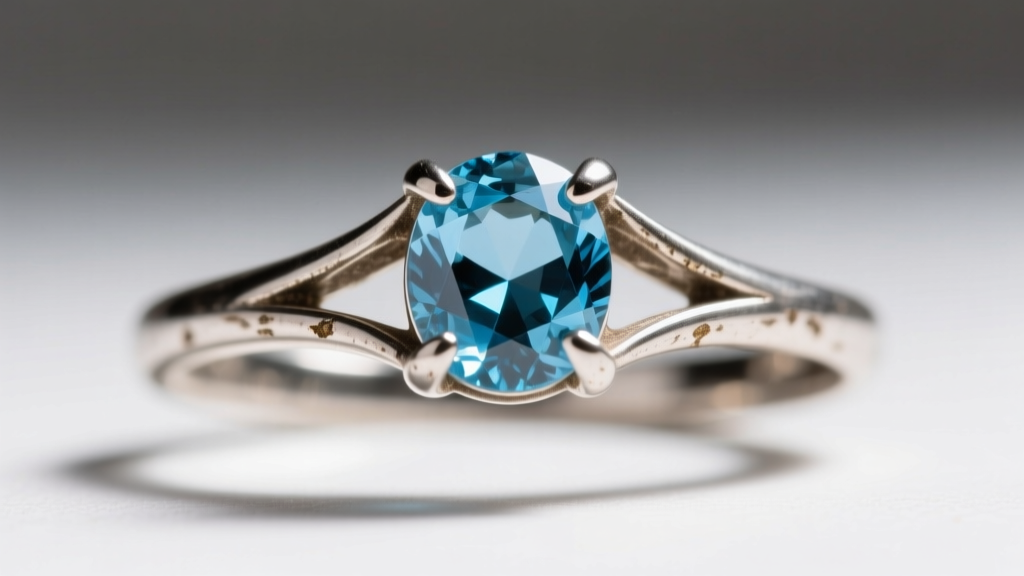
Gold Alloys: 14k vs. 18k
While 18k gold (75% pure) is prized for its rich color and hypoallergenic properties, 14k gold (58.5% pure) is actually the superior functional choice for vintage topaz settings. Topaz possesses perfect basal cleavage, meaning a single hard strike at the wrong angle can split the stone cleanly in half. The higher copper and zinc content in 14k gold provides greater tensile strength and prong rigidity, offering better protection against the impacts that could trigger topaz's cleavage planes.
Sterling Silver and Rhodium Degradation
Many vintage blue topaz necklaces from the 1980s feature sterling silver settings plated with rhodium to mimic white gold. Over decades of wear, this plating degrades. When evaluating a vintage silver piece, inspect the prong tips and the bail (the loop connecting the pendant to the chain). If the underlying silver is exposed and shows signs of micro-pitting or sulfide tarnishing, the structural integrity of the prongs may be compromised. Re-tipping silver prongs is a necessary maintenance cost that should be factored into your purchasing decision.
Identifying Structural Vulnerabilities and Wear
Because topaz is brittle and has that notorious perfect cleavage, the physical condition of the gemstone itself must be scrutinized under 10x magnification. When examining a vintage blue topaz necklace, look for the following specific failure modes:
- Frosting at the Girdle: If the stone was subjected to ultrasonic cleaning while held in a tight bezel or V-prong setting, the girdle (the outer edge) may appear frosted or chipped. This is a result of high-frequency vibrations interacting with the cleavage planes.
- Prong Tension Cracks: Vintage jewelers sometimes used overly thick prongs. Over time, as the metal work-hardens and contracts with temperature changes, it can exert lateral pressure on the topaz, causing internal stress fractures radiating from the crown facets.
- Abrasion on Facet Junctions: While topaz is an 8 on the Mohs scale, decades of friction against other jewelry in a box can cause minor abrasions where the pavilion facets meet. This dulls the stone's brilliance and requires a professional re-polish, which will slightly reduce the carat weight.
Pricing Framework and Market Valuation
Valuing a vintage blue topaz necklace requires separating the gemstone value from the antique/metallurgical value. Unlike rubies or emeralds, treated blue topaz is not a rare commodity, and its value is largely driven by cut quality, carat weight, and the craftsmanship of the setting.

According to the Gemological Institute of America (GIA), the cut of a topaz dramatically impacts its light return. Vintage pieces often feature step cuts (emerald or baguette) which highlight the stone's clarity but can look dark if the pavilion is cut too deep. Here is a general pricing framework for vintage necklaces in the current market:
- Entry-Level (Sterling Silver, 1-5 Carats, Swiss/Sky Blue): $80 - $250. Value is primarily in the silver weight and basic craftsmanship.
- Mid-Tier (14k Yellow Gold, 5-15 Carats, London Blue, Step Cut): $400 - $1,200. The premium here is driven by the gold weight and the highly desirable, deeply saturated London blue hue.
- High-End/Designer (18k Gold, Platinum, Intricate Filigree, >20 Carats): $1,500 - $4,000+. Pieces from notable mid-century or 1980s designer houses command a brand premium, and the intricate metalwork elevates the piece from simple jewelry to wearable art.
Care and Maintenance of Treated Topaz
Once you have acquired your vintage blue topaz necklace, proper material care is essential to preserve both the stone and the vintage alloy. The GIA's care and cleaning guidelines explicitly warn against certain cleaning methods for topaz.
Never use an ultrasonic cleaner. The high-frequency sound waves can easily cause a vintage stone with pre-existing internal stress fractures to shatter along its cleavage plane. Furthermore, ultrasonics can shake loose the adhesive used in some vintage channel settings or fracture-filled stones.
Avoid steam cleaning. Sudden thermal shock is a primary enemy of topaz. Moving a cold vintage pendant into a high-heat steam environment can induce catastrophic fracturing. Instead, use a solution of warm water, mild dish soap, and a soft-bristled baby toothbrush to gently remove decades of accumulated sebum and cosmetic residue from behind the pavilion facets. Dry thoroughly with a microfiber cloth to prevent water spots on the metal setting.
By understanding the precise gemological treatments, the metallurgical realities of vintage alloys, and the physical vulnerabilities of the stone, you can confidently navigate the secondary market. A well-chosen vintage blue topaz necklace is not just a beautiful accessory; it is a fascinating artifact of late-20th-century gemological innovation.


