Expert Guide to Choosing an Authentic Star Wars Necklace
Discover the metallurgy, licensing, and chain specs behind authentic Star Wars necklaces. Learn to spot fakes and choose high-grade pendants.

The Metallurgy of a Galaxy Far, Far Away
When collectors and fans search for the perfect Star Wars necklace, the conversation often revolves around character allegiance or iconic symbolism. However, as jewelry experts, we must look past the surface lore and examine the actual metallurgy, casting techniques, and structural integrity of these wearable artifacts. The market is saturated with everything from high-end, licensed sterling silver replicas to mass-produced, fast-fashion trinkets that degrade within weeks. Understanding the material composition is the first step in making an informed investment.
Base Metals: Zamak vs. Surgical Steel
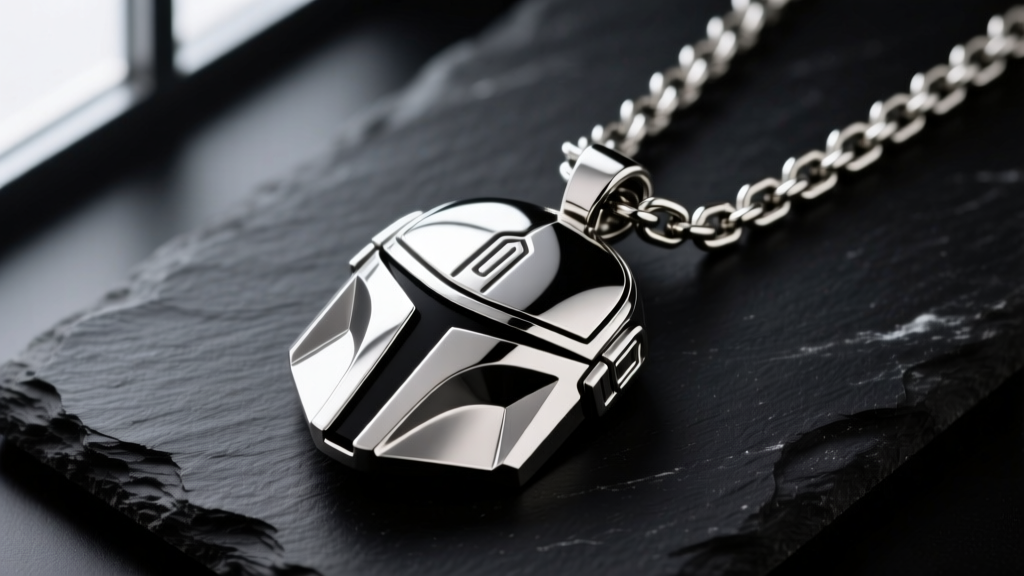
The majority of inexpensive, mall-kiosk Star Wars pendants are cast from Zamak, a zinc alloy with aluminum, magnesium, and copper. While Zamak is excellent for capturing intricate details in die-casting—such as the textured surface of a Mandalorian helmet—it is structurally brittle and highly susceptible to corrosion when the thin electroplated finish wears away. Once the base metal is exposed to the acidity of human sweat, it will rapidly oxidize, leaving a green or black residue on the skin.
In contrast, premium licensed jewelers utilize 316L surgical stainless steel or solid 925 sterling silver. 316L steel contains molybdenum, which drastically increases resistance to pitting and crevice corrosion. For a Star Wars necklace meant to be worn daily, 316L is arguably superior to silver because it requires zero polishing and will not tarnish when exposed to environmental sulfur compounds. When a pendant is marketed as 'gold-tone' or 'Sith yellow,' experts look for PVD (Physical Vapor Deposition) coating rather than traditional electroplating. PVD bonds the gold titanium nitride layer at a molecular level, offering a scratch-resistant finish that is up to ten times thicker and more durable than standard flash plating.
Chain Specifications: Matching the Pendant Weight
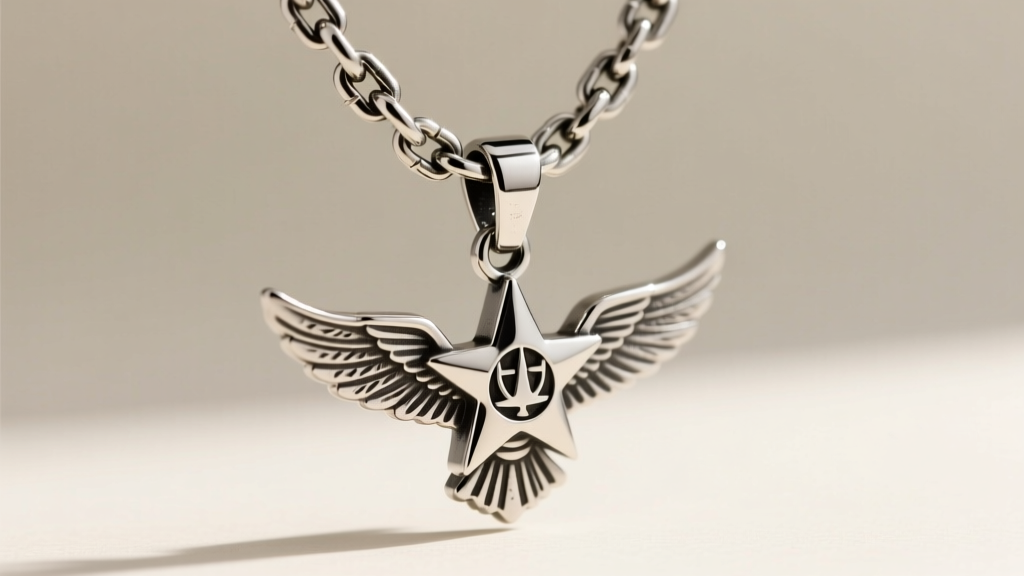
A common failure point in themed jewelry is the mismatch between the pendant's mass and the chain's tensile strength. A solid cast silver Rebel Alliance starbird or a dense steel Death Star pendant carries significant kinetic energy when the wearer moves. If suspended on a flimsy chain, the links will stretch, warp, or snap under dynamic load.
To ensure longevity, the chain's wire gauge and link style must be engineered for the specific pendant. For lightweight pendants (under 10 grams), a 1.2mm to 1.5mm cable or box chain in 20-gauge to 22-gauge wire is sufficient. However, for heavy statement pieces like a detailed beskar ingot or a large lightsaber hilt replica (often exceeding 25 grams), you must upgrade to a minimum 3.0mm thickness with an 18-gauge or 16-gauge wire diameter.
| Pendant Weight | Recommended Chain Style | Wire Gauge / Thickness | Clasp Requirement |
|---|---|---|---|
| Under 10g (e.g., tiny R2-D2) | Cable, Snake, or Delicate Box | 22-20 Gauge (0.6mm - 0.8mm) | Spring Ring |
| 10g - 20g (e.g., standard X-Wing) | Rolo, Curb, or Standard Box | 18 Gauge (1.0mm - 1.5mm) | Small Lobster |
| 20g - 35g (e.g., solid Beskar) | Thick Box, Cuban Link, Wheat | 16-14 Gauge (2.0mm - 3.5mm) | Large Lobster or Trigger |
| Over 35g (e.g., large prop replicas) | Heavy Cuban, Rope, or Leather | 12 Gauge+ (4.0mm+) | Toggle or Magnetic Lock |
Furthermore, the clasp is the weakest link in any necklace assembly. Spring ring clasps rely on a tiny internal steel spring that frequently fails or jams. For any Star Wars necklace over 15 grams, a solid cast lobster clasp is mandatory. For ultra-heavy pieces, a toggle clasp or a high-grade neodymium magnetic clasp provides superior security and ease of use.
Enamel Work and Gemstone Inlays
Many iconic Star Wars designs rely on vibrant color blocking, such as the crimson and black of the Sith Empire or the stark white and orange of Rebel flight suits. The technique used to apply these colors dictates the lifespan of the jewelry.
Cheap replicas use 'soft enamel' (essentially colored epoxy resin) poured into recessed metal channels. While initially bright, epoxy resin is highly vulnerable to UV degradation, turning yellow and brittle after a year of sun exposure. It is also easily scratched by everyday abrasion. High-end Star Wars jewelry utilizes vitreous enamel or advanced cold enamel techniques that are kiln-fired or UV-cured to a hardened, glass-like finish. Vitreous enamel will never fade, chip easily, or discolor, making it the only acceptable standard for heirloom-quality pieces.
When it comes to gemstones, the most sought-after pieces feature Kyber crystal replicas. Authentic high-tier necklaces will use precision-cut synthetic corundum (sapphire/ruby) or high-grade cubic zirconia with custom faceting to mimic the internal 'fractures' of a natural crystal. Avoid pendants that use dyed quartz or molded glass, as these lack the refractive index required to catch the light like a true lightsaber core.
Solder Joints and Bail Construction
The bail—the loop that connects the pendant to the chain—is a critical stress point often overlooked by buyers. In mass-produced Star Wars necklaces, the bail is frequently cast as a single, hollow piece with the pendant body. This creates a weak structural node. If the necklace is snagged on clothing, a hollow cast bail will snap cleanly off. Expert jewelers construct the bail separately, using a thick gauge wire that is laser-welded or soldered with high-temperature silver solder to the main body of the pendant. When inspecting a Star Wars necklace, examine the bail closely. You want to see a solid piece of metal with smooth, flush solder joints, rather than a thin, hollow loop with visible seams or porosity from cheap casting molds.
Licensing, Hallmarks, and Spotting Counterfeits
The secondary market and online bazaars are flooded with unauthorized Star Wars jewelry. According to the Federal Trade Commission, counterfeit goods not only infringe on intellectual property but often bypass crucial safety testing for heavy metals like lead and cadmium. Wearing unregulated, cheaply cast zinc alloys from unknown overseas manufacturers poses a legitimate contact dermatitis and toxicity risk.
An authentic, licensed Star Wars necklace will always bear specific hallmarks. Look for the 'Lucasfilm Ltd.' or 'Disney' stamp, usually located on the flat back of the pendant or stamped onto the small jump ring connecting the pendant to the chain. Additionally, reputable licensed jewelers, such as those featured on the official Star Wars merchandise portals, will stamp the metal purity (e.g., '925' for sterling silver or '316L' for steel).
Always verify the seller's authorized retailer status. A genuine licensed piece will come with official holographic tagging or a certificate of authenticity that includes a verifiable SKU number matching the Lucasfilm licensing database.
Care and Maintenance for Themed Jewelry
Proper maintenance ensures your Star Wars necklace survives for generations. For 316L stainless steel and PVD-coated pieces, routine cleaning requires nothing more than warm water, a drop of mild dish soap, and a soft microfiber cloth. Never use ultrasonic cleaners on PVD-coated items or pieces with epoxy resin, as the high-frequency vibrations can shatter the resin or micro-fracture the PVD layer, causing it to peel.
For solid 925 sterling silver pendants, tarnish is an inevitable chemical reaction with sulfur in the air. Store your silver Star Wars jewelry in an airtight anti-tarnish ziplock bag with a piece of activated charcoal or a commercial anti-tarnish strip. When polishing, use a treated silver cloth rather than liquid dips; liquid dips are highly abrasive and will strip away the intentional antiquing (oxidation) that jewelers apply to the crevices of a Death Star or Mandalorian helmet to give it three-dimensional depth and shadow.
By prioritizing premium metallurgy, appropriate chain gauges, and verified licensing, collectors can acquire a Star Wars necklace that is not just a piece of pop culture memorabilia, but a structurally sound, expertly crafted piece of fine jewelry.


