How to Clean and Care for an Arrowhead Necklace for Men
Discover expert cleaning and maintenance tips for your arrowhead necklace for men. Learn how to polish metals, condition leather cords, and prevent tarnish.

The Rigors of Daily Wear: Why Your Arrowhead Needs Specialized Care
Men's arrowhead necklaces are more than just aesthetic accessories; they are talismans of direction, focus, and resilience. Whether forged from 925 sterling silver, cast in 316L surgical steel, or knapped from natural bronze, these pendants endure harsh conditions. Worn close to the skin, an arrowhead necklace for men is constantly exposed to sebum, acidic sweat (typically pH 4.5 to 7.0), and environmental pollutants. Without a rigorous, material-specific maintenance protocol, even the most rugged pendant will lose its edge, suffering from tarnished crevices, degraded leather cords, and weakened bails.
This comprehensive guide provides actionable, metallurgically sound care routines to keep your pendant in peak condition. We will bypass generic jewelry advice and focus on the specific structural and chemical realities of men's arrowhead pendants.
Decoding the Metallurgy: Cleaning Your Arrowhead Pendant
The cleaning method you choose must be dictated by the exact metal alloy of your arrowhead. Using the wrong chemical agent can strip intentional oxidization or pit the surface of softer metals.
925 Sterling Silver and the Galvanic Bath
Silver tarnish is not dirt; it is silver sulfide, a chemical reaction between the silver and sulfur compounds in the air and your sweat. According to the Gemological Institute of America, abrasive polishes like toothpaste or harsh jeweler's rouges will micro-scratch the silver, creating more surface area for future tarnish to grip.
The Electrolytic Cleaning Method:
- Line a glass bowl with aluminum foil, shiny side facing up.
- Place your sterling silver arrowhead directly on the foil.
- Sprinkle 1 tablespoon of baking soda and 1 teaspoon of sea salt over the pendant.
- Pour boiling water into the bowl until the pendant is submerged.
- The galvanic reaction will transfer the sulfur from the silver to the aluminum. Leave for 3 to 5 minutes, then rinse with distilled water and pat dry with a microfiber cloth.
Note: Do not use this method if your silver arrowhead features an artificially applied black patina in its engraved grooves, as the electrolytic bath will strip the darkened finish.
Brass, Bronze, and Patina Management
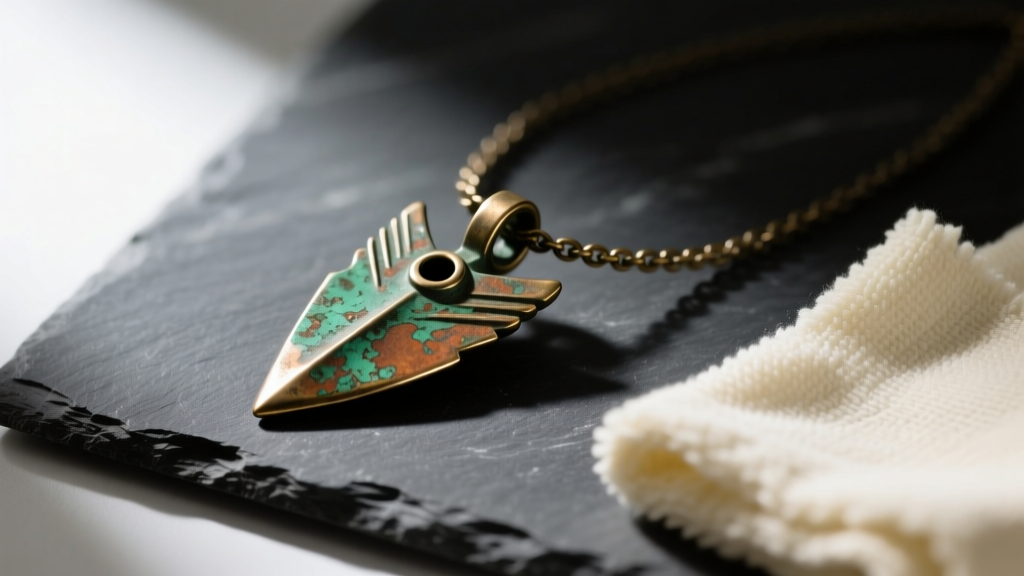
Copper alloys like brass and bronze are highly reactive to the lactic acid in human sweat. This reaction often results in a greenish residue on the skin and a dark, mottled patina on the metal. If you prefer a bright, polished arrowhead, use a specialized copper cleaner like Wenol or a homemade paste of equal parts flour, salt, and white vinegar. Apply with a soft-bristled toothbrush to reach the flintknapping ridges of the arrowhead design. If you prefer the rugged, antiqued look, simply wipe the pendant down with a damp cloth and a drop of mild dish soap to remove acidic sweat buildup without stripping the protective patina layer.
316L Stainless Steel and Titanium
These modern aerospace and medical-grade metals rely on a passive chromium oxide layer to prevent rust. They are virtually maintenance-free but can accumulate dead skin cells and soap scum in the deep crevices of the arrowhead's detailing. Clean these by soaking the pendant in a solution of warm water and a few drops of Dawn dish detergent, then agitate gently with an extra-soft baby toothbrush. For deep sanitation, a 40kHz ultrasonic jewelry cleaner is highly effective and will not damage the structural integrity of steel or titanium.
Cord, Chain, and Bail Maintenance
The pendant itself is only half the equation. The suspension system—whether a leather cord, waxed cotton, or a metal chain—requires equal attention to prevent catastrophic failure.
Leather and Waxed Cotton Cords
Human sweat is highly detrimental to the collagen fibers in leather. Over time, the alkaline tanning agents break down, causing the leather to become brittle and snap. According to leather conservation guidelines from Penn State Extension, leather should be cleaned with a dedicated saddle soap and conditioned every three to six months.
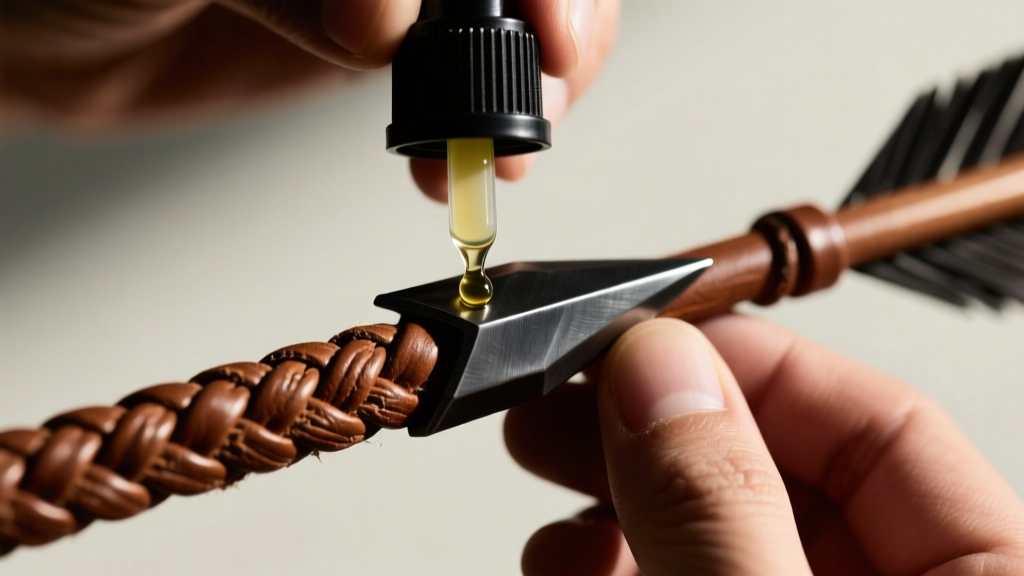
Apply a minimal amount of mink oil or neatsfoot oil to a lint-free cloth and rub it thoroughly into the leather cord, paying special attention to the area just behind the neck where sweat accumulation is highest. Allow the cord to absorb the oil for 12 hours before wearing. For waxed cotton or paracord cords, hand wash them in cold water with a mild wool detergent and re-wax cotton variants with a dedicated fabric wax bar to restore their water resistance.
The Bail: Your Necklace's Weakest Link
The bail is the metal loop that connects the arrowhead to the chain or cord. Friction from daily movement acts like a slow-motion saw, gradually thinning the metal at the top of the bail hole. Once a year, inspect the bail under a magnifying glass. If you notice deep grooving or the metal has thinned by more than 20%, take the necklace to a jeweler to have a heavy-duty sterling silver or steel jump ring soldered in place as a replacement.
The Ultimate Arrowhead Care Matrix
Use this quick-reference table to determine the optimal care routine based on your specific necklace configuration.
| Material Component | Recommended Cleaning Agent | Maintenance Frequency | Critical Warning |
|---|---|---|---|
| 925 Sterling Silver | Electrolytic bath (Aluminum/Baking Soda) | Monthly | Avoid chemical dips on oxidized grooves. |
| Brass / Bronze | Vinegar/Salt paste or Wenol | Bi-annually | Wash hands after polishing to avoid ingestion. |
| 316L Steel / Titanium | Warm water + Dawn detergent | Weekly | Do not use bleach-based cleaners. |
| Vegetable-Tanned Leather | Saddle soap + Neatsfoot oil | Every 3-6 months | Never submerge leather in water. |
| Waxed Cotton Cord | Mild wool detergent + Fabric wax | Quarterly | Do not machine wash or tumble dry. |
Expert Insight: Never use an ultrasonic cleaner on an arrowhead pendant that features inlaid turquoise, lapis lazuli, or any porous gemstone. The 40kHz high-frequency vibrations can fracture the stone's internal matrix or dissolve the epoxy resin used in the setting, resulting in irreversible stone loss.
Strategic Storage and Environmental Control
How you store your arrowhead necklace when it is not on your body is just as critical as how you clean it. Tossing a silver or bronze pendant into a humid bathroom drawer or leaving it on a sunlit nightstand accelerates chemical degradation.
Humidity and Airflow Management
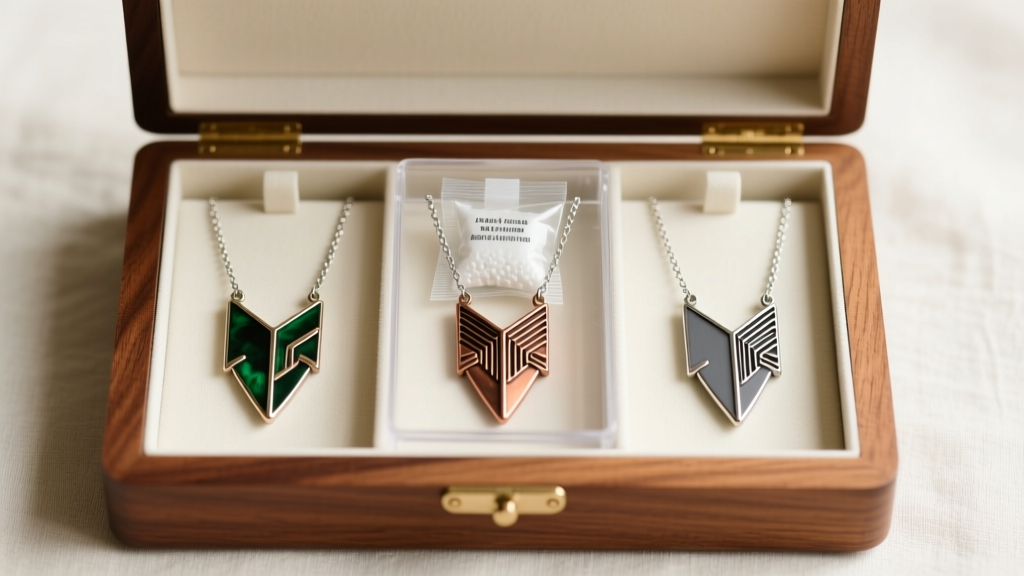
Silver sulfide formation requires moisture to catalyze the reaction with sulfur. Store your necklace in an airtight polyethylene ziplock bag along with a 3M anti-tarnish strip and a small silica gel desiccant packet. This creates a micro-climate with less than 40% relative humidity, effectively halting the tarnishing process. As noted by the Silver Institute, anti-tarnish strips absorb airborne sulfur compounds and should be replaced every six months to maintain efficacy.
Preventing Cord Memory and Kinks
Leather and waxed cotton cords develop a 'memory' over time, conforming to the shape they are stored in. If you leave your necklace crumpled in a tight jewelry box, the cord will develop permanent weak points at the kinks. Always store the necklace hanging from a dedicated jewelry hook, or lay it perfectly flat in a wide, felt-lined drawer. This preserves the structural integrity of the fibers and prevents the bail from bending under the weight of the pendant.
Final Thoughts on Pendant Longevity
An arrowhead necklace for men is designed to be a rugged, everyday companion, but ruggedness does not equate to invincibility. By understanding the specific metallurgical and organic materials that make up your piece, you can implement a targeted care routine that preserves both its aesthetic edge and its structural integrity. Whether you are maintaining a mirror-polished silver talisman or conditioning a sweat-stained leather cord, these precise, actionable steps will ensure your necklace remains a lifelong symbol of forward momentum.


