Metal Properties: Choosing a Safety Clasp for Necklace
Discover how metal properties impact your jewelry. Compare materials to choose the most durable safety clasp for necklace security and daily wear.

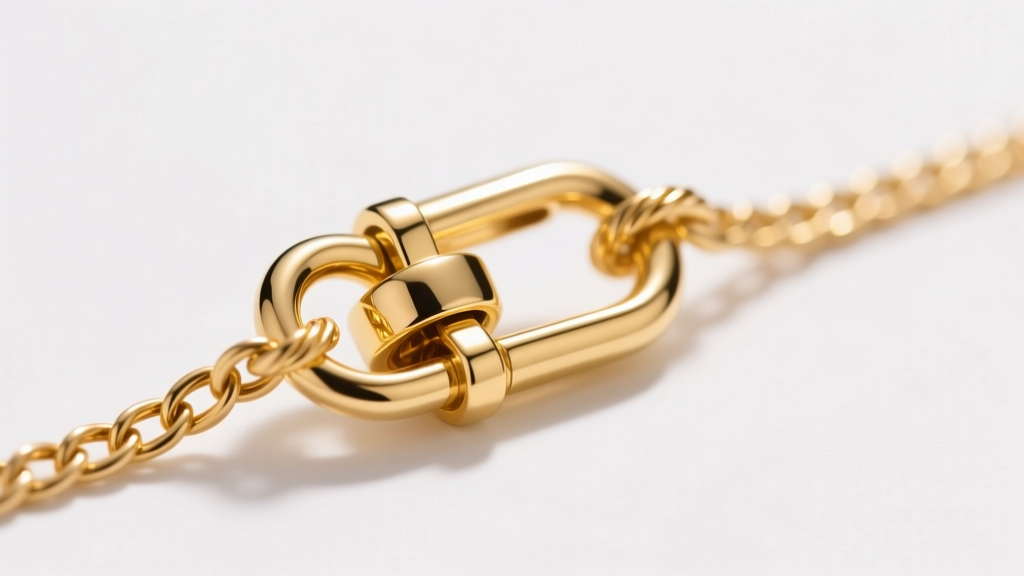
The Anatomy of Necklace Security: Why Material Matters
When securing a valuable pendant or an heirloom chain, the clasp is the single most critical point of failure. While consumers often focus on the aesthetic design of a safety clasp for necklace security, the underlying metallurgy dictates its actual lifespan and reliability. A clasp is a mechanical device subjected to repetitive shear stress, tensile loading, and environmental corrosion. If the metal alloy lacks the appropriate yield strength or fatigue resistance, the mechanism will inevitably fail, regardless of how robust it appears to the naked eye.
In jewelry manufacturing, the term "safety clasp" can refer to a primary secure closure (like a locking lobster or a fold-over clasp) or a secondary backup mechanism (like a figure-8 safety wire on a box clasp). In both cases, the material properties—specifically tensile strength, malleability, and work-hardening characteristics—determine whether the clasp will protect your jewelry or betray it. According to metallurgical data from Ganoksin, the leading online resource for jewelers, metal fatigue in spring-based mechanisms is the number one cause of accidental necklace loss.
Common Safety Clasp Mechanisms and Their Material Needs
Before diving into specific alloys, we must understand how different mechanisms rely on material properties to function safely.
- Lobster Clasps: Rely on an internal spring and a pivoting lever. The lever must resist bending under lateral load, while the spring must maintain tension over thousands of actuations.
- Spring Rings: Consist of a hollow circular tube with a wire core acting as a spring. The metal must possess high elastic recovery to snap back into place without permanently deforming.
- Box Clasps with Safety Catches: Utilize a folded metal tab that clicks into a boxed housing. The tab relies on the metal's "memory" and spring-temper to maintain upward pressure against the housing roof. Secondary figure-8 safety wires rely on high tensile strength to prevent the clasp from opening if the primary tab fails.
- Fold-Over Clasps: Use friction and a hinged latch. The hinge pin requires extreme shear strength, while the latch requires a precise, rigid alloy to maintain friction over time.
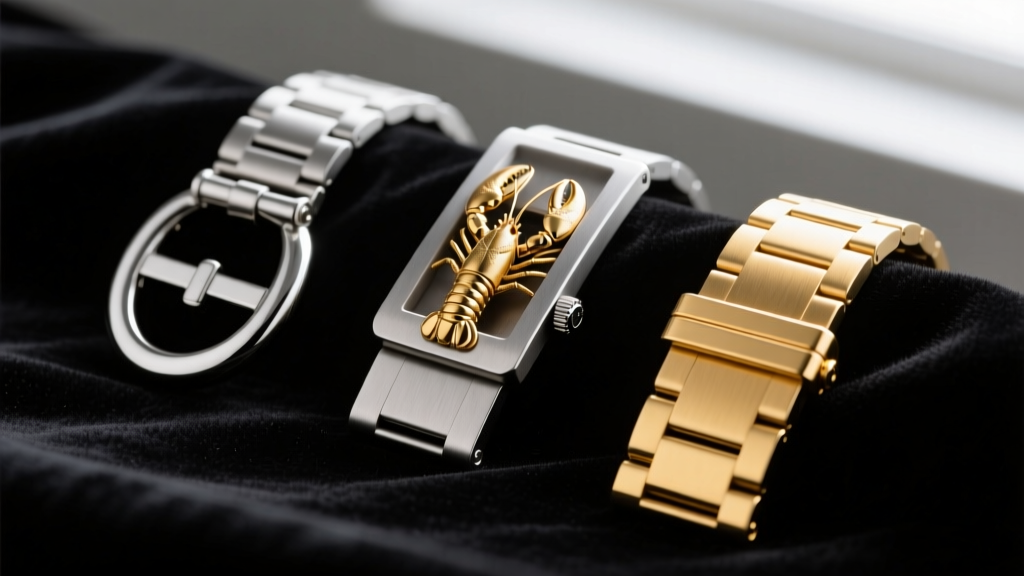
Material Comparison: Metals Used in Safety Clasps
The performance of your safety clasp for necklace security is entirely dependent on the alloy used. Here is a deep dive into the most common clasp materials and their mechanical properties.
Sterling Silver (925)
Sterling silver is an alloy of 92.5% silver and 7.5% copper. While beautiful, it has a relatively low yield strength (approximately 75 MPa in its annealed state). When used in spring rings or the internal mechanisms of lobster clasps, 925 silver is highly susceptible to metal fatigue and creep. Over time, the copper alloy work-hardens and becomes brittle, or the spring loses its tension entirely. For this reason, high-end silver jewelry often uses a stainless steel internal spring housed inside a silver shell to ensure the safety clasp for necklace longevity.
Stainless Steel (316L Surgical Grade)
316L stainless steel is the undisputed champion of mechanical clasp durability. With a yield strength exceeding 290 MPa and exceptional resistance to work-hardening fatigue, 316L is the ideal material for the internal springs and levers of lobster clasps. It does not tarnish, resists sweat-induced corrosion, and maintains its spring-temper indefinitely. If you are buying a heavy chain, ensuring the lobster clasp is crafted from 316L steel (even if plated with gold or silver) is a non-negotiable requirement for security.
Gold Alloys (14k vs. 18k vs. 22k)
Pure gold (24k) is far too soft for any mechanical clasp. According to the Gemological Institute of America (GIA), gold must be alloyed with metals like copper, silver, and zinc to increase its hardness.
- 14k Gold (58.5% pure): Offers an excellent balance of malleability and tensile strength. It is rigid enough to hold the shape of a fold-over latch or a box clasp tongue without bending.
- 18k Gold (75% pure): Softer and more prone to scratching and deformation. An 18k box clasp tongue can easily bend if snagged, causing the safety mechanism to disengage.
- The Internal Spring Problem: Neither 14k nor 18k gold possesses the elastic recovery required for a reliable microscopic spring. Therefore, almost all high-quality gold spring rings and lobster clasps utilize a steel or titanium internal spring, with only the exterior shell made of gold.
Titanium (Grade 5 / Ti-6Al-4V)
Grade 5 titanium is an aerospace-grade alloy with a staggering yield strength of roughly 880 MPa. While rarely used in traditional fine jewelry due to its extreme hardness and difficulty to solder, titanium is increasingly popular in modern, industrial, or tactical jewelry. A titanium safety clasp for necklace applications is virtually indestructible under normal human-wear conditions, offering unparalleled security for heavy, oversized pendants.
Data Table: Tensile Strength and Failure Modes by Metal
Understanding the mechanical limits of clasp materials helps in diagnosing why jewelry fails. The following table, compiled using standard jewelry metallurgy benchmarks from suppliers like Rio Grande, illustrates these differences.
| Material Alloy | Approx. Yield Strength | Primary Failure Mode | Best Clasp Application |
|---|---|---|---|
| Sterling Silver (925) | 75 - 150 MPa | Spring fatigue, lever bending | Lightweight chains, magnetic clasps |
| 316L Stainless Steel | 290 - 310 MPa | Solder joint failure (not metal failure) | Lobster springs, box clasp tongues |
| 14k Yellow Gold | 200 - 250 MPa | Hinge wear, friction loss in fold-overs | Box clasps, fold-over latches |
| 18k Yellow Gold | 120 - 160 MPa | Tongue bending, latch deformation | Aesthetic shells, non-spring parts |
| Grade 5 Titanium | 880+ MPa | Jump ring deformation (clasp survives) | Heavy tactical chains, primary lobster bodies |
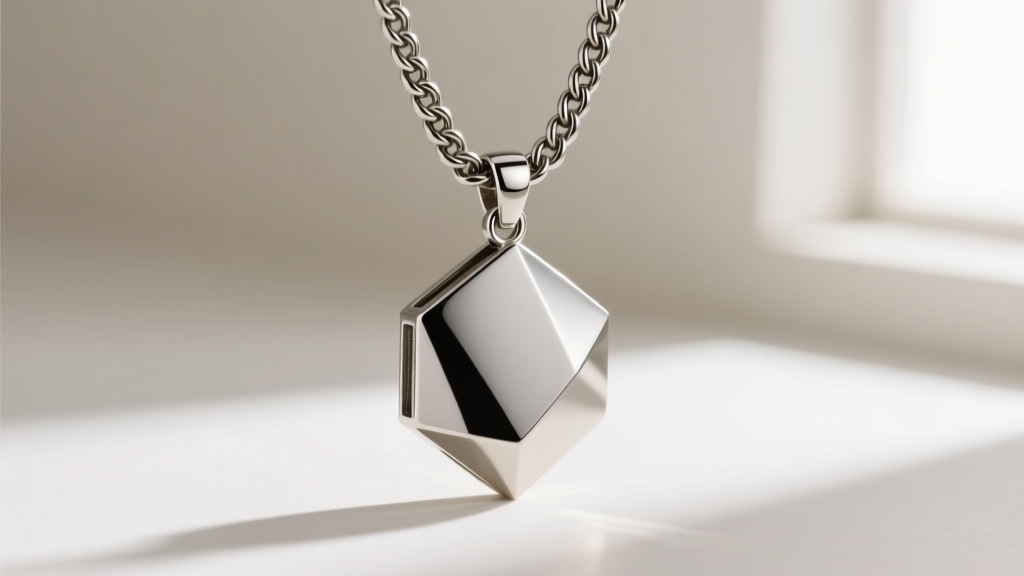
Matching the Clasp Material to Chain Weight and Pendant Load
Selecting the correct safety clasp for necklace configurations requires matching the clasp's material strength to the physical load it will bear. Use this actionable framework to ensure your jewelry remains secure.
Lightweight Chains (Under 10 Grams)
For delicate cable chains, serpentine chains, and lightweight pendants, the tensile load is minimal. Sterling silver or 18k gold spring rings are perfectly adequate here. The primary risk is not metal deformation, but rather losing the necklace due to a snag. A secondary safety chain (a thin wire linking the two sides of the clasp) is highly recommended, regardless of the primary clasp material.
Medium Weight Chains (10 to 30 Grams)
Medium chains, such as rope, curb, or Figaro chains, carry enough momentum to stress a weak clasp if swung or caught. You must use a lobster clasp with a 316L stainless steel internal spring. If the exterior is gold or silver, ensure the lever mechanism is thick enough to resist lateral bending. Avoid standard spring rings in this weight class, as the hollow tube construction can crush under sudden impact.
Heavy Chains and Pendants (Over 30 Grams)
Heavy statement pieces demand maximum security. The ideal safety clasp for necklace setups in this category is a box clasp with a dual figure-8 safety catch, machined from 14k gold or stainless steel. The box mechanism distributes the tensile load across a wide surface area, while the figure-8 safety wires (which must be made of high-carat spring gold or steel) act as a redundant backup. Alternatively, a heavy-duty, solid-body 316L stainless steel locking lobster clasp provides exceptional shear resistance.
Maintenance and Preventing Clasp Fatigue
Even the strongest safety clasp for necklace security will fail if subjected to environmental degradation or improper maintenance. To maximize the lifespan of your clasp mechanisms, follow these expert troubleshooting and maintenance protocols:
- Avoid Chemical Exposure: Chlorine in swimming pools and hot tubs is highly reactive with the copper and zinc alloys found in 14k gold and sterling silver. This causes "stress corrosion cracking," which can cause a clasp's spring to snap without warning. Always remove jewelry before swimming.
- Check the Solder Joints: The most common point of failure is not the clasp itself, but the jump ring soldered to it. Inspect the solder joint where the clasp meets the chain monthly. If you see a dark hairline crack, take it to a jeweler for laser welding immediately.
- Lubricate Stiff Mechanisms: If a gold or silver fold-over clasp becomes stiff, do not force it. A microscopic drop of synthetic watch oil applied to the hinge pin will restore smooth operation and prevent the metal from galling and seizing.
- Test the Spring Tension: Open and close your lobster or spring ring clasp. It should snap shut with an audible, crisp "click." If it closes sluggishly or requires you to push the lever manually, the internal spring has suffered from metal fatigue and the clasp must be replaced.
Jeweler's Pro-Tip: Never use a sterling silver lobster clasp on a heavy gold chain. The galvanic reaction between dissimilar metals in the presence of skin moisture can accelerate corrosion at the connection point, and the softer silver lever will eventually wear down against the harder gold jump ring, leading to accidental disengagement.
Final Verdict on Safety Clasp Selection
Ultimately, the reliability of your jewelry comes down to respecting the physics of metallurgy. A beautiful design means nothing if the metal cannot withstand the mechanical realities of daily wear. When shopping for a secure closure, look past the karat stamp and inquire about the internal mechanism. Prioritize 316L stainless steel for springs and levers, 14k gold for rigid box housings, and always insist on a secondary safety catch for heavy pendants. By aligning the material properties with the physical demands of your specific necklace, you ensure that your cherished pieces remain safely around your neck for a lifetime.


