Black Cord Necklace Pendant Guide: Cords, Knots & Bails
Master the black cord necklace pendant setup. Compare cord materials, tensile strength, bail sizing, and advanced knotting techniques for lasting wear.

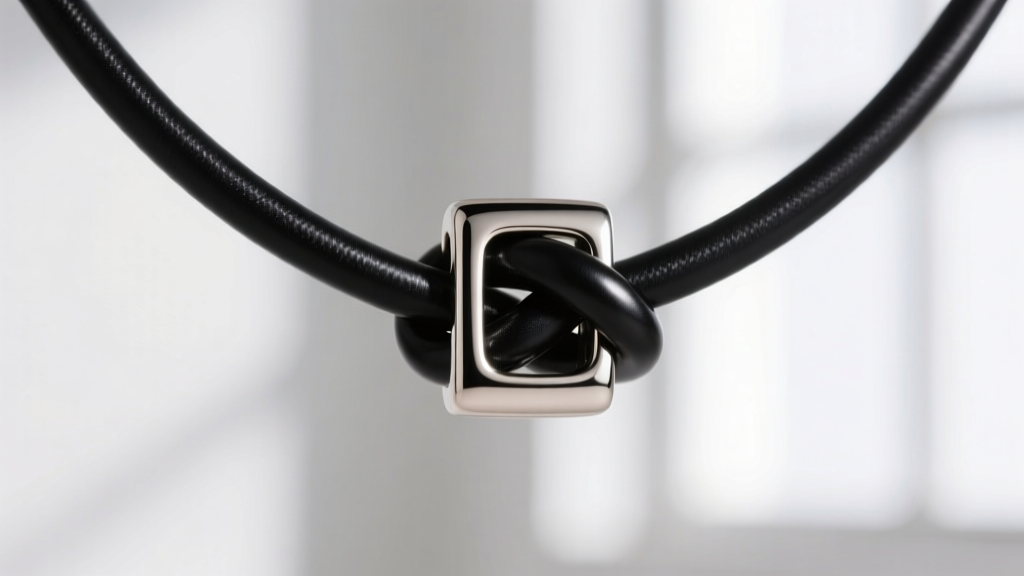
Engineering the Perfect Black Cord Necklace Pendant Setup
When designing or repairing a minimalist jewelry piece, the structural integrity of a black cord necklace pendant setup is often overlooked in favor of pure aesthetics. However, as any experienced bench jeweler will tell you, the interaction between the cord material, the pendant bail, and the termination knot dictates the lifespan of the piece. A failure in any one of these three nodes results in a lost pendant and a broken chain of trust with the wearer. In this deep dive, we move beyond basic styling advice and examine the material science, tensile physics, and mechanical engineering required to build a flawless, high-durability corded necklace.
The Core Variables of Corded Jewelry
Unlike metal chains, which fail primarily at the soldered jump rings or clasp mechanisms, corded necklaces fail via environmental degradation, friction abrasion, and knot slippage. To mitigate these risks, we must evaluate the cord's tensile yield point, its coefficient of friction against the bail hardware, and its resistance to human sebum and environmental UV exposure. According to technical guidelines from Rio Grande, selecting the correct stringing material is the single most critical decision in the fabrication of non-metallic necklaces.
Material Science: Choosing the Right Black Cord
Not all black cords are created equal. The market is flooded with generic options, but professional setups require precise material specifications. Below is an analysis of the top five cord materials used in high-end pendant suspensions.
1. Natural Silk (Griffin 100% Natural)
Silk offers an unparalleled, luxurious drape that synthetic fibers struggle to replicate. Sizing typically ranges from #4 (0.5mm) to #10 (1.5mm). However, silk is a protein-based fiber that is highly susceptible to acidic environments. Human sweat, which typically has a pH between 4.5 and 7.0, will degrade the peptide bonds in silk over time, leading to sudden tensile failure. Silk is strictly recommended for lightweight pendants (under 15 grams) and should be replaced annually if worn against the skin daily.
2. Leather (Kangaroo vs. Calfskin)
When a rugged, organic aesthetic is required, leather is the default choice. However, the species matters immensely. Calfskin is soft but prone to stretching and moisture rot. Kangaroo leather, by contrast, possesses a highly dense, tightly woven collagen fiber matrix that yields up to 10 times the tensile strength of calfskin at the same thickness. A 1.5mm round kangaroo cord can support over 80 lbs of static weight. The primary failure mode for leather is the drying out of natural oils, leading to micro-cracking at the knot stress points.
3. Synthetic Micro-Nylon (C-Lon / Superlon)
Braided micro-nylon (typically 0.9mm) is the workhorse of modern corded jewelry. It is colorfast, UV resistant, and entirely impervious to sweat and water. Nylon has a slight mechanical stretch, which acts as a natural shock absorber if the pendant is snagged. Its melting point is around 256°C (491°F), meaning it can be safely sealed with a thermal thread zapper without burning.
4. PTFE (Teflon) Cord
For heavy, sharp-edged pendants (such as raw quartz or unpolished meteorite), PTFE is the ultimate defensive cord. It is chemically inert, completely waterproof, and boasts a remarkably low coefficient of friction. This low friction prevents the cord from fraying when rubbing against rough metal or stone bails. A 0.8mm PTFE cord offers exceptional cut resistance compared to organic fibers.
5. Aramid / Kevlar
Kevlar cords (usually 1.0mm to 1.5mm) offer extreme sheer strength and cut resistance, capable of holding hundreds of pounds. However, aramid fibers are highly sensitive to UV degradation and repeated bending fatigue. They are best reserved for heavy, static pendants that are not subjected to constant flexing or prolonged direct sunlight.
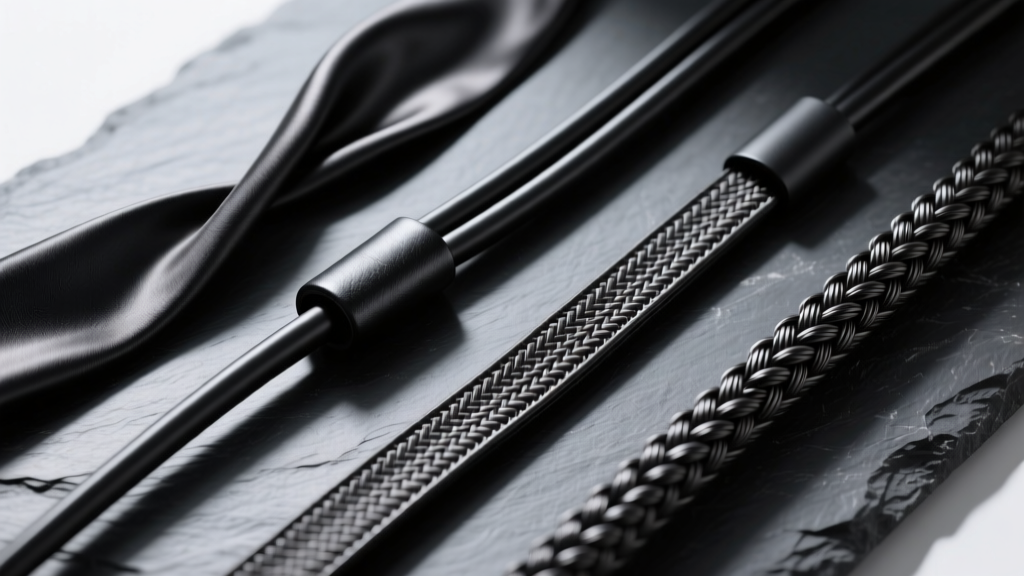
Tensile Strength & Failure Mode Matrix
| Material | Standard Gauge | Avg. Tensile Strength | Primary Failure Mode | Ideal Pendant Weight |
|---|---|---|---|---|
| Natural Silk | 0.8mm (#8) | 3 - 5 lbs | Sweat/pH degradation | < 15g |
| Kangaroo Leather | 1.5mm Round | 80+ lbs | Moisture rot, oil drying | 20g - 80g |
| Micro-Nylon | 0.9mm Braided | 12 - 15 lbs | Thermal melting, friction | 15g - 50g |
| PTFE (Teflon) | 0.8mm Solid | 18 - 22 lbs | Knot slippage (low friction) | 30g - 100g |
| Aramid (Kevlar) | 1.5mm Braided | 150+ lbs | UV degradation, bend fatigue | 50g - 200g+ |
The Physics of Bail Compatibility
The most common point of failure in a black cord necklace pendant assembly is the interface between the cord and the bail loop. Jewelers frequently select a bail based on its outer aesthetics rather than its Inner Diameter (ID) relative to the cord's Outer Diameter (OD).
Calculating Clearance for Sliding Knots
If your design utilizes an adjustable sliding macrame knot, the cord must pass through the pendant bail multiple times. Specifically, two strands must pass through to form the loop, and the knot itself must be able to pass through if the wearer adjusts it to the shortest length. Therefore, the bail ID must be at least 2.5 to 3 times the diameter of the cord. For example, if you are using a 1.0mm nylon cord, the bail ID must be a minimum of 2.5mm to 3.0mm to prevent severe friction abrasion and binding.
Fixed Bail Considerations
For fixed terminations (where the cord is knotted or crimped directly below the bail), the clearance requirement is less stringent. However, you must account for the 'choke point.' If the bail ID is too tight against the cord, the pendant will not lay flat against the sternum, causing the bail to act as a lever that places sheer stress on the cord fibers. The Gemological Institute of America (GIA) frequently notes that improper bail sizing leads to premature wear on both the stringing material and the gemstone setting itself.
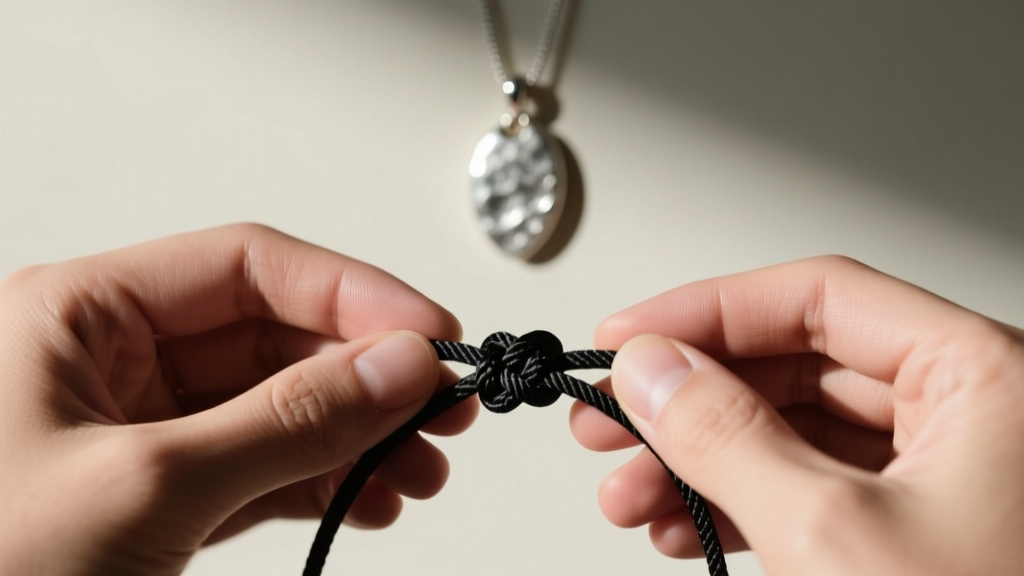
Advanced Termination: Knotting and Adhesives
Securing the ends of your cord requires an understanding of both mechanical friction and chemical bonding. The wrong adhesive will destroy the cord; the wrong knot will slip under dynamic loading.
The Sliding Square Knot (Macrame)
For adjustable setups, the sliding square knot (often referenced as Knot #1439 in the Ashley Book of Knots) is the industry standard. It relies on the friction of the cord against itself. Crucial Tip: When using low-friction materials like PTFE or heavily waxed leather, a standard square knot will eventually slip. You must upgrade to a double or triple wrap friction knot, or apply a micro-drop of flexible adhesive to the inner core of the knot.
Adhesive Selection: Cyanoacrylate vs. Flexible Cements
Never use standard cyanoacrylate (Super Glue) on corded jewelry. Cyanoacrylate cures into a hard, brittle acrylic plastic. When the cord flexes during normal wear, the brittle adhesive shatters, creating microscopic sharp edges inside the knot that cut the cord fibers from the inside out. Instead, use a flexible, polyurethane-based jewelry cement like G-S Hypo Cement. It dries clear, remains slightly pliable, and moves with the cord's natural stretch and flex.
Bench Jeweler Pro-Tip: When sealing the ends of braided nylon or silk to prevent fraying before threading a bail, use a thermal thread zapper rather than a butane lighter. A lighter leaves a carbon soot residue that can stain porous gemstones (like turquoise or opal), while a thermal zapper provides a clean, precise, and soot-free micro-melt.
Environmental Degradation & Maintenance Protocols
To ensure the longevity of your black cord necklace pendant, you must implement a care routine tailored to the specific material in use. Synthetic cords like nylon and PTFE can be washed with mild dish soap and warm water to remove sebum buildup. However, natural fibers require a different approach. Silk should never be submerged; instead, wipe it gently with a slightly damp, lint-free cloth. Leather cords require periodic conditioning with a specialized leather balm (such as mink oil or a beeswax-based conditioner) to replenish the lipid barrier and prevent the collagen matrix from drying out and snapping under tension. By matching the material science to the wearer's lifestyle, you elevate a simple corded necklace from a fragile accessory to a durable, lifelong heirloom.


