The Goose Necklace: Metallurgy, Casting, and Chain Pairing
Discover the technical details behind the perfect goose necklace. We analyze lost-wax casting, metal grades, and chain gauges for waterfowl pendants.

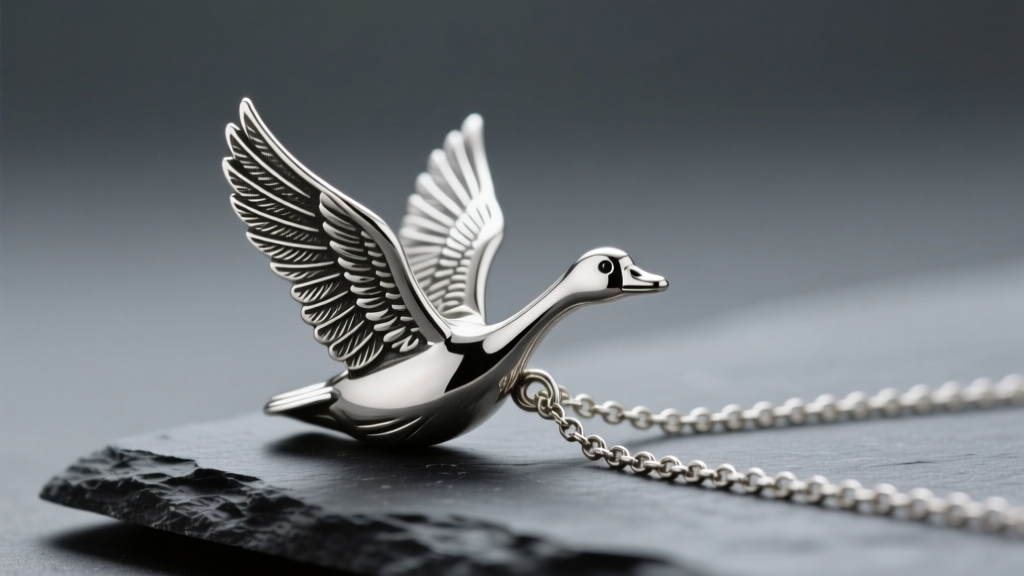
The goose necklace occupies a highly specialized niche within wildlife and nature-inspired fine jewelry. Unlike compact animal motifs or simple geometric pendants, the waterfowl silhouette—particularly the Canada goose or snow goose in flight—presents distinct structural and metallurgical challenges. The elongated neck and extended wingspan create high-stress leverage points that demand precise engineering. In this 2026 technical deep dive, we examine the CAD tolerances, casting methodologies, and chain mechanics required to produce a durable, heirloom-quality goose pendant that withstands daily wear without fracturing.
The Structural Vulnerability of Waterfowl Silhouettes
When designing a goose necklace, the primary point of mechanical failure is almost always the neck. In a realistic flying silhouette, the neck is extended forward, creating a cantilevered mass. If the pendant is dropped or caught on clothing, the kinetic energy transfers directly to the base of the neck. To mitigate this, expert jewelers enforce a minimum cross-sectional thickness of 1.4mm at the narrowest point of the neck for sterling silver, and 1.2mm for 14k gold alloys. Furthermore, the transition zone where the neck meets the body must feature a subtle fillet (a rounded internal corner) rather than a sharp 90-degree angle, which would act as a stress concentrator and invite micro-fractures during the casting cooling phase.
CAD Modeling and Lost-Wax Casting Tolerances
Modern goose pendants are rarely carved by hand from wax; they are modeled using advanced CAD software like MatrixGold or Rhino 3D. This allows for precise manipulation of the feather barbs, which are typically recessed by 0.3mm to 0.5mm to allow for later oxidation. Once the master model is 3D printed in castable photopolymer resin, it undergoes the lost-wax investment casting process. According to casting guidelines from Rio Grande, jewelers must account for metal shrinkage during the cooling phase. Sterling silver shrinks by approximately 1.5% to 1.8%, meaning the CAD model must be scaled up accordingly to ensure the final wingspan meets the intended 35mm to 45mm dimensions.
Metallurgical Selection: Hardness and Tensile Strength
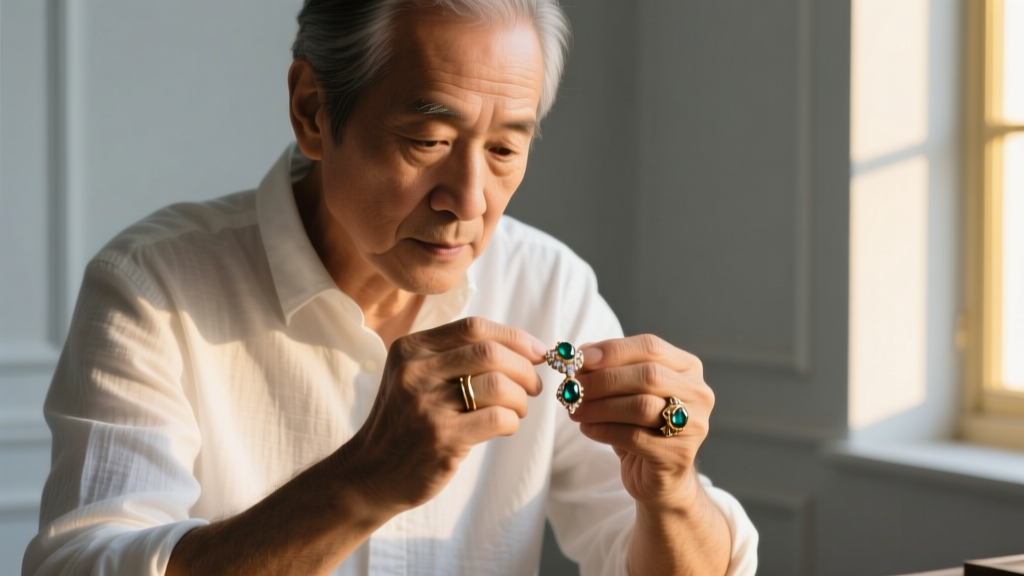
Choosing the right alloy for a goose necklace is critical. The extended wings are prone to bending if the metal is too soft. Below is a technical comparison of the most common alloys used for wildlife pendants in 2026, focusing on their Vickers Hardness (HV) and yield strength.
| Alloy | Vickers Hardness (HV) | Yield Strength (MPa) | Best Use Case | Approx. Cost per Gram |
|---|---|---|---|---|
| 925 Sterling Silver | 65 HV | 140 MPa | Standard everyday wear | $0.95 |
| Argentium Silver | 130 HV (Hardened) | 200 MPa | Tarnish-resistant, high-durability | $1.35 |
| 14k Yellow Gold | 135 HV | 250 MPa | Heirloom luxury, rigid wingspans | $48.00 |
| Jewelers Bronze | 150 HV | 300 MPa | Budget-friendly, rustic patinas | $0.18 |
For collectors who hunt or spend significant time outdoors, Argentium silver is highly recommended. Its germanium content provides a protective oxide layer that resists the sulfur-heavy environments of marshlands and wetlands, keeping the goose necklace bright without constant polishing.
Bail Engineering for Horizontal Pendants
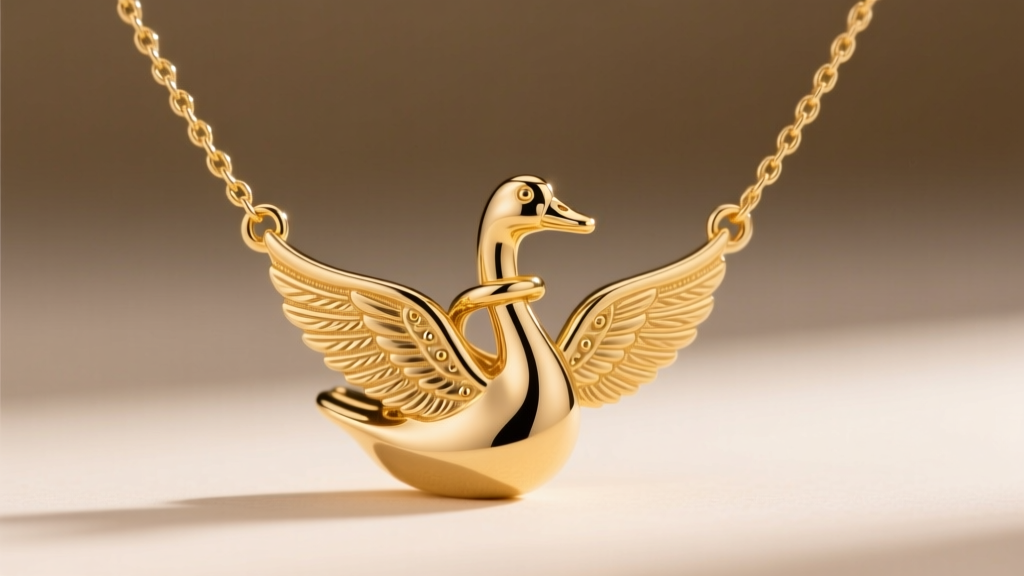
A flying goose pendant is horizontally oriented, which creates a unique draping problem. A standard single bail soldered to the top center of the back will cause the pendant to constantly flip and slide along the chain, failing to lay flat against the sternum. To solve this, master jewelers utilize a 'Double Tube Bail' or a 'Saddle Bail'. By soldering a 1.5mm sterling silver tube horizontally across the dorsal ridge of the goose's back—spanning at least 12mm in width—the center of gravity is stabilized. This engineering feat, often highlighted in technical workshops by Halstead, ensures the waterfowl silhouette remains perfectly parallel to the ground when worn.
Chain Gauge and Drape Mechanics
The chain you pair with a goose necklace must support the pendant's weight (typically 8 to 14 grams) without overpowering the delicate feather details. Snake chains are strictly discouraged; their tight interlocking links kink easily and lack the flexibility required to accommodate the wide, horizontal bail of a goose pendant. Instead, opt for a 1.2mm to 1.5mm Wheat chain or a Box chain. Wheat chains offer a braided, organic texture that complements the nature-inspired motif, while providing exceptional tensile strength. A 1.5mm Box chain offers a modern, geometric contrast that works exceptionally well with highly polished, minimalist goose silhouettes.
Chemical Patination for Feather Definition
To achieve the striking contrast seen in high-end wildlife jewelry, the recessed feather barbs must be oxidized while the raised surfaces remain polished. This is achieved using Liver of Sulfur (potassium sulfide). The pendant is submerged in a warm, dilute solution (roughly 1 gram of Liver of Sulfur per 500ml of water) for exactly 45 to 60 seconds. This turns the entire piece a deep charcoal black. The jeweler then uses a fiberglass scratch brush or a polishing wheel with rouge compound to remove the oxidation from the high points—the wingtips, the beak, and the outer contours. This leaves the deep recesses dark, creating a 3D topographical map of the goose's plumage that catches the light dynamically.
Long-Term Maintenance and Ultrasonic Risks
Caring for a goose necklace requires an understanding of its casting porosity. While modern vacuum-assisted casting minimizes air bubbles, micro-porosity can still exist in the thickest sections of the bird's body. Submerging the pendant in an ultrasonic cleaner for extended periods can force cleaning solvents into these microscopic pores, leading to internal corrosion or 'bleeding' of chemicals onto the skin later. Instead, clean your goose necklace using a mild dish soap, warm water, and a soft-bristled toothbrush, gently working the bristles along the grain of the oxidized feather details to remove sebum and environmental dust without stripping the intentional patina.


