What Type of Necklace to Wear With Different Necklines: Styling Fixes
Discover what type of necklace to wear with different necklines. Solve tangling, hiding, and clashing issues with exact lengths and chain styles.

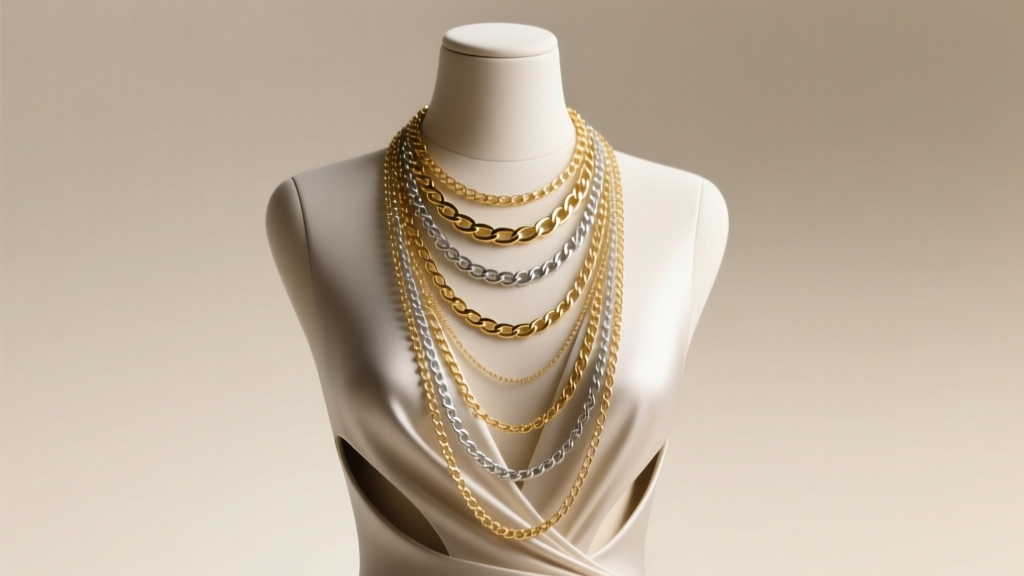
The Core Problem: Why Necklaces and Necklines Clash
Few styling errors are as frustrating as a beautiful pendant disappearing into a ruffled collar or a delicate chain constantly tangling in the hem of a V-neck. The friction between jewelry and apparel isn't just a visual issue; it is a matter of physical geometry and material interaction. When asking what type of necklace to wear with different necklines, most guides offer vague advice like 'match the shape.' But as a jewelry stylist, I look at the exact negative space, the fabric weight, and the chain weave.
In 2026, the shift towards modular, convertible jewelry means we have more tools than ever to fix these mismatches. Whether you are dealing with a choking turtleneck or an asymmetrical hemline, troubleshooting the neckline-to-necklace relationship requires precise measurements and an understanding of hardware. Below, we break down the exact chain lengths, pendant weights, and metal weaves required to solve the most common styling disasters.
Troubleshooting the V-Neck: Avoiding the 'Float' and Tangles
The V-neck is notoriously difficult because it creates a deep, narrow channel of negative space. The two most common failures here are the 'float' (where the pendant sits two inches above the fabric's apex, looking disconnected) and the 'tangle' (where the chain catches on the collarbone seam).
The 18-Inch Princess Rule
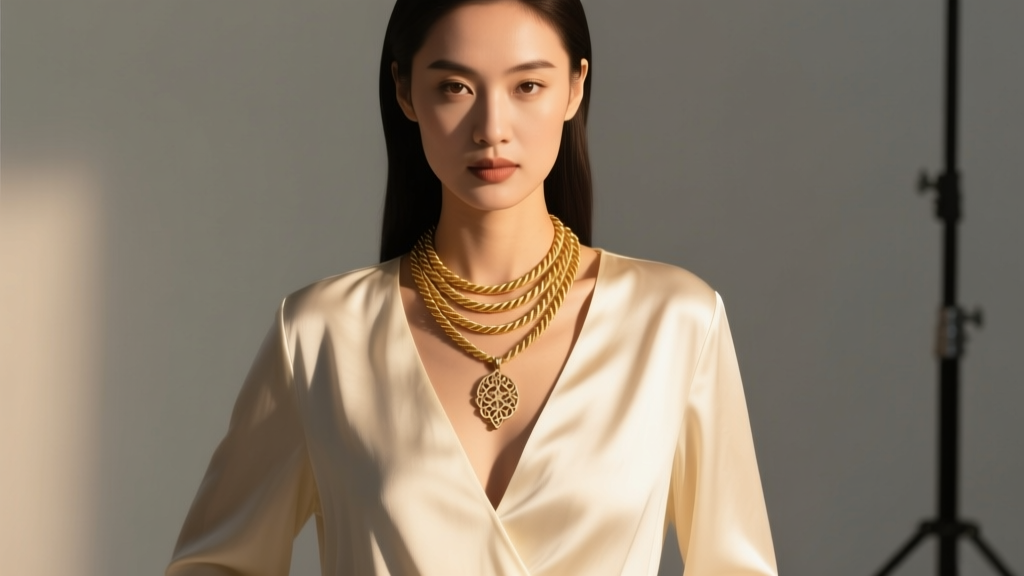
A standard women's V-neck drops approximately 4.5 to 5.5 inches below the clavicle. On an average 14-inch neck circumference, a 16-inch choker will sit awkwardly above the V, while a 20-inch matinee will plunge into the bodice, rubbing against the skin and getting lost. The mathematical sweet spot is the 18-inch princess length. This places the pendant exactly at or slightly above the fabric's apex, framing the face without competing with the garment's structure.
Chain Weave Selection for V-Necks
If you are layering, avoid mixing cable chains with box chains over silk or satin V-necks. The sharp edges of a box chain will catch on delicate hems. According to The Spruce Crafts Chain Directory, rope chains and wheat chains offer a smooth, frictionless glide that mimics the drape of a V-neckline. If your pendant keeps flipping upside down inside the V, the bail (the loop connecting the pendant to the chain) is likely too wide. Swap it for a tapered V-bail or a hidden bail to lock the pendant in place.
High Collars and Turtlenecks: Overcoming the Choke and Snag
Winter knits and high collars introduce a massive variable: fabric friction. The most frequent complaint I troubleshoot is the 'velcro effect,' where a necklace snags and pulls the knitwear, or the pendant constantly flips upside down against the chest.
Banning the Snake Chain
Never wear a snake chain over cashmere, wool, or ribbed cotton. Snake chains are constructed from tightly coiled, interlocking wire rings that act exactly like a bristle brush against knitted fibers. Instead, opt for a box chain or a smooth herringbone chain. These weaves lay flat and slide over textiles without catching.
The Gram-Weight Requirement
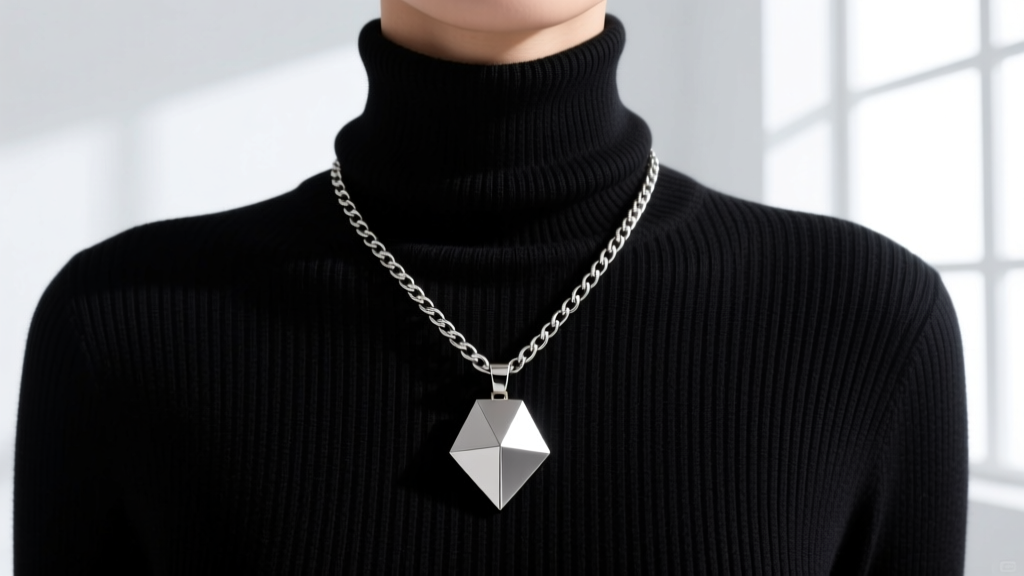
Lightweight pendants (under 5 grams) will not lay flat against the convex surface of a thick turtleneck. They will flip, twist, and slide to the side. To troubleshoot this, you must increase the pendant's gram weight. A pendant weighing 12 to 18 grams provides enough gravitational pull to remain centered on a 24-inch opera-length chain. As noted by the Gemological Institute of America (GIA), heavier metals like solid 14k gold or platinum naturally provide this necessary weight without requiring bulky, unattractive designs.
The Boat Neck and Off-Shoulder Dilemma: Breaking the Horizontal
Boat necks (Bateau necklines) and off-shoulder tops create a stark, continuous horizontal line across the collarbones. Wearing a standard horizontal collar necklace or a short choker with these tops creates visual stagnation and makes the neck look wider.
The Fix: You must introduce a vertical axis. A lariat necklace or a Y-chain drops a single line of metal down the sternum, visually elongating the torso and breaking the harsh horizontal boundary of the boat neck. If you prefer a traditional pendant, use a 20-inch chain with an elongated, vertical drop pendant (like a marquise or pear-shaped gemstone) to draw the eye downward.
Quick-Fix Reference Chart: Neckline to Necklace Mapping
Use this troubleshooting matrix to instantly diagnose and fix your daily styling mismatches. Keep in mind that these lengths assume an average 14-inch neck; add 2 inches for larger neck circumferences.
| Neckline Type | Common Failure Mode | Ideal Chain Length | Best Chain Weave & Pendant Style |
|---|---|---|---|
| V-Neck | Pendant floats above apex or tangles | 18 inches (Princess) | Rope chain with a V-shaped bail |
| Turtleneck | Snagging, pendant flipping upside down | 24 to 30 inches (Opera/Rope) | Box chain, heavy pendant (12g+) |
| Boat Neck | Visual widening, horizontal clash | 22+ inches or Lariat drop | Y-chain or vertical marquise drop |
| Crew Neck | Chain hidden under tight collar | 14 to 16 inches (Collar/Choker) | Wide Cuban link or statement collar |
| Scoop Neck | Necklace mimics neckline too closely | 16 to 18 inches (Layered) | Delicate cable chains, curved pendants |
Hardware and Material Troubleshooting
Sometimes the chain length is correct, but the hardware fails the outfit. Here is how to troubleshoot the physical components of your jewelry.
Clasp Upgrades for High Collars
Standard 8mm lobster clasps are nearly impossible to fasten blindly against the back of a high collar or turtleneck. If you are constantly struggling, take your necklace to a jeweler to have a 12mm magnetic neodymium clasp soldered on. This allows you to secure the chain at the front of your neck before rotating it to the back, completely eliminating the struggle.
Using Extenders to Fix the 'Plunge'
If your favorite 16-inch choker is sitting too high on a scoop neck, do not buy a new chain. Purchase a 2-inch to 4-inch chain extender with a secure lobster clasp on one end and a jump ring on the other. This modular approach, heavily favored by stylists in Vogue's layering guides, allows you to adapt a single piece of jewelry to three different necklines instantly.
'The secret to flawless jewelry styling isn't just about the gold or the gems; it is about understanding the architecture of the garment. A necklace should never fight the fabric; it should complete the geometry of the negative space.' — Senior Editorial Stylist, Jewel Style Radar
Preventing the 'Green Skin' Friction Burn
When necklaces sit directly against the skin in tight necklines (like crew necks or halter tops), sweat and friction can cause base metals to oxidize rapidly, leaving green or black marks on the collarbone. To troubleshoot this, ensure any chain worn flush against the skin is solid 316L surgical stainless steel, titanium, or at least 14k solid gold. Avoid gold-plated brass for tight necklines, as the friction will wear through the microscopic plating layer in a matter of weeks, exposing the reactive copper beneath.
Final Adjustments: The 2026 Styling Mindset
Understanding what type of necklace to wear with different necklines is ultimately an exercise in problem-solving. By paying attention to exact chain lengths, selecting the correct weave for your fabric type, and upgrading your hardware for ease of wear, you can eliminate the daily frustrations of tangled, hidden, or clashing jewelry. Audit your jewelry box today: measure your chains, weigh your pendants, and swap out those snag-prone snake chains for smooth, elegant box weaves. Your wardrobe will look instantly more cohesive, and your jewelry will finally perform exactly as it was designed to.


