Necklace Holders DIY: A Beginner's Guide to Tangle-Free Storage
Learn how to build custom necklace holders DIY style. Discover the best woods, anti-tarnish fabrics, and spacing rules to keep chains tangle-free.

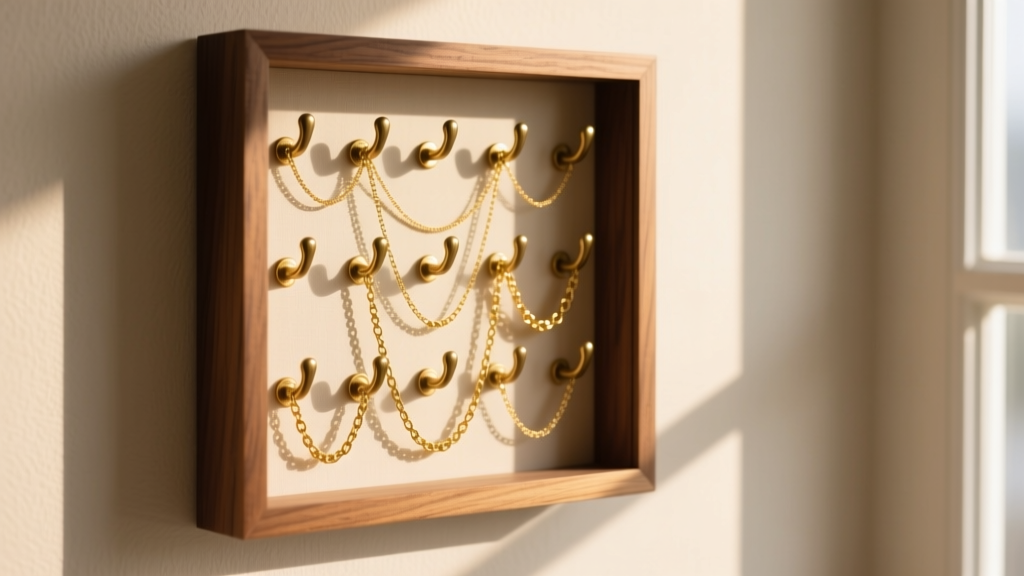
Commercial jewelry organizers often fail the very pieces they are meant to protect. Mass-produced necklace holders are frequently constructed from medium-density fiberboard (MDF) and lined with synthetic felts. These materials trap moisture and off-gas volatile organic compounds (VOCs), accelerating the tarnishing of sterling silver and degrading delicate gold vermeil. For serious collectors and everyday wearers alike, building custom necklace holders DIY style is not just a fun weekend project; it is a vital preservation strategy.
This beginner-friendly explainer will walk you through the material science of jewelry storage, precise spacing metrics to prevent chain entanglement, and a step-by-step build process for a framed shadowbox holder that rivals high-end boutique displays.
The Anatomy of a Perfect Necklace Organizer
A truly functional DIY necklace holder requires more than just a piece of wood and some nails. It must address three core challenges: weight distribution, tarnish prevention, and spatial geometry. According to the Gemological Institute of America (GIA), proper storage is the first line of defense against micro-scratches and environmental tarnishing. Your build must incorporate a rigid backing, an inert fabric lining, and corrosion-resistant hardware.
Material Selection: Wood, Fabric, and Hardware
Choosing the right materials is where most DIY jewelry projects fail. Here is the exact specification list you need to source before cutting any wood.
Lumber and Backing Boards
Avoid MDF and particleboard entirely; they absorb ambient humidity and swell over time. Instead, opt for 1/2-inch cabinet-grade birch plywood or solid poplar. If you prefer the insect-repelling properties of cedar, be aware that raw cedar contains natural acids and oils that can react with metals. You must seal cedar completely before use. The best sealant for jewelry storage is a water-based polycrylic (such as Minwax Polycrylic). Avoid oil-based polyurethanes, as they contain solvents and sulfur compounds that off-gas for months and will rapidly turn sterling silver black.
Anti-Tarnish Linings
Never use standard craft felt or synthetic velvet. These materials generate static electricity, which attracts dust and abrasive micro-particles to your chains. The gold standard for DIY jewelry lining is Pacific Silvercloth or 100% unbleached, acid-free cotton flannel. Pacific Silvercloth is embedded with microscopic silver particles that absorb tarnish-causing gases before they reach your jewelry. The Smithsonian Institution highly recommends unbleached cotton and specialized tarnish-inhibiting textiles for long-term silver conservation.
Corrosion-Resistant Hardware
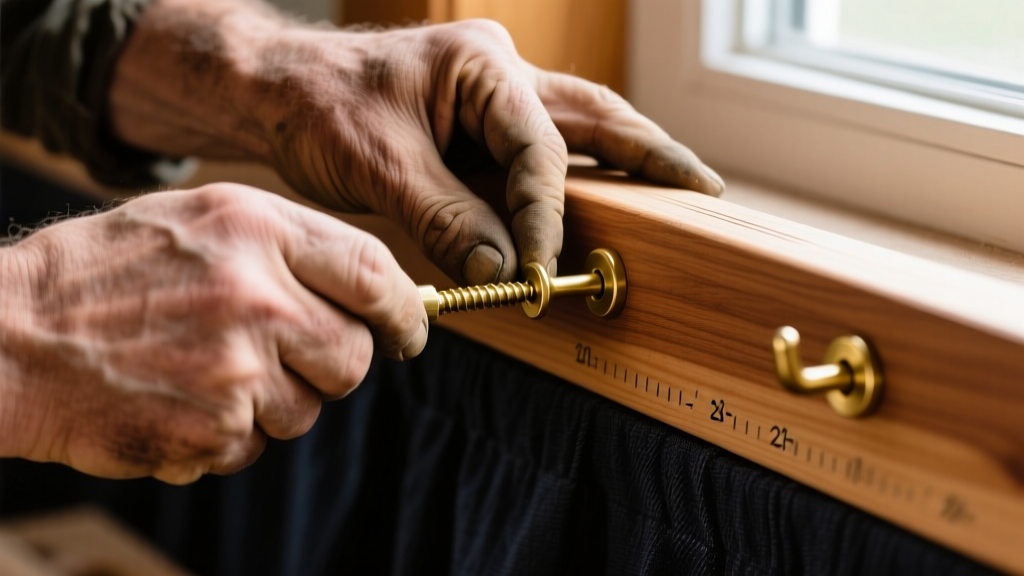
Cheap nickel-plated hooks will eventually rust and can scratch soft metals. Purchase #214 or #216 solid brass screw eyes. Brass is soft enough not to scratch gold or silver, and it naturally resists corrosion.
The Golden Rules of Spacing and Weight Distribution
The most common frustration with necklace storage is tangling. Tangling occurs when the pendulum swing of a heavy pendant intersects with the drape of an adjacent chain. To prevent this, hook spacing must be dictated by the chain's thickness and weight, not by aesthetic symmetry.
| Chain Style | Average Thickness | Minimum Hook Spacing | Max Weight per Hook |
|---|---|---|---|
| Cable / Rolo | 1mm - 2mm | 3.0 inches | 2 oz |
| Box / Wheat | 2mm - 4mm | 4.5 inches | 4 oz |
| Cuban / Statement | 5mm+ | 7.0 inches | 10+ oz |
Pro Tip: Always measure the longest necklace you own before determining the vertical height of your shadowbox frame. A standard 24-inch opera-length chain requires at least 15 inches of vertical drop space to hang completely straight without touching the bottom shelf.
Step-by-Step Build: The Framed Shadowbox Holder
Follow this precise sequence to construct a professional-grade organizer.
- Cut and Sand: Cut your birch plywood to your desired dimensions (e.g., 24x36 inches). Sand the surface progressively through 120, 150, and 220 grit sandpaper until it is glass-smooth. Any roughness will telegraph through your fabric lining.
- Seal the Wood: Apply three thin coats of water-based polycrylic, allowing 2 hours of drying time between coats. This locks in moisture and prevents wood acids from migrating to your fabric.
- Measure and Mark: Using a laser level and a pencil, mark your horizontal rows. Space the rows at least 6 inches apart vertically. Mark your horizontal hook placements based on the spacing table above.
- Apply the Lining: Lay your board flat. Spray a light, even coat of acid-free spray adhesive onto the wood. Carefully lay your Pacific Silvercloth or cotton flannel over the board, smoothing from the center outward to eliminate bubbles. Wrap the excess fabric around to the back and secure it with stainless steel T50 staples to prevent rust bleed.
- Install Hardware: Do not force screw eyes directly into hardwood, or you risk snapping the brass. Use a 1/16-inch drill bit to drill shallow pilot holes exactly on your pencil marks. Screw the brass hooks in by hand until the base sits flush against the fabric.
Maintenance and Tarnish Prevention
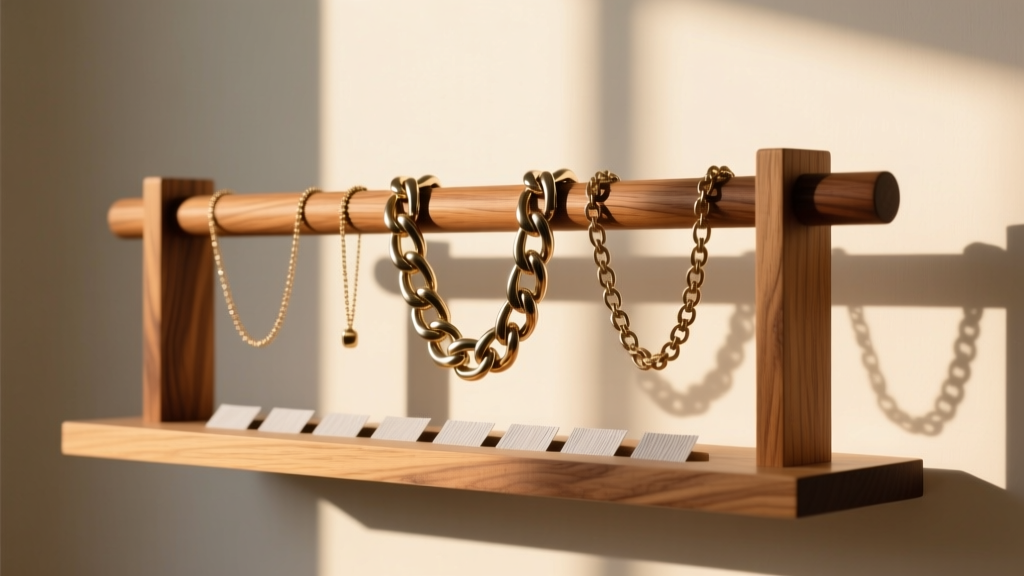
Even with the best DIY construction, environmental factors like humidity and sulfur in the air will eventually cause tarnish. To supercharge your custom holder, adhere 3M Anti-Tarnish Strips to the inside corners of the shadowbox frame. These strips absorb airborne sulfides and typically last for 6 to 12 months before needing replacement. Additionally, keep a treated polishing cloth in a small built-in lower drawer or shelf for quick touch-ups before wearing.
Conclusion
Building your own necklace holders DIY style is an investment in the longevity of your jewelry collection. By selecting inert materials like sealed birch and Pacific Silvercloth, respecting the physics of chain draping, and using solid brass hardware, you create a functional piece of art that protects your pendants, lockets, and chains for decades. Ditch the tangled, tarnished mess of commercial plastic racks and build a storage solution worthy of your collection.


