Durable Materials for Necklaces for Halloween Parties
Discover the best materials for necklaces for Halloween. Compare tarnish resistance, durability, and skin safety against theatrical makeup and fake blood.

The Unique Stresses of Halloween Jewelry
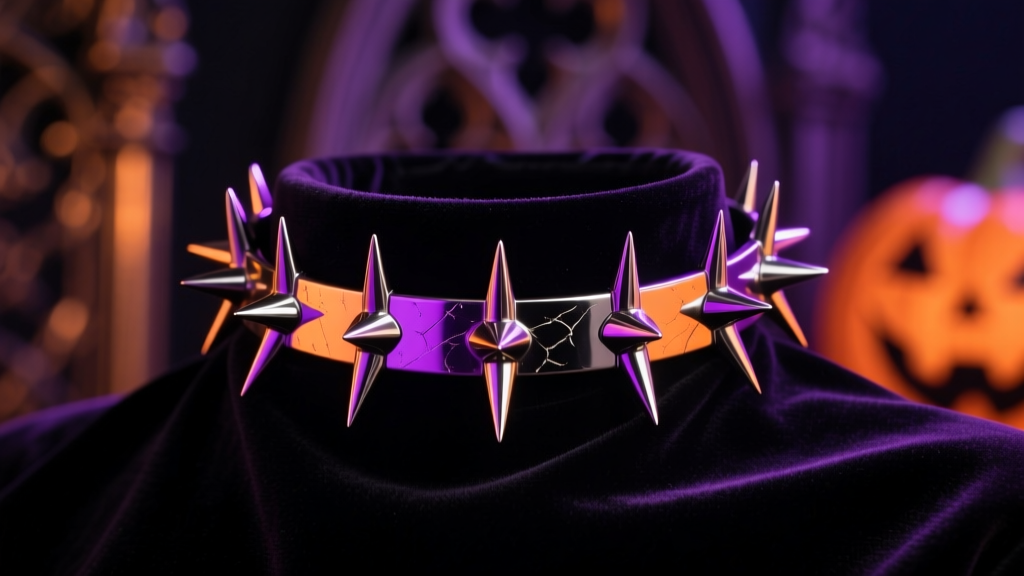
As we navigate the 2026 Halloween season, where immersive horror experiences and elaborate, multi-layered cosplay are driving demand for high-quality accessories, the environments in which we wear jewelry have become notoriously hostile. Unlike everyday wear, necklaces for Halloween are subjected to a gauntlet of chemical and physical hazards. Theatrical makeup contains heavy pigments, liquid latex, and adhesives like spirit gum that can permanently bond to porous metals. Furthermore, artificial blood—typically a base of corn syrup, gelatin, and Red Dye #40—acts as a sticky, acidic magnet for lint and accelerates oxidation in unstable alloys. Add the physical snag hazards of synthetic wigs, lace masks, and layered costumes, and you have a high-risk environment for chain breakage, clasp failure, and gemstone loss.
Material Breakdown: What Survives the Night?
When selecting necklaces for Halloween, understanding the metallurgical and chemical properties of your materials is the difference between a reusable staple and a single-use disaster. Below is a deep dive into the most common materials used in seasonal and alternative jewelry.
Zinc Alloys & Pot Metal (The Cheap Thrill)
Most mass-market "costume" jewelry is cast from zinc alloys (often branded as Zamak 3). While inexpensive and capable of capturing intricate details like skulls or gargoyles, zinc is highly reactive and inherently porous at a microscopic level. When exposed to the lactic acid in sweat or the glycerin in fog machine residue, zinc rapidly oxidizes, leaving a dull, chalky white or greenish residue on the skin. More critically, these alloys frequently contain nickel as a hardening agent. According to the American Academy of Dermatology, nickel allergies can trigger severe contact dermatitis, a risk amplified when the skin is occluded by heavy stage makeup and sweat.
316L Surgical Steel (The Reliable Workhorse)
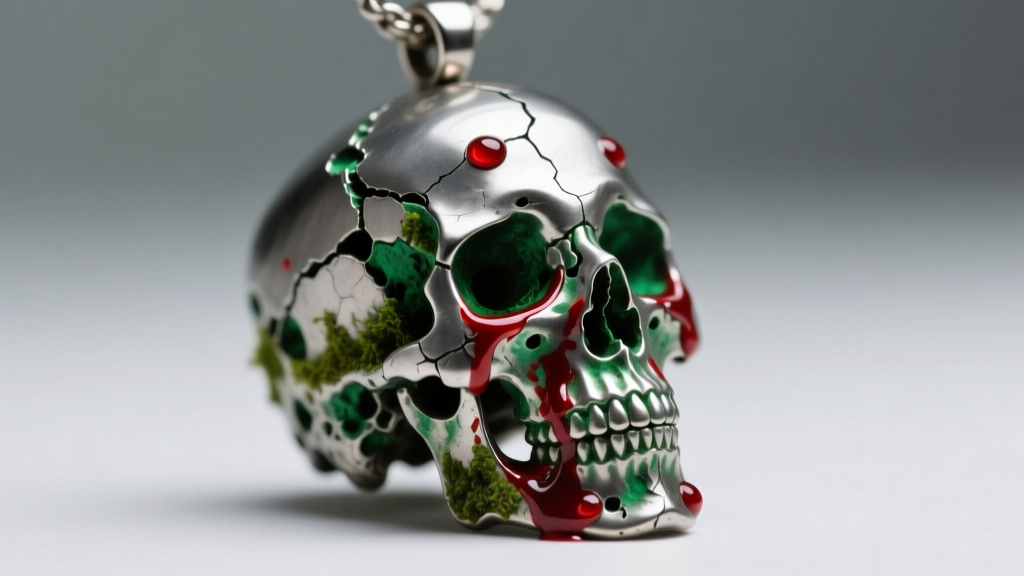
For gothic, steampunk, or horror-themed necklaces for Halloween, 316L stainless steel is the optimal mid-tier choice. The "L" stands for low carbon, but its true superpower is the inclusion of 2-3% molybdenum. Molybdenum drastically increases resistance to chloride pitting—meaning it will not corrode when exposed to heavy perspiration or the saline solutions used in some special effects. It is entirely non-porous, allowing you to easily wipe away Kryolan grease paints or Mehron fake blood with isopropyl alcohol without damaging the finish or trapping bacteria in the metal.
Anodized Titanium (The Hypoallergenic Hero)
If your Halloween costume requires vibrant, metallic colors without the risk of paint chipping, anodized titanium is unparalleled. Unlike plated brass, which uses toxic chemicals and wears off rapidly, titanium is anodized through an electrolytic process that alters the oxide layer on the surface to refract light. Grade 23 titanium (Ti 6Al-4V ELI) is completely biocompatible. Even if you are wearing prosthetics glued directly to your chest or neck, titanium will not react with medical-grade silicone adhesives like Pros-Aide, making it the safest choice for extreme SFX costumes.
Acrylic & UV Resin (The Lightweight Statement)
For oversized, avant-garde, or alien-themed costumes, metal becomes a liability due to weight. Cast acrylic and UV-cured epoxy resins offer massive scale without the neck strain. Acrylic has a high impact resistance and does not conduct heat, making it comfortable for outdoor trick-or-treating in chilly October weather. However, acrylic is highly susceptible to scratching and will melt or warp if exposed to acetone-based makeup removers, requiring careful maintenance.
Gemstone & Inlay Vulnerability
Many Halloween pendants feature dark cabochons like onyx, turquoise, or howlite to achieve a moody aesthetic. According to the Gemological Institute of America (GIA), porous gemstones require specialized care and are highly vulnerable to chemical staining. Turquoise and howlite will permanently absorb the red pigments from fake blood or the dark dyes from spirit gum, ruining the stone. For Halloween jewelry, always choose non-porous alternatives: black cubic zirconia, lab-created spinel, or dark glass. These materials have a Mohs hardness of 8 or higher and a non-porous crystalline structure, allowing you to aggressively scrub them clean with soap and water after a messy night.
Chemical Resistance Matrix
To truly evaluate materials, we must test them against standard Halloween hazards. Below is a comparative matrix detailing how popular necklace materials react to common theatrical substances.
| Material | Fake Blood (Corn Syrup/Dye) | Spirit Gum / Latex | Acetone Makeup Remover | Price Range (Pendant) |
|---|---|---|---|---|
| Zinc Alloy (Zamak) | Severe Staining / Oxidation | Permanent Bonding | Strips Paint / Patina | $5 - $15 |
| 316L Surgical Steel | No Effect (Wipes Clean) | Peels Off Safely | No Effect | $25 - $60 |
| Anodized Titanium | No Effect (Wipes Clean) | Peels Off Safely | No Effect | $40 - $90 |
| Cast Acrylic / Resin | Mild Surface Staining | Clouds Surface Finish | Melts / Warps Material | $15 - $35 |
Chain Gauge & Clasp Failure Points
The pendant is only half the equation; the chain and clasp dictate the necklace's survival. For Halloween, avoid delicate cable chains under 1.2mm (16-gauge). The friction from synthetic costume fibers and wig hair can easily wedge between the tiny links, causing them to pull apart under the weight of a heavy pendant or a sudden snag.
- Optimal Chain Styles: Curb or Figaro chains in the 2.0mm to 3.5mm (12-gauge to 8-gauge) range. These links lay flat against the collarbone, drastically reducing the surface area available to snag on lace, tulle, or mask straps.
- Clasp Mechanics: Spring-ring clasps are a massive liability. The tiny lever easily catches on threads and pulls open. A 12mm lobster clasp provides a secure, lockable gate.
- Safety Breakaways: If you are wearing a tight choker with a high collar or a mask with a neck strap, install a breakaway magnetic clasp. This ensures that if the necklace is violently yanked by a passing prop or a crowded party doorway, the chain releases rather than choking the wearer or snapping the links.
Pre- and Post-Halloween Jewelry Maintenance
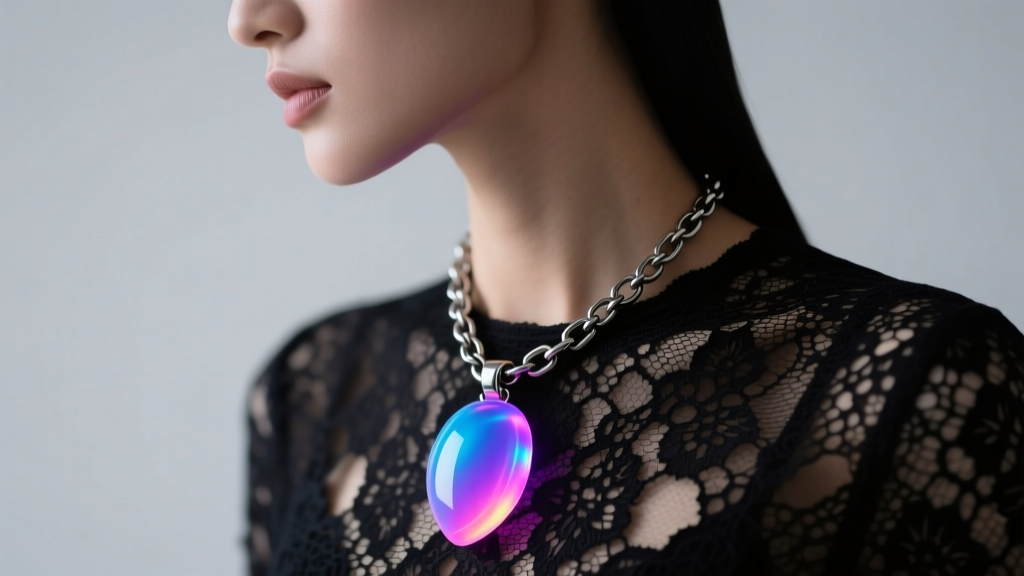
Proper maintenance ensures your investment pieces survive beyond October 31st. Never use ultrasonic cleaners on jewelry that has been exposed to theatrical adhesives; the high-frequency vibrations can drive the glue deeper into the microscopic pores of the metal or shatter glass inlays. Instead, use a 70% isopropyl alcohol solution and a soft-bristled toothbrush to gently dissolve grease paints and fake blood. For resin and acrylic pieces, stick to warm water and mild dish soap, as alcohol can cause micro-fractures in the polymer over time. Store your cleaned pieces in anti-tarnish microfiber pouches, completely separated from everyday jewelry, to prevent cross-contamination of residual dyes.
Final Verdict: Investing vs. Single-Use
When sourcing necklaces for Halloween, align your material choice with the costume's lifecycle. If you are building a reusable, high-end cosplay or a historical vampire wardrobe, invest in 316L steel or anodized titanium chains with secure lobster clasps and lab-created spinel inlays. If the piece is a single-night novelty, acrylic and resin provide the best visual impact-to-weight ratio. Avoid zinc alloys entirely; the upfront savings are quickly negated by the high risk of skin irritation and irreversible staining from theatrical dyes.


