The Black Metal Necklace Trend 2026: Styling Dark Metals
Discover the 2026 black metal necklace trend. Explore materials like blackened silver and PVD titanium, plus expert styling tips for dark jewelry.


The jewelry landscape has undergone a radical transformation as we navigate through 2026. Once relegated to subcultural niches and avant-garde runways, the black metal necklace has firmly cemented its status as a cornerstone of contemporary high fashion and everyday luxury. This shift is not merely aesthetic; it is driven by advancements in metallurgical treatments, a cultural pivot toward moody, architectural minimalism, and a consumer demand for versatile, gender-neutral accessories. Whether you are exploring oxidized sterling silver, PVD-coated titanium, or black rhodium-plated gold, understanding the nuances of dark metals is essential for building a modern jewelry wardrobe.
The Rise of the Black Metal Necklace in 2026
Historically, dark jewelry was synonymous with gothic subcultures or heavy punk aesthetics. However, the 2026 iteration of the black metal necklace is defined by sleekness, precision, and material innovation. Designers are moving away from overly ornate, spiked motifs in favor of heavy, geometric chains and matte-finished pendants that absorb light rather than reflect it. According to trend forecasts from the World Jewellery Confederation (CIBJO), the demand for alternative metal finishes has grown by over 34% in the luxury sector over the last two years, driven by a desire for understated opulence. The modern black metal necklace acts as an anchor piece, providing a striking visual contrast against both stark white tailoring and rich, earth-toned knitwear.
Material Breakdown: What Makes the Metal Black?
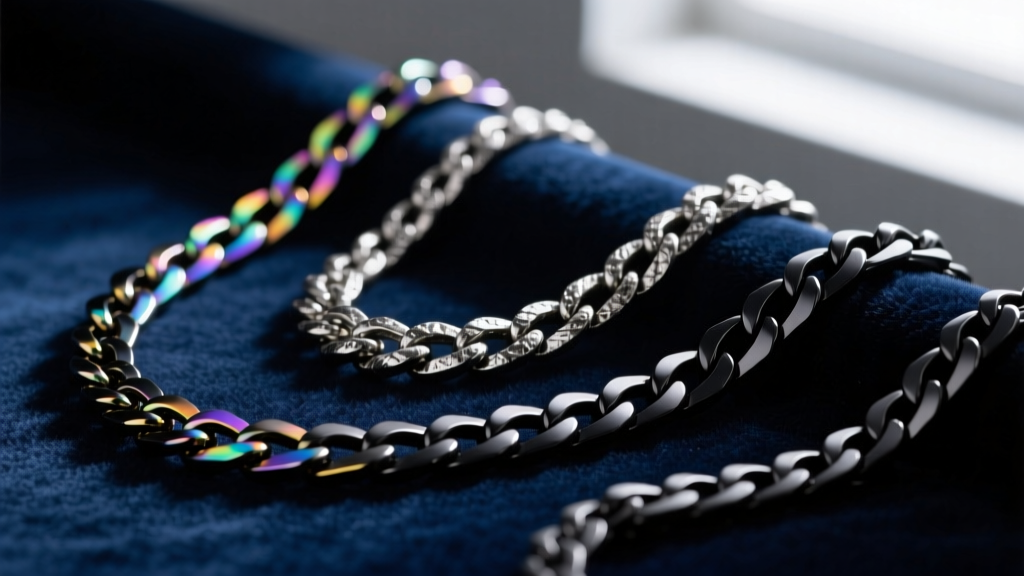
Not all dark jewelry is created equal. The method used to achieve a black finish dictates the necklace's weight, durability, price, and care requirements. Below is a comprehensive breakdown of the primary materials dominating the market this year.
| Material | Process | Durability & Hardness | 2026 Price Range |
|---|---|---|---|
| Blackened Sterling Silver | Chemical oxidation using liver of sulfur (potassium sulfide) to create a silver sulfide patina. | Mohs 2.5-3. Patina wears off on high-friction areas, requiring re-oxidation. | $150 - $600 |
| PVD-Coated Titanium | Physical Vapor Deposition (PVD) bonds zirconium carbonitride to the metal in a vacuum chamber. | Extremely high. Coating is 2000+ HV. Hypoallergenic and sweat-resistant. | $80 - $350 |
| Tungsten Carbide | Alloy of tungsten and carbon, naturally dark grey/black when polished or sandblasted. | Mohs 8.5-9.0. Virtually scratch-proof but can shatter under extreme blunt force. | $50 - $200 |
| Black Rhodium over Gold | Electroplating a black rhodium and ruthenium mixture over 14k or 18k white gold. | Mohs 4.5-5. Plating is 0.1-0.2 microns thick; requires re-plating every 1-2 years. | $1,200 - $5,000+ |
Gauge, Weight, and Sizing Specifics
When investing in a black metal necklace, the gauge (thickness) and gram weight fundamentally alter the drape and visual impact of the piece. In 2026, the market is heavily skewed toward medium-to-heavy chains that offer a substantial, tactile feel.
- The 3mm to 4mm Sweet Spot: Ideal for layering or wearing with pendants. A 20-inch 3mm PVD titanium curb chain weighs approximately 18 grams, offering a lightweight but visible presence that slips easily under unbuttoned collars.
- The 5mm to 6mm Statement: The standard for standalone wear. A 5mm blackened sterling silver Cuban link chain at 22 inches weighs roughly 65 grams. This weight ensures the chain lays flat against the sternum without flipping or tangling.
- The 8mm+ Heavyweight: Reserved for high-impact streetwear and editorial looks. Chains of this width, particularly in solid oxidized silver, can exceed 150 grams, requiring reinforced clasps and heavy-duty jump rings.
Hardware and Clasp Mechanics
A critical, often overlooked aspect of dark metal jewelry is the hardware. Traditional torch soldering, which uses temperatures exceeding 400°C, will instantly burn off PVD coatings and melt black rhodium plating. Therefore, reputable manufacturers utilize laser welding to close jump rings and attach clasps on coated chains. When shopping, inspect the clasp area closely. For heavy tungsten or thick silver chains, look for custom-machined box clasps with double safety catches, as standard lobster clasps often fail under the tension of a 100-gram chain. Magnetic clasps are gaining traction in 2026 for their sleek, seamless look, but ensure the internal neodymium magnets are encased in stainless steel to prevent rusting against the dark chain links.
Styling Framework: Necklines and Layering
The matte, light-absorbing nature of a black metal necklace requires strategic styling to ensure it doesn't get lost against dark clothing. Here is a practical framework for integrating dark metals into your daily rotation.
The Monochromatic Contrast
A black metal necklace pops most dramatically against high-contrast, light-colored fabrics. Pair a 24-inch blackened silver rope chain with a crisp, heavyweight white poplin shirt or an ivory cashmere crewneck. The lack of reflectivity in the black metal creates a sharp, graphic line that draws the eye downward, elongating the neck.
The Tonal Layer
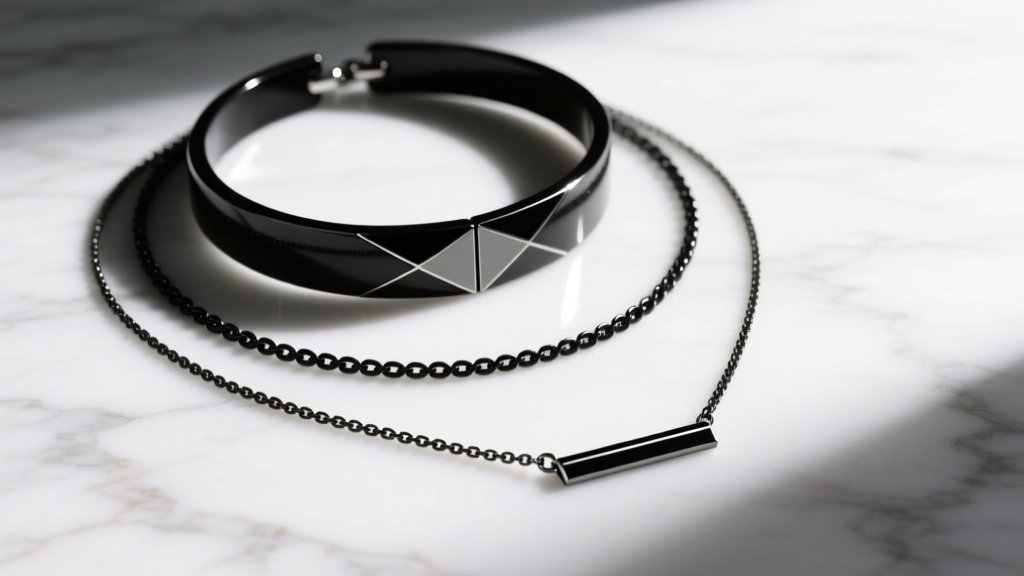
For an avant-garde, tonal look, layer dark metals over black or charcoal garments, but vary the textures. Combine a matte black tungsten bead necklace with a high-polish black rhodium pendant chain. The interplay between matte and polished black finishes creates depth without relying on color contrast. According to the Gemological Institute of America (GIA), mixing metal finishes within the same color family is a hallmark of advanced contemporary styling.
Care and Maintenance: Preventing Patina Loss
Maintaining the deep, inky hue of a black metal necklace requires specific care protocols. The enemies of dark jewelry are friction, harsh chemicals, and improper storage.
Never use ultrasonic cleaners or silver dip solutions on oxidized or blackened silver. These chemicals are designed to strip tarnish and will instantly remove the intentional black patina, leaving you with a patchy, uneven chain.
For oxidized silver, clean only with a soft, dry microfiber cloth. If the blackening begins to fade on the high points of the links (a natural process that adds vintage character), you can have a jeweler re-dip it in a liver of sulfur solution. For PVD-coated titanium, maintenance is incredibly low; simply wash with warm water and mild dish soap to remove skin oils, which can dull the matte finish over time. Black rhodium requires the most upkeep; avoid spraying perfumes or applying lotions while wearing it, as the alcohols and oils can accelerate the wear of the micro-thin plating.
Where to Invest: Market Benchmarks
The 2026 market offers a black metal necklace for every budget, but knowing where to allocate your funds is crucial. If you want an indestructible, daily-wear piece that can survive the gym and the shower, a PVD-coated titanium chain in the $150–$250 range is the undisputed champion of durability. For those seeking heirloom-quality craftsmanship and the organic, evolving beauty of a living patina, invest in solid blackened sterling silver from artisan jewelers, typically ranging from $300 to $800. Finally, for black-tie events and high-luxury wardrobes, black rhodium over 18k white gold remains the pinnacle of dark elegance, though it demands a luxury budget and a commitment to periodic re-plating.


