Red Crystal Necklace: Technical Guide to Cuts & Care
Discover the gemology, cut mechanics, and structural engineering behind a high-quality red crystal necklace. Expert insights on rubies, spinels, and garnets.

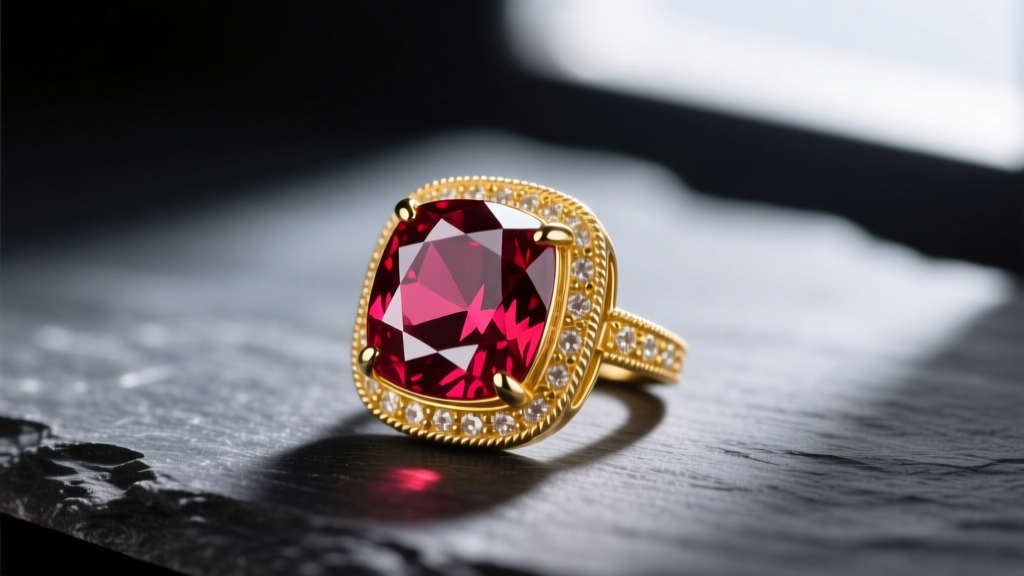
The term "red crystal necklace" is frequently used in commercial jewelry markets as a catch-all descriptor, but from a gemological and metallurgical perspective, it represents a complex intersection of mineralogy, optical physics, and structural engineering. Whether you are evaluating a high-carat Burmese ruby, a vibrant red spinel, or a deep almandine garnet, understanding the technical specifications of your pendant is critical for both aesthetic performance and long-term durability. As of 2026, the market is saturated with both natural and lab-grown red crystals, making technical literacy more important than ever for collectors and everyday wearers alike.
Mineralogical Breakdown: Decoding the "Red Crystal"
In mineralogy, a crystal is defined by its ordered internal atomic lattice. When consumers seek a red crystal necklace, they are typically encountering one of four primary gemological families. Each possesses distinct chemical compositions, hardness ratings on the Mohs scale, and specific gravity (SG) metrics that dictate how the stone must be cut and set.
- Corundum (Ruby): Composed of aluminum oxide (Al2O3) with trace chromium causing the red hue. With a Mohs hardness of 9 and an SG of 4.00, ruby is exceptionally durable and dense. According to the Gemological Institute of America (GIA), natural rubies often exhibit silk (rutile needles) which can be dissolved via high-temperature heat treatment to improve clarity.
- Spinel: Magnesium aluminum oxide (MgAl2O4). Red spinel is singly refractive (isotropic), meaning it lacks the pleochroism seen in rubies. It scores an 8 on the Mohs scale and offers exceptional brilliance due to its lack of cleavage planes.
- Garnet (Pyrope/Almandine): A nesosilicate group. Almandine garnets are iron-rich, resulting in a darker, sometimes brownish-red tone, while pyrope is lighter. Garnets score between 7 and 7.5 on the Mohs scale, making them slightly more susceptible to abrasive scratching over decades of wear.
- Red Beryl (Bixbite): An exceedingly rare beryllium aluminum cyclosilicate. With a Mohs hardness of 7.5 to 8, red beryl is highly prized but rarely found in sizes above 2 carats, commanding premium prices per carat that rival fine emeralds.
Optical Mechanics: Refractive Index and Extinction
The visual impact of a red crystal pendant is governed by its Refractive Index (RI) and the precision of its lapidary cut. The RI determines how much light bends upon entering the stone, while the cut determines how that light is reflected back to the observer's eye.
The Problem of Extinction in Dark Crystals
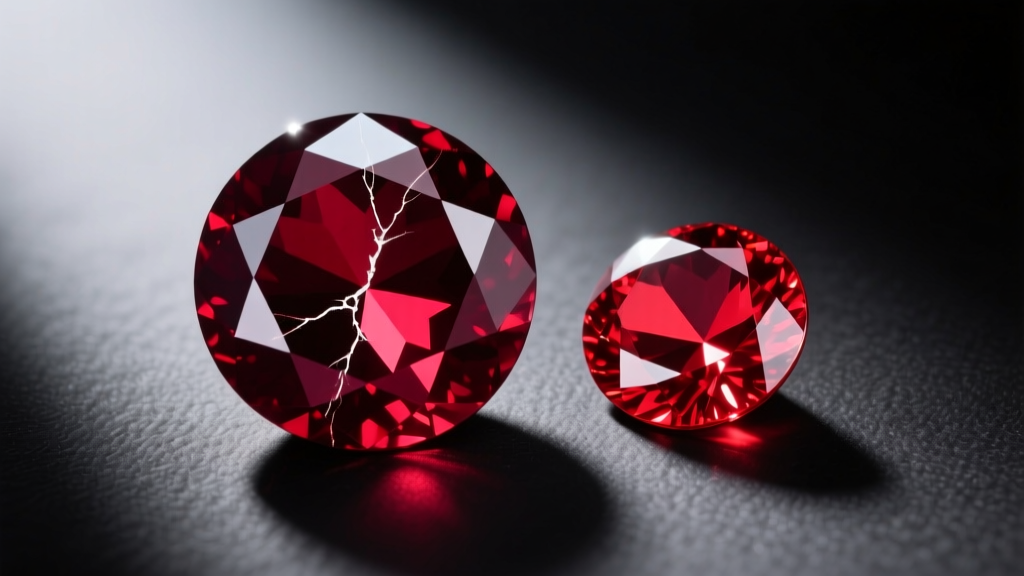
Extinction refers to the dark, lifeless areas in a gemstone where light leaks out of the pavilion rather than reflecting back. This is a chronic issue in dark red crystals, particularly almandine garnet. Because almandine has a high RI (1.76 - 1.82) but a very dark body color, cutters often face a dilemma: cut the stone deeply to retain carat weight (resulting in a blacked-out center), or cut it shallow to allow light transmission (risking a "windowed" stone where you can see straight through the center).
"A master lapidary will utilize a mixed cut—typically a step-cut pavilion with a brilliant-cut crown—to maximize the light return in dark red crystals without sacrificing the structural integrity of the girdle."
Conversely, rubies possess a strong red fluorescence under UV light (including sunlight), which effectively "masks" extinction and makes the stone appear to glow from within. This optical phenomenon is why a slightly included, native-cut ruby can sometimes face up better than a perfectly clean, poorly proportioned garnet.
Comparative Gemological Data (2026 Market Metrics)
The following table outlines the critical physical and market properties of the most common red crystals used in fine pendants.
| Material | Mohs Hardness | Refractive Index | Specific Gravity | Avg. Price/ct (Commercial) | Avg. Price/ct (Gem Quality) |
|---|---|---|---|---|---|
| Ruby (Natural, Heated) | 9.0 | 1.762 - 1.770 | 4.00 | $400 - $1,200 | $8,000 - $25,000+ |
| Red Spinel | 8.0 | 1.718 | 3.60 | $200 - $800 | $3,000 - $12,000 |
| Almandine Garnet | 7.5 | 1.76 - 1.82 | 3.70 - 4.30 | $20 - $80 | $150 - $500 |
| Red Beryl | 7.5 - 8.0 | 1.56 - 1.57 | 2.72 | $2,000 - $4,000 | $10,000 - $30,000 |
Structural Engineering: Bails, Chains, and Impact Resistance
Unlike rings, which endure direct, high-impact compressive forces, necklaces are subject to pendulum dynamics. A pendant swings freely and frequently impacts the sternum or clavicle. This repetitive kinetic shock requires specialized setting mechanics.
Setting Architecture: Bezel vs. Prong
For red crystals with lower toughness (such as spinel or garnet, which can have conchoidal fracturing), a full or partial bezel setting is highly recommended. A bezel distributes impact forces evenly across the girdle. If prongs are used for aesthetic reasons, V-prongs must be employed at the sharp corners of pear or marquise cuts to prevent chipping. According to GIA's comprehensive garnet encyclopedia, garnets are particularly sensitive to sharp thermal shocks and hard physical blows, making protective settings essential for daily-wear pendants.
Chain Gauge and Tensile Requirements
The chain must be engineered to support the pendant's mass without succumbing to metal fatigue at the clasp or bail. As a strict engineering rule, the chain's breaking strength should exceed the pendant's weight by a factor of at least 10 to account for sudden kinetic snagging.
- Box Chains (1.2mm - 1.5mm): Ideal for pendants weighing 3 to 8 grams. The interlocking square links distribute tension evenly, preventing the chain from kinking.
- Wheat Chains (1.5mm - 2.0mm): Woven links offer superior tensile strength, suitable for heavy garnet or ruby pendants exceeding 10 grams.
- Cable Chains (Under 1.0mm): Strictly decorative. These should never be paired with heavy red crystal pendants, as the soldered joints on the links will rapidly fatigue and snap under pendulum stress.
Bail Mechanics
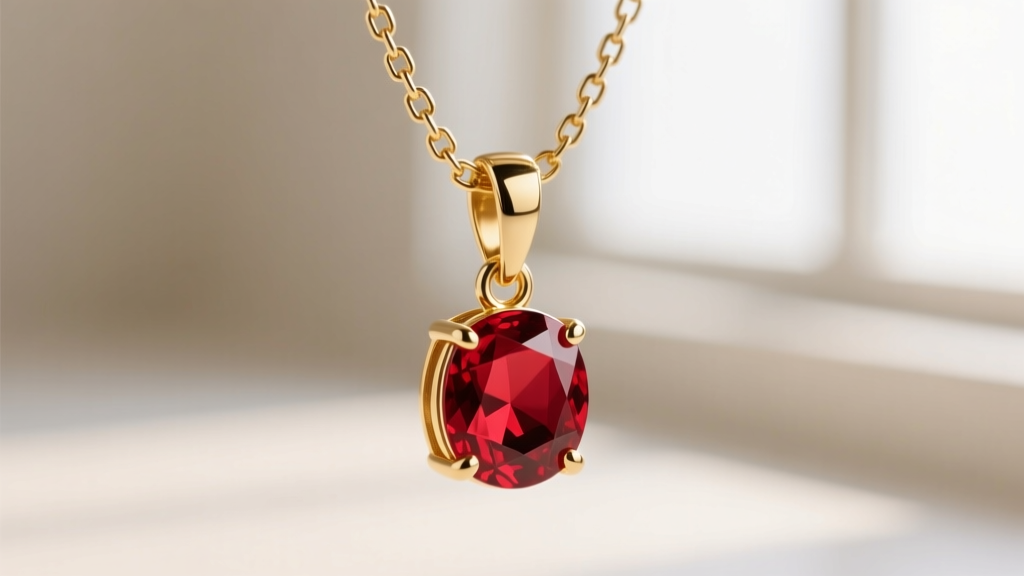
Avoid glue-set or tension-fit bails for any red crystal pendant exceeding 4 carats. Over time, the natural oils from the skin and temperature fluctuations degrade jewelry adhesives. A soldered hidden bail or a mechanically pinned bail drilled directly through the crystal's upper facet is the only structurally sound method for securing high-value red gemstones.
Chemical Stability and Maintenance Protocols
Maintaining the optical clarity of a red crystal necklace requires an understanding of its chemical vulnerabilities and internal fracture networks.
Ultrasonic and Steam Cleaning Risks
While a flawless, untreated ruby can generally withstand ultrasonic cleaning, the vast majority of commercial red crystals cannot. Garnets frequently contain microscopic liquid inclusions; the high-frequency cavitation bubbles generated by an ultrasonic cleaner can expand these inclusions, causing the stone to fracture internally. Similarly, many rubies on the market are fracture-filled with lead-glass to improve apparent clarity. Steam cleaners and acidic solutions (even mild citrus-based jewelry dips) will etch the glass filler, leaving the stone cloudy and structurally compromised.
Recommended Cleaning Protocol
For all red crystal pendants, the safest and most effective maintenance protocol involves a solution of lukewarm distilled water and a few drops of pH-neutral dish soap. Use a high-quality, ultra-soft goat-hair brush to gently agitate the pavilion (the back of the stone), where skin oils and lotions accumulate and severely dampen light return. Rinse with distilled water to prevent hard water spotting, and dry with a lint-free microfiber cloth. Store the necklace in a lined jewelry box where the pendant is isolated from other pieces to prevent the harder ruby or spinel from scratching adjacent gold or silver links.


