Black Necklace Men: Expert Guide to Coatings, Alloys & Links
Discover the metallurgy behind the best black necklace men wear. Compare DLC coatings, black zirconia, and chain link tensile strengths.

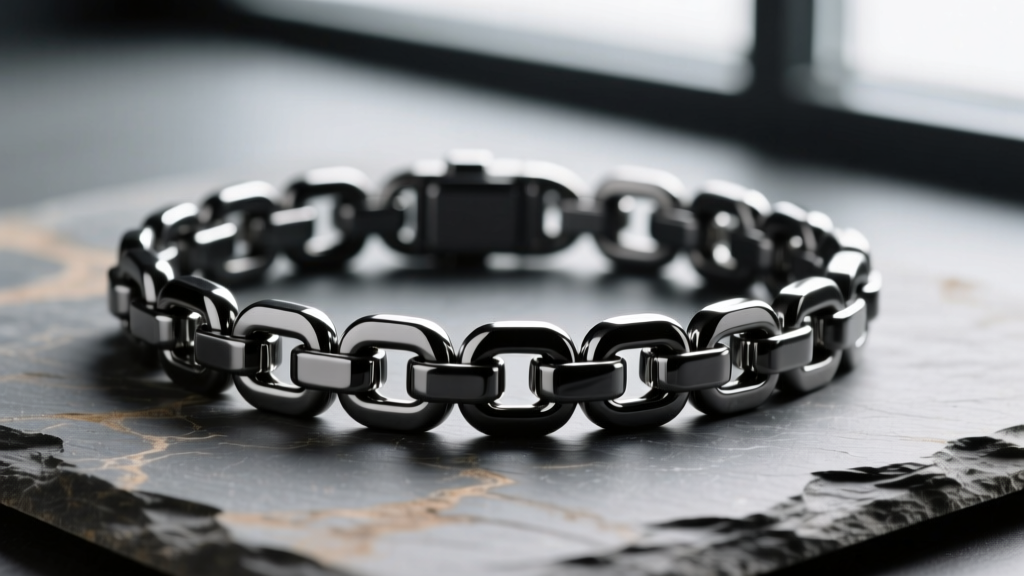
The Metallurgy of Black Finishes: PVD vs. Solid Alloys
Men's jewelry has evolved from simple accessories to complex expressions of material science. When searching for a black necklace men frequently wear in demanding environments, the focus must shift from mere aesthetics to structural integrity, surface engineering, and metallurgical resilience. A black finish is not merely a color; it is a physical or chemical alteration of the base metal. Understanding the difference between a superficial electroplated layer and a Diamond-Like Carbon (DLC) Physical Vapor Deposition (PVD) coating is the difference between a piece that lasts a lifetime and one that degrades within months.
This guide deconstructs the technical specifications, alloy compositions, and mechanical stress points of black mens necklaces, providing a definitive framework for evaluating quality, tensile strength, and long-term durability.
The Science of PVD and DLC Coatings
Physical Vapor Deposition (PVD) is the industry standard for high-end black stainless steel and titanium jewelry. Unlike traditional electroplating, which relies on chemical baths and results in a relatively soft, microporous layer, PVD occurs in a high-vacuum chamber. Vaporized metals—often titanium or zirconium—are bombarded with nitrogen or carbon gases, creating a dense, microscopic ceramic layer that bonds at the atomic level to the substrate.
For the ultimate black necklace men can rely on, Diamond-Like Carbon (DLC) is the pinnacle of PVD technology. DLC coatings contain a high ratio of sp3 carbon bonds, mimicking the crystalline structure of natural diamonds. According to material science data, DLC coatings can achieve a Vickers Hardness (HV) of up to 7,000, compared to the 150 HV of standard 316L surgical stainless steel. This extreme hardness provides unparalleled scratch resistance.
The Eggshell Effect: While DLC is incredibly hard, the coating thickness is typically between 1 to 4 micrometers. If the underlying steel substrate is subjected to severe impact and dents, the rigid DLC layer can micro-fracture. Always opt for 316L or 904L stainless steel substrates, which offer higher yield strength to support the brittle DLC layer.
Solid Black Alloys: Zirconia and Tungsten Carbide
For those who prefer solid materials over coated metals, black zirconium ceramic and tungsten carbide offer exceptional alternatives that eliminate the risk of coating wear entirely.
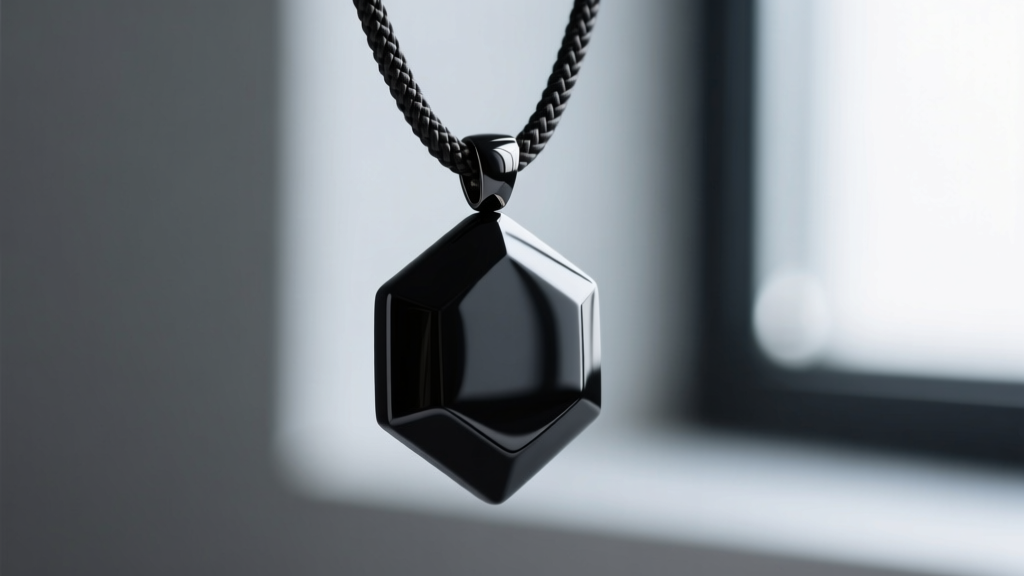
Black zirconia, specifically Yttria-stabilized tetragonal zirconia polycrystal (Y-TZP), is engineered through a precise sintering process that transforms the ceramic into a dense, opaque black material. As noted by materials researchers at AZoM, Y-TZP ceramics boast a Vickers Hardness of approximately 1,200 HV and a flexural strength exceeding 900 MPa. This makes a solid black zirconia pendant or chain highly resistant to both scratching and shattering, while remaining remarkably lightweight.
Tungsten carbide, an alloy of tungsten and carbon atoms, sits even higher on the Mohs hardness scale at 9 to 9.5. It is virtually scratch-proof in daily wear scenarios. However, its extreme hardness comes with a trade-off: brittleness. Tungsten carbide possesses low fracture toughness. A heavy tungsten chain dropped onto a hard tile floor may shatter or chip, whereas a PVD-coated steel chain would merely dent. Therefore, tungsten is best utilized in solid pendants or thick, rigid links rather than fine, flexible chains.
Comparative Analysis of Black Necklace Materials
When selecting a black necklace, understanding the mechanical properties of the material is crucial for matching the jewelry to your lifestyle. The table below outlines the technical specifications of the most common black materials used in men's neckwear.
| Material / Coating | Mohs Hardness | Vickers Hardness (HV) | Tensile / Flexural Strength | Primary Failure Mode |
|---|---|---|---|---|
| DLC over 316L Steel | 7 - 8 | ~7,000 (Coating) | 515 MPa (Substrate) | Substrate denting causing coating micro-fractures |
| Black Y-TZP Zirconia | 8.5 - 9 | ~1,200 | 900+ MPa (Flexural) | Extreme blunt force impact shattering |
| Tungsten Carbide | 9 - 9.5 | ~1,500 | 344 MPa (Flexural) | Dropping on hard surfaces causing catastrophic cleavage |
| Oxidized Sterling Silver | 2.5 - 3 | ~110 | 170 MPa | Surface abrasion wearing away the liver of sulfur patina |
Chain Link Architecture and Tensile Stress
The structural integrity of a black chain necklace relies heavily on its link architecture and the manufacturing method used to seal the joints. In black PVD chains, friction is the ultimate enemy. As links rub against one another, poorly applied coatings will quickly wear away at the contact points, revealing the bright silver steel beneath.
- Cuban Links (5mm - 8mm): The flat, interlocking surface area of Cuban links distributes tension evenly. However, the large surface contact means more friction. Look for chains that are PVD coated after the links are machine-pressed and polished, ensuring the coating reaches the inner crevices.
- Rope Chains (3mm - 5mm): Rope chains feature complex, twisting links that create high localized stress at the joints. For black rope chains, laser welding is mandatory. Traditional soldering introduces a different metal alloy to the joint, which will not accept the PVD coating uniformly, leading to weak points and discoloration.
- Box Chains (2mm - 4mm): Box chains offer excellent tensile strength due to their 90-degree interlocking geometry. When coated in black TiAlN (Titanium Aluminum Nitride), box chains maintain their dark hue exceptionally well because the links have minimal surface-on-surface grinding during movement.
Clasp Engineering and Friction Points
The clasp is the most mechanically complex and vulnerable component of any necklace. In black necklaces for men, the clasp is often the first place the finish degrades due to the repetitive friction of the spring mechanism and the internal tension components.
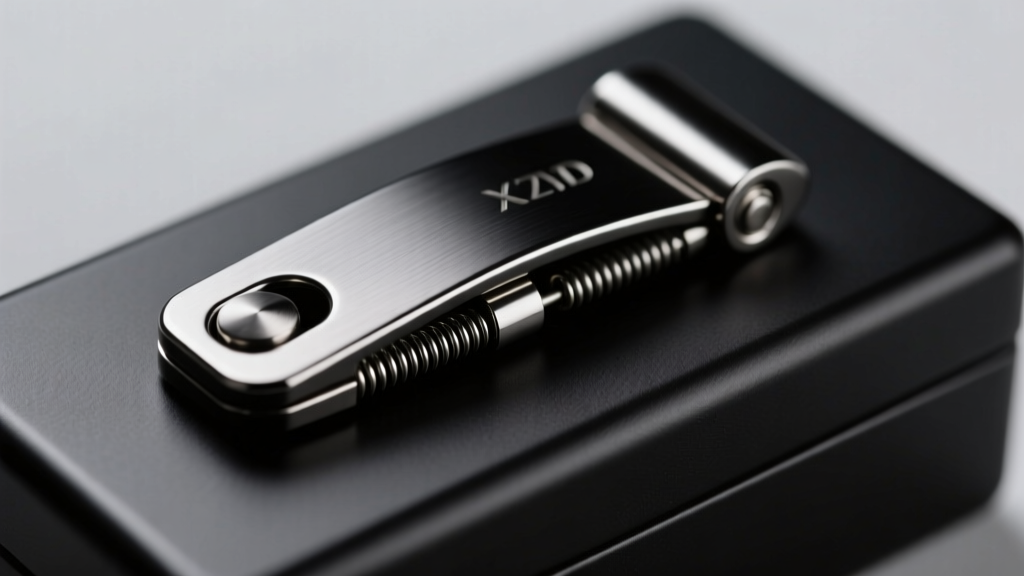
Standard lobster clasps rely on a tiny internal steel spring and a pivot pin. In a black PVD necklace, the coating on the pivot pin will inevitably wear away after a few hundred actuations, leading to a stiff, grinding mechanism. To circumvent this, high-end manufacturers utilize magnetic neodymium clasps encased in black zirconia, or box clasps with push-button releases. Box clasps distribute the mechanical wear across a wider internal track rather than a single microscopic pin, vastly extending the lifespan of the black finish.
If you must use a lobster clasp, ensure the internal spring and pin are crafted from uncoated, corrosion-resistant 904L stainless steel, while only the exterior housing receives the black DLC treatment. This prevents internal friction from generating metallic dust that can jam the mechanism.
Maintenance and Chemical Degradation
Even the most advanced black coatings require specific maintenance protocols to prevent chemical degradation. Human sebum, which has an average pH of 5.5, combined with environmental chlorides and sulfur compounds, can slowly degrade certain black finishes.
For PVD and DLC coated steel, avoid ultrasonic cleaners. The high-frequency cavitation bubbles can create microscopic impacts that, over time, compromise the adhesion of the PVD layer to the substrate. Instead, clean the necklace using a solution of distilled water and a pH-neutral surfactant, gently agitating with a soft-bristled nylon brush. Dry immediately with a microfiber cloth to prevent water spotting on the hydrophobic DLC surface.
For blackened sterling silver (treated with liver of sulfur to create a black silver sulfide patina), the black color is a controlled corrosion layer. It is inherently soft and will polish away with friction. To maintain the black patina on high-relief pendants, avoid contact with abrasive fabrics and store the piece in an anti-tarnish, low-sulfur environment when not in use. For comprehensive gemstone and material care standards, refer to the guidelines provided by the GIA Gem Encyclopedia.
By prioritizing material science over fleeting trends, you can invest in a black necklace that not only commands attention but withstands the rigorous demands of daily wear, maintaining its structural and aesthetic integrity for decades.


