2026 Clover Chain Necklace Value Guide: Pricing & Worth
Discover the true value of a clover chain necklace in 2026. We break down pricing tiers, material grades, and how to spot quality demi-fine jewelry.

The Anatomy of a Clover Chain Necklace: What Are You Paying For?
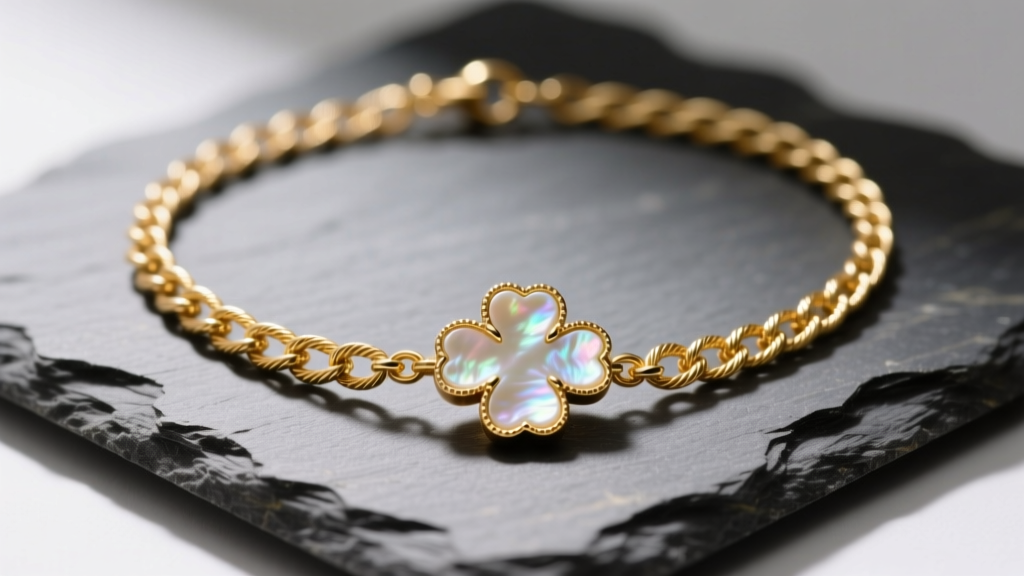
The quatrefoil, universally recognized in the jewelry industry as the "clover" motif, has dominated necklace trends for decades. Originally popularized by high-end heritage houses, the clover chain necklace has trickled down into the demi-fine and fashion markets. However, as we navigate the 2026 jewelry landscape, the price disparity between a $30 fast-fashion pendant and a $2,500 solid gold heirloom piece is vast. Understanding the true value of a clover chain necklace requires looking past the aesthetic and examining the metallurgy, stone inlay techniques, and chain engineering.
At its core, the value of this necklace style hinges on three pillars: the base metal and plating thickness, the authenticity and cutting precision of the inlay stone, and the structural integrity of the chain and clasp. Many consumers overpay for heavily marketed demi-fine pieces that utilize fragile chains and synthetic epoxy resins, while others miss out on exceptional value from independent jewelers who prioritize heavy gold vermeil and genuine semi-precious stones. This guide will dissect the market, providing a concrete framework to assess whether a clover chain necklace is a worthwhile investment or an overpriced trend piece.
2026 Market Pricing Tiers: From Fast Fashion to Heirloom
To accurately assess value, we must segment the market into three distinct tiers. The pricing below reflects the 2026 market, accounting for recent surges in raw gold and silver commodity prices.
| Tier | Material Composition | Inlay Material | Price Range (2026) | Longevity & Value |
|---|---|---|---|---|
| Fashion | Brass or Zinc Alloy, flash-plated (<0.5 microns) | Epoxy Resin, Enamel, or Dyed Howlite | $15 - $45 | Poor. Plating wears off in months; high allergy risk. |
| Demi-Fine | Sterling Silver (925), Gold Vermeil (2.5+ microns) | Genuine Mother-of-Pearl, Malachite, Onyx | $85 - $180 | Good. Lasts years with care; excellent everyday value. |
| Fine / Heirloom | Solid 14k (585) or 18k (750) Gold | Precision-cut natural stones, flush-set | $650 - $2,500+ | Excellent. Lifetime durability; retains intrinsic metal value. |
If you are shopping in the $50 to $80 range, you are likely in the "danger zone." This price point often features brass bases disguised by marketing buzzwords like "gold-dipped" or "waterproof PVD coating." While PVD (Physical Vapor Deposition) is durable, it is often applied over cheap alloys that can cause contact dermatitis. For genuine value, aim for the lower end of the demi-fine tier (around $95-$120) where sterling silver bases are standard.
Material Deep Dive: Vermeil, Gold-Filled, and Solid Gold
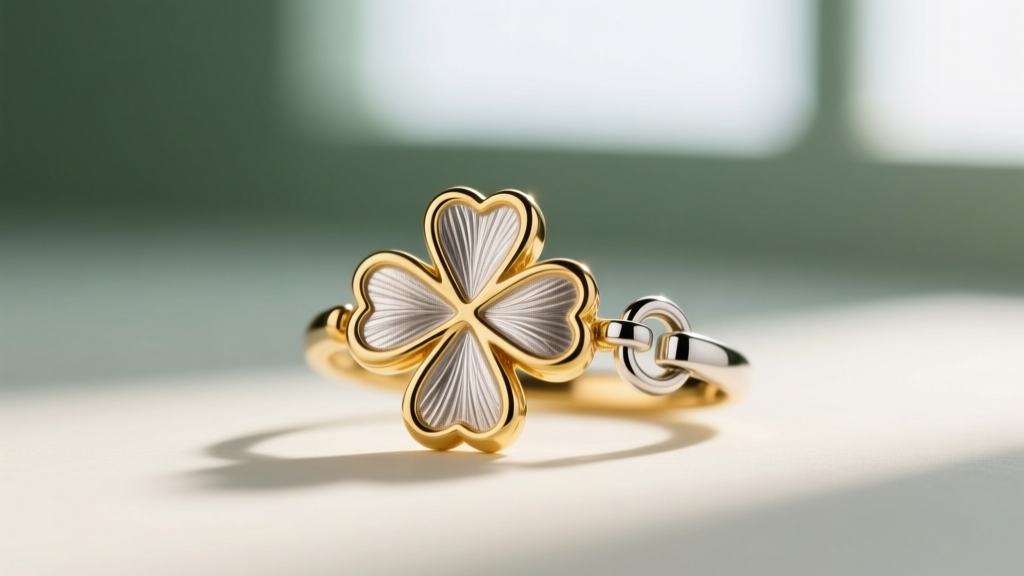
When evaluating a gold clover chain necklace, the terminology used by brands can be deliberately misleading. According to the Federal Trade Commission (FTC) guidelines, the term "Vermeil" is strictly regulated. To qualify as gold vermeil, the piece must have a sterling silver base and be plated with gold of at least 10k fineness, with a minimum thickness of 2.5 microns.
The Micron Measurement Matters
Many brands sell "gold plated sterling silver" for $150, but fail to disclose that the plating is only 0.5 to 1.0 microns thick. At this thickness, the friction from the necklace resting against your collarbone will wear through the gold layer within a year, exposing the silver beneath, which will quickly oxidize and tarnish. A true 2.5-micron vermeil clover necklace, priced fairly between $100 and $150, offers the best budget-to-value ratio for buyers who want the look of solid gold without the $1,000+ price tag.
Inlay Stones: Natural vs. Synthetic
The clover motif relies heavily on contrasting inlays. The Gemological Institute of America (GIA) notes that natural malachite and onyx are the industry standards for high-quality demi-fine and fine jewelry. However, budget brands often use dyed agate or synthetic spinel to mimic these stones.
How to spot the difference:
- Malachite: Natural malachite features distinct, asymmetrical banding and varying shades of green. If the green clover inlay has perfectly uniform, concentric circles, it is likely synthetic or dyed.
- Onyx: True black onyx is incredibly dense and cool to the touch. Imitations made from black epoxy resin will feel slightly warm and may show microscopic bubble inclusions under a jeweler's loupe.
- Mother-of-Pearl (MOP): Genuine MOP exhibits a deep, multi-dimensional iridescence. Shell powder composites, often used in fashion tiers, look flat and chalky.
The Clasp and Chain Gauge: Hidden Value Indicators
A common failure point in mid-tier clover chain necklaces is not the pendant itself, but the chain. To cut costs, manufacturers will pair a heavy, well-crafted clover pendant with a fragile, hollow 0.8mm rope chain. This creates a severe weight imbalance. The pendant pulls on the delicate links, causing them to stretch, kink, and eventually snap.
The 1.2mm Cable Chain Standard: For a standard 12mm to 15mm clover pendant, the chain should be a minimum of 1.2mm in diameter. A solid 1.2mm cable chain or rolo chain provides the necessary tensile strength to support the pendant's weight without sacrificing a delicate, feminine aesthetic. Furthermore, inspect the links. High-value pieces feature laser-welded links, meaning there is no visible seam where the metal loop closes. Soldered or simply bent links will pull apart under stress.
Equally important is the clasp. Avoid spring-ring clasps on any necklace over $80. The internal spring mechanism in budget spring rings is prone to failure, and they are notoriously difficult to operate with one hand. A well-constructed lobster claw clasp, complete with a slightly oversized jump ring for easy gripping, is a hallmark of a brand that invests in functional hardware.
How to Assess Value: A Buyer's Checklist
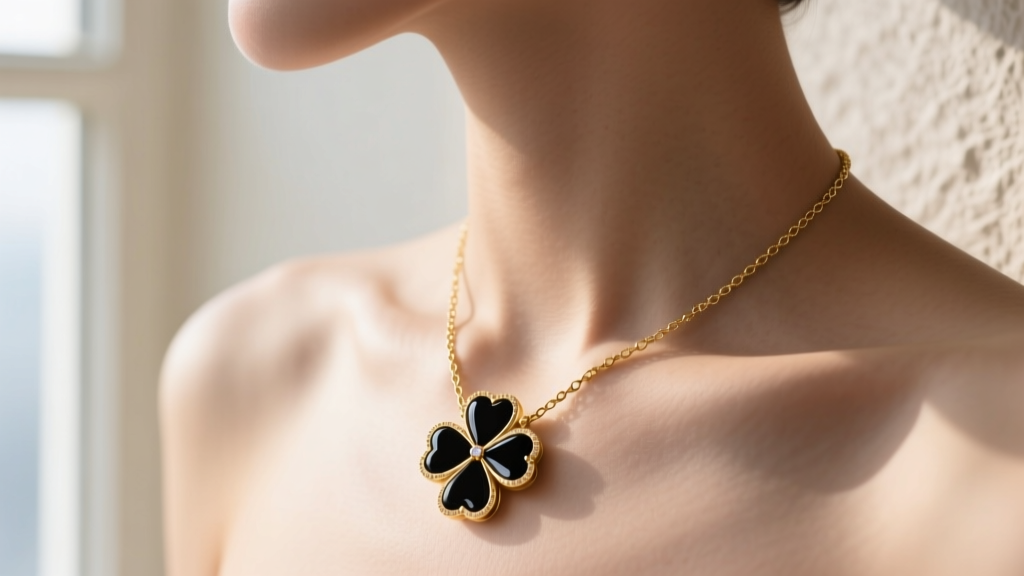
Before adding a clover chain necklace to your cart, run it through this rapid assessment checklist to ensure you are getting what you pay for:
- Hallmark Verification: Look for a "925" stamp for vermeil/sterling, or "14k"/"585" for solid gold. If there is no stamp, or it just says "18kGP" (Gold Plated), you are buying fashion jewelry and should not pay demi-fine prices.
- Bezel Setting Inspection: The metal rim (bezel) holding the stone inlay should be perfectly flush. Run your fingernail over the edge; if you feel a gap, glue is likely being used to secure the stone, which will degrade when exposed to perfumes and lotions.
- Weight Test: Solid gold and heavy silver have a distinct heft. If the pendant feels suspiciously light, it may be hollow-cast or made from lightweight base metals.
- Chain Proportionality: Ensure the chain gauge is at least 1.0mm to 1.2mm to prevent premature stretching from the pendant's weight.
- Return Policy & Warranty: Reputable demi-fine brands will offer at least a 1-year warranty against plating defects. If they do not stand behind their vermeil thickness, walk away.
Final Verdict: Is the Clover Motif Worth the Investment?
The clover chain necklace remains a staple in 2026 because of its timeless geometric symmetry and versatility. However, its value is entirely dependent on material integrity. Fast-fashion iterations are essentially disposable accessories; they hold zero resale value and will tarnish quickly, making them a poor long-term investment.
For the budget-conscious buyer seeking genuine value, the sweet spot lies in the $110 to $160 range. At this price, you should demand a sterling silver base, a minimum of 2.5 microns of gold vermeil, genuine semi-precious stone inlays (like natural onyx or malachite), and a robust 1.2mm cable chain with a lobster clasp. If a piece meets all these criteria, it is a highly valuable addition to your jewelry wardrobe that will withstand daily wear for years to come. Conversely, if you have the budget for solid 14k gold, the clover motif translates beautifully into an heirloom piece that retains intrinsic commodity value, completely insulating your purchase from the volatility of fashion trends.


