Cote d'Argent Butterfly Necklace: 2026 Trend Analysis
Discover why the Cote d'Argent butterfly necklace is dominating 2026 trends. Explore styling tips, sterling silver care, and layering techniques.

The Evolution of the Butterfly Motif in 2026
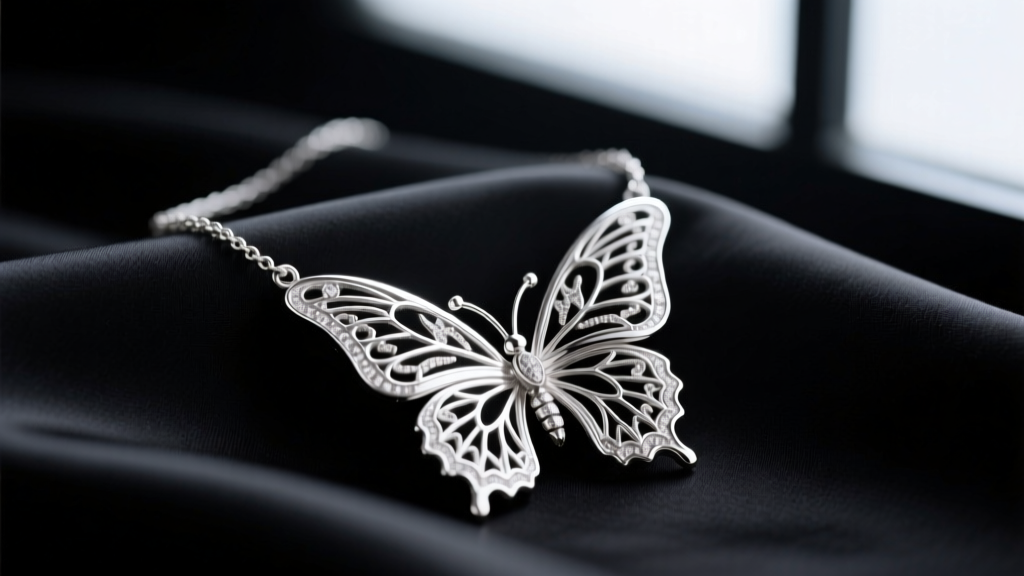
The jewelry landscape in 2026 has decisively pivoted from the heavy, maximalist chains of the early 2020s toward what industry insiders are calling 'ethereal minimalism.' At the forefront of this shift is the Cote d'Argent butterfly necklace, a piece that perfectly encapsulates the modern desire for nature-inspired motifs rendered with architectural precision. While the Y2K revival initially brought butterflies back in the form of chunky, rhinestone-encrusted plastics, the current iteration demands sophistication. The Cote d'Argent collection answers this by utilizing anatomical wing structures blended with subtle Art Deco geometry, creating a silhouette that feels both organic and meticulously engineered.
This specific piece has become a staple for style editors and jewelry collectors alike because it bridges the gap between whimsical 'fairycore' and refined, everyday luxury. Whether worn as a solitary statement piece over a silk blouse or integrated into a complex, multi-strand stack, the butterfly pendant serves as a versatile anchor. But beyond its aesthetic appeal, the true value of this necklace lies in its material composition and the specific styling frameworks that maximize its visual impact.
Material Breakdown: 925 Sterling Silver and Rhodium Flashing
To understand the longevity and wearability of the Cote d'Argent butterfly necklace, one must look at the metallurgy. The brand utilizes genuine 925 sterling silver, an alloy consisting of 92.5% pure silver and 7.5% copper. Pure silver is too malleable for intricate casting and daily wear, making the copper addition essential for structural integrity. However, copper is highly reactive to sulfur and moisture in the air, which leads to tarnishing.
To combat this, Cote d'Argent employs a rhodium flashing technique. According to the Gemological Institute of America (GIA), rhodium is a platinum-group metal that is highly reflective, exceptionally hard, and completely tarnish-resistant. The pendant and chain are electroplated with a microscopic layer of rhodium (typically between 0.75 and 1.0 microns thick). This not only provides a brilliant, white-metal luster that mimics platinum but also acts as an impermeable barrier against oxidation. When evaluating this piece against cheaper, brass-based alternatives that merely use a thin silver wash, the rhodium-plated 925 silver ensures the necklace maintains its structural and visual integrity for years, provided it is cared for correctly.
Chain Specifications and Tensile Strength
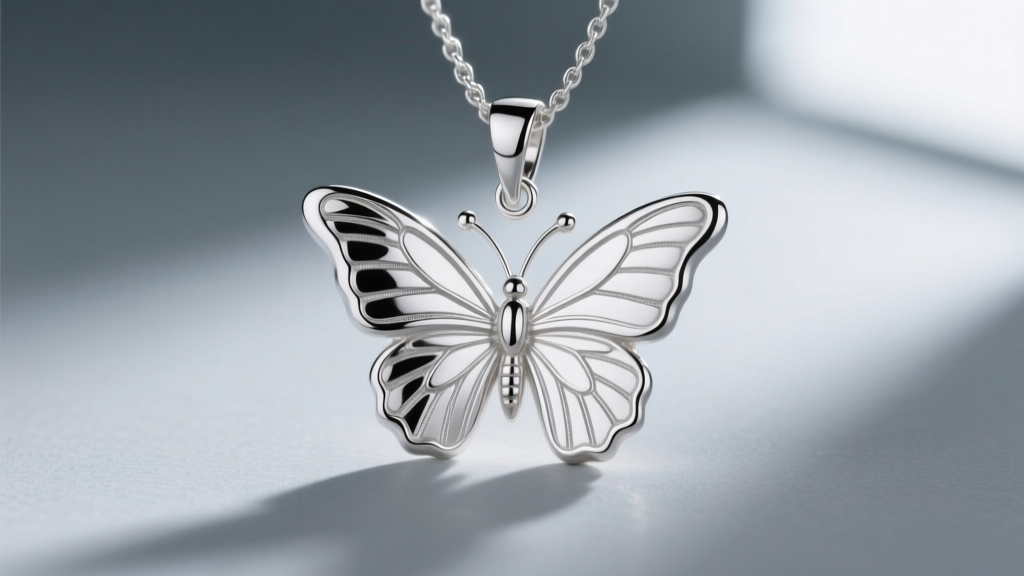
A common failure point in delicate jewelry is the chain. The Cote d'Argent butterfly necklace typically features a lightweight cable or rope chain designed to complement the 2.5-gram pendant without overpowering it. Understanding the tensile strength and thickness of these chains is crucial for consumers looking to invest in fine jewelry that withstands daily friction.
| Chain Type | Thickness | Tensile Strength | Best Application |
|---|---|---|---|
| Cable Chain | 0.9mm | ~2.5 kg | Everyday wear, lightweight pendants |
| Rope Chain | 1.2mm | ~4.0 kg | Layering, high-friction environments |
| Box Chain | 1.0mm | ~3.0 kg | Geometric pendants, modern styling |
The standard 0.9mm cable chain included with the butterfly pendant offers an ideal strength-to-weight ratio. It is robust enough to handle the 2.5-gram pendant but delicate enough to slide seamlessly through the collar of a button-down shirt. The clasp is typically a 5mm lobster claw, which provides a much more secure closure than a traditional spring ring, reducing the risk of accidental unclasping during active wear.
The Cascade Framework: Mastering the Layered Stack
In 2026, wearing a single delicate chain is often viewed as an underutilization of the neckline. The Cote d'Argent butterfly necklace shines brightest when applied using the 'Cascade Framework'—a styling methodology that ensures each piece in a stack occupies its own distinct visual zone, preventing tangling and visual clutter.
- Zone 1 (The Anchor - 14 to 15 inches): Position the butterfly necklace here. Sitting at the collarbone, it acts as the focal point. This length pairs perfectly with scoop necks and off-the-shoulder tops.
- Zone 2 (The Bridge - 16 to 17 inches): Introduce a textured chain or a simple geometric pendant (like a solid silver disc or a tiny bezel-set cubic zirconia). This creates a visual bridge between the delicate butterfly and the lower chest.
- Zone 3 (The Elongator - 18 to 20 inches): Finish with a heavier, longer chain, such as a 1.5mm rope chain or a lariat-style drop. This draws the eye downward, elongating the neck and torso, which is particularly flattering when worn over V-necklines or deep sweetheart cuts.

Troubleshooting Common Wearability Issues
One of the most frequent complaints among wearers of lightweight pendants is 'clasp migration.' Because a 5mm lobster clasp is often heavier than a 2.5-gram butterfly pendant, gravity and friction cause the clasp to slide around the neck and rest awkwardly at the front, next to the pendant.
To solve this, expert jewelers recommend two practical solutions. First, look for chains that feature a built-in counterweight tag—a small, solid piece of metal attached to the chain exactly opposite the clasp. If your Cote d'Argent chain lacks this, you can purchase a microscopic silicone o-ring (often sold as 'necklace stoppers') and thread it onto the chain near the clasp. The silicone creates just enough friction against the skin and hair to anchor the clasp at the nape of the neck, keeping the butterfly pendant perfectly centered on your chest all day.
Long-Term Care and Tarnish Prevention
While the rhodium plating offers excellent protection, it is not permanent and will eventually wear down at high-friction points, exposing the underlying sterling silver. To maximize the lifespan of the plating and the silver beneath it, a strict maintenance routine is required.
'Never expose rhodium-plated sterling silver to chlorinated water, harsh cosmetics, or aerosolized perfumes. The chemicals can accelerate the degradation of the flashing, leading to premature tarnishing of the copper alloy beneath.' — Guidelines adapted from Jewelers of America.
For routine cleaning, avoid liquid silver dips, which are highly abrasive and can strip the rhodium layer entirely. Instead, use a dry, untreated microfiber polishing cloth to gently buff the butterfly wings and chain links after each wear. This removes sebum, dead skin cells, and environmental pollutants that can dull the metal's reflectivity. Store the necklace flat in an anti-tarnish ziplock bag with a small silica gel packet to control ambient humidity.
Final Verdict: Value and Versatility
Priced typically between $55 and $85, the Cote d'Argent butterfly necklace occupies a highly competitive space in the demi-fine jewelry market. It offers the material authenticity of solid 925 silver and premium rhodium plating without the inflated markups associated with heritage luxury houses. For the 2026 consumer who values both ethical material sourcing and trend-responsive design, this piece represents an exceptional cost-per-wear investment. Its ability to transition seamlessly from a minimalist office environment to an elaborate evening stack ensures it will remain a foundational element of the modern jewelry wardrobe for years to come.


