Opal Diamond Necklace Value Guide: 2026 Pricing & Budget Tips
Discover how to evaluate an opal diamond necklace in 2026. Compare Ethiopian vs. Australian opals, diamond melee grades, pricing tiers, and setting safety.

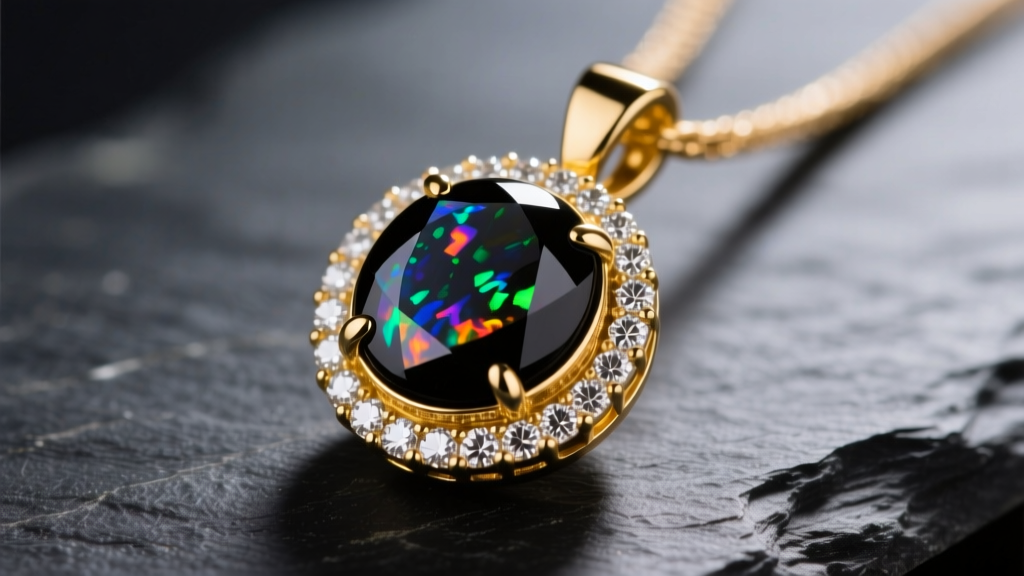
The True Cost of an Opal Diamond Necklace in 2026
When evaluating an opal diamond necklace, the traditional rules of jewelry valuation have shifted dramatically. Historically, the diamond accents dictated a significant portion of the retail markup. However, as we navigate the 2026 market, the widespread adoption of high-quality lab-grown melee diamonds has fundamentally altered the pricing structure. Today, the true value—and the bulk of your budget—should be anchored entirely in the opal's provenance, play-of-color, and structural stability.
An opal diamond necklace is a masterclass in contrasting gemological properties. Diamonds rank at a 10 on the Mohs hardness scale, while opals sit at a fragile 5.5 to 6.5. This extreme disparity means that assessing value isn't just about visual beauty; it requires a rigorous evaluation of how the jewelry is engineered to protect the softer gemstone. In this guide, we break down the exact metrics, material grades, and pricing tiers you need to know before making a purchase.
Decoding Opal Varieties: Where Your Budget Actually Goes
The term "opal" encompasses vastly different geological formations, each with unique failure modes and price points. Understanding the origin of the center stone is the first step in your value assessment.
Australian White and Black Opals (The Premium Tier)
Sourced primarily from Lightning Ridge and Coober Pedy, Australian opals are non-porous and geologically stable. They do not absorb water, making them highly resistant to the environmental cracking that plagues other varieties. A genuine Australian black opal with a vivid, broad-flash play-of-color (specifically red-on-black) commands premium pricing, often exceeding $1,500 per carat for high-grade cabochons. When paired with natural diamond accents, these necklaces represent heirloom-grade investments.
Ethiopian Welo Opals (The Budget-Friendly Illusion)
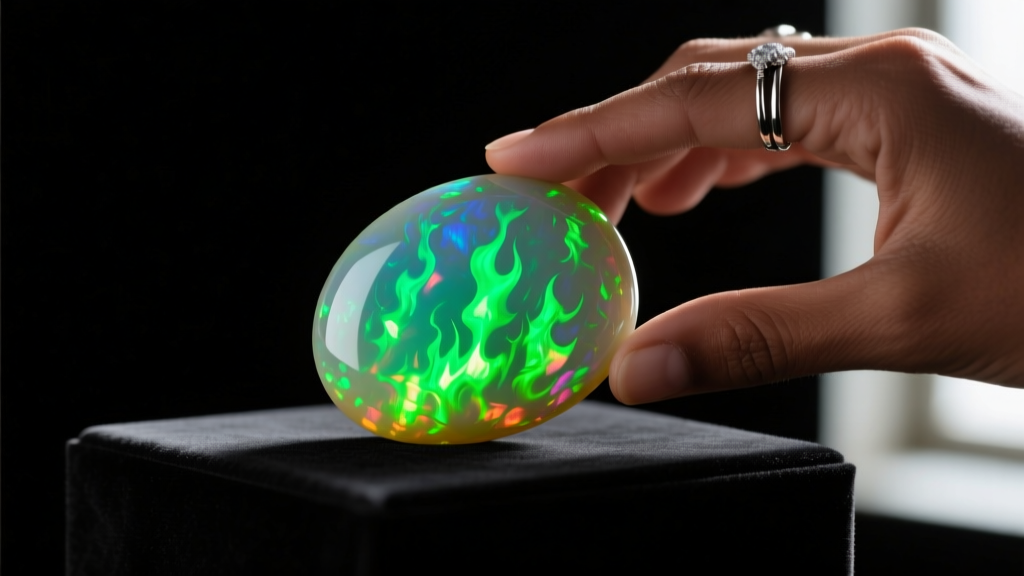
Ethiopian Welo opals dominate the under-$1,000 market. They are spectacularly vibrant, often displaying a more intense neon fire than their Australian counterparts for a fraction of the cost. However, they are hydrophane. This means they are highly porous and will absorb moisture, oils, and lotions. Over time, an Ethiopian opal worn daily against the skin can lose its transparency, turn yellow, or suffer from "crazing" (internal cracking due to rapid moisture exchange). If you are buying an Ethiopian opal diamond necklace, the lower price tag must be weighed against its high-maintenance nature and shorter lifespan.
Diamond Accents: Melee vs. Solitaire Value Propositions
In an opal diamond necklace, the diamonds serve to frame and reflect light back into the opal's cabochon dome. Because lab-grown diamonds have stabilized the cost of smaller stones, buyers should demand higher color and clarity grades in the accents, even on a budget.
| Diamond Accent Type | Carat Weight (Total) | Expected Grade (2026 Standard) | Value Impact on Necklace |
|---|---|---|---|
| Single-Cut Melee | 0.01 - 0.05 ct each | I1-I2 Clarity, J-K Color | Low; creates a dull, greyish halo that mutes the opal's fire. |
| Full-Cut Melee (Lab) | 0.05 - 0.15 ct each | VS1-VS2 Clarity, E-F Color | High; brilliant light return enhances the opal without adding massive cost. |
| Solitaire Side Stones | 0.25 - 0.50 ct each | SI1 Clarity, G-H Color | Premium; shifts the piece from a pendant to a statement trilogy necklace. |
According to the Gemological Institute of America (GIA), the cut quality of melee diamonds heavily influences the overall brilliance of a piece. Always inspect the diamond halo under 10x magnification; if the stones look cloudy or heavily included, the manufacturer has cut corners on the accents to offset the cost of the opal.
Structural Integrity: Settings That Protect Your Investment
The most critical, yet frequently overlooked, aspect of valuing an opal diamond necklace is the setting architecture. Because opals are soft and brittle, the metalwork must act as a shock absorber.
The Danger of High-Profile Prong Settings
Prong settings elevate the opal, exposing the dome to direct impacts. A common failure mode occurs when a prong catches on knitwear or hair, acting as a lever that either snaps the prong or chips the opal's girdle. Furthermore, opals are sensitive to extreme temperature changes and the pressure of prong tightening. If a jeweler needs to re-tip a prong on a matching set, the localized heat and pressure can easily fracture the stone.
The Bezel and Halo Advantage
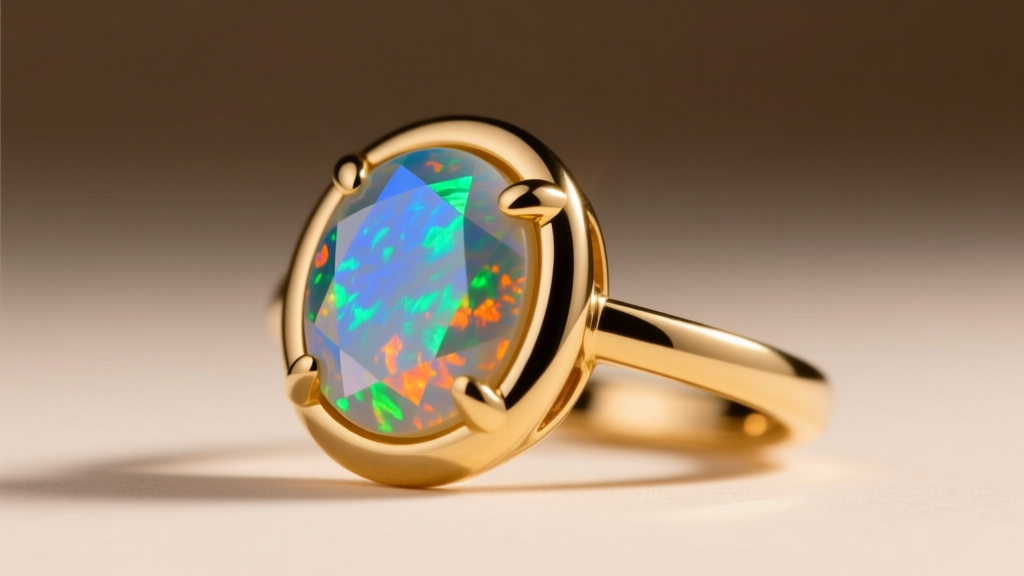
For maximum longevity, a bezel setting—where a continuous rim of 14k or 18k gold wraps entirely around the opal's edge—is mandatory for daily wear. 14k gold is preferred over 18k for the bezel wire because its higher alloy content (usually copper and silver) provides superior tensile strength, creating a more rigid protective cage. When combined with a diamond halo, the bezel can be integrated into the halo's gallery, lowering the opal's profile against the chest and minimizing snag risks.
2026 Pricing Tiers: What to Expect at Every Budget
To conduct a proper budget assessment, you must align your expectations with current market realities. Here is a realistic breakdown of what your money buys in the current landscape.
- Entry-Level ($350 - $800): Expect a 10k or 14k gold chain with a 1.5 to 3-carat Ethiopian Welo opal. The diamond accents will likely be single-cut, lab-grown melee (approx. 0.10 ctw) in a simple prong or semi-bezel setting. Great for occasional wear, but requires strict moisture avoidance.
- Mid-Range ($800 - $2,500): This tier introduces Australian white opals or high-grade boulder opals, set in 14k solid gold with full-cut lab-grown diamond halos (0.25 - 0.50 ctw). You should expect a fully enclosed bezel setting and a sturdy 1.5mm cable or box chain.
- Heirloom / Premium ($2,500 - $10,000+): The domain of Lightning Ridge black opals with distinct red harlequin or rolling flash patterns. Set in 18k gold with natural, earth-mined diamond accents of VS clarity. These pieces come with comprehensive gemological certificates detailing the opal's exact body tone (N1-N4) and brightness scale (B1-B5).
Red Flags and Synthetic Traps to Avoid
When shopping for an opal diamond necklace, be highly skeptical of listings that use vague terminology. The GIA's opal buying guide warns against undisclosed treated or assembled stones.
Expert Warning: Avoid "Opal Doublets" or "Triplets" disguised as solid cabochons. A doublet is a thin slice of precious opal glued to a black glass or potch backing to mimic a black opal. A triplet adds a clear quartz dome on top. While visually striking, the adhesive layers will eventually degrade, cloud, or delaminate when exposed to ultrasonic cleaners, steam, or even heavy perspiration, rendering the necklace virtually worthless.
Additionally, watch out for "Gilson" or synthetic lab-created opals. While they possess the same chemical makeup (hydrated silica), their play-of-color often exhibits an unnatural, highly uniform "lizard skin" or "columnar" pattern under magnification. They hold virtually zero resale value compared to their natural counterparts.
Final Assessment: Prioritize Engineering Over Carat Weight
Ultimately, the value of an opal diamond necklace is not determined merely by the carat weight of the gems, but by the synergy of their engineering. A smaller, geologically stable Australian boulder opal, securely encased in a low-profile 14k gold bezel and framed by brilliant-cut diamonds, will outlast, outshine, and retain its value far better than a massive, poorly set Ethiopian stone. As you evaluate your options in 2026, demand transparency regarding the opal's origin, insist on protective bezel architecture, and verify the cut quality of the diamond accents to ensure your investment stands the test of time.


