Expert Guide: Buying a Genuine Black Obsidian Crystal Necklace
Discover how to authenticate, set, and style a black obsidian crystal necklace. Expert insights on Mohs hardness, chain pairings, and lapidary cuts.

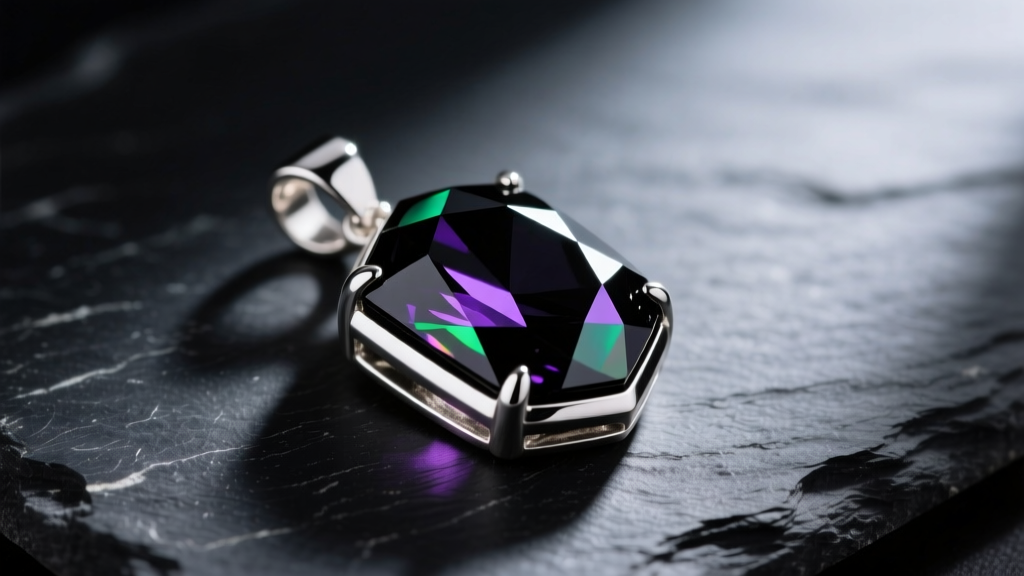
The Mineralogy of Obsidian: Volcanic Glass vs. Crystal
When evaluating a black obsidian crystal necklace, the first technical hurdle is acknowledging a geological paradox: obsidian is not actually a crystal. According to Mindat.org, obsidian is an amorphous mineraloid—a naturally occurring volcanic glass formed from the rapid cooling of felsic lava. Because it lacks a defined crystalline lattice structure, its physical properties differ vastly from true crystalline gemstones like quartz or tourmaline. Understanding this mineralogical reality is the foundation of expert jewelry selection, as the amorphous structure dictates everything from how the stone must be cut to how it should be set in metal.
On the Mohs scale of mineral hardness, natural obsidian registers between 5.0 and 5.5. While this makes it reasonably durable for occasional wear, it is significantly softer than airborne quartz dust (Mohs 7), meaning a black obsidian pendant can accumulate micro-scratches over time if improperly stored. Furthermore, its specific gravity (SG) ranges from 2.35 to 2.60, making it relatively lightweight compared to metallic hematite or heavy baryte, yet substantial enough to require robust chain hardware when cut into large, statement-sized cabochons.
Authentication Framework: Spotting Fakes and Man-Made Glass
The 2026 holistic jewelry market is heavily saturated with man-made slag glass and factory-molded bottle glass masquerading as natural obsidian. Because both natural obsidian and man-made glass share a similar refractive index (RI of 1.48–1.51), standard optical gemological tests can sometimes be ambiguous. However, an expert deep dive into microscopic inclusions provides a definitive authentication framework.
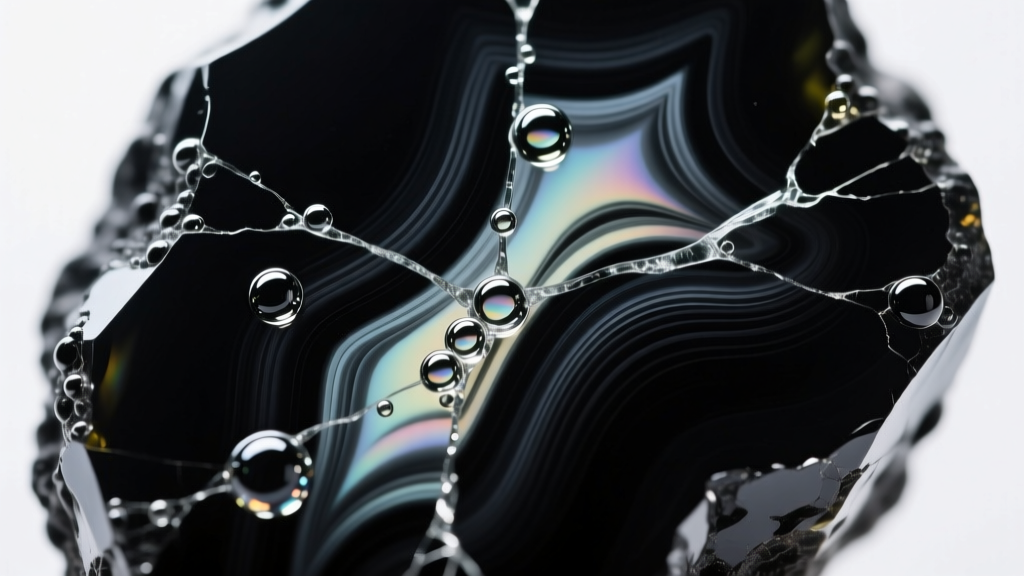
Natural obsidian forms under immense geological pressure and rapid cooling, which traps gases in specific ways. Under a 10x jeweler's loupe or a digital microscope, genuine black obsidian will reveal elongated, teardrop-shaped gas bubbles and distinct flow banding—swirls of microscopic cristobalite crystallites. Conversely, man-made glass cools in controlled, low-pressure environments, resulting in perfectly spherical bubbles. If you inspect a black obsidian crystal necklace and see perfectly round bubbles, you are looking at factory glass.
Material Comparison Matrix
| Property | Natural Black Obsidian | Man-Made Slag Glass | Black Tourmaline (Common Substitute) |
|---|---|---|---|
| Structure | Amorphous Mineraloid | Amorphous Synthetic | Crystalline Cyclosilicate |
| Inclusions | Elongated bubbles, flow bands | Spherical bubbles, swirl marks | Needles, striations, liquid inclusions |
| Fracture Type | Conchoidal (smooth, curved) | Conchoidal | Uneven to subconchoidal |
| Mohs Hardness | 5.0 - 5.5 | 5.5 - 6.0 | 7.0 - 7.5 |
For authoritative geological classification and regional sourcing data, gemologists frequently reference the Encyclopedia Britannica's mineralogy archives, which detail how the high silica content (often exceeding 70%) in rhyolitic lava flows creates the dense, pitch-black appearance prized in high-end lapidary work.
Lapidary Cuts and Structural Vulnerabilities
Cutting obsidian is a notoriously unforgiving lapidary process. Because it lacks cleavage planes (the natural fault lines along which crystals split), obsidian fractures conchoidally—meaning it breaks with smooth, curved, shell-like surfaces. This is the same property that allowed ancient civilizations to knap obsidian into razor-sharp scalpel blades. However, in modern jewelry making, this conchoidal fracture is a structural vulnerability.
The Dangers of Prong Settings
Never purchase a black obsidian crystal necklace featuring a traditional four-prong or six-prong setting. Prongs exert concentrated point-pressure on the stone's girdle. Given obsidian's brittle, amorphous nature, the localized stress from a metal prong being pushed against the stone will almost inevitably cause a conchoidal chip. Over time, temperature fluctuations and minor impacts will exacerbate these micro-fractures, leading to catastrophic stone failure.
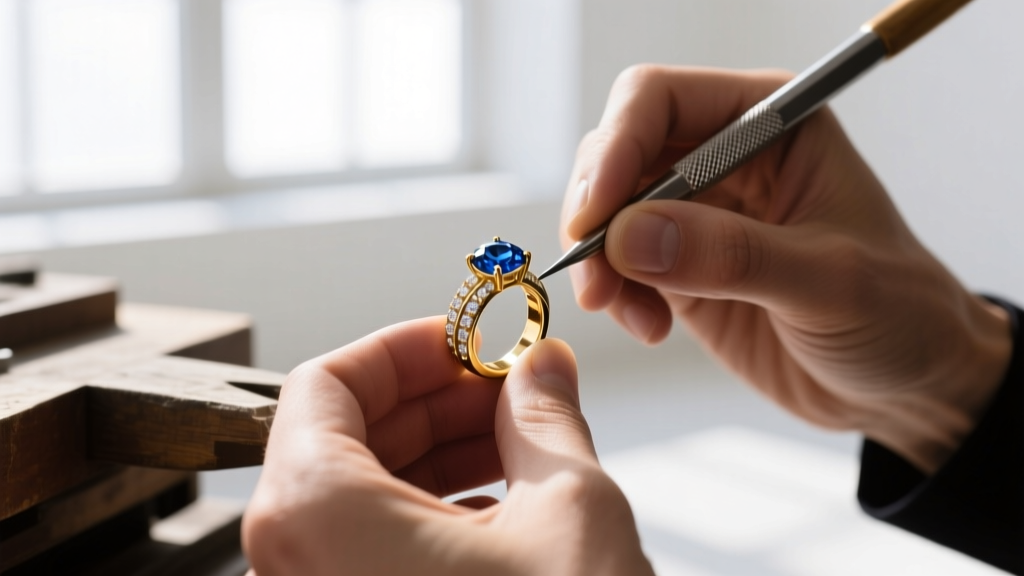
Instead, expert jewelers utilize full bezel or semi-bezel settings. A bezel setting wraps a continuous rim of metal (typically 14k gold-filled or solid sterling silver) entirely around the perimeter of the cabochon. This distributes mechanical stress evenly across the stone's edge, protecting the vulnerable girdle from impacts and preventing the conchoidal chipping that plagues poorly designed pendants.
Chain Metallurgy and Tensile Requirements
A large, 40mm x 30mm black obsidian cabochon can weigh between 15 and 25 grams. While this may seem light, the dynamic loading placed on a necklace chain during daily wear—such as catching the pendant on a sweater or experiencing a sudden tug—can generate momentary tensile forces exceeding 3 to 5 kilograms. Therefore, the chain metallurgy must be carefully selected to prevent snap-failures.
- Avoid Hollow Chains: Hollow rope or tubular herringbone chains are prone to kinking and snapping under the pendulum-like swinging motion of a heavy obsidian pendant.
- Optimal Chain Styles: Solid 1.5mm cable chains, 2.0mm wheat (spiga) chains, or solid 1.2mm box chains offer the highest tensile strength-to-weight ratios.
- Clasp Mechanics: Discard standard spring-ring clasps, which possess weak internal springs that fail under dynamic loads. Upgrade to a solid cast lobster clasp with a reinforced jump ring soldered shut at the chain terminus.
Care Protocols: What Destroys Obsidian
Maintaining the optical clarity and structural integrity of a black obsidian crystal necklace requires strict adherence to specific care protocols. The most common mistake consumers make is treating obsidian like a durable crystalline gemstone such as sapphire or diamond.
- Ultrasonic Cleaners are Forbidden: The high-frequency acoustic cavitation bubbles generated by ultrasonic jewelry cleaners will induce micro-fractures within the amorphous glass structure, eventually causing the pendant to shatter from the inside out.
- Thermal Shock Avoidance: Steam cleaners and boiling water are equally destructive. Obsidian's lack of a crystalline lattice makes it highly susceptible to thermal shock. Rapid temperature changes will cause immediate, irreversible cracking.
- Proper Cleaning Method: Use only lukewarm water, a mild pH-neutral dish soap, and a high-density microfiber cloth. Gently wipe the surface to remove sebum and environmental oils that can dull the glassy luster.
- Storage Isolation: Because obsidian is a Mohs 5.5, it will be easily scratched by diamonds, sapphires, quartz, and even standard household dust (which contains microscopic quartz particles). Always store your necklace in a dedicated, soft flannel pouch or a lined jewelry box compartment, completely isolated from harder gemstones.
By understanding the unique mineralogical profile, lapidary limitations, and tensile requirements of volcanic glass, you can confidently select a black obsidian crystal necklace that is not only geologically authentic but structurally engineered to last a lifetime.


