The Black Rosary Necklace: A Beginner's Style Guide
Discover how to choose, style, and care for a black rosary necklace. Explore bead materials, chain lengths, and modern streetwear styling tips.

What Defines a Black Rosary Necklace?
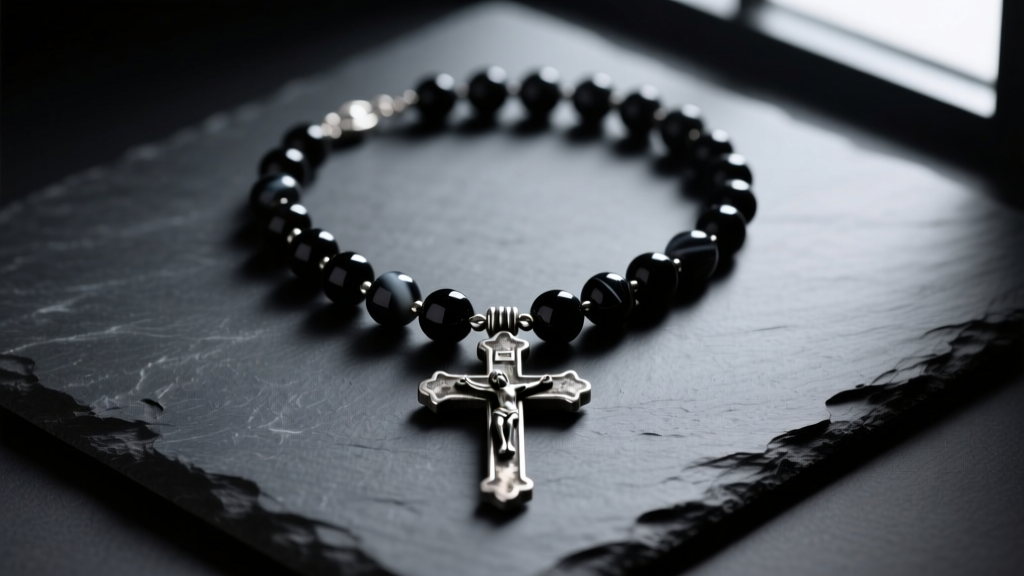
The black rosary necklace has evolved far beyond its traditional religious origins. In 2026, it stands as a versatile staple in gothic, streetwear, techwear, and avant-garde minimalist wardrobes. For beginners, navigating the market can be overwhelming due to the vast differences in construction, bead materials, and hardware quality. A true fashion rosary borrows the structural aesthetics of the Catholic prayer bead string—featuring segmented 'decades' of beads, a centerpiece, and a crucifix or geometric drop—but adapts it for daily wearability and modern style.
Unlike traditional religious rosaries, which strictly feature five decades (50 small beads) and five larger 'Our Father' beads, fashion rosaries often utilize a continuous loop of uniform beads or a simplified single-decade design. Understanding the anatomy and material composition is the first step to investing in a piece that will not easily break, tarnish, or lose its dark allure.
Material Breakdown: Beads and Metals
The most critical factor in determining the price, weight, and longevity of your black rosary necklace is the bead material. Black beads are not created equal; they range from soft, easily scratched acrylics to highly durable, naturally occurring gemstones. According to the Gemological Institute of America (GIA), natural black onyx is a chalcedony quartz with a Mohs hardness of 7, making it highly resistant to everyday scratches. However, many budget options use dyed agate or matte glass.
| Material | Mohs Hardness | Weight & Feel | Price Range | Best For |
|---|---|---|---|---|
| Black Onyx | 7.0 | Heavy, cold to touch | $40 - $120 | Everyday luxury, heirloom pieces |
| Black Spinel | 8.0 | Medium, highly refractive | $80 - $250 | High-end faceted light reflection |
| Matte Glass | 5.5 | Lightweight, uniform | $15 - $45 | Budget-friendly, casual streetwear |
| Acrylic / Resin | 2.0 - 3.0 | Very light, warm | $10 - $25 | Costume jewelry, temporary trends |
When it comes to the metal hardware (the chain links, wire wrapping, and crucifix), look for 316L surgical stainless steel with a PVD (Physical Vapor Deposition) black coating. PVD coating is vastly superior to cheap electroplating, as it bonds at a molecular level and will not flake off when exposed to sweat or friction. For a more artisan, gothic look, oxidized sterling silver (treated with liver of sulfur) provides a deep, antiqued black finish that highlights intricate crucifix engravings.
Construction Techniques: Wire-Wrapping vs. Stringing
How your black rosary necklace is assembled dictates its lifespan. There are two primary construction methods you will encounter:
1. Wire-Wrapping (The Gold Standard)
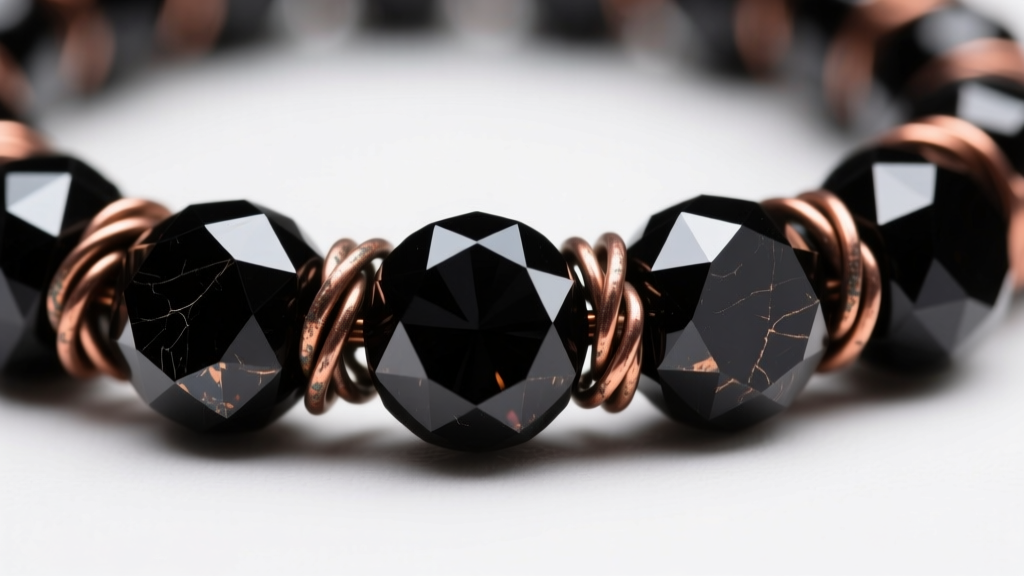
In this method, each individual bead is linked using wire—typically 20-gauge or 22-gauge half-hard wire. The artisan creates a loop on each side of the bead, wrapping the excess wire tightly around the 'neck' of the loop. Why it matters: If a wire-wrapped rosary snaps, you lose one bead. The rest of the necklace remains intact. This is essential for heavy stones like onyx, which put significant tensile stress on the links.
2. Nylon-Coated Steel Stringing
Many mass-produced rosaries are strung on nylon-coated braided steel wire (such as 49-strand Beadalon) and finished with crimp beads. While this creates a fluid, flexible drape, it is highly vulnerable to kinking. If the wire kinks and snaps, the entire necklace will unravel, scattering dozens of glass or stone beads across the floor. If you buy a strung rosary, ensure it includes a 'knot' or small metal spacer between every 5 to 10 beads to act as a fail-safe.
Sizing and Proportions: Finding Your Perfect Length
Choosing the right length is crucial for achieving your desired aesthetic. The black rosary necklace is highly sensitive to proportion, and a few inches can completely change the vibe of your outfit.
- 18 to 20 Inches (Collarbone Length): Best for traditional, minimalist wear. Sits neatly above the collar of a t-shirt or button-down. Ideal for smaller, 4mm to 6mm beads so the piece doesn't feel choking or overly heavy.
- 24 to 28 Inches (Mid-Chest): The sweet spot for streetwear and layering. This length allows the crucifix or centerpiece to rest over the chest, making it perfect for wearing over hoodies, oversized graphic tees, or lightweight jackets.
- 32+ Inches (Lariat / Over-Head): Designed for avant-garde and techwear aesthetics. These extra-long rosaries often lack a clasp entirely, slipping over the head and swinging freely. They are best paired with 8mm beads for a bold, heavy, and deliberate statement.
Modern Styling: Beyond Traditional Wear
Styling a black rosary necklace requires balancing its inherent visual weight. Because the repeating beads create a highly textured, 'busy' pattern, the rest of your outfit should provide a clean canvas.
"The key to mastering the dark aesthetic in 2026 is contrast in texture, not just color. Pairing a matte black onyx rosary with a sleek, high-gloss leather jacket or a soft, distressed cotton hoodie creates a tactile dialogue that elevates the jewelry from a mere accessory to a focal point."
For a monochrome minimalist look, pair a delicate 20-inch black spinel rosary with a black silk blouse or a fine-gauge merino wool turtleneck. The subtle faceting of the spinel will catch the light without overpowering the sleek silhouette. For streetwear and techwear, opt for a 28-inch matte glass or onyx rosary with heavy, oxidized silver hardware. Layer it over a heavyweight, boxy hoodie, and mix it with a simple, thick Cuban link silver chain to break up the bead pattern and add metallic contrast.

Care and Maintenance for Dark Finishes
Black jewelry requires specific maintenance to preserve its moody aesthetic. If your hardware is made of oxidized sterling silver, never use liquid silver dips or harsh chemical polishes. These products will strip the intentional black oxidation from the recesses of the metal, leaving you with a bright, shiny crucifix that loses its gothic appeal. Instead, use a dry, untreated microfiber cloth to gently buff only the raised, high-friction areas of the metal.
For natural stone beads like onyx or spinel, clean them with a damp cloth and mild soap. Avoid ultrasonic cleaners, especially if the beads are dyed agate (a common onyx substitute), as the high-frequency vibrations and heat can cause the black dye to bleed or cloud the finish. Always store your rosary necklace flat or hung vertically; tossing it into a drawer will cause wire-wrapped loops to bend and strung wire to permanently kink.
Where to Buy: Navigating the Market
When shopping for a black rosary necklace, avoid fast-fashion retailers if you want longevity. Look for independent jewelers on platforms like Etsy who specialize in wire-wrapping and clearly state their bead origins. For high-end pieces, seek out boutique gothic jewelers who use solid 925 sterling silver and genuine black spinel. Expect to pay between $60 and $150 for a well-constructed, wire-wrapped onyx rosary with solid metal hardware—a worthwhile investment for a piece that bridges the gap between spiritual history and modern fashion.


