How to Clean a Black Silver Necklace Without Ruining It
Learn how to safely clean a black silver necklace. Discover expert tips to maintain oxidized finishes and avoid stripping the dark patina.

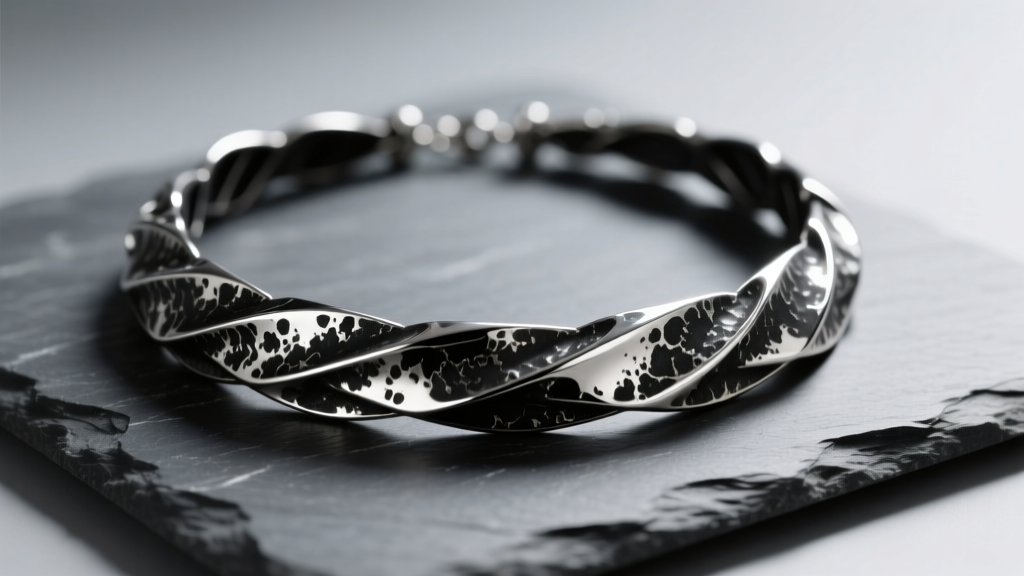
The Metallurgy of Black Silver: Oxidized vs. Plated
When you invest in a black silver necklace, you are purchasing a piece of jewelry that relies on deliberate chemical alterations to achieve its striking, moody aesthetic. However, the term "black silver" is often used as a catch-all phrase in the jewelry industry, which can lead to disastrous cleaning mistakes if you do not know exactly what is happening on a metallurgical level. As of 2026, the market is dominated by two distinct types of blackened silver, and each requires a radically different maintenance protocol.
The first and most common type is oxidized sterling silver. This is not actually a plating, but rather a controlled chemical reaction. Jewelers expose sterling silver (which is 92.5% silver and 7.5% copper) to a compound called liver of sulfur (potassium sulfide). This accelerates the natural tarnishing process, creating a layer of silver sulfide (Ag2S) on the surface. The piece is then lightly polished to remove the black oxidation from the high points, leaving the dark patina trapped in the recesses and engravings to create depth and contrast.
The second type is black ruthenium or black rhodium plated silver. Ruthenium is a rare platinum-group metal that is electroplated onto the surface of the silver. Unlike oxidation, which is a surface conversion of the silver itself, plating is an entirely separate microscopic layer of metal bonded to the top. Understanding whether your necklace is oxidized or plated is the critical first step in our care framework.
The Chemistry of Tarnish vs. Patina
To properly care for your jewelry, you must understand the difference between accidental tarnish and intentional patina. According to the Gemological Institute of America (GIA), standard silver tarnish occurs when the copper alloy in sterling silver reacts with sulfur compounds in the air, moisture, and everyday chemicals like perfume or lotions. This tarnish usually presents as a dull, yellowish-brown film that eventually turns black and spreads evenly across the entire surface, ruining the luster of the metal.
Intentional oxidation, however, is a localized, deep-black silver sulfide layer that is meant to stay exactly where it is. The challenge of maintaining a black silver necklace is that the chemical agents used to remove accidental yellowish tarnish from the polished high-points will simultaneously strip the intentional black patina from the recesses. You are essentially walking a chemical tightrope every time you clean the piece.
The "Never Do This" List: Avoiding Catastrophic Damage
Before we discuss what you should do, we must establish the absolute boundaries of black silver care. Using the wrong cleaning method will instantly ruin the contrast of your necklace, leaving you with a patchy, gray, and uneven piece of metal.
- Never use chemical silver dips (e.g., Tarn-X): These liquid cleaners rely on thiourea and strong acids to strip silver sulfide. They do not discriminate between accidental tarnish and intentional oxidation. A three-second dip will completely erase the black finish.
- Never use the aluminum foil and baking soda bath: This popular DIY internet hack creates an electrochemical reaction that reverses silver sulfide back into pure silver. It will strip your black silver necklace just as aggressively as a commercial dip.
- Never use ultrasonic cleaners: Ultrasonic machines use high-frequency sound waves to create microscopic cavitation bubbles in a liquid solvent. When these bubbles collapse against the metal, they create localized shockwaves. Because oxidized silver sulfide is relatively porous and brittle compared to the base metal, these shockwaves can literally blast the black oxidation right out of the engraved recesses.
- Never use treated polishing cloths: Cloths infused with jeweler's rouge or chemical tarnish-removers (like standard Sunshine cloths) contain mild abrasives that will sand away the dark patina on contact.
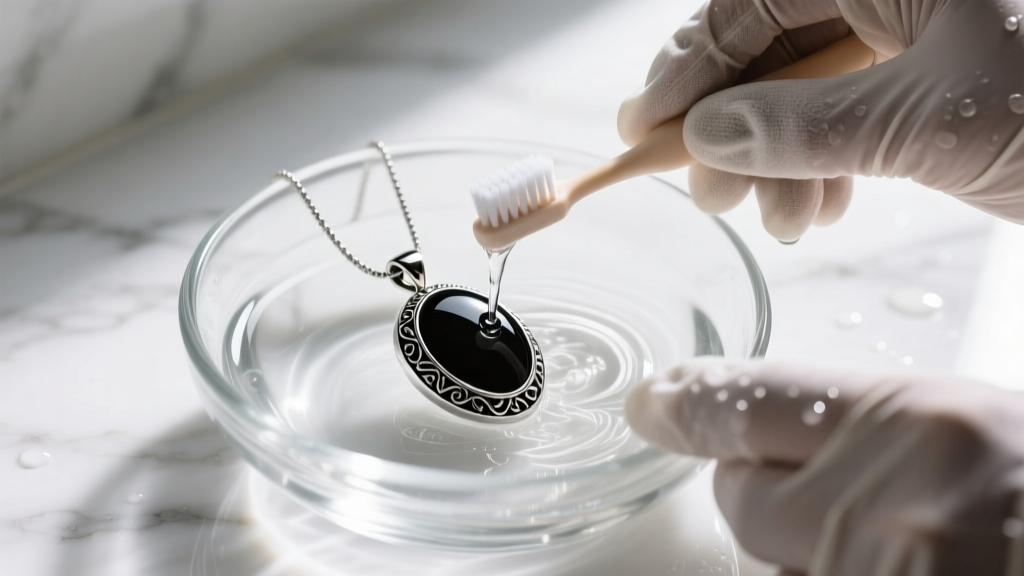
Step-by-Step Cleaning Guide for Oxidized Black Silver
If your necklace is oxidized (the most common variant), your goal is to remove skin oils, lotions, and environmental dust without disturbing the silver sulfide layer. Follow this exact protocol for safe maintenance.
- Prepare a Neutral Bath: Fill a glass bowl with lukewarm distilled water. Add exactly two drops of a pH-neutral, phosphate-free dish soap (original blue Dawn is the industry standard). Avoid soaps with citrus extracts, degreasers, or moisturizing creams, as these can leave a cloudy film or react with the copper alloy.
- Soak Briefly: Submerge the black silver necklace for no more than 3 to 5 minutes. This is just enough time to loosen sebum and environmental grime.
- Agitate Gently: Use an extra-soft baby toothbrush (never a standard adult toothbrush, as the bristles are too stiff and can scratch the polished high points). Lightly brush the chain links and the surface of the pendant. Do not scrub aggressively into the dark recesses.
- Rinse with Distilled Water: Tap water contains chlorine and trace minerals that can cause water spots or initiate new, unwanted tarnish. Rinse the necklace thoroughly under a gentle stream of distilled water.
- Pat Dry, Never Rub: Lay the necklace flat on a clean, untreated microfiber towel. Gently press another microfiber towel on top to absorb the moisture. Never drag or rub the towel across the metal, as friction can wear down the oxidation over time.
- Air Dry Completely: Allow the piece to air dry for 15 minutes in a low-humidity room before storing it. Trapping moisture in a jewelry box is the fastest way to degrade the metal.
Pro-Tip for Polished High Points: If the raised, polished areas of your oxidized necklace have developed a slight yellowish tarnish, take a standard cotton swab (Q-tip), dip it very lightly in a non-chemical silver polish paste, and carefully trace only the raised areas. Wipe away any residue immediately with a damp cloth to ensure none of the paste seeps into the black recesses.
Maintenance Routine for Black Ruthenium Plated Silver
If your necklace is plated with black ruthenium or black rhodium, the cleaning process is slightly more forgiving regarding chemical reactions, but much more dangerous regarding physical abrasion. Plating is measured in microns (usually between 0.1 and 0.5 microns for fashion jewelry, and up to 2.0 microns for fine jewelry). Every time you rub the surface, you are removing a microscopic fraction of that plating.
Clean plated black silver using the same distilled water and mild soap method outlined above, but eliminate the toothbrush entirely. Instead, use your fingertips to gently massage the soapy water over the metal. Rinse and pat dry immediately. Never use any form of polish, paste, or abrasive cloth on plated black silver, as you will wear through the plating and expose the bright, silvery base metal underneath.
Comparison of Cleaning Agents and Their Effects
To help you make informed decisions when selecting jewelry care products, refer to this matrix detailing how common household and commercial agents interact with black silver finishes.
| Cleaning Agent | Effect on Oxidized Silver | Effect on Black Ruthenium Plating | Verdict |
|---|---|---|---|
| Mild Dish Soap & Water | Safe; removes oils without stripping patina | Safe; gently removes surface grime | Highly Recommended |
| Thiourea Chemical Dips | Instantly strips all black oxidation | Can cause chemical pitting and discoloration | Never Use |
| Baking Soda & Aluminum | Reverses oxidation back to bright silver | Ineffective; may leave abrasive residue | Never Use |
| Ultrasonic Cavitation | Blasts porous oxidation out of recesses | Can cause micro-fractures and peeling in plating | Never Use |
| Untreated Microfiber | Safe for drying and light buffing | Safe for drying; avoid heavy rubbing | Recommended |
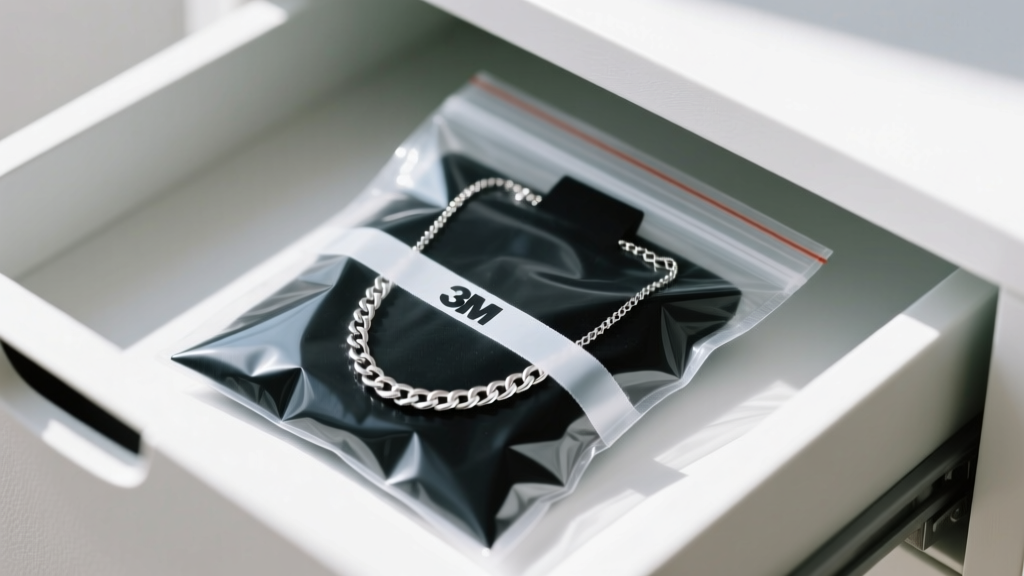
Storage and Prevention: Keeping the Patina Intact
Proper storage is arguably more important than the cleaning process itself. According to guidelines published by Jewelry Wise, controlling the micro-environment where your jewelry rests is the key to longevity. The copper in sterling silver is highly reactive to sulfur, humidity, and salt.
- Use Anti-Tarnish Strips: Store your black silver necklace in a sealed polyethylene ziplock bag alongside a 3M anti-tarnish strip. These strips contain activated carbon and silver particles that act as a sacrificial anode, absorbing airborne sulfur compounds before they can reach your necklace.
- Avoid Cardboard and Paper: Never store your necklace in a cardboard jewelry box or wrap it in tissue paper. The wood pulp and adhesives used in paper products emit trace amounts of sulfuric acid and volatile organic compounds (VOCs) that accelerate uncontrolled, patchy tarnishing.
- The "Last On, First Off" Rule: Your necklace should be the last thing you put on when getting dressed and the first thing you take off. Hairsprays, perfumes, and body lotions contain alcohols and aerosolized chemicals that can degrade both oxidized and plated finishes over time.
When to Seek Professional Re-Oxidation
Even with meticulous care, the black silver sulfide layer on an oxidized necklace will naturally wear away over the years, particularly on areas that experience high friction, such as the back of the pendant or the individual chain links. When the contrast begins to fade and the piece looks uniformly gray, it is time for professional re-oxidation.
A bench jeweler can easily restore the piece by polishing it back to bright silver, applying a fresh liver of sulfur solution, and carefully re-polishing the high points. This process is relatively inexpensive and can make a vintage or well-loved black silver necklace look brand new. Do not attempt to re-oxidize the piece at home using craft-store chemicals, as achieving an even, deep-black finish requires precise temperature control and professional ventilation. By understanding the unique chemistry of your black silver necklace and adhering to these strict maintenance protocols, you ensure that its dark, dramatic beauty will endure for decades.


