How to Choose a Men's Jade Necklace: Grades and Styles
Discover how to choose the perfect men's jade necklace. Learn the differences between nephrite and jadeite, jade grades, and styling tips for men.

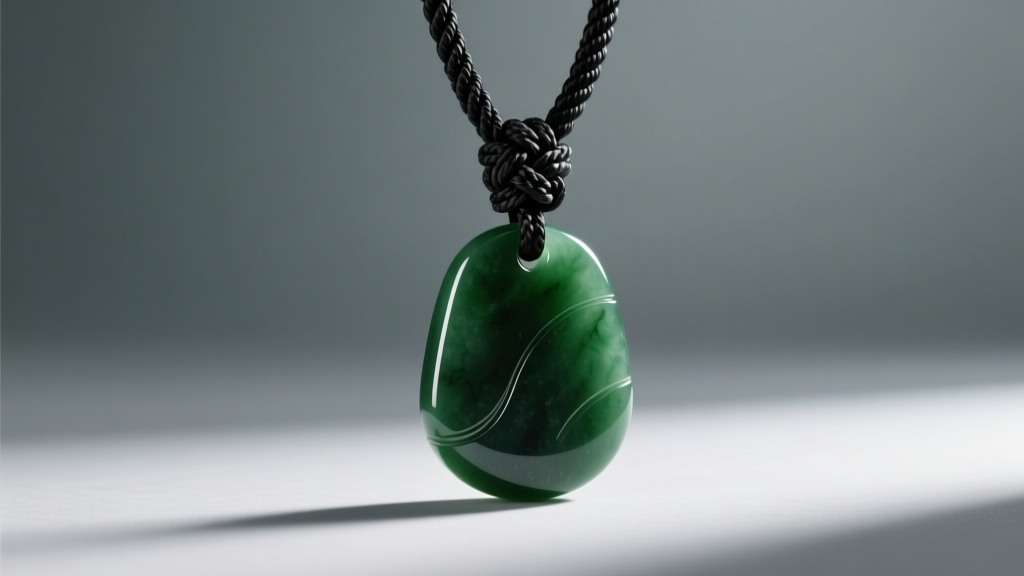
The men's jade necklace has evolved far beyond its traditional roots, cementing itself as a staple in modern luxury, streetwear, and minimalist men's fashion. Whether you are drawn to the deep, grounding tones of black nephrite or the vibrant, translucent hues of imperial jadeite, buying jade requires a specific set of skills. Unlike diamonds, which are graded on a universally standardized scale, jade valuation relies heavily on mineralogy, treatment history, and provenance. For beginners, navigating the market can feel overwhelming, with prices ranging from $50 for treated stones to over $100,000 for museum-grade jadeite.
This beginner-friendly explainer will demystify the buying process, giving you the exact frameworks, material grades, and sizing metrics needed to invest in a high-quality piece.
The Resurgence of Jade in Men's Fashion
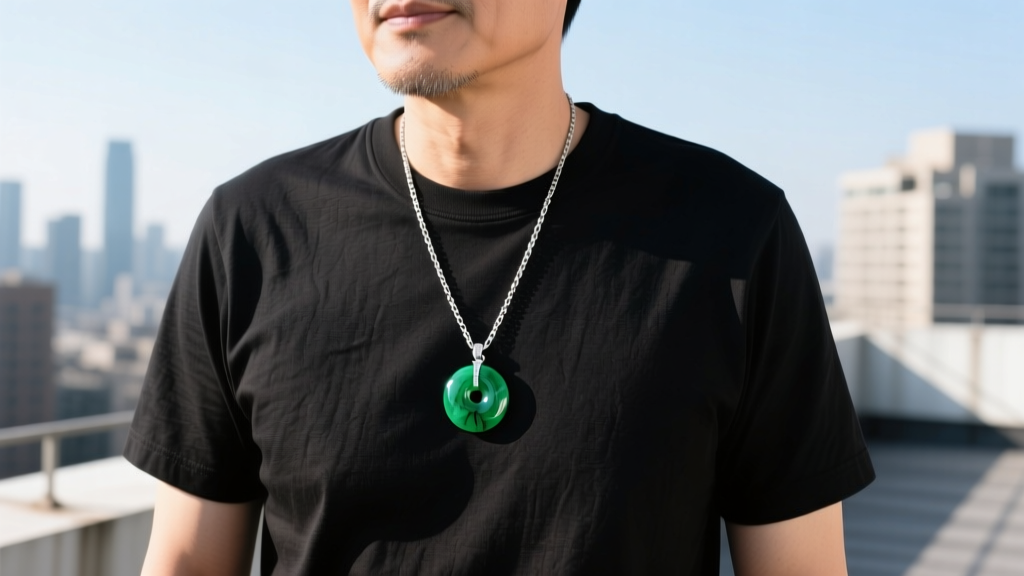
In 2026, the men's jade necklace is experiencing a massive renaissance. High-profile collectors, hip-hop artists, and minimalist designers have all embraced jade for its unique intersection of cultural heritage and organic texture. Unlike highly reflective gemstones like diamonds or sapphires, jade possesses a waxy to vitreous luster that absorbs and scatters light, giving it a subtle, understated masculinity. It pairs exceptionally well with both casual streetwear (think heavyweight cotton tees and denim) and tailored suiting, acting as a grounding focal point rather than a flashy distraction.
Nephrite vs. Jadeite: The Mineral Breakdown
The term "jade" is actually an umbrella term for two distinct metamorphic minerals: Nephrite and Jadeite. Understanding the difference is the first critical step in evaluating any men's jade necklace.
Nephrite is a calcium magnesium iron silicate. It is historically significant, widely available, and known for its fibrous, interlocking crystal structure, which makes it incredibly tough (resistant to breaking, even if it scratches easier). Nephrite colors are typically more muted: spinach green, mutton-fat white, and deep black.
Jadeite, a sodium aluminum silicate, is the rarer and more valuable of the two. It features a granular crystal structure and can achieve a high degree of translucency and vivid color saturation, including the highly coveted "Imperial Green" and lavender hues. According to the Gemological Institute of America (GIA), jadeite is the primary jade used in high-end fine jewelry and auction-house pieces.
| Feature | Nephrite | Jadeite |
|---|---|---|
| Chemical Composition | Calcium Magnesium Iron Silicate | Sodium Aluminum Silicate |
| Mohs Hardness | 6.0 - 6.5 | 6.5 - 7.0 |
| Toughness | Exceptional (Fibrous structure) | High (Granular structure) |
| Common Colors | Spinach green, black, white, brown | Imperial green, lavender, icy white, yellow |
| Price Range (Men's Pendant) | $50 - $2,500 | $500 - $100,000+ |
| Best For | Carved motifs, daily wear, budget buyers | Investment pieces, cabochons, luxury collectors |
Understanding Jade Treatments: Grades A, B, and C
This is where beginners lose money. The jade market uses an alphabetical grading system to denote chemical treatments. When shopping for a men's jade necklace, you must know how to identify these grades or rely on a certified gemological report.
Grade A: 100% Natural
Grade A jade is completely natural. It has been cut, shaped, and polished using only traditional mechanical methods and mild waxes. It has not been subjected to acid baths, polymer resins, or chemical dyes. Always aim for Grade A when building a jewelry collection. Over decades, Grade A jade retains its structural integrity and value.
Grade B: Acid-Bleached and Polymer-Impregnated
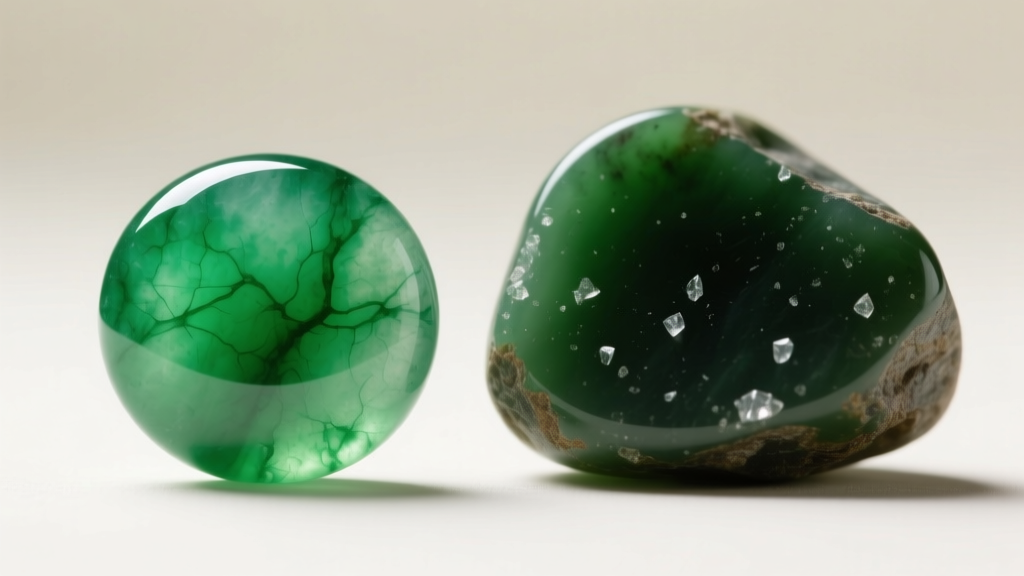
Grade B jade starts as lower-quality, heavily included stone. It is soaked in hydrochloric acid to bleach out brown or yellow impurities. This process destroys the stone's natural crystalline matrix, making it brittle. To hold it together, it is vacuum-impregnated with polymer resin. While it may look clean and translucent initially, the resin will yellow and degrade over time when exposed to UV light and skin oils.
Grade C: Chemically Dyed
Grade C jade has been artificially dyed to mimic the vibrant greens or lavenders of high-end jadeite. The dye concentrates in the microscopic fractures of the stone, which can often be seen under a 10x jeweler's loupe as spiderweb-like color veins. Grade C stones have virtually no resale value and can cause skin irritation. The GIA Jade Quality Factors guide heavily emphasizes that only Grade A jade is considered gem-quality by reputable appraisers.
Sizing, Proportions, and Hardware
A common mistake men make when buying a jade pendant is choosing the wrong proportions for their frame, or pairing a heavy stone with inadequate hardware.
Pendant Dimensions
- Width: For most men, a pendant width between 30mm and 50mm is ideal. Anything under 25mm can look lost on a broader chest, while anything over 60mm crosses into statement-costume territory.
- Thickness: Jade needs depth to show its internal light scattering. Look for a minimum thickness of 6mm to 12mm. Thin, flat slices often indicate low-quality material that the cutter was trying to stretch.
Cord vs. Metal Chains
The setting drastically alters the formality of the necklace. Black macrame or silk cords (1.5mm to 2.5mm thickness) are the traditional and most versatile choice. They allow the jade to rest close to the skin and are easily adjustable via slip knots. They are also safer for heavy nephrite carvings, as metal bails can wear down the stone's drill hole over time.
If you prefer metal, avoid flimsy chains. A heavy jadeite cabochon requires a sturdy chain. Opt for a 2.5mm to 3.0mm sterling silver or 14k gold rope chain. Ensure the bail (the metal loop connecting the stone to the chain) is lined with a soft metal or has a smooth interior to prevent friction against the jade.
Popular Men's Jade Motifs
Jade is rarely left uncarved when using nephrite. The motifs carry deep cultural symbolism, making them highly personal.
- Pi Xiu (Pixiu): A mythical winged lion known for attracting and guarding wealth. Highly popular in men's streetwear and business circles.
- Dragon: Represents power, strength, and transformation. Best suited for larger, bolder nephrite pieces.
- Ping'an Kou (Peace Buckle): A simple, uncarved disc with a hole in the center. This is the ultimate minimalist choice, representing safety and fluidity. It is the most common shape for high-grade, translucent jadeite.
- Guan Yin: The bodhisattva of compassion. Often worn for spiritual protection and mindfulness.
Care and Maintenance
Jade is tough, but it is not invincible. To maintain the luster of your men's jade necklace, follow these strict care protocols:
- Avoid Ultrasonic Cleaners: While safe for Grade A jade, ultrasonic vibrations can completely shatter the polymer resin in Grade B jade and strip the dye from Grade C.
- Keep Away from Harsh Chemicals: Chlorine in swimming pools and harsh household cleaners can etch the surface polish of the stone and degrade silk cords.
- The Best Cleaning Method: Use a soft, lint-free microfiber cloth dampened with warm water and a drop of mild, pH-neutral dish soap. Gently wipe the stone, rinse with distilled water, and air dry.
"Jade is not just a gemstone; it is a living archive of geological pressure and human artistry. When you buy a men's jade necklace, you are investing in a stone that will outlast you, provided you respect its natural chemistry and avoid the pitfalls of modern chemical treatments."
By prioritizing Grade A materials, understanding the mineral differences between nephrite and jadeite, and selecting the correct proportions for your physique, you can confidently acquire a men's jade necklace that serves as both a stylish anchor for your wardrobe and a lasting heirloom.


