2026 Trend Report: The Artisan Blown Glass Necklace Revival
Explore the 2026 blown glass necklace trend. Discover material differences, layering techniques, and how to authenticate artisan lampwork glass.

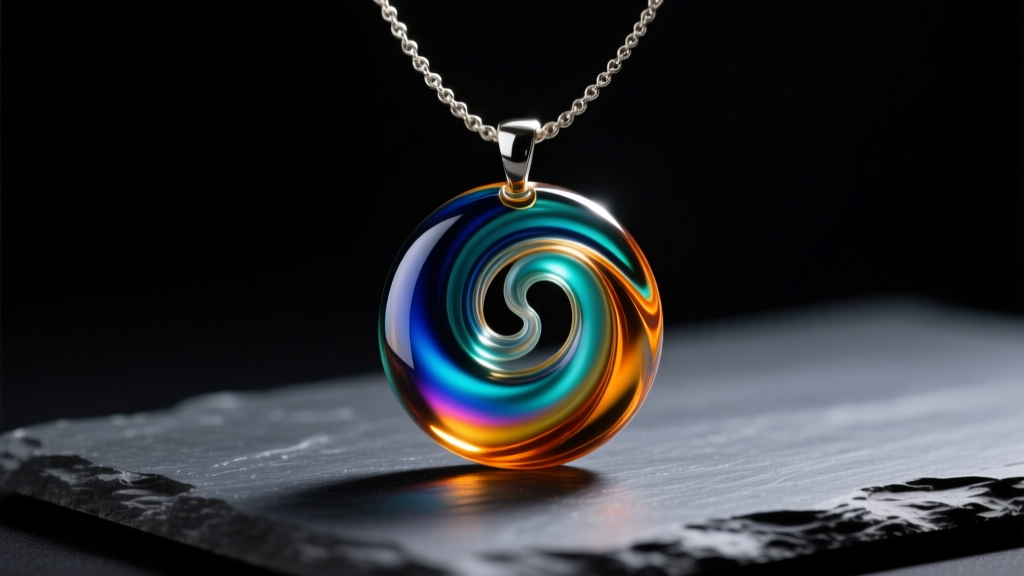
The jewelry landscape of 2026 has seen a definitive pivot away from hyper-minimalist metallics toward tactile, organic, and deeply personal adornments. At the forefront of this shift is the blown glass necklace. Once relegated to souvenir shops and niche craft fairs, artisanal glass pendants have been reclaimed by high-fashion houses and independent metallists alike. This resurgence is not merely aesthetic; it represents a broader consumer demand for wearable art with verifiable provenance and unique material properties. As a staple in the Necklaces & Pendants category, understanding the nuances of glasswork is now essential for both collectors and everyday stylists.
The 2026 Resurgence: Why Blown Glass is Dominating Necklines
Unlike the uniform precision of CNC-milled metals or faceted gemstones, a hand-blown glass pendant captures a moment of kinetic energy frozen in an amorphous solid. In 2026, runway styling in Milan and Paris has heavily featured asymmetrical silhouettes anchored by oversized, organically shaped glass pendants. The trend speaks to a desire for 'imperfect luxury'—pieces that showcase the human hand. According to the Glass Art Society, there has been a 40% increase in cross-disciplinary collaborations between traditional glassblowers and precious metal smiths over the last three years, resulting in hybrid necklaces that marry 18k gold wire-wrapping with delicate lampwork glass.
This revival also aligns with the sustainability movement. Glass is infinitely recyclable, and many contemporary artisans are utilizing crushed, reclaimed post-consumer glass to create vibrant, eco-conscious pendant collections. However, as demand spikes, the market has been flooded with factory-molded imitations masquerading as hand-blown art. Navigating this requires a deep understanding of material science and structural styling.
Material Deep Dive: Borosilicate vs. Soda-Lime Glass
Not all glass is created equal, and the longevity of your necklace depends entirely on its chemical composition. The two primary materials used in pendant making are soda-lime glass and borosilicate glass. Understanding the difference is critical for evaluating durability, thermal shock resistance, and overall value.

Soda-lime glass is the most common and economical type of glass. While it can be beautifully colored, it has a high coefficient of thermal expansion, making it susceptible to micro-fractures if exposed to sudden temperature changes (like stepping out of a hot shower into cold air). Borosilicate glass, on the other hand, incorporates boron trioxide, which drastically lowers its thermal expansion rate. Originally popularized by laboratory glassware and high-end lampwork bead makers, borosilicate is the gold standard for durable, everyday glass jewelry.
| Property | Soda-Lime Glass | Borosilicate Glass |
|---|---|---|
| Durability | Moderate; prone to chipping | High; highly impact-resistant |
| Thermal Shock | Poor; fractures easily | Excellent; withstands rapid shifts |
| Annealing Temp | ~900°F (482°C) | ~1050°F (565°C) |
| Refractive Index | 1.52 (Standard brilliance) | 1.47 (Slightly softer optical glow) |
| Market Price Tier | Budget / Fast Fashion | Artisan / Fine Jewelry |
Proper annealing is just as critical as the material itself. According to the Corning Museum of Glass, annealing is the controlled cooling process that relieves internal stresses. A borosilicate pendant that is flash-cooled instead of properly kiln-annealed will harbor invisible tension points, leading to spontaneous shattering months after purchase. Always verify that an artisan utilizes a digitally controlled Lehr kiln for their annealing process.
Chain Pairing & Layering Frameworks for Glass Pendants
A blown glass necklace is only as strong as its suspension system. Glass pendants, particularly those with intricate dichroic inclusions or elongated teardrop shapes, require specific chain gauges and bail mechanics to prevent catastrophic failure.
The 1.2mm to 1.5mm Cable Chain Standard
For pendants weighing between 8 and 25 grams, a 1.2mm to 1.5mm sterling silver or 14k gold cable chain provides the optimal balance of tensile strength and visual lightness. Heavy chains, such as 4mm Cuban links, will visually overpower the translucency of the glass and create excessive kinetic momentum, increasing the risk of the glass striking a hard surface if dropped. Conversely, chains thinner than 1.0mm are prone to snapping at the jump ring under the pendulum weight of a glass pendant.
Bail Mechanics: Avoid the Glue
The bail—the connector between the chain and the glass—is a frequent point of failure. Mass-produced necklaces often use adhesive-backed metal bails glued directly to the glass surface. Over time, UV exposure and skin oils degrade the cyanoacrylate or epoxy adhesives, causing the pendant to detach. In 2026, the industry standard for high-end blown glass necklaces is the mechanically wrapped wire bail or a sterling silver pinch bail that grips a pre-drilled glass loop. If a pendant features a glass loop, ensure the metal jump ring is soldered closed; an open jump ring will eventually warp and slice through the glass loop due to friction.
Asymmetrical Layering Techniques
To integrate a bold blown glass pendant into a modern layered stack, utilize the 'Anchor and Orbit' method. Use the glass pendant on an 18-inch or 20-inch chain as the heavy visual anchor. Then, layer a 14-inch delicate 0.8mm box chain featuring a tiny, opaque metallic charm (like a solid gold crescent or a matte onyx bead) to create an asymmetrical contrast. This prevents the glass from competing with other reflective surfaces and allows its internal striations to catch the light unobstructed.
Authenticating Artisan Lampwork vs. Factory-Molded Glass
As the blown glass necklace trend has accelerated, overseas manufacturing hubs have begun producing mold-cast glass designed to mimic the organic imperfections of hand-blown art. Here is a practical framework for authenticating genuine artisan work:
- The Pontil Mark or Shear Line: Hand-blown pendants are typically gathered on a blowpipe or mandrel. When removed, they leave a pontil mark (a small scar) or a cleanly sheared and fire-polished lip. Molded glass will often feature a uniform, raised seam line running vertically along the edge where the two halves of the steel mold met.
- Internal Striations and Bubbles: Artisan glass frequently contains organic, asymmetrical striations (swirls of color) and occasionally microscopic 'seed' bubbles that are trapped during the gathering process. Factory glass is usually homogenized, and any bubbles present will be perfectly spherical and evenly distributed.
- Weight Distribution: Because hand-blown glass is shaped by gravity and centrifugal force, the walls of the pendant will vary in thickness. Hold the piece up to a strong light source; you should see gradients of opacity. Molded glass maintains a mathematically uniform wall thickness.
- The Temperature Test: Glass is a thermal conductor, but borosilicate glass feels noticeably cooler to the touch upon initial contact than cheap plastic or resin imitations, and it retains that coolness longer than thin, hollow molded glass.
Price Tier Analysis: What Should You Pay in 2026?
Valuing a blown glass necklace requires looking past the raw material cost and evaluating the technical mastery and time investment of the glassblower. Here is the current market breakdown for authentic pieces:
Tier 1: Production Lampwork ($35 - $85)
These pieces are typically made by production beadmakers who create dozens of identical or semi-identical shapes in a single torch session. While often made of quality borosilicate glass, they lack complex internal sculpting. Expect simple focal beads on basic sterling chains.
Tier 2: Independent Artisan & Sculptural Pendants ($120 - $350)
This tier features complex techniques such as implosion, encasement, and the use of precious metal leaf (gold or silver fuming). The pendants are usually one-of-a-kind, kiln-annealed, and paired with high-quality, soldered chainmaille or custom wire-wrapped bails.
Tier 3: Master Glassblower & Fine Jewelry Integration ($500 - $2,000+)
At the apex of the market, master glassblowers collaborate with fine jewelers. These necklaces feature blown glass elements integrated into 18k gold or platinum settings, often utilizing advanced dichroic glass that shifts color based on the angle of light. These are investment-grade wearable sculptures.
Ultimately, the 2026 blown glass necklace trend is a celebration of material alchemy. By prioritizing borosilicate durability, demanding mechanical bail security, and learning to read the subtle visual signatures of the torch, you can curate a pendant collection that is as structurally resilient as it is visually breathtaking.


