Finding the Perfect Beaded Necklace Blue: A Material Comparison
Discover how to choose a beaded necklace blue by comparing lapis, sodalite, glass, and dyed howlite. Expert material properties guide.

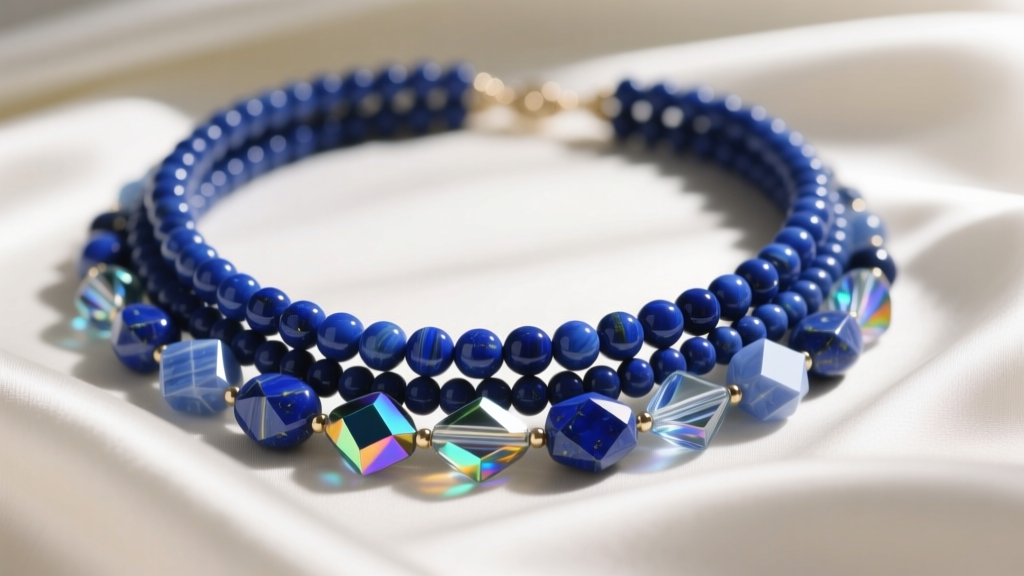
The Allure and Complexity of Blue Bead Materials
The search for the perfect beaded necklace blue often leads consumers into a maze of misidentified stones, synthetic imitations, and unstable dyes. Blue is one of the most psychologically sought-after colors in jewelry, symbolizing tranquility and depth. However, from a gemological and material science perspective, not all blue beads are created equal. The structural integrity, porosity, and chemical stability of blue beads vary wildly depending on their origin and composition.
Whether you are designing a custom piece or investing in high-end artisan jewelry, understanding the physical properties of blue bead materials is critical. A bead's Mohs hardness, specific gravity, and reaction to environmental factors like sweat and UV light will dictate its longevity. In this comprehensive guide, we dissect the most common materials used in blue beaded necklaces, separating natural gemstones from treated imitations and manufactured glass.
Natural Gemstones: Lapis Lazuli vs. Sodalite
When buyers envision a premium beaded necklace blue, they are usually picturing Lapis Lazuli. However, Sodalite is frequently sold as a more affordable alternative—or deceptively marketed as Lapis. Understanding the mineralogical differences is essential for assessing value and durability.
Lapis Lazuli: The Royal Standard
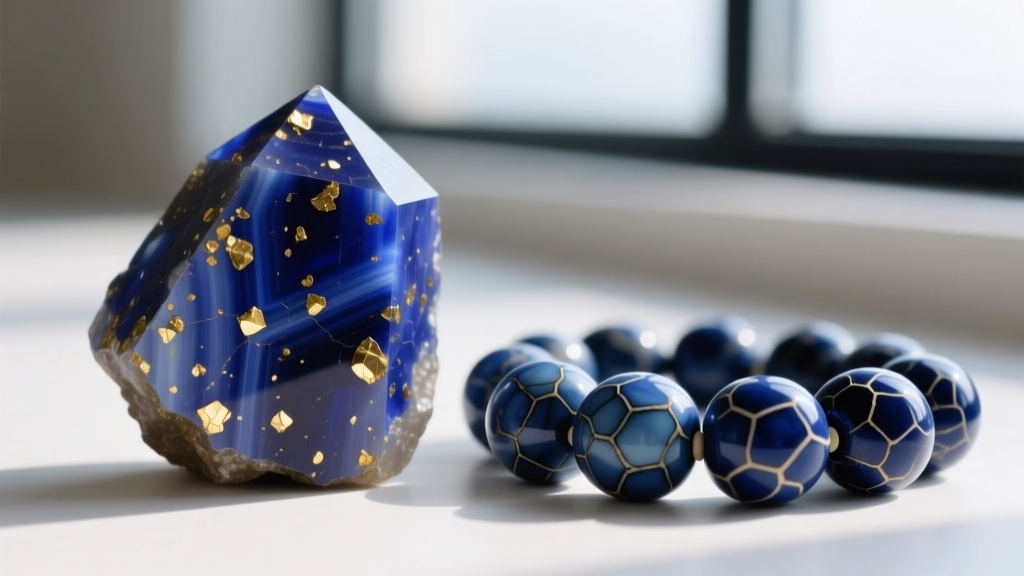
Lapis lazuli is not a single mineral, but a metamorphic rock composed primarily of lazurite (which provides the blue color), calcite (white streaks), and pyrite (golden flecks). According to the Gemological Institute of America (GIA), high-quality Afghan lapis contains minimal calcite and a dense, even distribution of pyrite. Lapis registers between 5.0 and 5.5 on the Mohs hardness scale, making it relatively soft and susceptible to scratching from everyday wear.
- Porosity: Moderate. The calcite veins are highly porous and reactive to acids.
- Failure Mode: Exposure to acidic substances (even mild skin pH or citrus-based cleaners) will dissolve the calcite matrix, leaving the bead pitted and structurally compromised.
- Treatments: Lower-grade lapis is often dyed to mask white calcite, or reconstituted (ground lapis dust mixed with epoxy resin).
Sodalite: The Durable Alternative
Sodalite is a tectosilicate mineral that shares a similar deep blue hue but lacks the golden pyrite flecks characteristic of lapis. It often features white veining, but this is typically sodalite or nepheline rather than calcite. Mindat.org notes that sodalite has a slightly higher hardness (5.5 to 6.0) and lacks the acid-reactive calcite found in lapis, making it a more stable choice for daily-wear necklaces.
Gemologist's Note: A rare variety of sodalite known as Hackmanite exhibits tenebrescence, meaning it changes color when exposed to UV light. If your blue beads temporarily turn purple or pink in sunlight, you likely have Hackmanite, not standard lapis.
The Imitation Game: Dyed Howlite and Magnesite
The most pervasive imitation in the blue bead market is dyed howlite or magnesite. Howlite is a naturally white or gray borate mineral with a Mohs hardness of just 3.5. Because it is highly porous, it acts as an excellent sponge for aniline dyes.
Manufacturers dye howlite to mimic both lapis lazuli and turquoise. While a dyed howlite beaded necklace blue may look striking in a display case, it presents significant long-term wear issues:
- Dye Bleeding: Aniline dyes are not permanently fixed within the crystal lattice. When exposed to the natural oils, sweat, and friction of human skin, the dye will inevitably bleed, staining the wearer's skin and ruining adjacent beads.
- The Acetone Test: To identify dyed howlite, swipe a cotton swab dipped in pure acetone (nail polish remover) across an inconspicuous area of the bead. If the swab turns blue, the stone is dyed.
- Specific Gravity: Howlite is exceptionally light (SG ~2.53) compared to lapis (SG ~2.7-2.9). An experienced jeweler can often identify a fake simply by the 'heft' of the necklace.
Manufactured Brilliance: Czech Glass and Crystal
For those prioritizing durability, uniformity, and colorfastness over natural stone, high-quality glass beads are the superior choice. Czech fire-polished glass and precision-cut crystal (such as Preciosa) offer a Mohs hardness of 6.0 to 7.0, making them highly resistant to scratching.
Unlike porous gemstones, glass is entirely non-porous. It will never absorb sweat, bleed dye, or react to household chemicals. The color in quality glass beads is either baked into the silica matrix or applied as a permanent metallic foil backing (such as Aurora Borealis or Ceylon finishes). For a vibrant beaded necklace blue that requires zero special maintenance and withstands rigorous daily wear, opaque or transparent cobalt glass beads are practically indestructible under normal conditions.
Material Properties & Durability Matrix
| Material | Mohs Hardness | Porosity | Common Treatments | Price Range (8mm Strand) |
|---|---|---|---|---|
| Lapis Lazuli (Afghan) | 5.0 - 5.5 | Moderate | Waxing, Dyeing (low grade) | $45 - $150+ |
| Sodalite | 5.5 - 6.0 | Low | Rarely treated | $12 - $30 |
| Dyed Howlite | 3.5 | Very High | Aniline Dyeing | $4 - $10 |
| Czech Fire-Polished Glass | 6.0 - 7.0 | None | Surface coatings | $8 - $25 |
| Blue Lace Agate | 6.5 - 7.0 | Low | Heat treatment (rare) | $25 - $60 |
Stringing Mechanics and Failure Modes
The structural failure of a beaded necklace blue rarely originates from the beads themselves; it almost always stems from improper stringing materials. The choice of thread or wire must be matched to the bead's weight, edge sharpness, and chemical properties.
Silk Thread vs. Synthetic Cords
Traditionalists often string high-end lapis lazuli on 100% natural silk cord (such as Griffin size No. 2 or No. 4). While silk drapes beautifully and allows for traditional knotting between beads, it is a protein-based fiber. Human sweat is slightly acidic (pH 4.5 to 7.0) and contains urea and salts. Over time, this acidic environment degrades the silk proteins, causing the thread to rot and snap without warning. If you wear a silk-strung lapis necklace daily against your skin, the cord must be professionally replaced every 12 to 18 months.
Micro-Coated Stainless Steel Wire
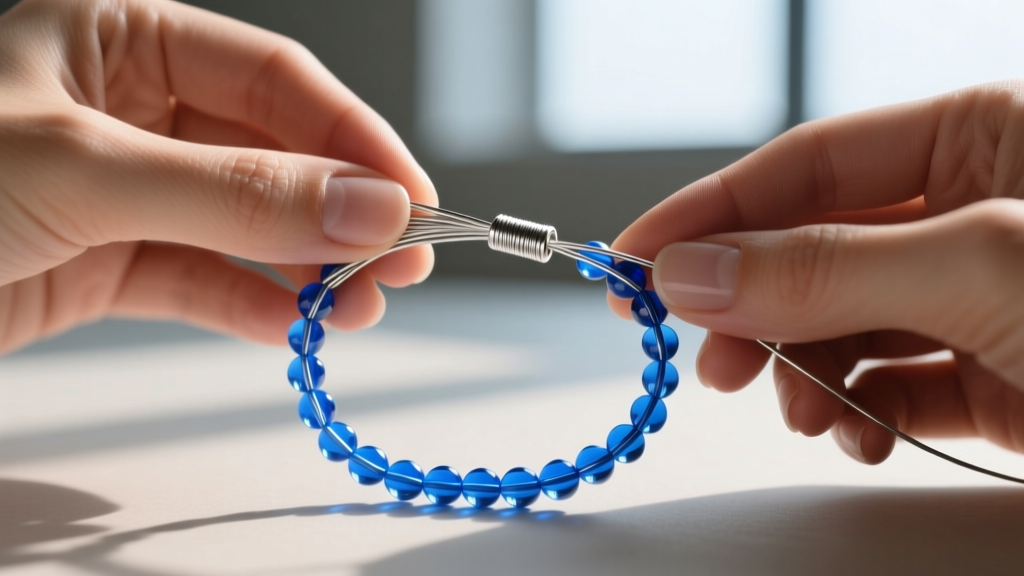
For heavier blue bead strands or sharp-edged stone beads, 49-strand micro-coated stainless steel beading wire (like Beadalon 0.018-inch) is the industry standard. The 49-strand construction provides the drape of silk with the tensile strength of steel. The nylon coating prevents the metal from reacting with porous stones, while the high strand count prevents kinking, which is a primary cause of metal fatigue and wire snapping.
Care, Cleaning, and Preservation Protocols
Maintaining the luster of blue gemstone beads requires strict adherence to material-specific cleaning protocols. The most common mistake consumers make is utilizing ultrasonic cleaners or harsh chemical dips.
- Never use ultrasonic cleaners on Lapis or Howlite: The high-frequency vibrations will shatter the calcite veins in lapis and strip the dye from howlite, leaving the beads dull and fractured.
- Avoid steam cleaning: Thermal shock can cause internal fracturing in glass beads and destabilize the epoxy resins used in reconstituted lapis.
- The Safe Cleaning Method: For all natural blue stones, use a soft, lint-free microfiber cloth slightly dampened with distilled water. Wipe gently and dry immediately. For glass beads, a mild solution of dish soap and warm water is perfectly safe.
Final Verdict: Which Blue Bead Suits Your Lifestyle?
Selecting the ideal beaded necklace blue requires balancing aesthetic desires with practical wearability. If you seek historical prestige and deep, complex color with golden accents, invest in untreated Afghan Lapis Lazuli, but commit to the strict maintenance and silk-restringing it requires. If you want a natural stone with excellent durability for daily, carefree wear, Sodalite or Blue Lace Agate are superior gemological choices. Finally, if colorfastness, uniformity, and absolute chemical stability are your priorities, premium Czech glass offers unmatched longevity without the risk of dye bleeding or acid degradation.


