Fixing a Broken Herringbone Necklace: Expert Repair & Care Guide
Is your broken herringbone necklace beyond repair? Discover expert soldering vs. laser welding fixes, kink prevention, and when to replace the chain.

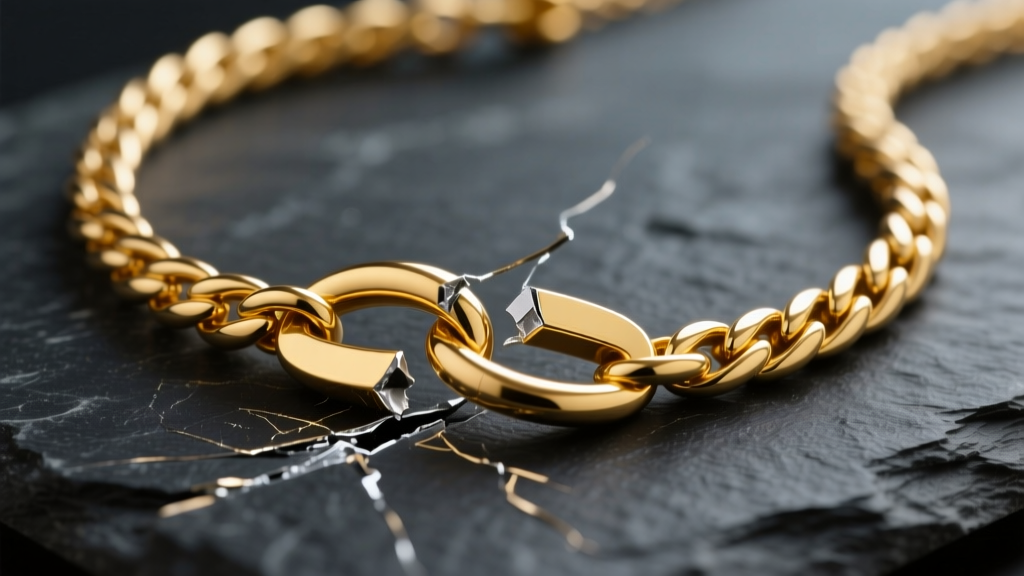
Herringbone chains are celebrated for their liquid-like drape, brilliant light reflection, and sleek, modern aesthetic. However, their unique structural geometry makes them notoriously fragile. If you are dealing with a broken herringbone necklace, you are likely facing one of three issues: a severe kink, a clean snap at the clasp, or a mid-chain fracture. Because herringbone weaves lack the interlocking flexibility of cable or rope chains, traditional repair methods often fail or leave the chain permanently stiff.
In this comprehensive troubleshooting guide, we will break down the metallurgy of herringbone chains, compare professional repair techniques, and provide actionable steps to salvage your jewelry or know when it is time for a replacement.
The Anatomy of a Herringbone Chain: Why They Break
To understand why your herringbone necklace broke, you must understand how it is constructed. Unlike a standard link chain where individual oval loops interlock, a herringbone chain is composed of multiple parallel rows of flat, slanted links. These links are tightly packed and laid flat against one another, creating a continuous, ribbon-like surface.
This design creates two inherent vulnerabilities:
- Lack of Articulation: The flat links have very little rotational freedom. When the chain is bent past a 45-degree angle, the links are forced against each other, causing metal fatigue and permanent deformation (kinking).
- Hollow vs. Solid Construction: Many affordable herringbone chains are electroformed (hollow). While this makes them lightweight and budget-friendly, hollow links crush easily under pressure and are virtually impossible to solder. Solid die-struck herringbone chains are heavier, more durable, and can be repaired, though they still suffer from kinking.
Furthermore, the karat of the gold plays a massive role in durability. According to metallurgical standards outlined by the Gemological Institute of America (GIA), 14k gold (58.5% pure gold) offers superior tensile strength due to its copper and zinc alloys. An 18k or 22k herringbone chain will be significantly softer, making it far more susceptible to stretching, kinking, and snapping under its own weight.
Diagnosing Your Broken Herringbone Necklace
Before taking your necklace to a jeweler, accurately diagnose the type of damage. The nature of the break dictates the repair strategy.
Scenario A: The Dreaded Kink
A kink occurs when the chain folds over on itself and is pulled tight. The flat links bend out of their horizontal alignment, creating a sharp, rigid V-shape. If left untreated, the metal at the apex of the kink will experience work hardening and eventually snap. Do not pull the chain taut to 'pop' the kink out; this will guarantee a fracture.
Scenario B: Clasp and Jump Ring Failure
The weakest point of any necklace is the connection between the chain and the clasp. If your herringbone chain broke right at the end, it is usually due to a worn jump ring or a failed solder joint at the end cap. This is the best-case scenario, as the chain links themselves remain undamaged.
Scenario C: Mid-Chain Snap
If the chain snapped in the middle, it is almost always the result of a previous, unnoticed kink that weakened the structural integrity of the links. Mid-chain breaks on herringbone chains are the most difficult to repair invisibly.
Repair Options: Traditional Soldering vs. Laser Welding
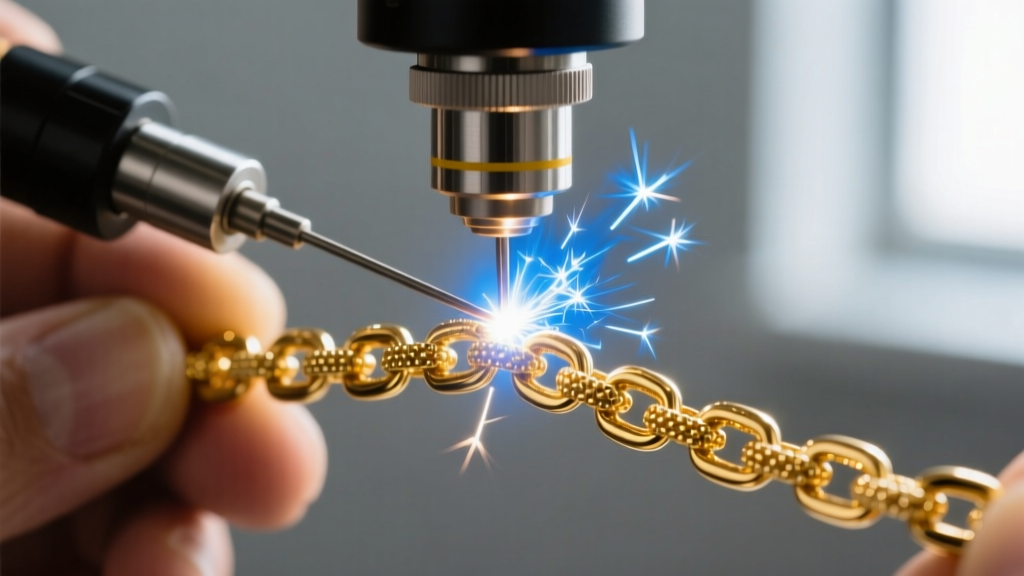
If your chain has snapped, you have two professional repair routes. It is vital to consult a jeweler who specializes in advanced bench techniques, as standard torch soldering can ruin a herringbone weave. For deeper insights into professional bench standards, refer to the Stuller Bench Guide.
| Feature | Traditional Torch Soldering | Nd:YAG Laser Welding |
|---|---|---|
| Heat Application | Broad, high heat (can melt adjacent flat links) | Pinpoint, localized heat (1064 nm wavelength) |
| Flexibility Post-Repair | Stiff spot created; chain may not drape flat | Maintains near-original flexibility and drape |
| Visual Seam | Visible solder line; requires heavy polishing | Virtually invisible; minimal polishing needed |
| Average Cost (2026) | $35 - $65 | $85 - $160+ |
| Suitability for Hollow Chains | Impossible (will melt/collapse) | Difficult, but sometimes possible with filler wire |
Master Jeweler's Insight: 'When laser welding a solid herringbone chain, we use a micro-pulse setting to fuse the flat links without annealing the surrounding metal. If we use too much heat, the slanted links will fuse together into a solid block, destroying the chain's drape permanently.'
Step-by-Step: How to Safely Untangle and Unkink
If your chain is severely tangled or kinked but not yet snapped, you can attempt to flatten it at home using the 'Baby Oil and Needle' method. This reduces friction and allows the flat links to slide back into their parallel alignment.
- Prepare the Surface: Lay the necklace on a clean, hard, non-porous surface like a glass pane or a ceramic tile. Do not attempt this on a soft towel, as the fabric will catch the links.
- Apply Lubricant: Place a single drop of mineral oil or baby oil directly onto the center of the kink or tangle. Avoid using harsh chemical cleaners or soaps, which can leave a residue in the tight seams.
- Use a Precision Tool: Take two sewing needles or fine jewelry tweezers. Gently insert the tips into the seams of the overlapping links.
- Coax, Don't Pull: Use a gentle wiggling motion to encourage the links to slide over one another. Apply zero upward pulling force. Let the oil do the work of reducing friction.
- Flatten and Clean: Once the kink is released, lay the chain flat and gently press it down with a smooth, heavy book (wrapped in a microfiber cloth) for 24 hours to restore its 'memory.' Clean the oil off with a mild dish soap solution and a soft brush.
Preventative Care: Storage and Wearing Rules
The Jewelers of America consistently highlights that improper storage is the leading cause of herringbone chain failure. Because these chains possess a strong 'metal memory,' once they kink, they will always want to return to that bent shape.
The Golden Rules of Herringbone Care
- Never Sleep in It: The tossing and turning during sleep creates acute angles that will instantly kink a herringbone chain. Always remove it before bed.
- Avoid High-Friction Clothing: Herringbone chains can catch on coarse knits, lace, or heavy wool. The pulling force can separate the flat links.
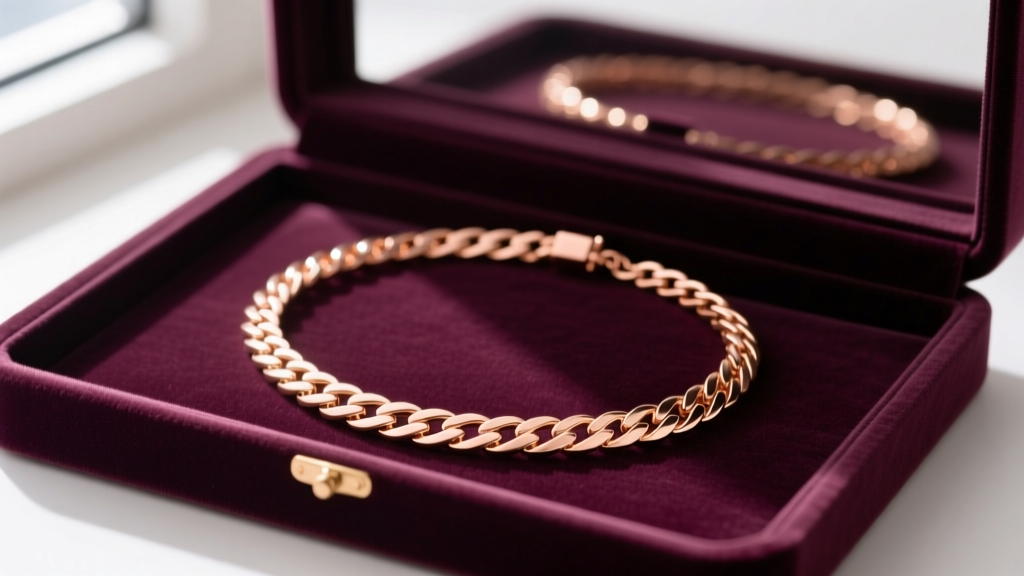
- Store Completely Flat: Never hang a herringbone necklace on a standard jewelry hook. The weight of the chain pulling downward can cause it to stretch and separate at the clasp. Always store it laid out perfectly straight in a velvet-lined drawer or a dedicated flat jewelry box.
- The 'Two-Finger' Rule: When putting the necklace on, ensure it is not twisted before clasping it. A twisted herringbone chain will immediately try to untwist itself against your skin, causing micro-kinks.
When to Accept Defeat: Replacement Thresholds
Not every broken herringbone necklace can be saved. You must recognize when repair costs exceed the replacement value or when the structural integrity is permanently compromised.
Replace the chain if:
- It is a hollow electroformed chain that has been crushed: Once the hollow air-filled links are flattened, they cannot be inflated or soldered back together. The damage is terminal.
- There are multiple kinks within a two-inch span: Even if the chain hasn't snapped yet, the metal fatigue in that specific section is too severe. A jeweler cannot replace a mid-section of a herringbone chain without it looking like a patchwork quilt.
- The chain has stretched and separated: If you can see daylight between the flat links when the chain is laid flat, the structural tension is gone. This usually happens with lower-quality, lightweight chains that have borne heavy pendants.
Dealing with a broken herringbone necklace is frustrating, but understanding the mechanics of the weave empowers you to make the right repair decisions. By opting for laser welding for solid chains and practicing rigorous flat-storage habits, you can ensure your herringbone jewelry maintains its flawless, liquid-metal drape for years to come.


