Decoding the Blue Mood Necklace Meaning and Thermochromic Materials
Discover the true blue mood necklace meaning, exploring thermochromic liquid crystals, base metals, and the material science of color shifts.

For decades, mood jewelry has captivated wearers with its seemingly magical ability to shift colors in real-time. Among the spectrum of hues, blue is universally celebrated as the most desirable shade. But what is the actual blue mood necklace meaning behind the marketing, and more importantly, what is the material science driving this phenomenon? In 2026, advancements in thermochromic materials have made these pendants more stable than ever, yet the fundamental chemistry remains a fascinating intersection of physics, biology, and metallurgy.
As a materials-focused jewelry guide, we are moving past the superficial color charts to examine the exact chemical compounds, encapsulation methods, and base metal thermal conductivities that dictate how, when, and why your mood pendant turns blue.
The True Blue Mood Necklace Meaning: Physics Meets Biology
The popular cultural interpretation of the blue mood necklace meaning is that the wearer is 'happy,' 'relaxed,' or 'in love.' Scientifically, however, the pendant is not reading your emotions; it is reading your peripheral skin temperature. The color blue in a standard thermochromic pendant typically manifests when the surface temperature of the stone rests between 82°F and 90°F (28°C to 32°C).
This temperature range correlates with a biological state called peripheral vasodilation. When you are relaxed and comfortable, your blood vessels dilate, allowing warm blood to flow freely to the extremities and the surface of your skin. Conversely, when you are stressed, anxious, or cold, your body triggers vasoconstriction, pulling blood away from the skin to protect vital organs, which drops the skin's surface temperature and turns the pendant black or brownish-green.
The 'blue' state is essentially a bio-feedback loop indicating optimal thermal regulation and low sympathetic nervous system arousal, validating the traditional 'calm' meaning attributed to the color.
The Chemistry of Color: Cholesteric Liquid Crystals
The core material responsible for the color shift in high-quality mood necklaces is not a simple dye, but a complex matrix of cholesteric liquid crystals. According to research highlighted by the American Chemical Society, these molecules possess a unique helical structure. As the temperature fluctuates, the physical distance between the layers of the helix expands or contracts.
How the Helix Reflects Light
- Black/Brown (Cold / Under 78°F): The helix is tightly wound, absorbing most visible light or reflecting wavelengths outside the human visible spectrum (infrared).
- Green/Yellow (Neutral / 78°F - 82°F): The helix slightly expands, reflecting mid-spectrum wavelengths like green and yellow.
- Blue/Violet (Warm / 82°F - 90°F): The helix reaches its optimal relaxed pitch, perfectly reflecting the shorter wavelengths of blue and violet light.
It is crucial to note that prolonged exposure to ultraviolet (UV) light can break down the delicate ester bonds within the liquid crystal matrix. This is why vintage mood rings from the 1970s often become 'stuck' on a permanent dark amber color—the chemical structure has suffered irreversible photodegradation.
Encapsulation Materials: Protecting the Thermochromic Core
Liquid crystals are highly sensitive to moisture and oxygen. If water penetrates the pendant, hydrolysis occurs, destroying the thermochromic properties instantly. Therefore, the encapsulation material is just as critical as the liquid crystal itself. Below is a comparison of the three primary encapsulation methods used in modern jewelry manufacturing.
| Encapsulation Material | Optical Clarity | Durability & Impact Resistance | Moisture Barrier | Typical Price Tier |
|---|---|---|---|---|
| Borosilicate Glass | Excellent | Low (Shatters on hard impact) | Perfect (Hermetic seal) | Mid to High |
| Synthetic Quartz | Exceptional | High (Scratch and shatter resistant) | Perfect | Luxury / Artisan |
| Epoxy Polymer Resin | Good (May yellow over time) | Very High (Drop-proof) | Poor to Moderate | Budget / Fast Fashion |
While polymer resins dominate the budget market, serious collectors and jewelers in 2026 prefer synthetic quartz or hermetically sealed borosilicate glass to ensure the liquid crystals remain completely isolated from ambient humidity.
Base Metal Thermal Conductivity: The Hidden Variable
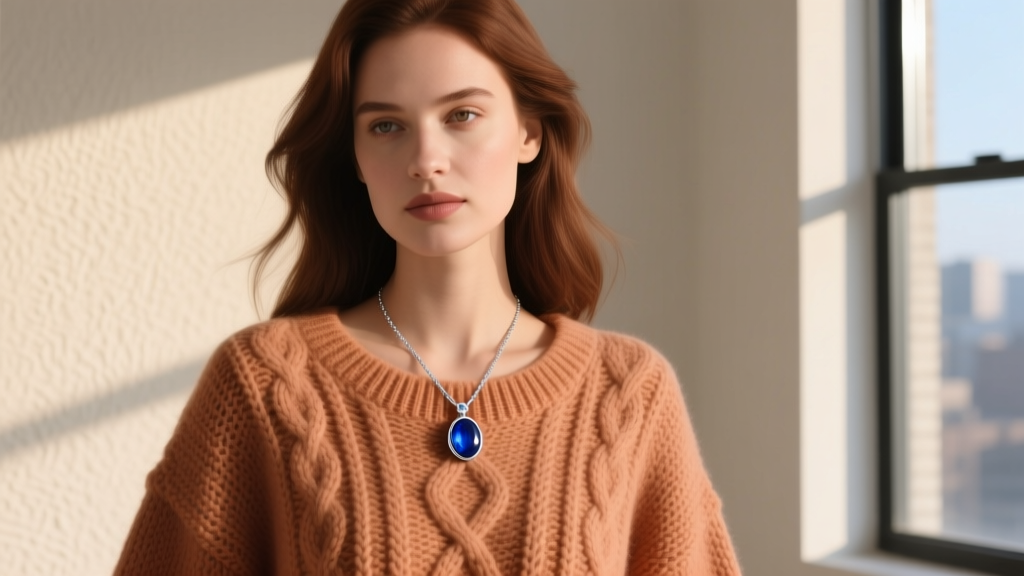
Many wearers wonder why their mood pendant turns blue when held in their palm but shifts to black the moment it is placed against their chest. The answer often lies in the thermal conductivity of the base metal used for the pendant bezel and the chain. The Smithsonian Magazine has noted that the original 1970s mood rings utilized specific metal alloys to act as heat sinks, but modern manufacturing varies wildly.
Thermal Conductivity Comparison (W/m·K)
- 925 Sterling Silver (429 W/m·K): The gold standard for mood jewelry. Silver rapidly pulls ambient heat away from the pendant, making the liquid crystal highly responsive to subtle changes in skin temperature. A silver bezel will yield the most accurate 'blue' readings.
- 316L Surgical Stainless Steel (16 W/m·K): Highly hypoallergenic and durable, but a poor thermal conductor. Steel bezels act as insulators, often causing the pendant to lag behind actual skin temperature changes, resulting in a pendant that stays stubbornly green or black.
- Brass / Base Alloys (109 W/m·K): Frequently used in cheap, mass-produced pendants. While the thermal conductivity is decent, brass reacts with the acidic pH of human sweat. This oxidation creates a microscopic layer of grime that acts as a thermal barrier, eventually ruining the pendant's responsiveness.
If you are seeking a reliable blue shift, always inspect the hallmark. Opt for 925 sterling silver or solid 14k gold settings, and avoid heavily lacquered brass.
Troubleshooting: Why Your Pendant Refuses to Turn Blue
If your necklace is perpetually stuck on black or murky brown despite you feeling perfectly relaxed, consider the following material failure modes before discarding it:
- The 'Cold Room' Effect: Ambient room temperature plays a massive role. If your environment is below 68°F (20°C), the ambient air will cool the front face of the glass or quartz faster than your skin can heat the back. The liquid crystals will average the two temperatures, resulting in a green or black hue regardless of your mood.
- Micro-Fractures: Dropping a glass-encapsulated pendant on a tile floor can cause microscopic fractures in the hermetic seal. This allows oxygen to enter and oxidize the liquid crystals, permanently locking them into a dark, muddy color.
- Chain Interference: Wearing a mood pendant on a thick, heavy steel chain can create a thermal bridge that siphons heat away from the pendant bezel. Switching to a delicate silver chain or a silk cord can immediately improve thermal retention and promote the coveted blue hue.
Final Thoughts on Material Selection
Understanding the blue mood necklace meaning requires looking past the novelty and appreciating the sophisticated chemistry of cholesteric liquid crystals. By selecting a pendant featuring a hermetically sealed quartz or glass cabochon, set in a highly conductive sterling silver bezel, you ensure that the jewelry accurately reflects your physiological state. Treat the thermochromic matrix with care—keeping it away from harsh UV exposure and extreme thermal shocks—and your pendant will continue to reveal its vibrant blue spectrum for years to come.


