Blue Pearl Necklace Guide: Grading Tahitian and Akoya Hues
Discover the technical differences in a blue pearl necklace. We grade Tahitian peacock overtones, Akoya Madama, nacre thickness, and dye detection.

The Gemological Anatomy of Blue Pearls
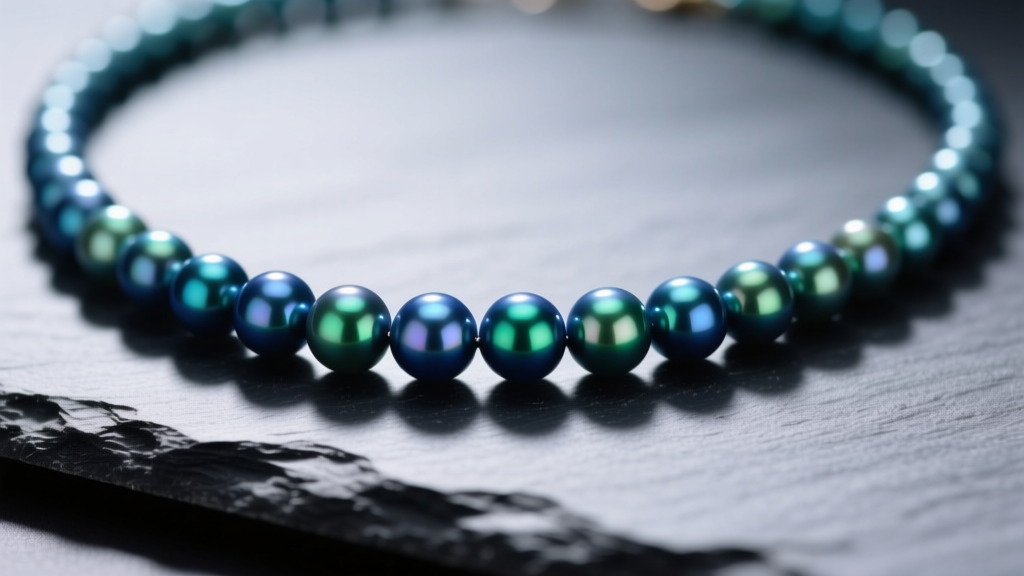
When collectors and gemologists evaluate a pearl necklace, blue coloration is rarely a uniform, solid pigment. Instead, the blue hues seen in high-end strands are the result of complex optical interference and organic pigments layered within the nacre. Nacre is a composite material consisting of microscopic aragonite (calcium carbonate) platelets bound together by conchiolin, an organic protein. The thickness, translucency, and alignment of these aragonite layers dictate how light refracts through the pearl, creating what gemologists term overtone.
Many buyers type 'pearl necklace blue' into search engines, but true blue body colors are exceptionally rare in nature. In Tahitian pearls (Pinctada margaritifera), the body color is typically dark grey to charcoal, while the blue is an overtone that floats on the surface. In Akoya pearls (Pinctada fucata), specific genetic expressions in the mollusk can produce a natural blue-grey body color, but these represent less than 5% of the total harvest. Understanding the distinction between body color and overtone is the first critical step in appraising a blue strand.
Comparative Grading Matrix: Tahitian, Akoya, and Freshwater
The market is flooded with trade names designed to obscure the actual gemological origin of the pearls. Below is a technical breakdown of the three primary categories of blue pearls you will encounter, including their structural properties and current market valuations for an 18-inch, knotted strand.
| Pearl Type | Trade Name | Origin of Blue | Nacre Thickness | Typical Size | Market Price (18" Strand) |
|---|---|---|---|---|---|
| Tahitian | Peacock / Blue | Optical Overtone | 0.8mm - 1.5mm+ | 9.0mm - 13.0mm | $4,500 - $18,000+ |
| Akoya | Madama | Body Color + Overtone | 0.4mm - 0.9mm | 7.5mm - 9.5mm | $2,800 - $7,500 |
| Freshwater | Metallic Blue | Irradiation / Dye | Solid Nacre | 8.0mm - 11.0mm | $150 - $600 |
Detecting Irradiation and Chemical Dyes
Because natural blue pearls command premium prices, the market is heavily saturated with treated alternatives. As a buyer, you must know how to identify the two most common treatments: silver nitrate dyeing and gamma ray irradiation.
Silver Nitrate Dyeing
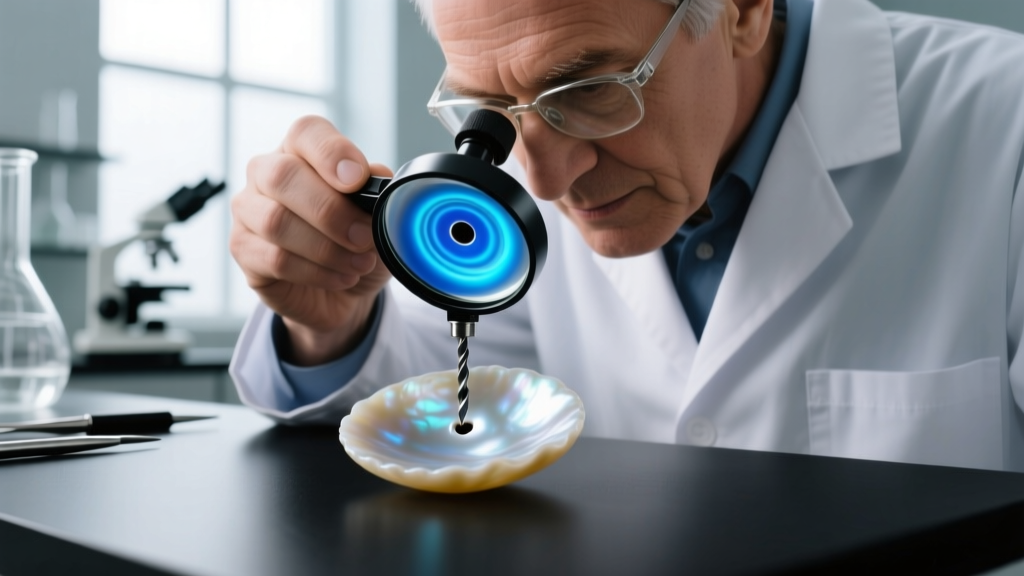
Silver nitrate (AgNO3) is used to darken the conchiolin layers, creating a uniform black or deep blue-grey appearance. This is most commonly applied to low-grade freshwater pearls or thin-nacre Tahitians. Under a 10x gemological loupe, dyed pearls often reveal telltale signs: the dye concentrates heavily around the drill hole, creating a dark, distinct ring. Furthermore, the luster of a dyed pearl often appears 'chalky' or flat because the chemical bath degrades the outermost aragonite platelets.
Gamma Ray Irradiation
According to the Gemological Institute of America (GIA), gamma irradiation (often using Cobalt-60) is frequently used on freshwater pearls. The radiation darkens the manganese-rich nucleus and the surrounding conchiolin, resulting in a metallic, gunmetal-blue appearance. While visually striking, irradiated pearls lack the deep, multi-dimensional optical interference of natural Tahitian overtones. Advanced gemological labs like the SSEF use UV-Vis-NIR spectrophotometry to definitively separate irradiated freshwater pearls from naturally colored saltwater varieties.
Structural Engineering: Stringing Heavy Blue Strands
A high-quality pearl necklace requires structural engineering that matches the weight and value of the gems. A strand of 11mm Tahitian blue pearls can easily exceed 80 grams. Traditional silk thread, while historically popular, is highly susceptible to failure in these heavy applications.
- Silk Failure Modes: Silk stretches over time under heavy loads. This stretching increases the distance between knots, allowing the pearls to rub against one another, which accelerates nacre wear around the drill holes. Furthermore, silk absorbs skin acidity and cosmetics, leading to rapid protein degradation and eventual snapping.
- Gel-Spun Polyethylene (GSP): For any blue pearl necklace featuring pearls over 9mm, we mandate the use of GSP (such as PowerPro) or bonded nylon. A 10lb to 15lb test GSP thread offers zero stretch, is impervious to moisture and skin acids, and provides a breaking strength exceeding 400 lbs.
- French Wire (Gimp) Protection: The termination points where the thread meets the clasp are the highest friction zones. A 0.5mm or 0.6mm sterling silver or 18k gold French wire must be used to shield the thread from the metal jump ring. Skipping gimp guarantees the thread will fray and fail within 24 months of regular wear.
Certification and Provenance Standards
When investing over $3,000 in a blue pearl necklace, verbal assurances from a jeweler are insufficient. You must demand documentation that aligns with the CIBJO Pearl Guidelines. A proper gemological report will explicitly state whether the color is of natural origin or the result of treatment.
Expert Rule of Thumb: If a seller claims a strand is 'Tahitian Blue' but cannot provide a report confirming the saltwater origin (Pinctada margaritifera) and the absence of dye, walk away. The visual difference between a top-tier Madama Akoya and a dyed freshwater strand is nearly impossible to confirm with the naked eye once set in a necklace.
Ultimately, mastering the technical nuances of blue pearls transforms you from a passive consumer into an informed collector. By prioritizing nacre thickness, verifying overtone origins, and demanding superior stringing materials, you ensure your necklace will retain both its structural integrity and its gemological value for decades.