Choosing a Blue Sapphire and Diamond Necklace: Material Guide
Compare natural vs. lab-grown stones, metal settings, and gemstone properties to choose the perfect blue sapphire and diamond necklace.

The Optical Synergy: Refractive Index and Light Return
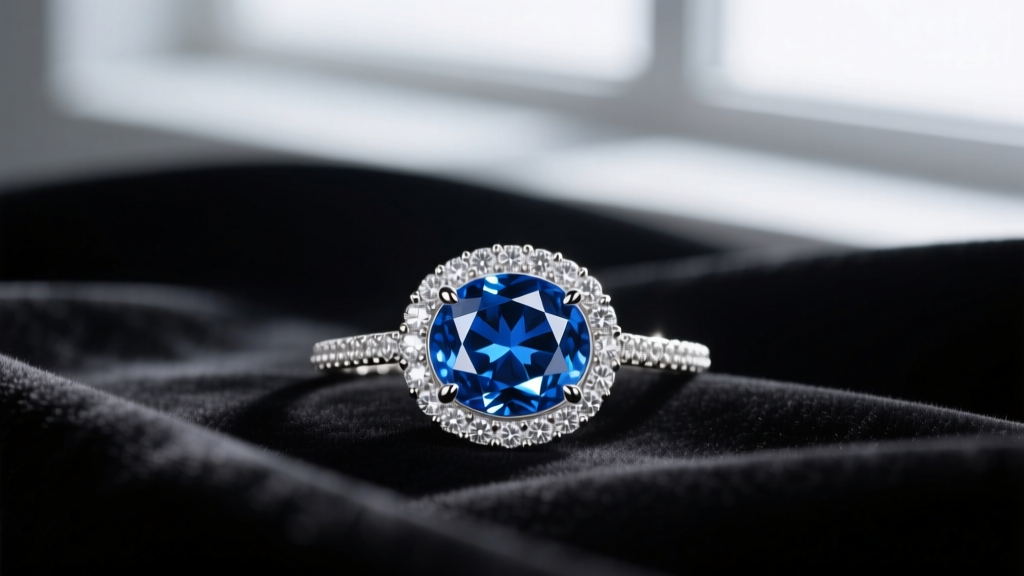
When evaluating a blue sapphire and diamond necklace, the visual impact is driven by the distinct optical properties of the two gemstones. Diamonds possess a high refractive index (RI) of 2.42, resulting in exceptional brilliance and light return. In contrast, corundum (the mineral family of sapphires) has an RI of 1.76 to 1.78. This lower RI means sapphires do not sparkle with the same sharp, white scintillation as diamonds; instead, they exhibit a deep, velvety saturation and a softer, more dispersed glow. A well-designed necklace leverages this contrast, using the high-frequency sparkle of diamond melee to frame and amplify the deep, moody color of the central sapphire. Understanding these material properties is the first step in selecting a piece that performs beautifully under both natural daylight and indoor lighting.
Corundum Properties: Evaluating the Blue Sapphire
Sapphires rank at a 9 on the Mohs scale of hardness, making them the second hardest natural gemstone after diamonds. However, hardness (resistance to scratching) is only one part of the durability equation. Sapphires lack true cleavage planes, meaning they are highly resistant to chipping and breaking compared to stones like topaz or tanzanite. This makes them an excellent candidate for everyday pendant wear, where the stone may occasionally strike a hard surface.
Natural vs. Lab-Grown and Treatment Disclosures
The modern market offers both natural and lab-grown blue sapphires. Chemically and optically, lab-grown corundum is identical to its natural counterpart, but the inclusion profiles differ. Natural sapphires often contain rutile silk, fingerprint inclusions, and color zoning. According to GIA's sapphire quality factors guide, heat treatment is an industry-standard practice used to dissolve rutile silk and improve both clarity and color saturation. Over 90% of natural sapphires on the market are heated.
Consumers must be highly vigilant regarding beryllium diffusion (lattice diffusion). This treatment introduces beryllium into the crystal lattice during heating to artificially induce or enhance blue coloration. While stable, diffusion-treated sapphires are worth a fraction of the price of traditionally heated or unheated stones. Always demand a gemological report that explicitly states whether the stone is 'No Indications of Heating', 'Heated', or 'Lattice Diffusion'.
Diamond Melee: Grading and Color Matching
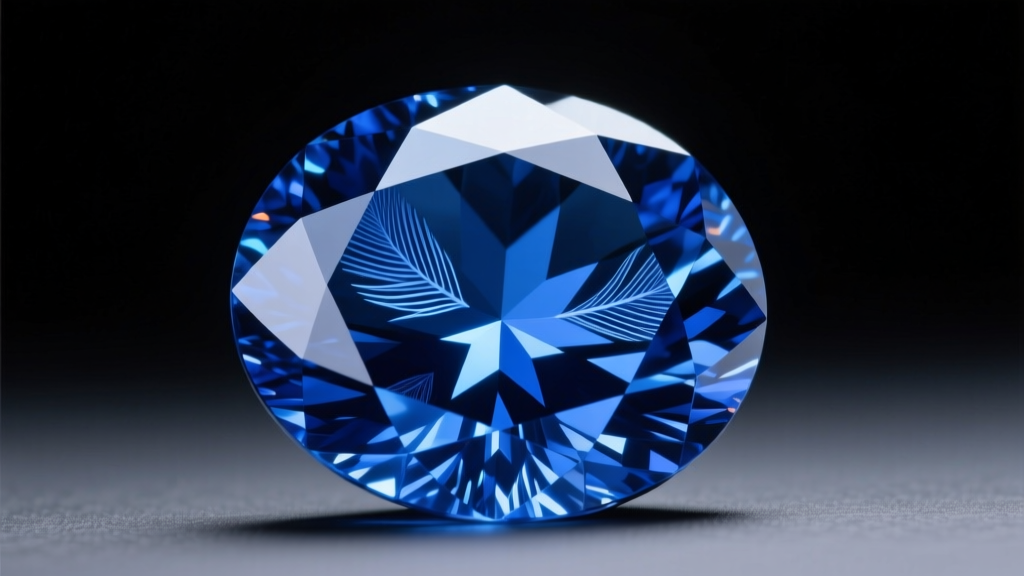
The diamonds used in sapphire halos and pendant accents are typically 'melee'—stones weighing under 0.15 carats each. Because of their small size, grading melee diamonds requires a different approach than evaluating a 1-carat center stone. Clarity is largely secondary; SI1 or even I1 inclusions are completely invisible to the naked eye in a 0.02-carat diamond. Therefore, paying a premium for VVS clarity in melee is a poor allocation of budget.
Color matching, however, is critical. To ensure the diamonds do not appear yellow or muddy against the stark blue of the sapphire, jewelers should use melee in the F-G color range (colorless to near-colorless). Furthermore, the cut quality of the melee dictates the necklace's overall scintillation. Full-cut melee (57 or 58 facets) will reflect light far more effectively than single-cut melee (17 or 18 facets), which can look flat and glassy. For a comprehensive breakdown of how these smaller stones are evaluated, refer to GIA diamond grading standards.
Metallurgy: Platinum vs. Gold for Pendant Settings
The metal chosen for a blue sapphire and diamond necklace dictates both the longevity of the prongs and the long-term maintenance of the piece. Platinum 950 and 18k White Gold are the most popular choices for pairing with white diamonds and blue sapphires, but their metallurgical properties differ vastly.
| Metal | Vickers Hardness | Prong Durability | Maintenance Profile |
|---|---|---|---|
| Platinum 950 | 125 HV | Excellent (Galls rather than wears away) | Develops a patina; requires occasional polishing |
| 18k White Gold | 140 HV | Good (Brittle; prongs can snap if bent repeatedly) | Requires rhodium replating every 1-3 years |
| 18k Yellow Gold | 135 HV | Good (Malleable; prongs can bend and catch) | Low maintenance; no plating required |
Platinum's unique 'galling' property means that when scratched or impacted, the metal displaces rather than flaking off. This makes it vastly superior for securing expensive gemstones over decades of wear. White gold, while initially harder and brighter, loses microscopic layers of metal and its rhodium plating over time, eventually requiring the prongs to be re-tipped.
Chain Mechanics and Tensile Strength
A heavy sapphire pendant requires a chain with adequate tensile strength. Delicate chains (under 0.9mm) are prone to snapping at the solder points of the links. For a pendant weighing over 5 grams, a 1.2mm to 1.5mm box chain or a solid wheat chain is highly recommended. Box chains feature interlocking square links that distribute weight evenly and resist kinking. Additionally, the clasp must be proportionate to the chain's weight. A standard spring-ring clasp is insufficient for heavy pendants; a lobster claw clasp with a reinforced solder ring ensures the necklace remains securely fastened.
Long-Term Wear and Failure Modes
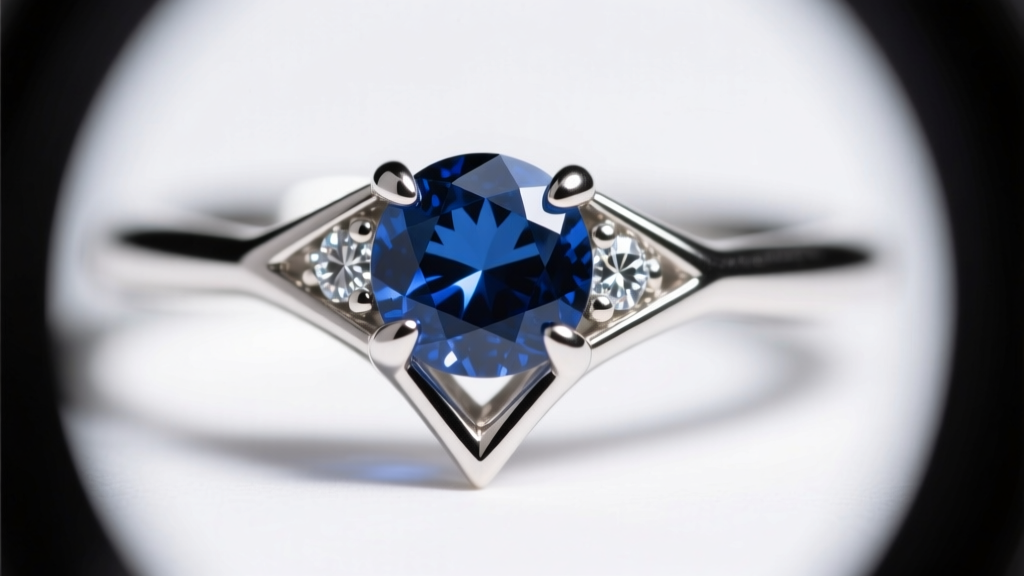
The most common failure mode for sapphire pendants is prong degradation. Because sapphires are often cut with sharp corners (such as princess, emerald, or pear cuts), these points are highly vulnerable to chipping if struck. To mitigate this, jewelers must use V-prongs (which wrap around the corner) rather than standard round prongs. Furthermore, the bale (the loop connecting the pendant to the chain) experiences constant friction. If the bale is lined with white gold, the friction from a platinum or steel chain will eventually wear a hole through the metal. Opting for a solid platinum bale or a removable, interchangeable bale insert prevents this specific point of failure, ensuring your blue sapphire and diamond necklace remains a secure, multi-generational heirloom. For those exploring modern alternatives, GIA's research on lab-grown diamonds provides excellent insights into how lab-grown melee can offer identical wear properties at a lower cost, allowing buyers to invest more heavily in the central sapphire and platinum setting.


