2026 Art Deco Glass Necklace Gift Guide & Occasion Match
Discover the perfect art deco glass necklace for every occasion in our 2026 gift guide. Expert tips on Czech glass, Murano, and vintage styling.

The 1920s Revival: Why Art Deco Glass Dominates 2026 Gifting
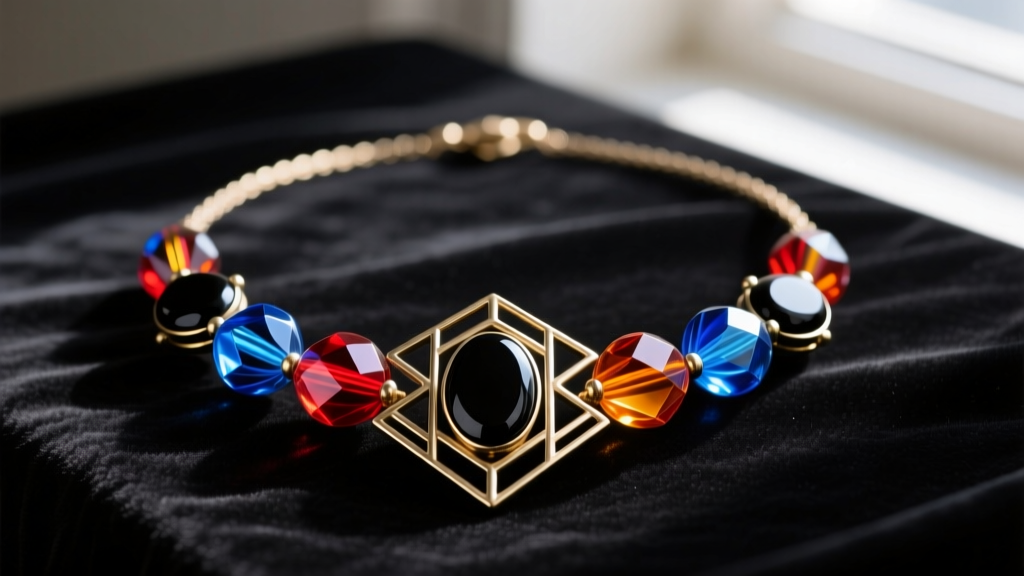
Gifting jewelry is an exercise in storytelling, and few eras tell a more compelling visual story than the 1920s and 1930s. As we navigate the 2026 gifting season, the art deco glass necklace has surged back to the forefront of antique and vintage markets. Unlike the heavy, ornate goldwork of the Victorian era or the organic, flowing lines of Art Nouveau, Art Deco jewelry is defined by its bold geometry, high-contrast color palettes, and embrace of industrial modernity. Glass—whether molded in Czechoslovakia, blown in Murano, or infused with uranium—was the quintessential medium of the era, offering vibrant color and optical clarity at a fraction of the cost of precious gems.
According to the Victoria and Albert Museum's overview of Art Deco jewelry, the 1925 Paris Exposition Internationale des Arts Décoratifs et Industriels Modernes cemented glass as a premier decorative material. Today, collectors and style enthusiasts seek out these pieces not just for their historical value, but for their striking compatibility with modern minimalist and avant-garde wardrobes. This guide breaks down the specific types of Deco glass, authenticates the hardware, and provides a precise matrix for matching these historical treasures to the right recipient and occasion.
Decoding the Glass: Czech vs. Murano vs. Uranium
Not all vintage glass is created equal. When sourcing an art deco glass necklace, understanding the origin and manufacturing technique is critical for both valuation and gifting appropriateness.
1. Czech Molded Glass (The Gablonz Standard)
The Gablonz region of Czechoslovakia was the epicenter of molded glass bead production. Czech Deco necklaces often feature highly geometric, faceted beads in striking colors like cobalt, ruby, and jet black, frequently interspersed with stamped brass or pot-metal filigree. These pieces are characterized by their sharp mold lines and high-relief patterns. They are the most accessible entry point for vintage collectors, with pristine examples typically ranging from $85 to $250 in the current market.
2. Murano Sommerso & Millefiori (The Venetian Masters)
Italian Murano glass from the Deco period often utilized the sommerso (submerged) technique, where layers of contrasting glass colors are dipped into clear molten glass, creating a thick, blocky, geometric pendant or bead with deep internal color gradients. Murano pieces are heavier, more sculptural, and command premium prices, often starting at $400 and exceeding $1,200 for signed or attributed pieces (e.g., early Venini or Barovier).
3. Uranium / Vaseline Glass (The Collector's Holy Grail)
Infused with uranium dioxide, this glass ranges from pale yellow to deep green and fluoresces a brilliant, eerie neon green under ultraviolet (black) light. Uranium glass necklaces are highly sought after by niche collectors. Because the material is slightly radioactive (though entirely safe to wear), it carries a unique novelty factor that makes it an unforgettable gift for the science-minded or eccentric collector. Expect to pay between $300 and $900 for a verified, intact strand.
The 2026 Occasion & Recipient Gifting Matrix
Matching the specific type of glass to the recipient's lifestyle and the gravity of the occasion ensures your gift is worn and cherished. Use this decision framework to select the perfect piece.
| Recipient Profile | Recommended Glass Type | Budget Range (2026) | Ideal Occasion | Styling & Wear Note |
|---|---|---|---|---|
| The Corporate Minimalist | Czech Molded (Jet/Cobalt) | $120 - $250 | Promotion, Milestone Birthday | Pairs flawlessly with structured blazers and silk blouses; geometric lines echo modern tailoring. |
| The Avant-Garde Creative | Murano Sommerso Pendant | $450 - $1,200+ | Gallery Opening, Anniversary | Worn as a statement piece over solid, architectural knits or turtlenecks; acts as wearable art. |
| The Eccentric Academic | Uranium / Vaseline Glass | $300 - $900 | PhD Graduation, Unique Holiday | Include a small UV flashlight in the gift box for the 'reveal' effect; a brilliant conversation starter. |
| The Vintage Purist | Multi-strand Czech w/ Bakelite | $200 - $400 | Retirement, Heirloom Gifting | Requires careful storage away from direct sunlight to preserve the patina of accompanying Bakelite elements. |
Authentication Checkpoints: Avoiding Modern Reproductions
The market is flooded with 1980s and contemporary reproductions of 1920s jewelry. To ensure you are gifting a genuine historical artifact, you must look past the glass and examine the structural forensics of the necklace. The Antique Jewelry University's guide to vintage clasps is an essential resource for understanding how hardware evolved, but here are the critical on-the-ground checkpoints.
Clasp & Hardware Forensics
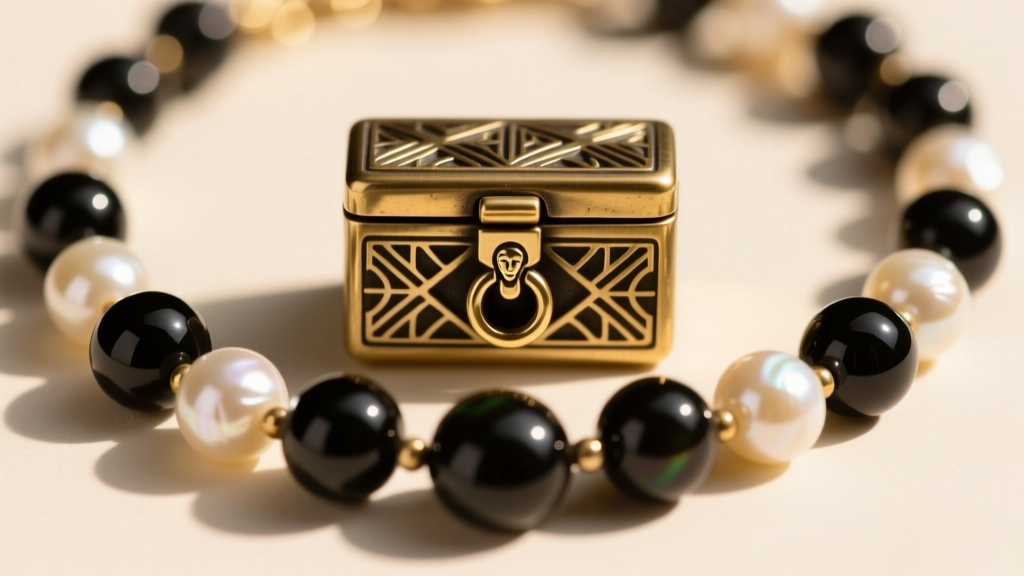
- The Push-Box Clasp: Genuine Deco necklaces frequently use push-in box clasps. Look for a 'figure-8' safety catch—a small wire loop that snaps over a pin on the side of the clasp. If the safety catch is a modern fold-over lever or lacks the figure-8 wire, the piece is likely a later reproduction or has been heavily altered.
- Barrel Clasps: Often found on bead-strung necklaces. Vintage barrel clasps will show specific wear patterns on the threads and will often be made of brass with a thin rhodium or silver plating that has worn away at the high-contact points.
- Jump Rings: Examine the jump rings connecting the clasp. Vintage jump rings were typically soldered closed or feature a very tight, flush cut. Modern, mass-produced jump rings often have a visible, wide gap.
Stringing & Wear Patterns
Original 1920s necklaces were strung on cotton thread or early silk, which degrades, stretches, and rots over a century. If you find an art deco glass necklace that is strung on modern, plastic-coated micro-wire (like Accu-Flex or Soft Flex) and features heavy, stiff drape, it has been professionally restrung. This is actually a positive for a gift, as it ensures the structural integrity of the piece for daily wear, but it should be priced slightly lower than a piece with pristine, original (albeit fragile) period stringing.
Neckline Pairings for the Modern Collector
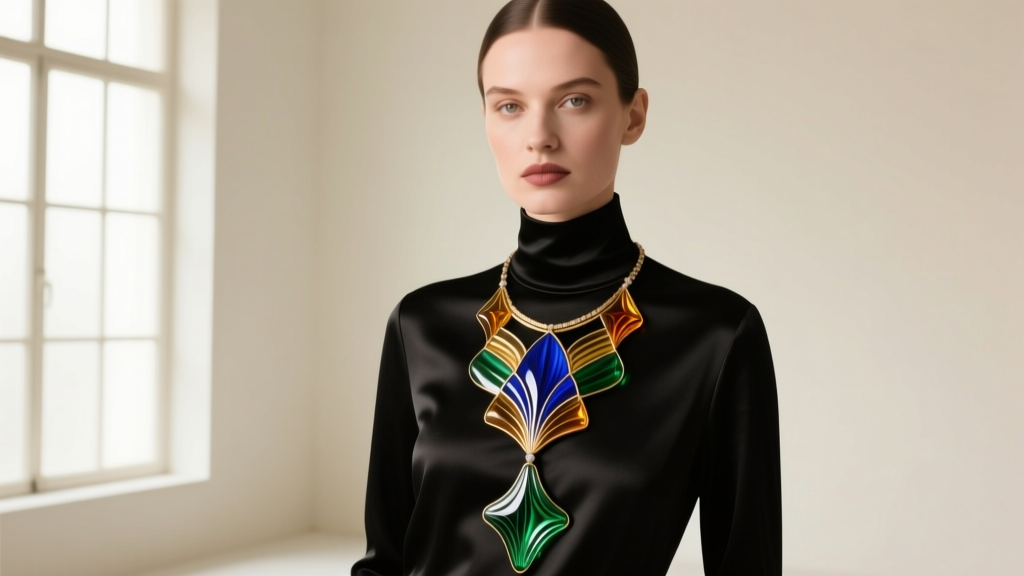
An art deco glass necklace is heavily reliant on the geometry of the garment it rests upon. The sharp angles and high-contrast colors of Deco glass can easily clash with busy patterns or competing necklines. When gifting, consider including a stylist's note on how to wear the piece.
'The golden rule of Art Deco jewelry is negative space. A geometric glass pendant demands a solid, unbroken canvas. A deep V-neck or a stark, high-collared silk blouse allows the architectural lines of the glass to act as the focal point, rather than competing with the garment's own structure.' — Archival Style Notes, Jewel Style Radar
For choker-length Czech glass collars (14-16 inches), the ideal pairing is a boatneck or off-the-shoulder top, which mirrors the horizontal emphasis of the necklace. For longer Murano sautoirs (28-34 inches), a simple black turtleneck or a drop-waist dress pays direct homage to the 1920s flapper silhouette while remaining fiercely modern in a 2026 context.
Final Gifting Verdict
An art deco glass necklace is more than an accessory; it is a tangible piece of interwar history, representing a time when design broke free from tradition and embraced the future. Whether you are gifting the neon glow of uranium glass to a curious mind, or the deep, submerged colors of Murano sommerso to a lover of fine art, you are presenting a masterclass in geometric elegance. By paying close attention to the clasps, the stringing, and the origin of the glass, you ensure your 2026 gift is both historically authentic and stylistically timeless.


