Purple Necklaces: Gemstone Materials & Durability Compared
Compare the durability, Mohs hardness, and pricing of top purple necklaces. Learn which purple gemstones suit daily wear versus occasional use.

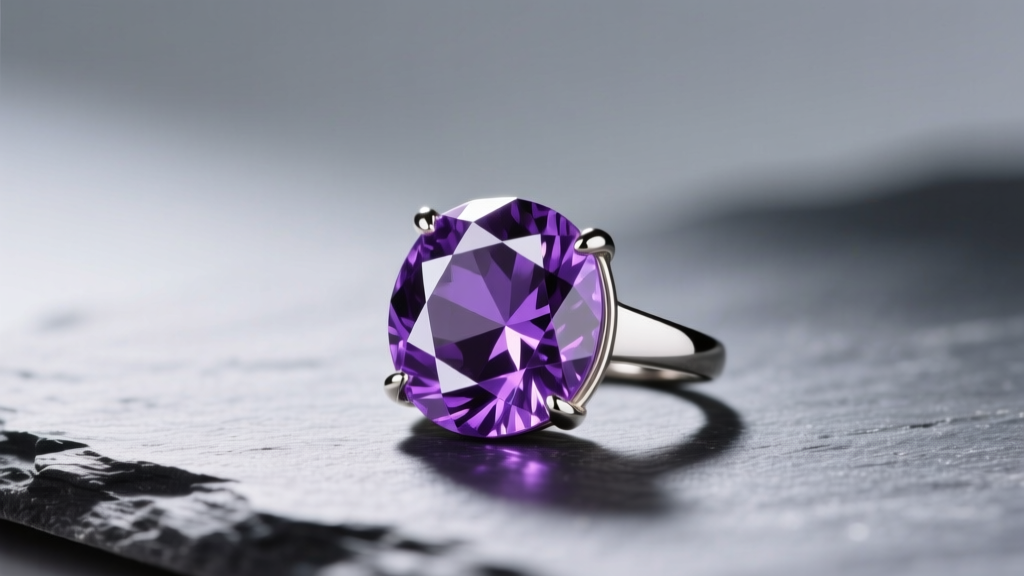
The Material Science of Purple Necklaces
When selecting purple necklaces, consumers are often captivated by the psychological allure of the color—ranging from soft lavender to deep, regal violet. However, from a gemological perspective, the term "purple" encompasses a vast array of distinct mineral species, each with drastically different physical properties, cleavage planes, and structural vulnerabilities. A necklace is inherently a high-impact piece of jewelry; it swings, catches on clothing, and rests against the sternum where it is prone to blunt force trauma. Therefore, understanding the material science behind your purple gemstone is not just academic—it is essential for preserving the longevity of your jewelry.
In this comprehensive guide, we dissect the physical properties of the five most prominent purple gemstones used in modern necklace design. We will evaluate their Mohs hardness, fracture mechanics, and optimal setting styles to help you make an informed, durable choice.
Gemstone Hardness & Wearability Matrix
The Mohs scale of mineral hardness is a qualitative ordinal scale that characterizes scratch resistance. However, for necklace pendants and beaded strands, toughness (resistance to breaking and chipping) and cleavage (the tendency to break along structural planes) are equally critical. Below is a comparative matrix of popular purple gemstone materials.
| Gemstone Material | Mohs Hardness | Cleavage / Fracture | Avg. Price (USD/ct) | Best Necklace Application |
|---|---|---|---|---|
| Purple Sapphire | 9.0 | No cleavage / Conchoidal | $500 - $3,000+ | Daily wear prong pendants |
| Amethyst (Quartz) | 7.0 | No cleavage / Conchoidal | $5 - $50 | Beaded strands, heavy pendants |
| Sugilite | 6.0 - 6.5 | No cleavage / Granular | $50 - $300 | Bezel-set pendants, cabochons |
| Charoite | 5.0 - 6.0 | Distinct cleavage | $20 - $80 | Protected bezel pendants |
| Purple Fluorite | 4.0 | Perfect octahedral | $5 - $15 | Occasional wear, display only |
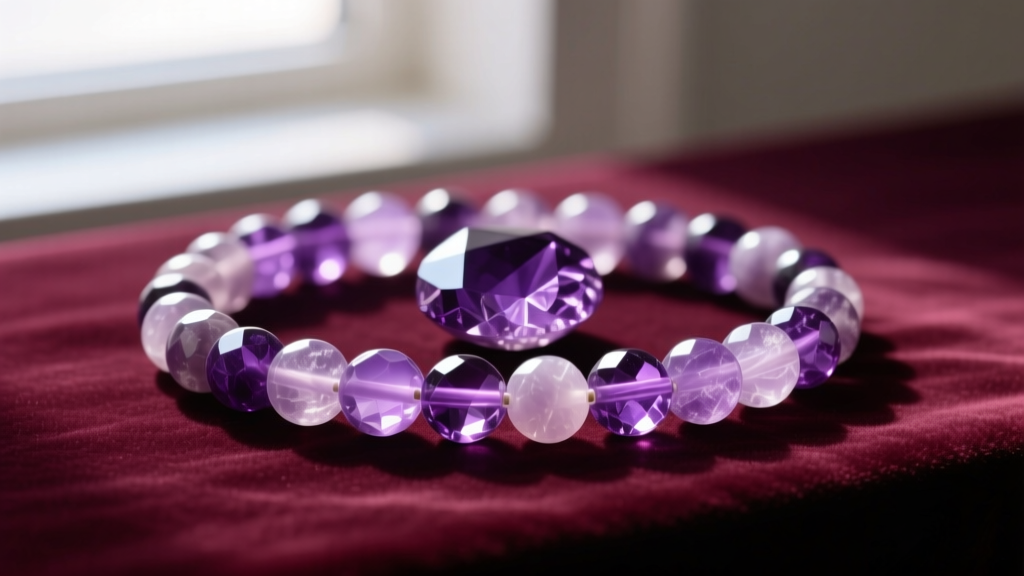
Deep Dive: Properties of Top Purple Gemstones
Amethyst (Crystalline Quartz)
Amethyst remains the undisputed standard for purple necklaces due to its exceptional balance of durability, availability, and price. As a macrocrystalline quartz, it registers a solid 7 on the Mohs scale, making it highly resistant to environmental dust (which contains quartz particles that can scratch softer stones). Amethyst exhibits a conchoidal fracture, meaning it chips rather than splitting cleanly. When sourcing amethyst for a necklace, look for Zambian origins if you prefer deep, reddish-purple hues with high clarity, or Brazilian origins for larger, more affordable, uniformly violet stones. Be aware that nearly all commercial amethyst is heat-treated to enhance color saturation, a stable and universally accepted practice in the gem trade.
Sugilite (Cyclosilicate)
Sugilite is an opaque, deeply saturated purple stone that has surged in popularity for artisan and bohemian necklace designs. Gem-grade sugilite—often referred to as "Royal Azel" or "Royal Purple"—lacks the white or black matrix inclusions found in lower grades. Because it lacks cleavage, it is relatively tough, but its Mohs hardness of 6 to 6.5 means it can be scratched by steel clasps or accidental impacts against glass and metal. For sugilite necklaces, a bezel setting is highly recommended to protect the girdle of the cabochon from chipping during daily wear.
Charoite (Inosilicate)
Discovered exclusively in the Sakha Republic of Russia, charoite is prized for its mesmerizing, swirling fibrous texture and occasional chatoyancy (cat's eye effect). However, its complex silicate structure gives it distinct cleavage planes, making it significantly more fragile than amethyst. A sharp knock against a granite countertop can easily split a charoite pendant along its internal grain. Jewelers must use careful prong placement or padded bezels to avoid applying uneven pressure during the setting process. According to mineralogical data from Mindat.org, charoite's specific gravity and interlocking crystal habits require specialized lapidary techniques to polish without undercutting.
Purple Sapphire (Corundum)
For luxury, heirloom-quality purple necklaces, purple sapphire is the ultimate investment. Traces of vanadium, iron, and titanium interact within the corundum crystal lattice to produce colors ranging from pale lilac to deep plum. With a Mohs hardness of 9 and no true cleavage, purple sapphire is virtually impervious to daily wear and tear. It can withstand ultrasonic cleaning and steam, making it the most hygienic and low-maintenance option for a pendant worn close to the skin. The Gemological Institute of America (GIA) notes that natural, unheated purple sapphires with strong color saturation command massive premiums at auction.
Purple Fluorite (Halide)
Fluorite offers some of the most striking, banded purple coloration in the gem world, often displaying deep violet and clear white zoning. Unfortunately, it is a halide mineral with a Mohs hardness of just 4 and perfect octahedral cleavage in four directions. This means fluorite can be scratched by a copper coin and will shatter predictably if dropped. Fluorite necklaces should be strictly reserved for occasional, low-activity evening wear. Pendants should be cut as smooth cabochons rather than faceted stones, as the facet junctions are highly prone to abrasion and chipping.
Structural Integrity: Chain Pairing & Bail Mechanics
The material properties of your purple gemstone must dictate the chain and bail mechanics of the necklace. Heavy, opaque stones like large sugilite or charoite pendants (often exceeding 30 carats) exert significant tensile stress on the chain.
- For Heavy Opaque Pendants (Sugilite/Charoite): Avoid delicate cable or snake chains. Opt for a 2.0mm to 3.0mm 14k gold rope chain or a solid sterling silver box chain. Ensure the bail is soldered, not glued, and features a reinforced inner loop to prevent metal fatigue.
- For Faceted Quartz (Amethyst): Amethyst is relatively lightweight even in large carat sizes. A 1.0mm to 1.5mm wheat chain or a delicate serpentine chain provides an elegant, floating aesthetic without risking structural failure.
- For Corundum (Purple Sapphire): Because sapphires are typically faceted and set in precious metals, a classic 18k white gold or platinum pendant bail paired with a 1.2mm cable chain offers the best light return and metal-to-gemstone color harmony.
Maintenance & Cleaning Protocols by Material
Improper cleaning is the leading cause of degradation in beaded and pendant necklaces. The chemical and structural stability of purple gemstones varies wildly.
Expert Warning: Never place fracture-filled amethyst, sugilite, charoite, or fluorite in an ultrasonic cleaner. The high-frequency vibrations will exacerbate internal fissures and can cause the stone to fracture completely. Furthermore, sugilite is porous; prolonged exposure to harsh chemical jewelry dips will permanently dull its polished surface.
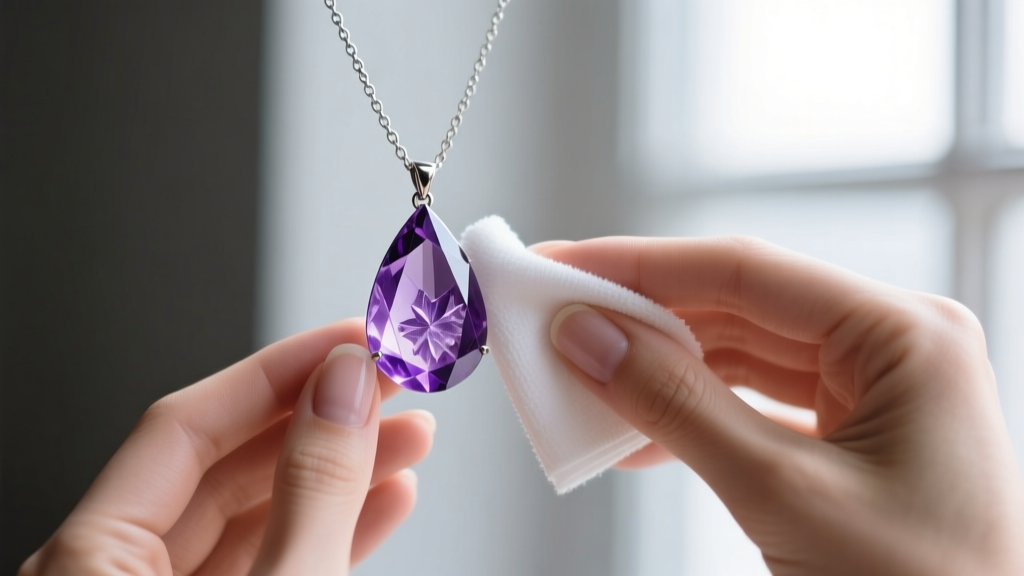
For routine maintenance of amethyst, sugilite, and charoite necklaces, use a solution of lukewarm water and a few drops of mild, phosphate-free dish soap. Agitate gently with a baby-soft toothbrush, rinse under a gentle stream of tepid water, and pat dry with a lint-free microfiber cloth. Purple sapphires can safely undergo ultrasonic cleaning unless they have significant surface-reaching fractures or have been treated with lattice diffusion, which is rare for purple hues but common in orange and yellow sapphires. Always store purple necklaces in individual anti-tarnish pouches to prevent harder stones (like sapphire) from scratching softer companions (like charoite or fluorite) when tangled in a jewelry box.


