The Beginner's Guide to Buying a Blue Sapphire Tennis Necklace
Discover how to choose the perfect blue sapphire tennis necklace. Learn about origins, treatments, settings, and pricing in this beginner guide.

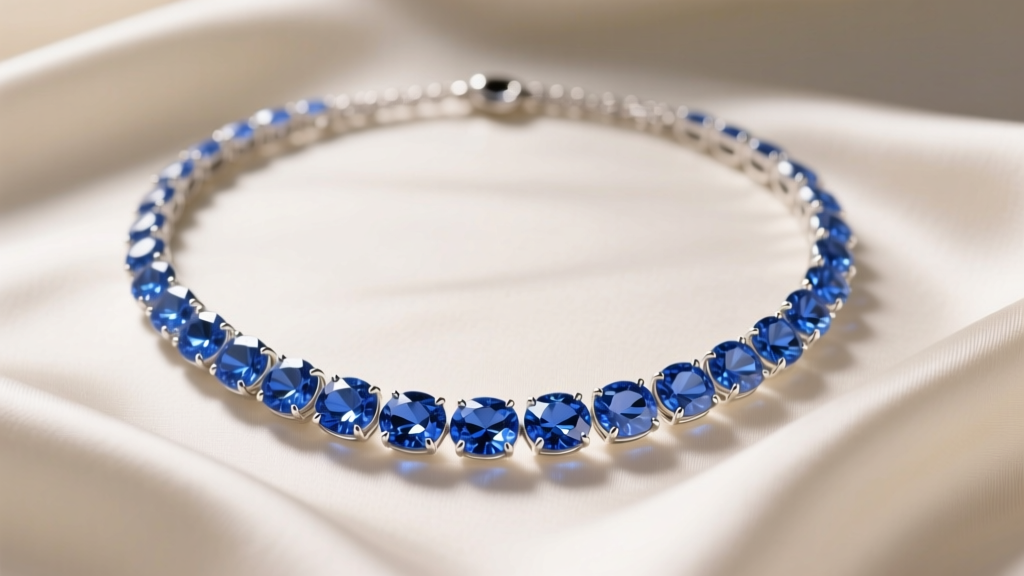
What Exactly Is a Blue Sapphire Tennis Necklace?
A blue sapphire tennis necklace is a continuous, flexible strand of individually set sapphires that wraps elegantly around the collarbone. Unlike a traditional pendant necklace, the brilliance here comes from the unbroken line of gemstones. While diamond tennis necklaces have dominated the market for decades, sapphire alternatives have surged in popularity due to their rich color saturation and the gemstone's exceptional durability. Ranking at a 9 on the Mohs hardness scale, sapphire is second only to diamond, making it a viable option for regular wear—provided the setting is engineered correctly.
For beginners, navigating the world of colored gemstones can feel overwhelming. Unlike diamonds, which are graded on a universal lack of color, sapphires are valued primarily on their hue, tone, and saturation. This guide breaks down the exact specifications, pricing matrices, and structural failure points you need to know before investing in a blue sapphire tennis necklace.
Decoding Sapphire Quality: Color, Clarity, and Treatments
The value of a sapphire tennis necklace is heavily dictated by the origin and treatment of the stones. According to the Gemological Institute of America (GIA), color is the single most critical factor in sapphire valuation.
Understanding Hue and Saturation
The most sought-after color for these necklaces is 'cornflower blue'—a vivid, medium-light tone with high saturation. 'Royal blue' is another premium tier, offering a deeper, more velvety saturation. When shopping, ensure the necklace features color-matched stones. Because tennis necklaces require dozens of individual gems (often 40 to 60 stones), achieving perfect color uniformity is a hallmark of high-quality craftsmanship.
The Truth About Treatments
It is an industry standard that over 90% of natural sapphires undergo heat treatment to improve clarity and color. This is permanent and widely accepted. However, you must be wary of beryllium diffusion. This is a lattice-altering treatment that introduces color into pale stones. The Federal Trade Commission (FTC) mandates that diffusion treatments must be explicitly disclosed, as they reduce the stone's value by up to 80% compared to standard heat-only sapphires. Always request a lab report from a reputable institution like GIA or AGL for necklaces priced over $5,000.
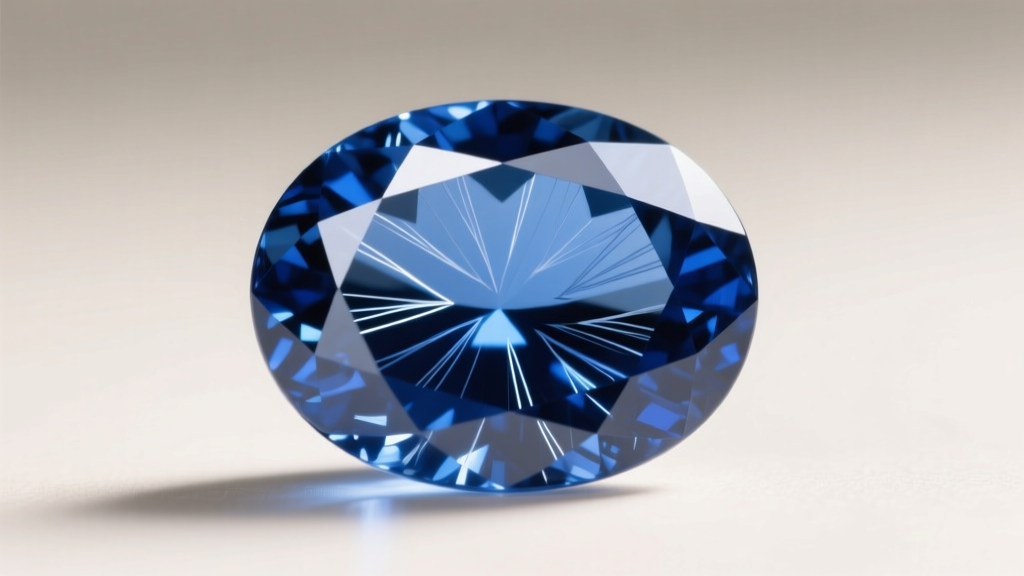
Sapphire Origins and Pricing Matrix
Where your sapphires were mined plays a massive role in the final price tag of your tennis necklace. Below is a comparative breakdown of the most common sapphire origins used in fine jewelry, assuming a standard 4mm to 5mm round or oval cut.
| Origin | Color Profile | Typical Treatment | Estimated Price (Per Carat) | Best For |
|---|---|---|---|---|
| Ceylon (Sri Lanka) | Vivid Cornflower Blue | Standard Heat | $800 - $3,500+ | Investment pieces, high brilliance |
| Montana (USA) | Steely Blue, Teal hints | Unheated / Light Heat | $400 - $1,200 | Ethical sourcing, unique hues |
| Australian | Dark, Inky Blue-Green | Standard Heat | $150 - $500 | Budget-friendly, moody aesthetics |
| Lab-Grown (Flux) | Perfect Royal Blue | None (Synthetic) | $50 - $150 | Flawless clarity, everyday wear |
Structural Integrity: Settings and Failure Modes
The most common mistake beginners make is focusing entirely on the gemstones while ignoring the metalwork. A tennis necklace is a highly articulated piece of jewelry, meaning it has dozens of moving joints. This flexibility is a structural vulnerability.
Prong vs. Bezel Settings
Four-prong settings are the industry standard for sapphire tennis necklaces because they allow maximum light entry, enhancing the gem's brilliance. However, prongs can catch on clothing. Bezel settings (where a rim of metal completely encircles the gem) offer superior protection against girdle chipping but sacrifice about 15% of the stone's visible surface area. For stones larger than 5mm, bezel or half-bezel settings are highly recommended for security.
Preventing Link Failure
The primary failure mode in tennis necklaces is the jump ring—the tiny metal loop connecting each gemstone basket—wearing thin from friction and snapping. When purchasing, ask the jeweler if the links are laser-welded or soldered. Laser-welded jump rings offer significantly higher tensile strength. Furthermore, due to the weight and value of a sapphire tennis necklace, never settle for a standard lobster clasp. Insist on a box clasp with a figure-8 safety latch or an integrated safety chain to prevent catastrophic loss if the primary clasp fails.
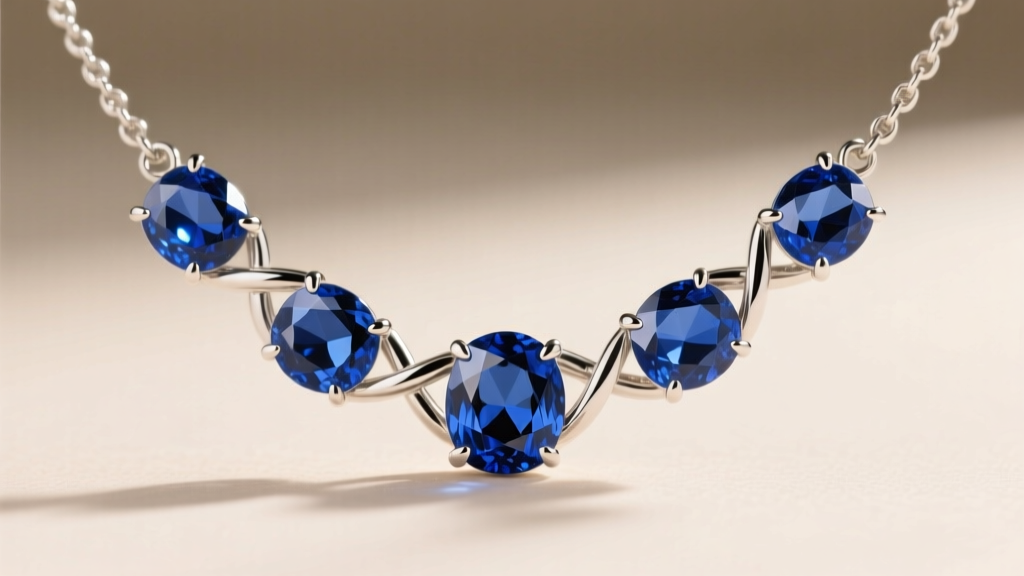
Sizing, Length, and Carat Weight Guide
Sapphire tennis necklaces are measured in Total Carat Weight (TCW) and length. A standard 16-inch choker length will sit tightly at the base of the neck, while an 18-inch princess length will rest on the collarbone. The visual impact of the necklace is determined by the millimeter size of the stones, which directly correlates to the TCW.
- 3.0mm stones (Approx. 15-20 TCW): Delicate, understated, perfect for layering with gold chains or pendants.
- 4.0mm stones (Approx. 30-40 TCW): The 'sweet spot' for everyday luxury. Offers substantial sparkle without feeling overly heavy or ostentatious.
- 5.0mm to 6.0mm stones (Approx. 50-80 TCW): High-impact, red-carpet ready. Requires a robust clasp and thicker metal baskets to support the gem weight.
When trying on a necklace, check the drape. The stones should lay flat against the skin without flipping over. If the stones flip, the metal baskets are too heavy for the connecting links, indicating poor structural balance by the manufacturer.
Everyday Care and Maintenance
While sapphires are incredibly tough, the metal settings and potential inclusions within the stones require specific care routines. Never place a sapphire tennis necklace in an ultrasonic cleaner if the stones have significant liquid inclusions or surface-reaching fractures, as the high-frequency vibrations can cause the gems to shatter. Furthermore, ultrasonic waves can loosen the tension in prong settings over time.
Instead, clean your necklace at home using a solution of warm water and a few drops of mild, ammonia-free dish soap. Soak the piece for 15 minutes, then gently agitate the dirt from behind the gemstones (the pavilion) using a soft-bristled baby toothbrush. Rinse thoroughly with distilled water to prevent hard water spots, and dry with a microfiber cloth. Have a professional jeweler inspect the prongs and jump rings every 12 months to ensure your investment remains secure.


