Bow Necklace Gold: 14K vs 18K Alloy Property Guide
Discover the metallurgy behind the perfect bow necklace gold. Compare 14K vs 18K alloys, vermeil durability, and structural hardness for lasting wear.

The Metallurgy of the Bow: Why Alloy Matters
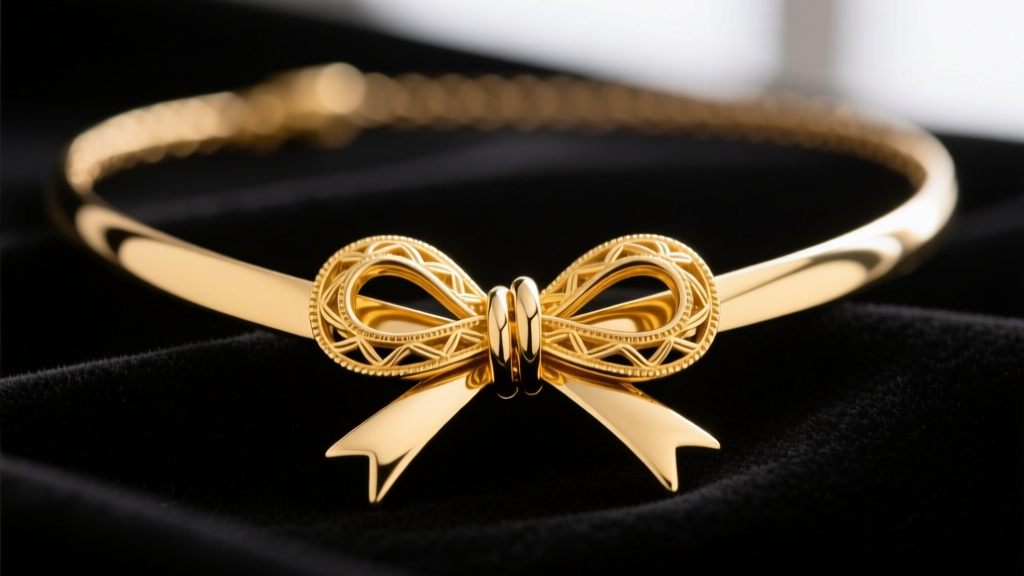
The resurgence of balletcore and coquette aesthetics has cemented the bow motif as a staple in modern jewelry boxes. However, from a metallurgical and structural engineering perspective, a bow is one of the most demanding shapes to execute in fine jewelry. Unlike a simple geometric pendant, a bow necklace gold design features sweeping curves, delicate ribbon tails, and a high-stress central knot. When selecting the right piece, understanding the alloy composition is not just about color preference; it is about structural survival.
Pure 24-karat gold is exceptionally malleable, registering a mere 25 on the Vickers Hardness (HV) scale. If a bow pendant were crafted from pure gold, the loops would crush under the weight of a heavy chain, and the central knot would deform upon impact. To achieve the necessary tensile strength and yield point, gold must be alloyed with metals like copper, silver, zinc, and sometimes palladium. These alloying elements dictate not only the hue of the gold but its resistance to work hardening, crevice corrosion, and permanent deformation.
14K vs. 18K Gold: Structural Integrity Compared
The debate between 14K and 18K gold is the most common crossroads for buyers. According to the Gemological Institute of America (GIA), the karat system measures the proportion of pure gold in the alloy, but it is the remaining percentage that provides the mechanical backbone for intricate designs.
| Property | 14K Gold (58.3% Pure) | 18K Gold (75% Pure) |
|---|---|---|
| Vickers Hardness (HV) | 140 - 160 HV | 120 - 135 HV |
| Tensile Strength | High (Excellent for thin wires) | Moderate (Prone to denting) |
| Color Saturation | Lighter, warmer yellow | Deep, rich buttery yellow |
| Best Bow Design | Wire-wrapped, hollow 3D, micro-pave | Solid cast, flat stamped, enamel |
| Average Price Range | $180 - $450 | $500 - $1,400+ |
For a highly detailed, three-dimensional bow with thin ribbon edges, 14K gold is the superior functional choice. Its higher copper and zinc content increases the yield strength, meaning the delicate tails will resist bending when caught on clothing. Conversely, 18K gold offers a luxurious, saturated color that pairs beautifully with flat, stamped bow designs or those featuring guilloché enamel, where extreme structural rigidity is less critical than surface beauty.
The Problem with Gold Vermeil and Plated Bows
While solid gold requires a significant investment, gold vermeil and gold-plated alternatives offer the bow aesthetic at a fraction of the cost. However, the anatomy of a bow necklace makes it uniquely hostile to plated finishes. The Federal Trade Commission (FTC) mandates that gold vermeil must feature a minimum of 2.5 microns of gold plating over a sterling silver base. Standard gold plating, often applied over brass or copper, can be as thin as 0.5 microns.
Friction and Crevice Wear
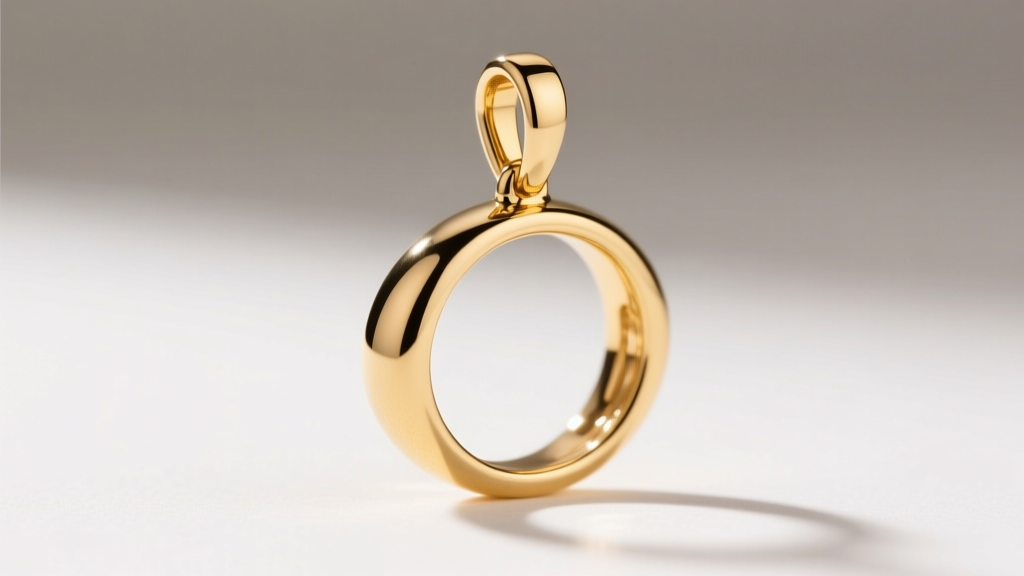
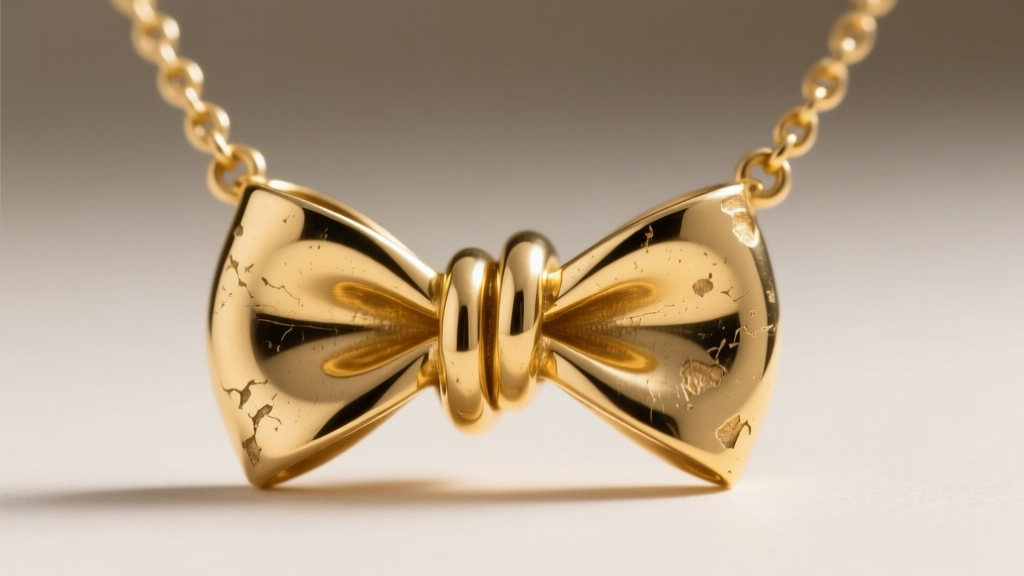
The central knot of a bow pendant is a notorious friction point. As the wearer moves, the pendant shifts, causing the bail (the loop that holds the chain) to rub continuously against the top of the bow knot. In plated or vermeil pieces, this micro-abrasion strips the gold layer away within months, exposing the base metal beneath. Furthermore, the deep crevices where the bow tails meet the knot trap skin oils, lotions, and sweat. In brass-based plated bows, this trapped moisture accelerates galvanic corrosion, leading to a greenish patina that is nearly impossible to polish out of intricate grooves.
Design Variations and Material Pairings
The manufacturing technique used to create your bow necklace gold piece heavily influences which alloy will perform best over decades of wear.
Cast vs. Stamped Construction
Most 3D bow pendants are created via lost-wax casting. During this process, molten gold is poured into a mold. The thick central knot of the bow cools at a different rate than the thin ribbon loops, which can lead to internal porosity (tiny air bubbles) if the jeweler does not properly vent the wax model. 14K gold flows exceptionally well and is less prone to severe shrinkage porosity than higher-karat alloys. Stamped bows, cut from flat sheets of gold using hydraulic presses, rely on the ductility of the metal. 18K gold is highly ductile, allowing for crisp, sharp edges on flat bow silhouettes without tearing the metal during the stamping process.
Wire-Wrapping and Work Hardening
Some artisan jewelers craft the center knot by tightly wrapping a thin gauge of gold wire around the bow loops. This process induces work hardening, where the metal becomes stiffer and more brittle as it is deformed. If the jeweler fails to anneal (heat and soften) the wire at the correct intervals, a stiff 14K wire can snap under tension. Understanding these manufacturing nuances helps explain why a well-crafted 14K bow pendant from a master jeweler will outlast a poorly cast 18K piece from a mass manufacturer.
Care and Maintenance for Intricate Gold Bows
Maintaining the luster of a bow necklace requires specific protocols, particularly due to the intricate geometry of the design.
- Avoid Ultrasonic Cleaners for Pave Bows: Many luxury bow necklaces feature a diamond or sapphire set in the center knot. The high-frequency vibrations of an ultrasonic cleaner can shake the micro-prongs loose, causing the accent stone to fall out into the machine's tank.
- Targeted Crevice Cleaning: Use a soft-bristled baby toothbrush and a drop of mild dish soap to gently agitate the deep grooves where the ribbon tails fold under the knot. Rinse with distilled water to prevent hard water spots from settling in the crevices.
- Chain Selection Matters: Pairing a delicate 14K gold bow with a heavy, thick Cuban link chain creates a severe weight mismatch. The heavy chain will act as a fulcrum, bending the bail of the bow pendant over time. Always match the chain weight to the pendant's structural capacity.
"The longevity of a motif-driven pendant like a bow relies entirely on the synergy between the alloy's Vickers hardness and the structural thickness of the casting. A 1mm thick 14K bow will outperform a 2mm thick 22K bow in daily wear scenarios."
Final Verdict: Which Bow Necklace Gold is Right for You?
If your priority is an everyday, heirloom-quality piece with intricate 3D details, thin ribbon tails, and high resistance to crushing, a solid 14K gold bow necklace is the undisputed champion of structural integrity. It provides the necessary tensile strength to survive the rigors of daily wear while maintaining a beautiful, warm luster. If you prefer a richer, deeper yellow hue and plan to wear the necklace primarily for special occasions where impact risk is low, an 18K gold flat-stamped or solid cast bow offers unparalleled luxury. Avoid gold-plated or thin vermeil bows for daily wear, as the friction at the central knot will inevitably compromise the finish, leaving you with a tarnished centerpiece.


