Brass Chain Necklace Guide: Alloys, Gauges, and Patina
Discover the technical details of the brass chain necklace. Explore copper-zinc alloys, link gauges, patina development, and expert maintenance tips.

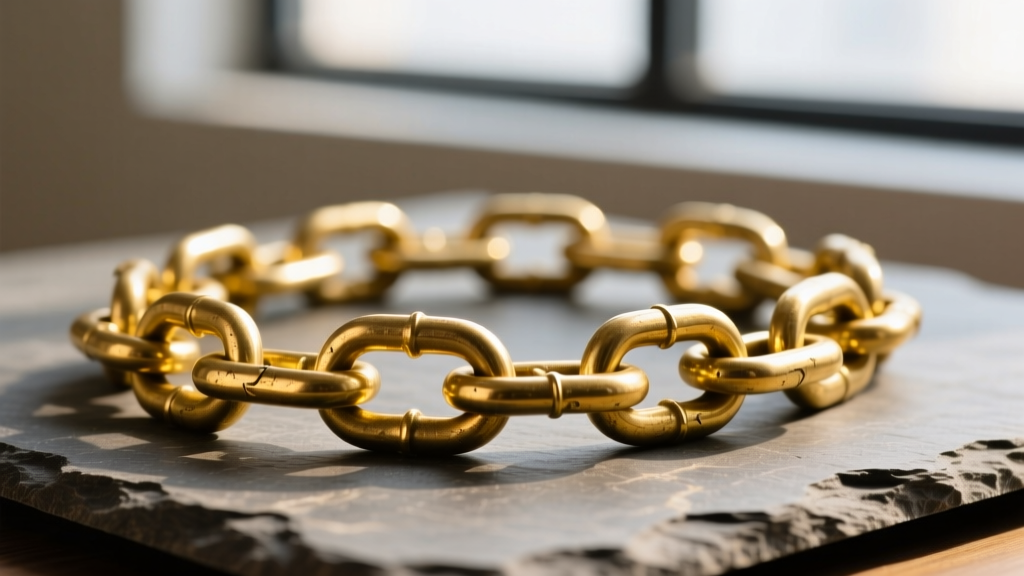
The Metallurgy of Brass: Understanding Your Alloy
When evaluating a brass chain necklace, most buyers focus solely on the aesthetic warmth of the metal. However, as a domain expert, I look first at the metallurgical composition. Brass is not a single elemental metal; it is an alloy primarily composed of copper (Cu) and zinc (Zn). The specific ratio of these elements drastically dictates the chain's color, tensile strength, and corrosion resistance.
In fine and artisan jewelry, the most common alloy is C26000 (Cartridge Brass), which consists of roughly 70% copper and 30% zinc. This ratio provides an optimal balance of ductility for drawing wire and a rich, golden-yellow hue that closely mimics 14k or 18k gold. Conversely, lower-tier mass-produced chains may utilize C28000 (Muntz Metal), which contains up to 40% zinc. While C28000 is harder and cheaper to produce, it is highly susceptible to dezincification—a corrosion process where zinc leaches out of the alloy when exposed to the chlorides and lactic acid present in human sweat, leaving behind a porous, brittle copper structure that easily snaps under tension.
According to the Copper Development Association, understanding these alloy designations is critical for predicting how a brass chain will age against the skin over a 5-to-10-year lifespan.
Link Construction and Gauge Specifications
The structural integrity of a brass chain necklace is defined by its wire gauge and link geometry. Because brass has a lower tensile strength than stainless steel or titanium, selecting the correct American Wire Gauge (AWG) is paramount to prevent the links from pulling apart under the weight of a pendant.
| Chain Style | Wire Gauge (AWG) | Thickness (mm) | Est. Tensile Strength | Best Application |
|---|---|---|---|---|
| Delicate Cable | 22 - 20 AWG | 0.64 - 0.81mm | Low (5-10 lbs) | Lightweight pendants, layering |
| Standard Figaro | 18 - 16 AWG | 1.02 - 1.29mm | Medium (15-25 lbs) | Everyday wear, medium charms |
| Heavy Curb | 14 - 12 AWG | 1.63 - 2.05mm | High (40-60+ lbs) | Statement pieces, heavy pendants |
| Wheat / Rope | 18 - 14 AWG | 1.02 - 1.63mm | High (30-50 lbs) | Textured standalone necklaces |
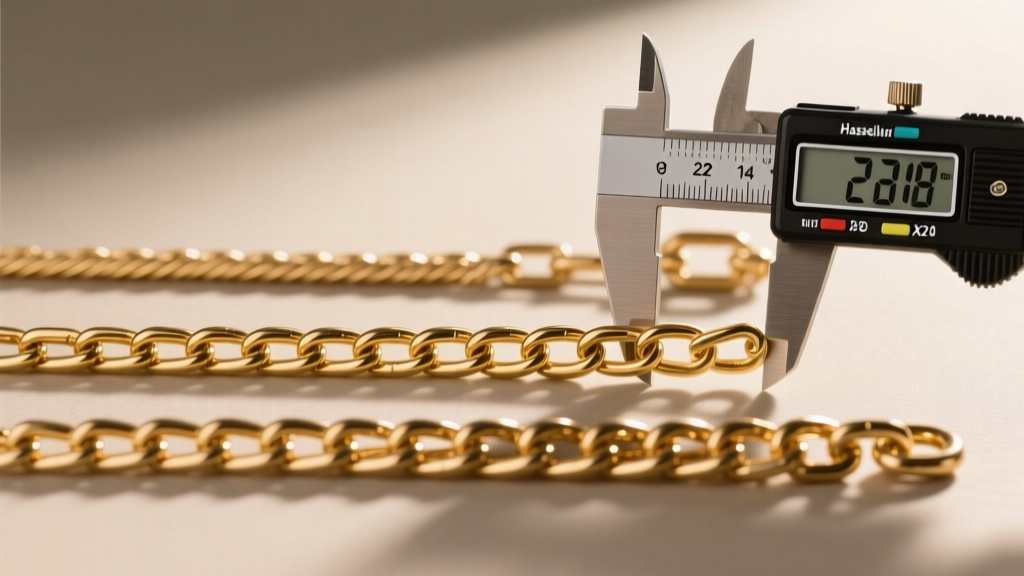
For chains featuring soldered links, the method of soldering matters. High-end brass chains utilize laser soldering, which applies localized heat without annealing (softening) the surrounding work-hardened brass wire. Torch-soldered links, often found in cheaper imports, can create soft spots in the wire that are prone to stretching and deformation.
Raw vs. Lacquered Brass: The Patina Debate
A defining characteristic of the brass chain necklace is its interaction with the environment. Raw brass oxidizes when exposed to sulfur compounds in the air, forming a dark layer of copper sulfide. When exposed to moisture and carbon dioxide, it can further develop copper carbonate, commonly known as verdigris (the green patina that also stains the wearer's skin).
To combat this, many commercial manufacturers apply a clear polyurethane or acrylic lacquer. While this preserves the high-polish factory finish, it creates a 'plastic' feel and inevitably chips or wears away at the friction points (like the clasp and jump rings), leading to patchy, uneven tarnishing that is nearly impossible to fix without completely stripping the chain in an acetone bath.
Expert Recommendation: Always opt for raw, unlacquered brass. While it requires maintenance, raw brass develops a rich, dark antique patina that can be selectively polished to highlight the high spots of the links, giving the necklace a bespoke, heirloom quality that lacquered pieces simply cannot achieve.
Hardware, Clasps, and Structural Integrity
A frequent failure point in brass jewelry is the clasp. Brass lacks the 'spring memory' required for internal mechanisms. Therefore, a solid brass lobster clasp must contain an internal spring made of stainless steel or a specialized beryllium-copper alloy. If a manufacturer attempts to use a brass wire for the internal spring, the clasp will fatigue and fail to close within a few months of daily use.
Furthermore, pay close attention to the jump rings connecting the clasp to the chain. These should be soldered closed or, at minimum, feature a heavy split-ring design. An unsoldered, butt-cut brass jump ring will easily warp open under the lateral torque of a swinging pendant, resulting in a lost necklace.
Expert Maintenance and Patina Reversal
When your brass chain necklace becomes overly dark or develops unwanted green verdigris, avoid commercial ammonia-based dip cleaners. Ammonia can cause stress-corrosion cracking (season cracking) in brass alloys that have residual tension from the wire-drawing process.
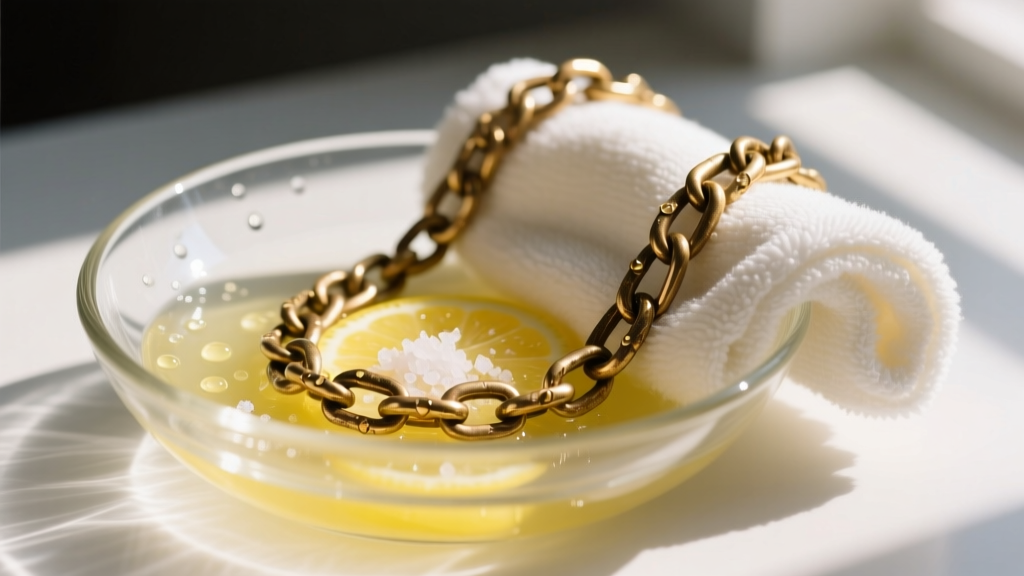
Instead, utilize a mild, food-grade acid bath. The Gemological Institute of America (GIA) and expert metallurgists frequently recommend mild organic acids for safe copper-alloy cleaning. Here is the precise technical protocol for restoring raw brass:
- The Solution: Mix 1/2 cup of fresh lemon juice (citric acid) with 1 tablespoon of non-iodized sea salt (sodium chloride). The chloride ions act as a catalyst, accelerating the acid's ability to dissolve copper oxide without pitting the base metal.
- The Process: Submerge the chain for exactly 3 to 5 minutes. Do not exceed 10 minutes, or the zinc in the alloy may begin to etch, leaving the chain with a permanent, unnatural salmon-pink hue (a sign of surface dezincification).
- Neutralization: Remove the chain and immediately wash it in a baking soda and water solution to neutralize the acid, followed by a thorough rinse in distilled water.
- Drying: Use compressed air or a microfiber cloth. Trapped moisture in the link crevices will cause immediate water-spot oxidation.
Sourcing and Authenticity Verification
With the rise of plated base metals masquerading as solid alloys, verifying the authenticity of a brass chain necklace is a necessary skill. Many fast-fashion brands sell zinc-alloy (Zamak) or steel chains with a thin brass electroplate.
First, perform the magnet test. Brass is strictly non-magnetic. If the chain or the clasp housing exhibits any magnetic pull, it contains a ferrous steel core. Second, consider the specific gravity. Solid brass has a density of approximately 8.4 to 8.73 g/cm³, making it noticeably heavier than aluminum or hollow-plated plastics, but slightly heavier than stainless steel (7.8 g/cm³). Finally, inspect the wear points. If the chain reveals a silvery or dull grey metal beneath the yellow surface at the clasp friction points, you are dealing with a plated item, not a solid brass chain necklace.


