Sword Heart Necklace Value Guide: Is It Worth the Price?
Discover how to assess the true value of a sword heart necklace. We break down materials, pricing tiers, and chain quality to help you buy smart.

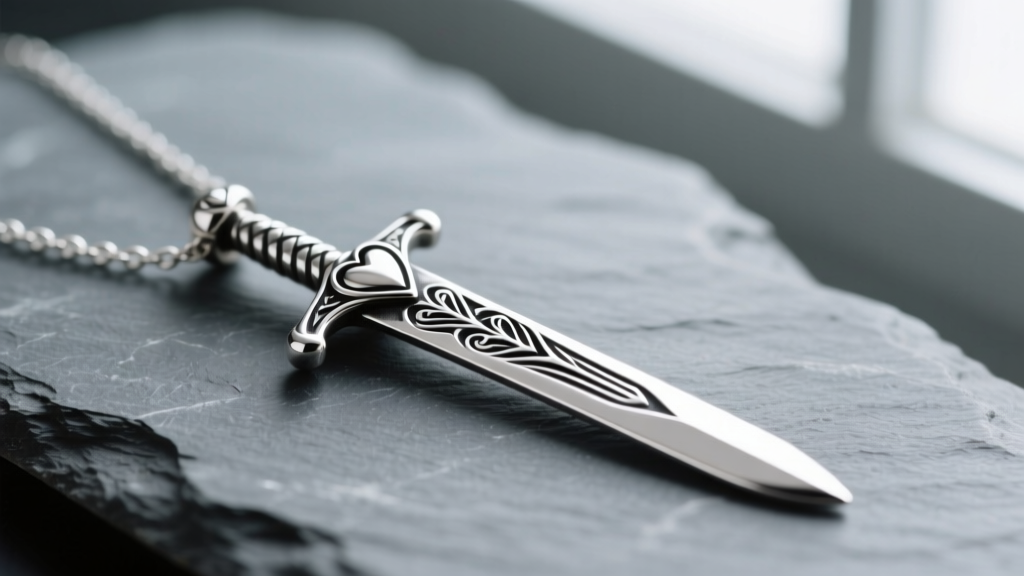
The Anatomy of a Sword Heart Pendant
The sword heart necklace is a striking staple of gothic, punk, and dark romantic aesthetics. Symbolizing everything from heartbreak and resilience to a fierce, guarded love, this motif has maintained a steady presence in alternative fashion for decades. However, as the demand for dark academia and romantic-macabre jewelry surges in 2026, the market has become heavily saturated. You can find a sword heart pendant for $12 on fast-fashion marketplaces or $350 from an independent artisan silversmith. But how do you accurately assess the value? Understanding the anatomy, material grades, and construction techniques is the only way to separate a genuine heirloom from overpriced costume jewelry.
When evaluating the pendant itself, look closely at the intersection of the blade and the heart. In mass-produced, die-cast pieces, the sword and heart are molded as a single, flat piece of zinc alloy. This results in a stiff, two-dimensional look with shallow detailing. In contrast, high-value artisan pieces often feature a three-dimensional construction where the sword is cast separately and soldered through a precision-cut channel in the heart. This not only adds structural integrity but creates dynamic shadows and depth. Additionally, examine the bail (the loop that connects the pendant to the chain). A cheap pendant will have a thin, stamped sheet-metal loop soldered to the top. A premium piece will feature a heavy, cast-integrated bail or a hidden bale that allows the pendant to sit flush against the chest, giving the illusion that the sword heart is floating on the chain.
Material Breakdown: What You Are Actually Paying For
The most significant driver of price in any necklace is the base metal. According to the Federal Trade Commission Jewelry Guides, retailers must accurately disclose metal content, yet vague terms like 'silver-tone' or 'antique finish' are frequently used to mask cheap alloys. Here is a realistic breakdown of what you should expect to pay based on material grades in the current market.
| Material Grade | Expected Price Range | Lifespan & Durability | Value Verdict |
|---|---|---|---|
| Zinc Alloy / Pot Metal | $10 - $25 | 1-2 years; prone to snapping, bending, and severe skin discoloration. | Poor. Only for temporary costume wear. |
| Brass with Silver Plating | $25 - $50 | 2-4 years; plating will wear off, exposing brass that turns skin green. | Fair. Acceptable if priced under $30. |
| 316L Surgical Steel | $35 - $75 | Lifetime; highly resistant to tarnish, rust, and moisture damage. | Excellent. The best budget-friendly option for daily wear. |
| Solid 925 Sterling Silver | $85 - $220 | Generational; can be polished and re-oxidized indefinitely. | Premium. The standard for serious collectors and artisans. |
| 14k/18k Gold Vermeil | $120 - $300 | 5-10 years; requires careful maintenance to prevent gold layer wear. | Good. Ensure the base is solid silver, not brass. |
If a seller is charging over $80 for a piece that is merely 'silver-plated,' you are being overcharged. Always demand proof of material, such as a '925' stamp for sterling silver or '316L' for surgical steel.
The Chemistry of Gothic Patina: Oxidation vs. Paint
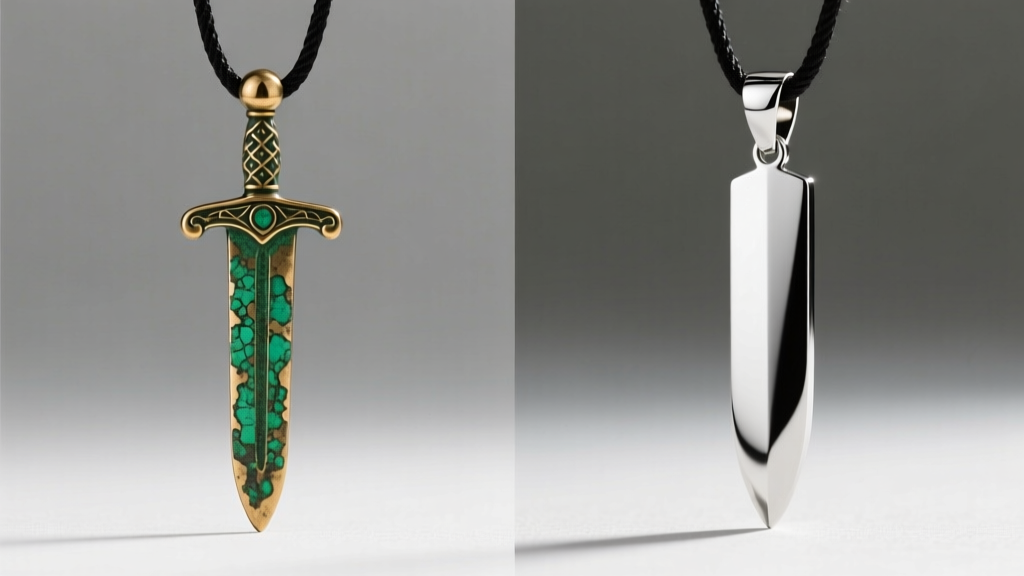
A defining characteristic of the sword heart necklace is its dark, brooding finish. This high-contrast look highlights the intricate engraving on the sword's hilt and the curves of the heart. However, the method used to achieve this darkness drastically impacts the necklace's long-term value and aging process.
- Liver of Sulfur (True Patina): High-end silversmiths use a chemical compound called liver of sulfur to force the sterling silver to oxidize. This creates a genuine, dark gray-to-black patina that penetrates the metal's pores. Over time, the high points of the sword and heart will naturally polish against your skin and clothing, creating a beautiful, custom contrast that cannot be replicated in a factory.
- Black Rhodium Plating: Some luxury brands use black rhodium, a precious metal in the platinum family, to achieve a sleek, gunmetal-black finish. While beautiful and highly resistant to tarnish, it is a surface plating. Once it wears away after a few years, the piece must be professionally re-plated, which adds to the lifetime cost of ownership.
- Enamel or Acrylic Paint: If you look closely at the crevices of a cheap pendant and see a glossy, pitch-black substance that looks like it was painted on, you are looking at enamel or paint. This is a massive red flag. It will chip, scratch, and peel within months, leaving the pendant looking cheap and degraded.
When assessing value, always ask the jeweler how the darkening was achieved. A true chemical oxidation adds significant artisan value to the piece.
Chain Mechanics: The Hidden Cost of Heavy Pendants
A common mistake buyers make is focusing entirely on the sword heart pendant while ignoring the chain it hangs from. A heavy, solid silver sword pendant can easily weigh between 15 and 30 grams. Suspending that weight on a flimsy, hollow chain is a recipe for disaster.
The Silver Institute notes that while sterling silver is a beautiful precious metal, it is relatively soft and malleable. Therefore, the gauge (thickness) of the chain is critical for structural integrity. For a pendant weighing over 15 grams, you need a chain with a minimum thickness of 1.5mm to 2.0mm. Cable chains, Figaro chains, and curb chains are excellent choices because their interlocking links distribute weight evenly. Avoid snake chains or omega chains for heavy gothic pendants, as the kinks and bends in these styles create weak points that will eventually snap under the pendulum motion of a heavy sword.
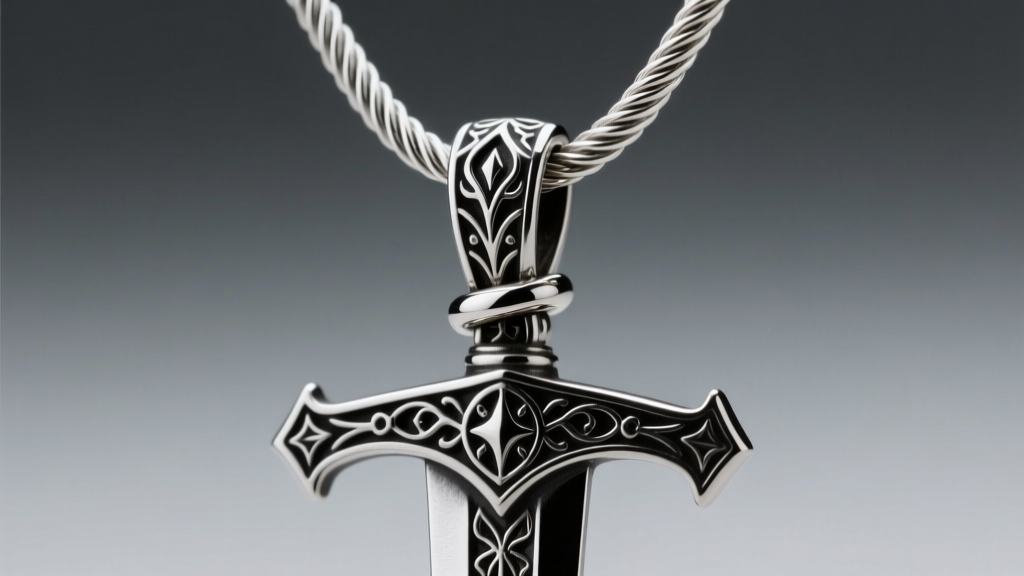
Furthermore, inspect the clasp. Spring ring clasps are standard on cheap jewelry, but their internal tension springs frequently fail, especially when supporting heavy loads. A high-value sword heart necklace should always feature a sturdy lobster clasp or a heavy-duty toggle clasp. If a $150 sterling silver pendant comes attached to a 0.8mm chain with a tiny spring ring clasp, the overall value of the package is significantly compromised, as you will immediately need to spend an additional $40-$60 to buy a chain capable of holding it safely.
Final Verdict: Assessing Value in 2026
The sword heart necklace remains a powerful, evocative piece of jewelry, but navigating the pricing landscape requires a critical eye. To ensure you are getting a fair deal, run through this quick assessment checklist before purchasing:
- Verify the Stamp: Look for '925', '316L', or a recognized maker's mark. Avoid unmarked metals entirely.
- Check the Weight: A quality solid metal pendant should have a noticeable, substantial heft in your hand. If it feels as light as plastic, it is likely hollow-cast or pot metal.
- Inspect the Bail and Solder Joints: Ensure the connection points are smooth, thick, and free of messy, visible solder blobs.
- Evaluate the Chain Pairing: Ensure the chain gauge is at least 1.5mm and utilizes a lobster clasp to support the pendant's weight.
- Understand the Patina: Confirm that the dark detailing is achieved through chemical oxidation rather than painted enamel.
By prioritizing material integrity and structural engineering over flashy marketing, you can invest in a sword heart necklace that not only makes a bold statement today but survives as a staple in your wardrobe for decades to come.


