How to Choose, Design, and Layer Milestone Necklaces
Learn how to design, size, and layer custom milestone necklaces. Expert guide on chain gauges, metal grades, and engraving techniques for lasting wear.

The Anatomy of a Permanent Milestone Piece
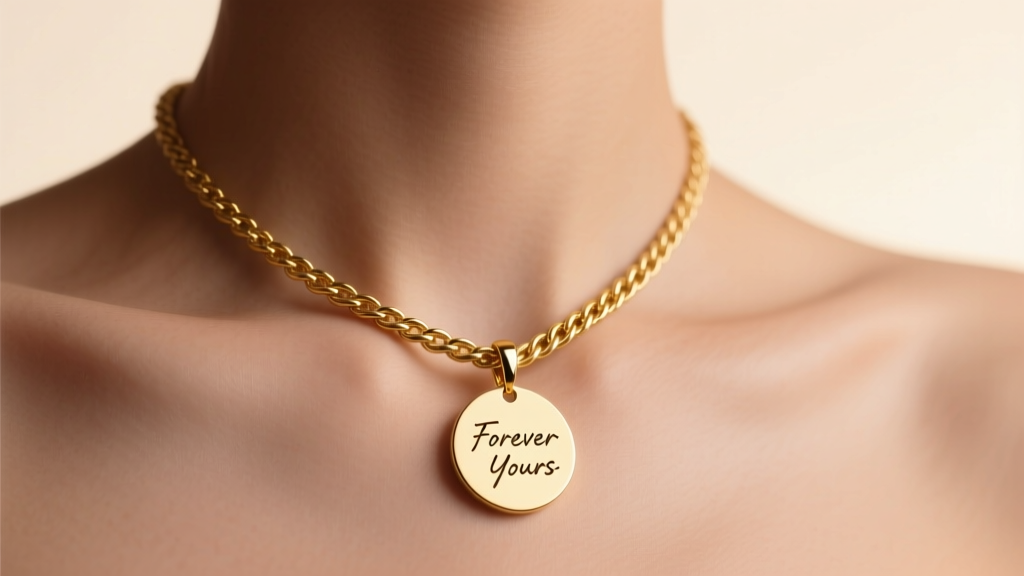
Milestone necklaces are more than just decorative accessories; they are archival anchors designed to commemorate life’s most significant transitions. Whether marking a graduation, a career pivot, a wedding, or the birth of a child, these pieces are intended for daily, lifelong wear. Because they are rarely taken off, the structural integrity of the chain, the metallurgy of the pendant, and the precision of the hardware must be meticulously planned. In this comprehensive guide, we break down the exact specifications, material grades, and layering physics required to design a custom milestone necklace that will survive decades of wear without breaking, tangling, or losing its engraving.
Step 1: Selecting the Right Metal Grade for Daily Wear
The most common mistake when commissioning milestone necklaces is prioritizing color over tensile strength. While 18k gold (75% pure gold) offers a rich, saturated yellow hue, it is relatively soft. On the Vickers hardness scale, 18k yellow gold sits at approximately 120 HV. By contrast, 14k gold (58.5% pure gold) is alloyed with higher concentrations of copper, silver, and zinc, pushing its hardness to roughly 135 HV. According to the Gemological Institute of America (GIA), this increase in alloy content significantly improves the metal's resistance to scratching and deformation.
Platinum vs. White Gold
If your milestone pendant features a heavy diamond solitaire or a solid gold medallion exceeding 5 grams, consider platinum. Platinum (usually 95% pure, alloyed with ruthenium or iridium) is incredibly dense and possesses high malleability without sacrificing structural memory. When a platinum chain link bends, it displaces metal rather than cracking, making it the ultimate choice for heirloom-weight pendants. Conversely, 14k or 18k white gold is plated with rhodium to achieve its bright white finish. Over a decade of daily wear, this rhodium plating will inevitably wear away, revealing the slightly yellowish underlying alloy and requiring professional re-plating.
Step 2: Matching Chain Gauges to Pendant Weights
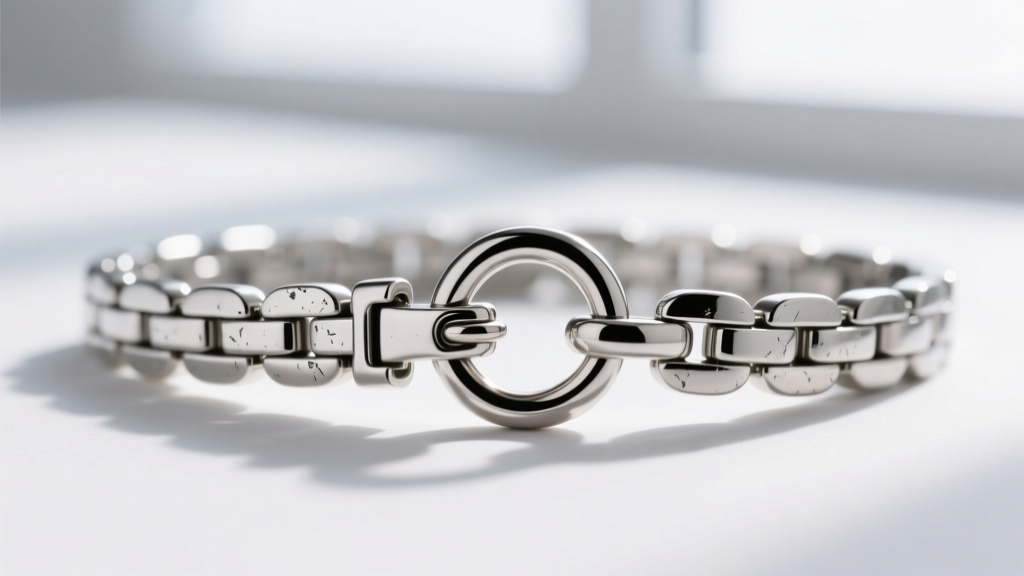
A chain is only as strong as its weakest link—literally. The gauge (thickness) of the chain must be proportionally matched to the weight of the pendant. Using a delicate 0.8mm cable chain to support a heavy 10-gram vintage locket will result in catastrophic failure, usually at the jump ring or the clasp solder point. Below is a structural framework for pairing chain weaves with pendant weights.
| Chain Weave | Gauge (mm) | Max Pendant Weight | Best Milestone Application |
|---|---|---|---|
| Cable | 0.8mm - 1.0mm | Up to 3g | Lightweight birthstone chips, delicate initial pendants |
| Box | 1.2mm - 1.5mm | Up to 8g | Solid gold medallions, diamond solitaire milestones |
| Wheat | 1.5mm - 2.0mm | Up to 15g | Engraved fingerprint pendants, woven hair lockets |
| Rope / Figaro | 2.5mm - 3.5mm | 25g+ | Heavy vintage lockets, multi-gemstone statement pieces |
Pro Tip: Always ensure the jump ring connecting the pendant to the chain is laser-welded or traditionally torch-soldered. A simple split jump ring will eventually pull apart under the kinetic friction of daily movement.
Step 3: Precision Engraving Techniques
The emotional core of milestone necklaces often lies in the engraving—be it a loved one's handwriting, a fingerprint, or a significant date. The method of engraving dictates both the legibility and the structural integrity of the metal.
Rotary vs. Fiber Laser Engraving
Traditional rotary engraving uses a diamond-tipped bit to physically carve away metal. While this creates a deep, tactile groove, it removes material, which can severely weaken pendants that are already thin (under 0.8mm). For modern milestone pieces, fiber laser engraving (operating at a 1064 nm wavelength) is the industry standard. Fiber lasers alter the surface of the metal at a microscopic level without compromising the structural thickness of the piece. They can achieve resolutions up to 1000 DPI, allowing for the exact replication of a child's messy handwriting or the intricate whorls of a fingerprint with line widths as fine as 0.05mm.
When submitting handwriting for laser engraving, always provide a high-contrast scan (minimum 600 DPI) of the original text written with a fine-point gel pen, rather than a ballpoint, to ensure the laser captures the natural variation in line weight.
Step 4: Determining the Drop Length and Neckline Mapping
The impact of a milestone necklace relies heavily on where it rests on the chest. Standard jewelry lengths are categorized into specific tiers, each serving a different aesthetic and functional purpose:
- Choker (14 - 16 inches): Rests tightly at the base of the neck. Ideal for minimalist, single-word bar pendants or small diamond solitaires. Best paired with V-neck or scoop-neck tops.
- Princess (18 inches): The universal standard. Rests perfectly on the collarbone. This is the optimal length for medallions, lockets, and fingerprint pendants, as it sits in the visual center of the chest and remains visible above most crew-neck and button-down shirts.
- Matinee (20 - 24 inches): Drops to the upper bust. Reserved for heavier, larger statement lockets or religious medals that need to hang freely over high-neck garments or dresses.
To find your exact custom length, use a flexible tailor's measuring tape. Drape it around your neck and adjust it to the desired drop point, noting the measurement to the nearest half-inch. Remember that a pendant with a large bail (the loop that connects it to the chain) will drop the focal point an additional 0.5 to 1 inch below the chain's resting place.
How to Layer Milestone Necklaces Without Tangling
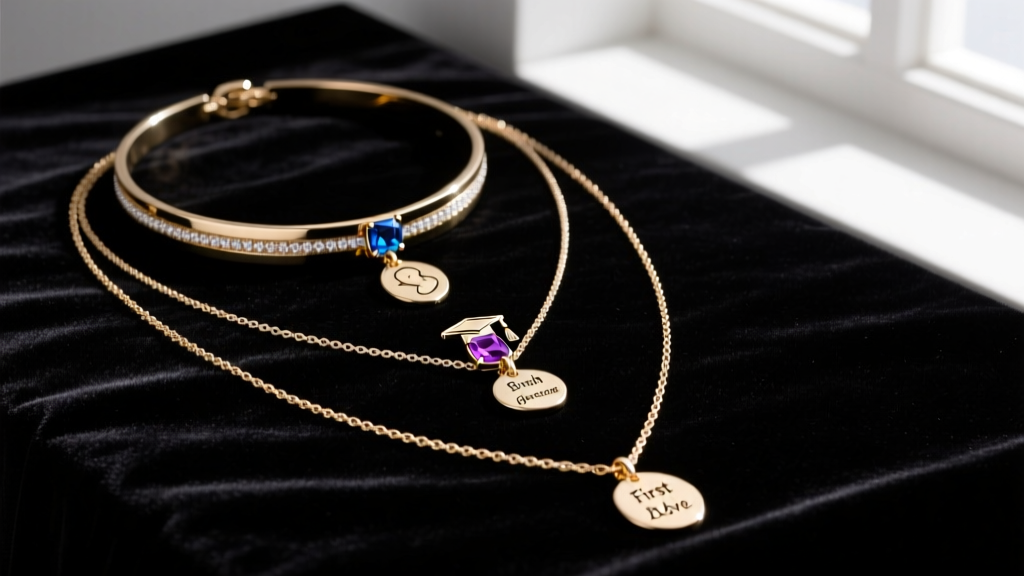
Layering multiple milestone necklaces—for instance, combining a wedding anniversary chain with a child's birthstone necklace—is a popular styling technique, but it introduces the physics of friction and interlocking. Tangling occurs when the links of one chain pass through the gaps of another.
The 2-Inch Separation Rule
To prevent the clasps and pendants from colliding and knotting, you must maintain a minimum 2-inch difference between the lengths of each chain. A 16-inch choker, an 18-inch princess, and a 20-inch matinee will naturally cascade without overlapping the pendant zones.
Mixing Chain Weaves
Never layer two chains of the exact same weave and gauge. Two 1.2mm box chains will act like gears, interlocking and knotting within hours of wear. Instead, mix the topology of the chains. Pair a smooth, flush-surfaced box chain with a textured, spiraled rope chain or a wheat chain. The differing surface textures and link geometries drastically reduce the coefficient of friction, allowing the chains to slide past one another rather than catching.
Hardware and Clasp Checks
When layering, the cumulative weight of the necklaces increases the tension on the nape of your neck. Upgrade standard spring-ring clasps (which fail at roughly 4 grams of lateral tension) to solid lobster claws or parrot clasps. According to Jewelers of America, routinely checking the tension of the clasp spring and ensuring the tiny lever snaps back flush against the body of the clasp is critical for preventing accidental loss of high-sentiment pieces.
Archival Care and Maintenance
Milestone necklaces are exposed to sweat, cosmetics, and environmental pollutants daily. To preserve the legibility of laser engravings and the brilliance of the metal, implement a monthly cleaning protocol. Avoid ultrasonic cleaners for pieces with fracture-filled gemstones or opaque gems like opals and turquoise, as the high-frequency vibrations can cause internal shattering. Instead, use a soft-bristled baby toothbrush, a few drops of mild dish soap, and lukewarm water. Gently agitate the chain to dislodge dead skin cells and lotion buildup trapped inside the links, rinse thoroughly, and dry with a microfiber cloth. By treating your milestone necklace as a permanent, structural heirloom rather than disposable fashion jewelry, you ensure it remains pristine for the next generation.


