How to Wear Multiple Necklaces: The Ultimate Layering Buying Guide
Master how to wear multiple necklaces with our buying guide. Learn chain weights, lengths, and clasp types to prevent tangling and irritation.

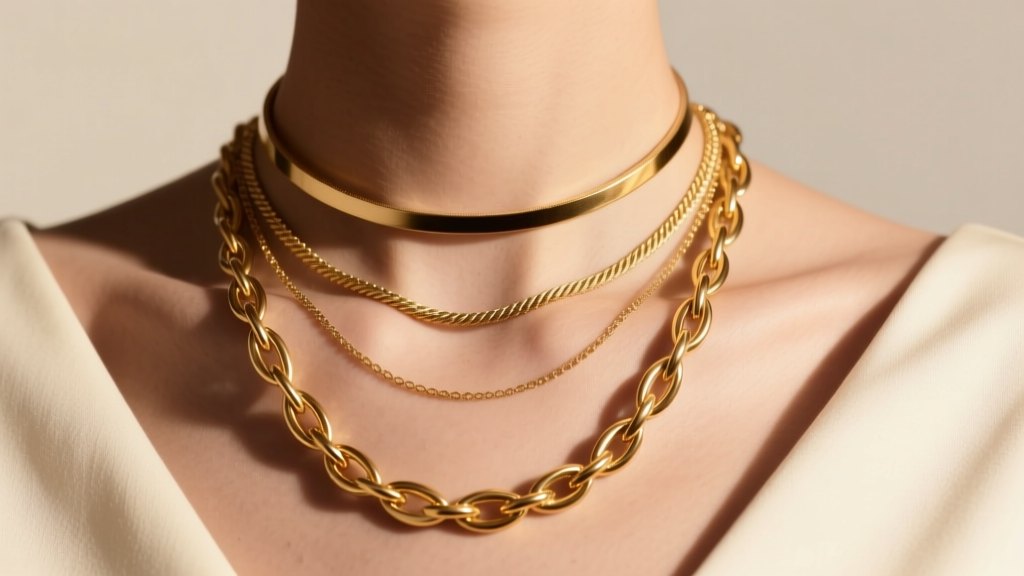
Learning how to wear multiple necklaces without ending up with a tangled, uncomfortable mess requires more than just an eye for fashion; it demands an understanding of jewelry mechanics. As we navigate the styling landscape of 2026, the trend has decisively shifted away from chaotic, random layering toward engineered, deliberate curation. The secret to a flawless layered look lies entirely in the purchasing phase. If you buy the wrong chain weaves, mismatched gauges, or incompatible metals, no amount of styling will save you from constant knotting and skin irritation.
This comprehensive buying guide breaks down the exact specifications, material grades, and structural details you need to look for when building a layering-friendly necklace collection. Whether you are investing in solid gold, sterling silver, or high-quality vermeil, understanding the physics and metallurgy of your jewelry is the first step to mastering the layered aesthetic.
The Mechanics of Layering: Why Most Necklaces Tangle
The primary reason layered necklaces tangle is friction. Every chain weave has a unique surface texture and friction coefficient. When two high-friction chains (like rope or wheat weaves) are worn at similar lengths, their textured surfaces act like microscopic gears, grabbing onto one another with every movement you make. Furthermore, static electricity generated by synthetic clothing can cause lightweight chains to cling together.
What to look for when buying: Never purchase two identical chain weaves for layering. If your base layer is a highly textured rope chain, your secondary layer must be a smooth, low-friction weave like a box, snake, or polished cable chain. The contrast in surface texture allows the chains to glide past one another rather than locking together.
The Length & Drop Matrix: What to Buy
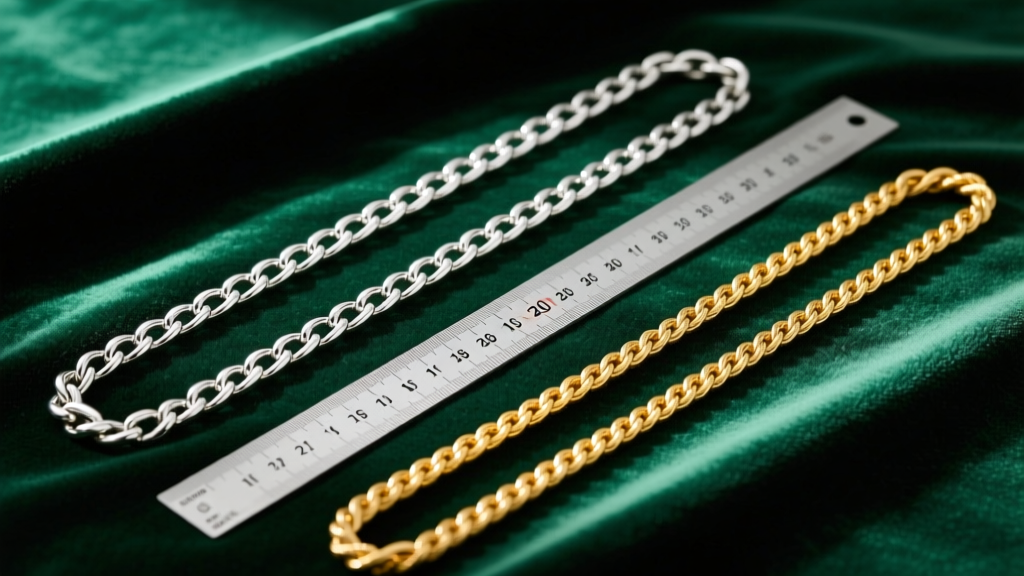
A successful layering stack relies on precise mathematical drops. If the length difference between your necklaces is less than two inches, the pendants will collide, and the chains will twist. When shopping, look for brands that offer exact inch measurements rather than vague terms like 'medium' or 'long'.
| Layer Position | Target Length | Drop (cm) | Ideal Chain Type | Max Pendant Weight |
|---|---|---|---|---|
| Base (Choker) | 14 - 15 inches | 35 - 38 cm | Smooth Box or Snake | Under 3 grams |
| Middle (Princess) | 16 - 18 inches | 40 - 45 cm | Cable or Curb | 3 - 8 grams |
| Bottom (Matinee) | 20 - 24 inches | 50 - 60 cm | Rope or Wheat | 8 - 15+ grams |
When purchasing, always verify that the brand includes a 2-inch extender chain. This hardware is non-negotiable for layering, as it allows you to micro-adjust the drop based on the neckline of your shirt and the thickness of the fabric.
Chain Weights and Gauge Thicknesses
Gauge size dictates the structural integrity and visual weight of your necklace. In jewelry, the gauge system is inverse: a higher number means a thinner chain. Understanding these metrics is crucial when learning how to wear multiple necklaces cohesively without one chain visually overpowering or physically strangling the others.
- 20-Gauge (0.81mm): Ultra-delicate. Best reserved for the 14-inch base layer. It can only support micro-pendants (under 3 grams). If you hang a heavy charm on a 20-gauge chain, the links will stretch and permanently deform.
- 18-Gauge (1.02mm): The versatile middle ground. Ideal for 16-to-18-inch lengths. It provides enough tensile strength to hold standard gemstone pendants (5-10 grams) without snapping under the dynamic stress of daily movement.
- 16-Gauge (1.29mm) to 14-Gauge (1.63mm): Heavy-duty. Use these exclusively for your longest layer (20+ inches). These thicker gauges anchor the visual stack and can support heavy lockets, oversized medallions, or solid metal bars weighing 15 grams or more.
For a balanced aesthetic, ensure there is at least a 0.5mm difference in width between adjacent layers. A 0.8mm base, a 1.5mm middle, and a 2.5mm bottom creates a visually pleasing gradient that draws the eye downward.
Metallurgy Matters: Preventing Galvanic Corrosion
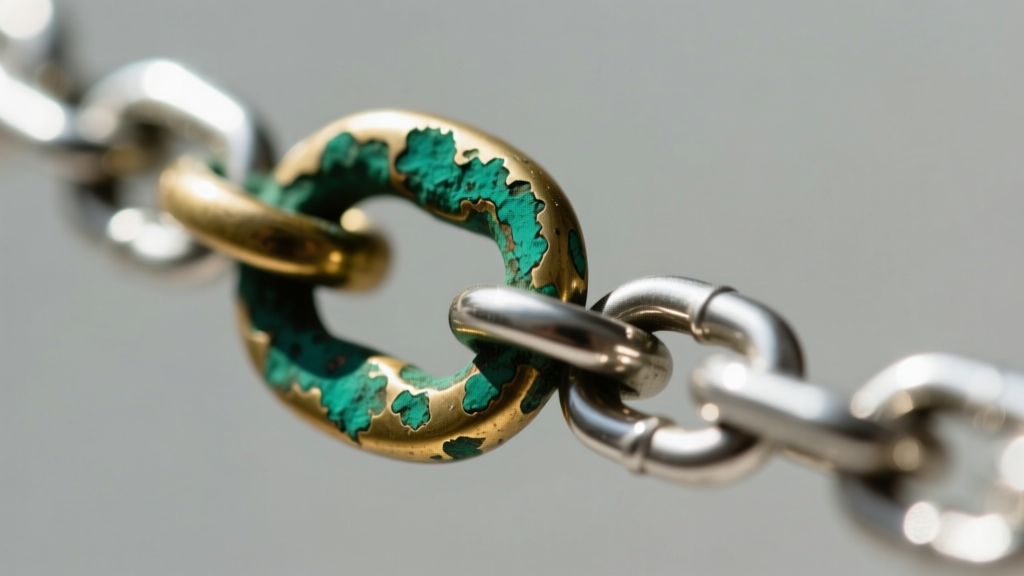
Mixing metals is a popular styling choice, but it introduces a severe chemical risk: galvanic corrosion. When two dissimilar metals (for example, sterling silver and raw brass or copper) come into physical contact in the presence of an electrolyte (your sweat), they form a microscopic battery. The less 'noble' metal (the brass or copper) acts as an anode and will rapidly corrode, leaving green oxidation on your skin and degrading the jewelry.
According to the Gemological Institute of America (GIA), silver is highly susceptible to tarnish when exposed to sulfur and certain reactive base metals. If you want to mix gold and silver tones in your layering stack, you must buy pieces that share the same base core. For instance, layer a sterling silver chain with a gold-vermeil chain (which is also sterling silver at its core). Because the underlying metal is identical, the galvanic reaction is neutralized. Avoid layering solid gold-filled chains directly against cheap brass-cast pendants, especially during summer months or workouts.
Clasp Engineering: Lobster vs. Spring Ring vs. Magnetic
The clasp is the most common failure point in a layered stack. When wearing three or more necklaces, you are dealing with multiple clasps resting against the nape of your neck. The wrong clasp type will catch on your hair, snag on other chains, or pop open under the cumulative weight of the stack.
What to Avoid
Spring Ring Clasps: These are the small, perfectly circular clasps pushed open with a tiny lever. They are notoriously difficult to operate when you have three of them clustered at the back of your neck, and their small loops easily catch on the links of adjacent chains.
Magnetic Clasps: While excellent for accessibility, magnetic clasps are a disaster for layering. If your necklaces are within an inch of each other, the magnets will attract, pulling the chains into a tight, tangled knot.
What to Buy
Lobster Clasps: The industry standard for a reason. Their elongated teardrop shape provides a large surface area for your fingers to grip, and the spring-loaded gate is secure. Look for 'swivel' lobster clasps, which feature a rotating barrel at the base. This allows the clasp to move independently of the chain, drastically reducing twisting at the nape of the neck.
Troubleshooting Common Layering Failures
Even with the perfect purchases, environmental factors can disrupt your stack. Here is how to troubleshoot the most common issues identified by jewelry manufacturing experts:
- The 'Pendant Flip': If your middle pendant constantly flips backward to show its flat metal back, the bail (the loop connecting the pendant to the chain) is too wide for the chain gauge. The Fix: Buy a silicone pendant stabilizer bead or a smaller jump ring to center the pendant and restrict its rotational axis.
- The 'Choke' Effect: As you move, chains naturally migrate toward the center of the neck, tightening the stack. The Fix: Purchase a 'layering clasp' or 'necklace spacer.' This is a single, unified clasp with multiple staggered loops that locks all your chains into their exact mathematical drops, preventing lateral migration entirely.
- Hair Snagging: If your chains are constantly pulling your hair at the nape, the chain links are likely split or poorly soldered. The Fix: Inspect the links under a magnifying glass. If you see microscopic gaps in the metal, the chain is defective. Return it and opt for laser-welded or seamless chain weaves (like a solid box chain) which have no open seams to catch hair.
Mastering how to wear multiple necklaces is ultimately an exercise in precision buying. By prioritizing contrasting weaves, calculating exact length drops, matching base metallurgy, and demanding high-quality swivel clasps, you will build a jewelry wardrobe that looks effortlessly chic and functions flawlessly all day long.


