The Ultimate Guide to Choosing a Bronze Pearl Necklace
Discover how to choose the perfect bronze pearl necklace. Compare bronze alloys, pearl types, patina care, and material properties in our expert guide.

The Intersection of Earth and Ocean: Why Bronze and Pearls?
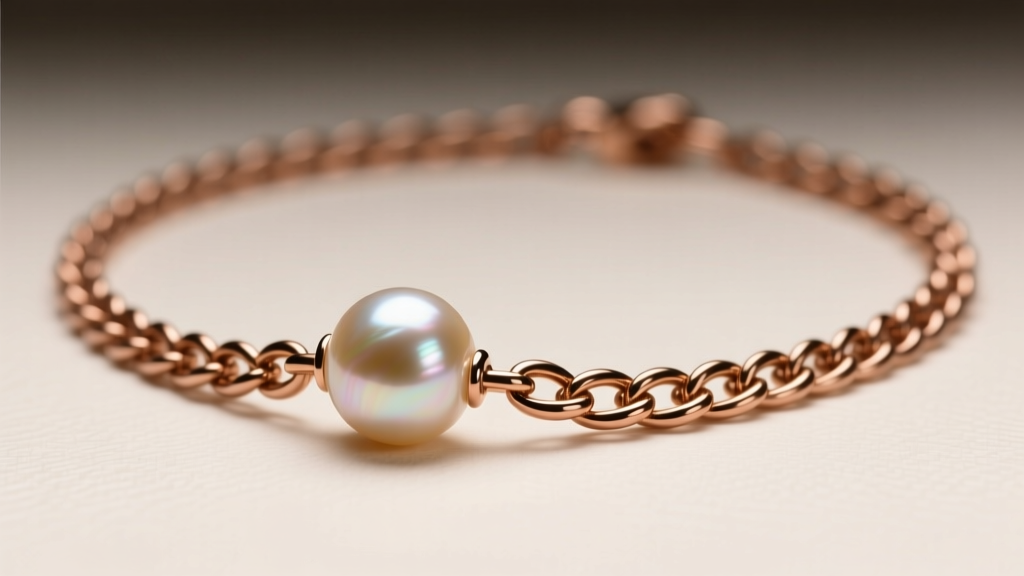
A bronze pearl necklace represents a striking juxtaposition of materials: the warm, earthy, and historically rich tones of copper-based alloys meeting the luminous, organic elegance of nacre. Unlike the high-glamour pairing of diamonds and platinum, bronze and pearls offer a grounded, artisanal aesthetic that appeals to collectors of vintage, bohemian, and contemporary organic jewelry. However, combining a reactive metal alloy with a delicate organic gemstone requires a deep understanding of material properties. In this comprehensive guide, we break down the metallurgy of bronze, the gemological traits of pearls, and the critical chemistry you must understand before investing in or crafting a bronze pearl necklace.
The Metallurgy of Bronze: Alloys Explained
Not all bronze is created equal. True bronze is an alloy consisting primarily of copper and tin, but modern jewelry making utilizes several variations, each with distinct working properties, tarnish rates, and skin interactions. According to the Copper Development Association, the specific trace elements in a bronze alloy drastically alter its color and durability.
| Alloy Type | Composition | Color Profile | Tarnish Rate | Best Jewelry Application |
|---|---|---|---|---|
| Silicon Bronze (C65500) | 95% Cu, 3% Si, 1% Mn | Warm gold-like hue | Slow | Chain links, clasps, wire wrapping |
| Phosphor Bronze (C51000) | 95% Cu, 5% Sn, trace P | Deep reddish-brown | Moderate | Structural pendants, springy clasps |
| Commercial Bronze | 90% Cu, 10% Zn (Brass) | Bright yellow-gold | Fast | Stamped charms, budget-friendly beads |
| Architectural Bronze | 57% Cu, 40% Zn, 3% Pb | Muted olive-brown | Very Fast | Heavy cast pendants (avoid for skin contact) |
For a high-quality bronze pearl necklace, silicon bronze is the superior choice. Its manganese and silicon content provides excellent corrosion resistance and a color that closely mimics 14k yellow gold, allowing the warm undertones of cream or peach pearls to radiate without the harsh contrast of darker metals.
Pearl Varieties That Complement Bronze
The Gemological Institute of America (GIA) notes that a pearl's bodycolor and overtone dictate its visual harmony with metal settings. Because bronze lacks the icy reflectivity of white gold or platinum, it requires pearls with specific optical properties to achieve a balanced look.
Freshwater Baroque Pearls
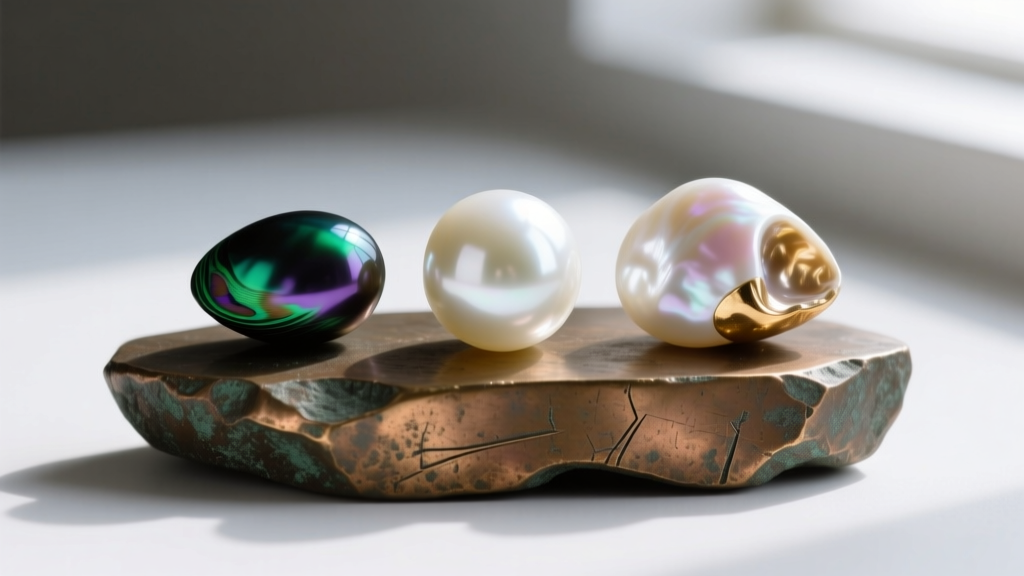
Baroque freshwater pearls, with their irregular shapes and natural ridges, are the most popular pairing for bronze. The organic, asymmetric nacre maps perfectly onto the hand-forged, slightly imperfect look of hammered bronze. Peach and lavender freshwater baroques enhance the coppery warmth of the alloy, while stark white baroques provide a pleasing, rustic contrast.
Tahitian Dark Pearls
For a moody, avant-garde aesthetic, Tahitian pearls with 'peacock' or 'aubergine' overtones are exceptional when set in oxidized phosphor bronze. The dark, iridescent nacre picks up the reddish-brown patina of the bronze, creating a necklace that looks like an excavated artifact. However, because Tahitian pearls are highly valuable, ensure the bronze bezel is lined with a neutral resin or gold-fill to prevent long-term chemical transfer.
Akoya Round Pearls
Pairing perfectly round, high-luster Akoya pearls with bronze is a deliberate exercise in contrast. The mirror-like luster of Akoya nacre clashes beautifully with the matte, brushed finish often applied to bronze chains. This combination bridges the gap between fine jewelry and artisanal metalwork.
The Chemistry of Wear: Oxidation and Nacre Preservation
This is where most mass-market jewelry fails. You are combining a reactive metal with a porous organic gem. Bronze oxidizes when exposed to moisture, oxygen, and the chlorides in human sweat, forming copper carbonate (verdigris)—the familiar green patina. Pearls, conversely, are composed of calcium carbonate and conchiolin, ranking a mere 2.5 to 4.5 on the Mohs hardness scale.
CRITICAL WARNING: Never use commercial liquid bronze or brass dips on a strung bronze pearl necklace. These cleaners contain thiourea and strong acids that will instantly etch, dull, and permanently destroy the pearl's nacre upon contact.
To safely maintain a bronze pearl necklace, you must manage the microenvironment where the metal meets the gem:
- Physical Barriers: Never thread bronze beads directly adjacent to pearl beads on the same wire or silk cord. The Mohs hardness of work-hardened bronze (approx. 3.5-4.0) will slowly grind away the pearl's nacre through friction. Always use silk knotting between beads, or use tiny rubber or silicone spacers.
- Patina Management: If you prefer the bright, polished look of silicon bronze, clean the metal components with a dry, untreated jeweler's polishing cloth. Remove the pearl pendant if possible, or mask it carefully with jeweler's tape before polishing the chain.
- Skin Acidity: Individuals with highly acidic sweat will cause bronze to oxidize rapidly, which can transfer to the pearl's drill holes, causing internal degradation. Apply perfume and lotions before putting on the necklace, and wipe the bronze chain with a soft, dry microfiber cloth after every wear.
Sizing, Gauges, and Chain Construction
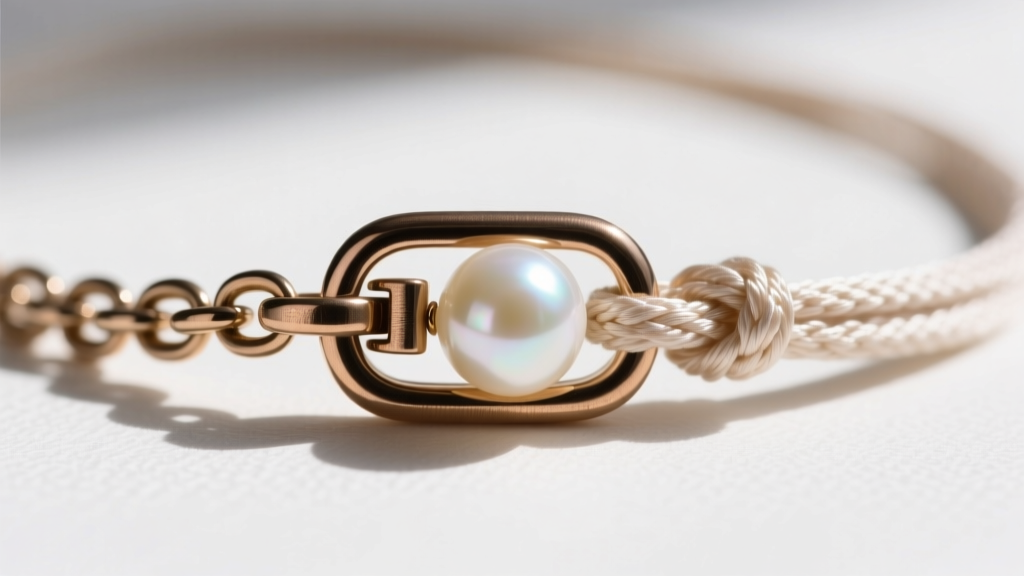
The structural integrity of a bronze pearl necklace relies heavily on wire gauge selection and chain construction. Because bronze is denser and heavier than aluminum or silver, the chain must be robust enough to support the weight of the pearls without stretching.
Wire Wrapping and Gauges
When wire-wrapping pearls in bronze, artisans typically use 22-gauge or 24-gauge dead-soft silicon bronze wire. Dead-soft wire bends easily around the delicate curves of a baroque pearl without requiring excessive force that could crack the nacre. For the structural jump rings that connect the pearl pendant to the main chain, 18-gauge half-hard phosphor bronze is recommended. The phosphor content gives the wire 'springback,' ensuring the jump rings stay securely closed under the pendant's weight.
Chain Styles
Heavy, textured chains like the rolo or Figaro complement the visual weight of pearls. A delicate 20-gauge cable chain will look visually unbalanced beneath a large 14mm freshwater baroque pearl and is prone to snapping if the bronze work-hardens and becomes brittle over time. Opt for chains between 14-gauge and 18-gauge for pendants exceeding 15 grams.
Pricing Tiers and Market Value
Understanding the market value of a bronze pearl necklace requires separating the cost of the raw materials from the artisanal labor. Unlike gold or platinum, bronze is an inexpensive base metal. Therefore, you are paying primarily for the design, the quality of the pearls, and the craftsmanship.
- Entry-Level ($30 - $80): Features commercial bronze (often brass mislabeled as bronze) paired with low-grade, blemished freshwater rice pearls. Chains are usually mass-produced and hollow.
- Artisan Mid-Range ($120 - $350): Hand-forged silicon bronze chains featuring high-luster, near-round freshwater pearls or small Akoya pearls. Knotting and wire-wrapping are executed with precision.
- Fine Contemporary ($500 - $1,500+): Museum-quality pieces featuring oxidized phosphor bronze paired with premium Tahitian or South Sea pearls. Often includes mixed-metal accents (like 18k gold bezels) to protect the nacre and elevate the design.
Expert Verdict: Is Bronze Right for Your Pearls?
A bronze pearl necklace is not a 'wear it in the shower and forget it' piece of jewelry like solid 14k gold or platinum. It is a living, breathing accessory that requires mindful wear and specific care routines. However, for those who appreciate the romance of oxidizing metals, the historical resonance of ancient alloys, and the unmatched organic beauty of nacre, a well-constructed bronze and pearl piece offers a deeply personal aesthetic that sterile, mass-produced fine jewelry simply cannot replicate. By selecting the right alloy—preferably silicon bronze—and respecting the chemical boundaries between metal and nacre, your necklace will age into a beautiful, unique heirloom.


