Gold Cuff Necklace Material Guide: 14k vs 18k vs Vermeil
Compare 14k, 18k, and vermeil gold cuff necklace materials. Discover which alloy offers the best durability, tensile strength, and tarnish resistance.

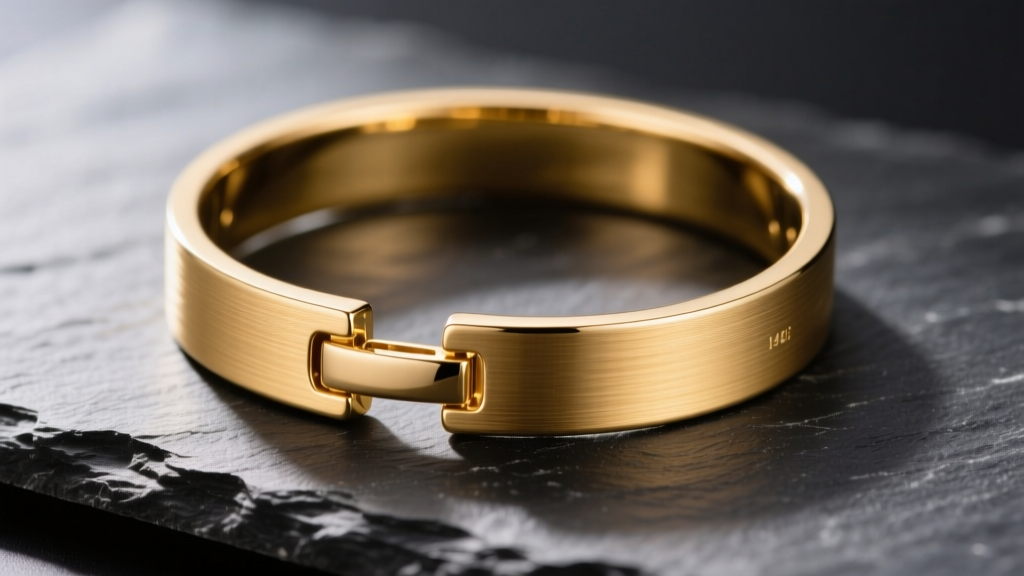
When selecting a rigid neckpiece, the structural demands are vastly different from those of a standard chain. A gold cuff necklace must maintain its geometric integrity while enduring the mechanical stress of being opened, closed, and worn against the collarbone. Choosing the wrong material or alloy can lead to metal fatigue, warped hinges, or catastrophic snapping. In this comprehensive metallurgical guide, we break down the exact properties, tensile strengths, and long-term wearability of the most common materials used in cuff necklaces today.
The Engineering Challenge of the Gold Cuff Necklace
Unlike malleable chain necklaces that drape and move with the wearer, a cuff necklace is an architectural piece. It generally falls into two structural categories:
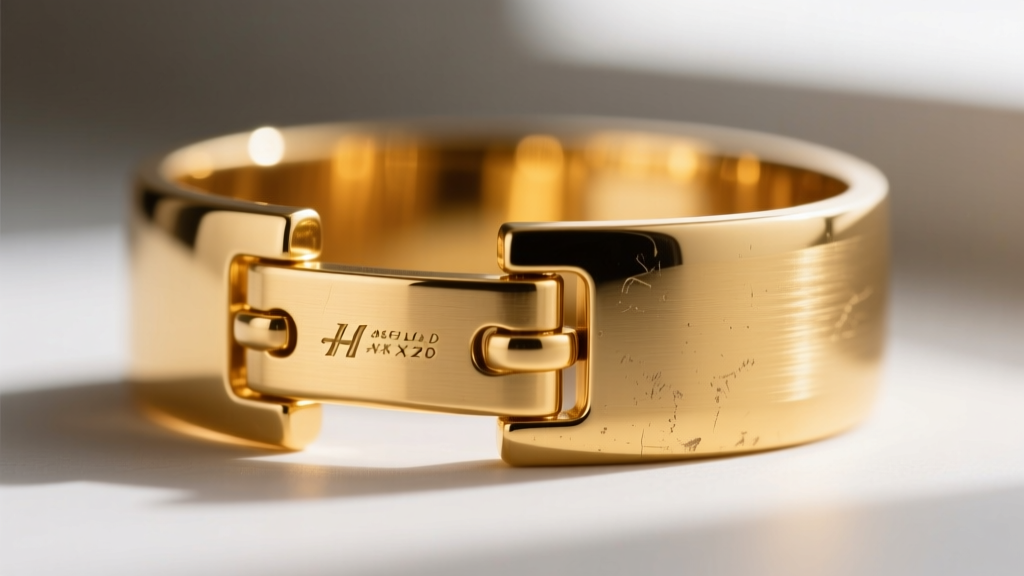
- Hinged Cuffs: Feature a mechanical barrel clasp or tongue-and-groove box clasp on one side and a micro-hinge on the other. The stress is concentrated on the hinge pin and the clasp housing.
- Slip-On (Spring) Cuffs: Rely on the metal's yield strength to flex open, slide over the neck, and snap back into its original circular or oval shape. These require a precise balance of malleability and "memory" (the ability to return to the original shape without permanent deformation).
Because of these physical demands, the karat weight and alloy composition of the gold are not just matters of color and prestige—they are critical safety and longevity factors.
Solid Gold Alloys: 14k vs. 18k vs. 22k
Pure gold (24k) is exceptionally dense but notoriously soft. To be used in jewelry, it must be alloyed with metals like copper, silver, zinc, and nickel. According to the Gemological Institute of America (GIA), the specific ratio of these alloying metals dictates the metal's hardness on the Vickers scale, which directly impacts a cuff's durability.
14k Gold (58.5% Pure Gold)
For a slip-on gold cuff necklace, 14k gold is the undisputed champion of structural integrity. The higher percentage of alloying metals (41.5%) increases the tensile strength and resistance to work hardening. A 14k cuff can be flexed open repeatedly with a significantly lower risk of metal fatigue. Bench jewelers typically recommend a minimum thickness of 14-gauge (1.6mm) at the stress points for a 14k slip-on cuff to ensure it retains its "spring" over decades of wear.
18k Gold (75% Pure Gold)
18k gold offers a richer, deeper yellow hue and is highly prized in luxury markets. However, it is noticeably softer than 14k. An 18k gold cuff necklace is almost exclusively crafted with a heavy-duty hinge and a secure box clasp rather than a flex-open design. If an 18k cuff is bent out of shape, it requires professional annealing (heating and quenching) by a jeweler to restore its crystalline structure; otherwise, it will become brittle and snap upon the next adjustment.
Why 22k and 24k Fail as Cuffs
While 22k and 24k gold are excellent for cast pendants or soft, hammered collars, they are entirely unsuitable for rigid, hinged, or spring-loaded cuffs. The Vickers hardness of 24k gold is roughly 25 HV, compared to 140 HV for 14k gold. A 22k cuff will permanently warp the first time it is squeezed to fit a smaller neck, and the hinge pins will rapidly shear under daily mechanical stress.
Plated and Layered Alternatives for Rigid Neckwear
For those seeking the aesthetic of solid gold without the four-figure price tag, layered metals offer a compelling alternative. However, the base metal dictates the cuff's structural viability.
Gold Vermeil vs. Standard Gold Plating
The Federal Trade Commission (FTC) strictly defines Gold Vermeil as a sterling silver base plated with a minimum of 2.5 microns of gold (usually 14k or 18k). Standard gold plating uses a brass or copper base with a microscopic layer of gold (often less than 0.5 microns). For a cuff necklace, a brass base is actually superior for rigidity, but it is highly prone to causing contact dermatitis if the plating wears through at the clasp. Vermeil is hypoallergenic, but sterling silver is prone to work hardening; a vermeil slip-on cuff may eventually snap if flexed too aggressively over time.
The Rise of PVD-Coated 316L Stainless Steel
In the modern jewelry landscape, Physical Vapor Deposition (PVD) gold coating over surgical-grade 316L stainless steel has become the gold standard for affordable rigid cuffs. Stainless steel possesses immense yield strength and zero metal fatigue under normal jewelry-wearing conditions. A PVD gold cuff necklace will not warp, will not snap at the hinge, and the gold layer is chemically bonded to the steel, making it highly resistant to the friction and sweat that degrades traditional electroplating.

Comprehensive Material Comparison Matrix
Use the data table below to evaluate which gold cuff necklace material aligns with your budget, wear frequency, and structural needs.
| Material | Gold Content | Tensile Strength | Best Cuff Style | Est. Price Range (USD) |
|---|---|---|---|---|
| 14k Solid Gold | 58.5% | High (Excellent Spring) | Slip-On & Hinged | $800 - $1,800 |
| 18k Solid Gold | 75.0% | Medium (Prone to Bending) | Hinged Only | $1,500 - $3,200 |
| Gold Vermeil | Surface (2.5μm) | Medium (Silver Base) | Hinged / Rigid | $90 - $200 |
| Gold Filled (Brass) | 5% by Weight | High (Stiff Base) | Slip-On / Hinged | $60 - $150 |
| PVD Gold on 316L Steel | Surface (PVD) | Extremely High | Slip-On & Hinged | $45 - $120 |
Skin Reactivity, Tarnish, and Maintenance
The alloys used to strengthen gold also dictate how the metal interacts with human skin chemistry. This is especially relevant for a gold cuff necklace, which sits flush against the pulse points of the neck where sweat and body oils accumulate.
"The most common failure point on a hinged cuff isn't the gold itself, but the steel spring inside the box clasp. If moisture gets trapped in the clasp housing, the internal steel spring will rust and seize, rendering the solid gold cuff unwearable until a bench jeweler fabricates a replacement."
— Master Bench Jeweler Notes on Cuff Maintenance
The Rose Gold Copper Oxidation Factor
Rose gold achieves its pink hue through a high copper content (sometimes up to 20% or more in 14k rose gold). While copper provides excellent tensile strength for spring cuffs, it is highly reactive to acidic sweat. Wearers with a low skin pH may notice a harmless but unsightly green or black oxidation transfer onto their collarbones. To prevent this, wipe the interior of a rose gold cuff with a microfiber cloth and mild soap after heavy perspiration.
White Gold and Rhodium Wear
White gold cuffs are alloyed with nickel or palladium to bleach the yellow hue, and then electroplated with rhodium for a bright, silvery finish. Because cuffs are rigid, they do not experience the same micro-abrasions as rings. However, the friction of the clasp mechanism will eventually wear through the rhodium layer, revealing the slightly yellowish-white alloy beneath. Budget for a professional rhodium "dip" every 3 to 5 years to maintain a pristine white gold cuff necklace.
Final Verdict: Choosing Your Cuff
If you are investing in a heirloom piece meant to be worn daily and flexed to fit your neck, 14k solid gold remains the superior metallurgical choice for a slip-on gold cuff necklace. If you prefer a hinged, architectural piece with a richer color and are willing to handle it with care, 18k gold is appropriate. For fashion-forward, rigid designs on a budget, bypass traditional brass plating entirely and opt for the structural invincibility of PVD-coated stainless steel.


