Ultimate Care Guide for Your Favorite Brown Stone Necklace
Learn expert cleaning and maintenance tips for your brown stone necklace. Protect tiger's eye, smoky quartz, and jasper from damage.


A brown stone necklace is a cornerstone of earthy, versatile jewelry styling. Whether you are drawn to the mesmerizing chatoyancy of tiger's eye, the moody translucence of smoky quartz, or the grounded, opaque patterns of brown jasper, these gemstones offer a unique aesthetic that bridges casual and formal wear. However, the very geological properties that give these stones their captivating colors and optical phenomena also dictate strict rules for their care and maintenance. Many owners inadvertently damage their jewelry by treating all gemstones with a one-size-fits-all cleaning approach. In this comprehensive guide, we break down the gemological realities of brown stones and provide actionable, expert-level maintenance protocols to keep your necklace looking pristine for decades.
The Gemological Profile of Brown Stones
To properly care for a brown stone necklace, you must first understand its mineral composition. Most popular brown gemstones belong to the macrocrystalline or microcrystalline quartz family, but their internal structures vary wildly, directly impacting their durability and cleaning requirements.
Tiger's Eye and Hawk's Eye
Tiger's eye is a pseudomorph—a stone that forms when silica replaces the fibrous structure of crocidolite (blue asbestos). This parallel fibrous alignment is what creates its signature 'cat's eye' effect (chatoyancy). While it sits at a 7 on the Mohs hardness scale, making it resistant to everyday dust scratches, its fibrous nature means it can harbor microscopic fissures. Harsh chemicals or ultrasonic vibrations can penetrate these fissures, potentially dulling the stone's optical reflectivity over time.
Smoky Quartz
Smoky quartz derives its brown-to-black hue from natural or artificial irradiation interacting with aluminum impurities within the crystal lattice. While it shares quartz's 7 Mohs hardness, smoky quartz is notably sensitive to prolonged ultraviolet (UV) exposure. Leaving your smoky quartz necklace in direct sunlight for extended periods can cause the irradiated color centers to degrade, leading to irreversible fading.
Brown Jasper and Bronzite
Jasper is a microcrystalline quartz (chalcedony) heavily laden with mineral inclusions like iron oxide, which gives it its brown, red, or yellow hues. Unlike transparent quartz, jasper is slightly porous. Bronzite, an iron-magnesium silicate with a metallic schiller effect, is softer (around 5.5 to 6 on the Mohs scale) and highly susceptible to scratching and acid etching. Both stones require gentle, non-abrasive care to prevent surface degradation.
The Chemistry of Jewelry Cleaners: What to Avoid
The commercial jewelry cleaning market is saturated with chemical dips and ultrasonic machines that are entirely inappropriate for many brown stones. Understanding the chemistry behind these cleaners will save your necklace from catastrophic damage.
- Ammonia-Based Dips: While excellent for diamonds and platinum, ammonia can strip the natural polish from porous stones like jasper and leave a cloudy residue trapped in the fibrous inclusions of tiger's eye.
- Abrasive Pastes (Toothpaste/Baking Soda):strong> Many DIY guides suggest baking soda or toothpaste. Toothpaste contains hydrated silica, which is essentially liquid sand. Scrubbing a bronzite or polished jasper pendant with silica paste will create micro-scratches, permanently destroying the surface luster.
- Ultrasonic Cleaners: These machines use high-frequency sound waves to create microscopic cavitation bubbles in a liquid solvent. If your smoky quartz or tiger's eye contains internal liquid inclusions or natural stress fractures (which are incredibly common in natural earth-mined stones), the shockwaves from an ultrasonic cleaner can cause the gemstone to shatter from the inside out.

Step-by-Step Cleaning Protocols by Stone Type
For routine maintenance, the safest and most effective method for almost all brown stones involves mild surfactants and manual agitation. Below is a structured matrix and specific methodology based on your stone type.
| Stone Type | Mohs Hardness | Ultrasonic Safe? | Steam Safe? | Primary Vulnerability |
|---|---|---|---|---|
| Tiger's Eye | 7.0 | No | No | Chemical residue in fibers |
| Smoky Quartz | 7.0 | Risky (Inclusions) | No | Thermal shock, UV fading |
| Brown Jasper | 6.5 - 7.0 | No | No | Porosity, oil absorption |
| Bronzite | 5.5 - 6.0 | No | No | Surface scratching, acids |
The Universal Safe Cleanse (For All Brown Stones)
- Prepare the Solution: Fill a glass bowl with lukewarm (never hot) distilled water. Add two drops of a mild, phosphate-free dish soap (such as original Dawn). Avoid soaps with added moisturizers or citrus extracts.
- Soak Briefly: Submerge the pendant or the central stone section of your brown stone necklace for no more than 3 to 5 minutes. If the necklace features a sterling silver chain, prolonged water exposure can accelerate tarnishing, so focus the soak on the stone.
- Agitate Gently: Using a brand-new, extra-soft baby toothbrush, gently sweep the bristles across the surface of the stone. Pay special attention to the back of the cabochon or facet junctions where skin oils and dead cells accumulate.
- Rinse and Dry: Rinse under a gentle stream of lukewarm distilled water. Pat dry immediately with a lint-free microfiber cloth. Allow the necklace to air dry completely on a towel before storing to prevent moisture from trapping against the metal settings.
For deeper insights into gemstone durability and chemical sensitivities, the GIA Gem Encyclopedia remains the gold standard for understanding how specific mineral inclusions react to environmental stressors.
Daily Wear Rules: Prevention Over Correction
The most effective cleaning method is preventing the buildup of grime in the first place. Brown stones, particularly porous jasper and fibrous tiger's eye, act like microscopic sponges for everyday cosmetics.
- The 'Last On, First Off' Rule: Your brown stone necklace should be the very last item you put on after applying lotions, perfumes, hairspray, and makeup. It should be the first item you take off when returning home.
- Sweat and Acidity: Human sweat is mildly acidic and contains salts that can degrade the polish of softer stones like bronzite and tarnish the metal bails or prongs holding your stone. If you wear your necklace during a workout or on a hot day, wipe it down with a damp microfiber cloth immediately upon removal.
- UV Protection: As noted by the American Gem Society, environmental factors play a massive role in gem longevity. Never leave a smoky quartz necklace on a sunny windowsill or the dashboard of a car, as the cumulative UV exposure will bleach the brown color centers.
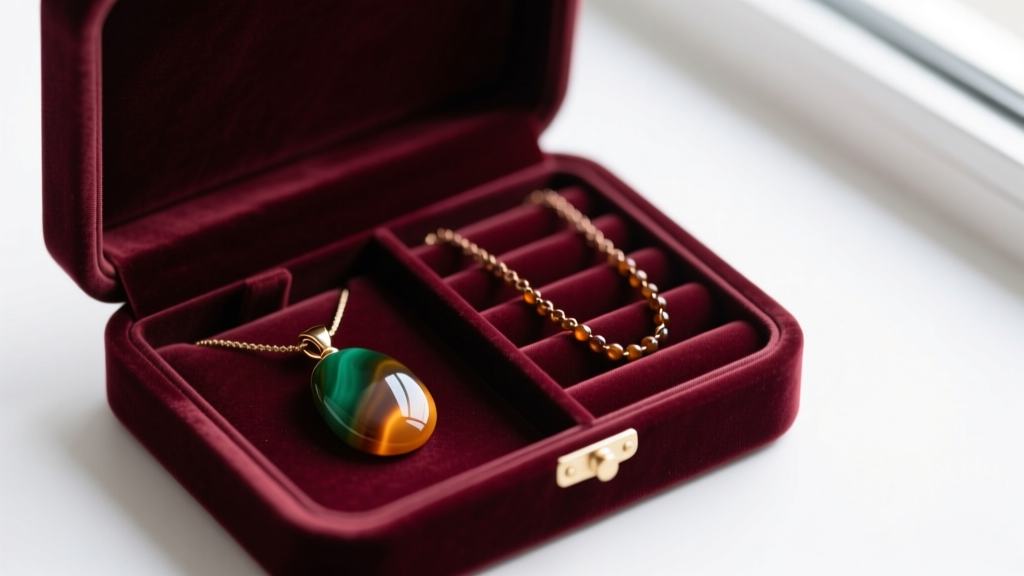
Strategic Storage to Prevent Scratches and Tarnish
How you store your brown stone necklace when it is not being worn is just as critical as how you clean it. Quartz-family stones are a 7 on the Mohs scale, meaning they are harder than most metals and softer gemstones (like pearls, turquoise, or opals). If you toss your tiger's eye necklace into a communal jewelry box, the quartz will aggressively scratch your pearls, and any diamonds or sapphires in the box will, in turn, scratch your brown stone.
Best Practices for Long-Term Storage
- Individual Pouches: Store each brown stone necklace in its own soft flannel or anti-tarnish cloth pouch. This prevents stone-on-stone contact and limits exposure to ambient humidity.
- Humidity Control: If you live in a high-humidity climate and your necklace features a sterling silver chain paired with a brown jasper pendant, place a small silica gel packet inside your jewelry drawer or box. This controls moisture, preventing silver sulfide tarnish without exposing the porous jasper to harsh chemical anti-tarnish strips.
- Lay Flat or Hang: Heavy stone pendants can stretch delicate chains over time. Either lay the necklace completely flat in a fabric-lined drawer or hang it on a padded jewelry stand to relieve tension on the chain links and the bail.
When to Seek Professional Gemological Maintenance
While home cleaning is perfect for surface oils and dust, it cannot address structural wear. If your brown stone necklace is held in a prong setting rather than a bezel or wire-wrap, the metal prongs will naturally wear down from friction against clothing. Once a year, take your piece to a certified bench jeweler. They will use a loupe to inspect the integrity of the prongs, check the bail for micro-fractures, and can professionally re-polish the stone using specialized cerium oxide compounds if the surface has become heavily abraded. By combining mindful daily wear habits with these targeted cleaning protocols, your brown stone necklace will retain its rich, earthy brilliance and structural integrity for a lifetime.


