Troubleshooting a Bubble Necklace: Repair & Care Guide
Learn how to fix scratches, dents, and bail failures on a bubble necklace. Expert troubleshooting for glass, resin, and hollow metal pendants.

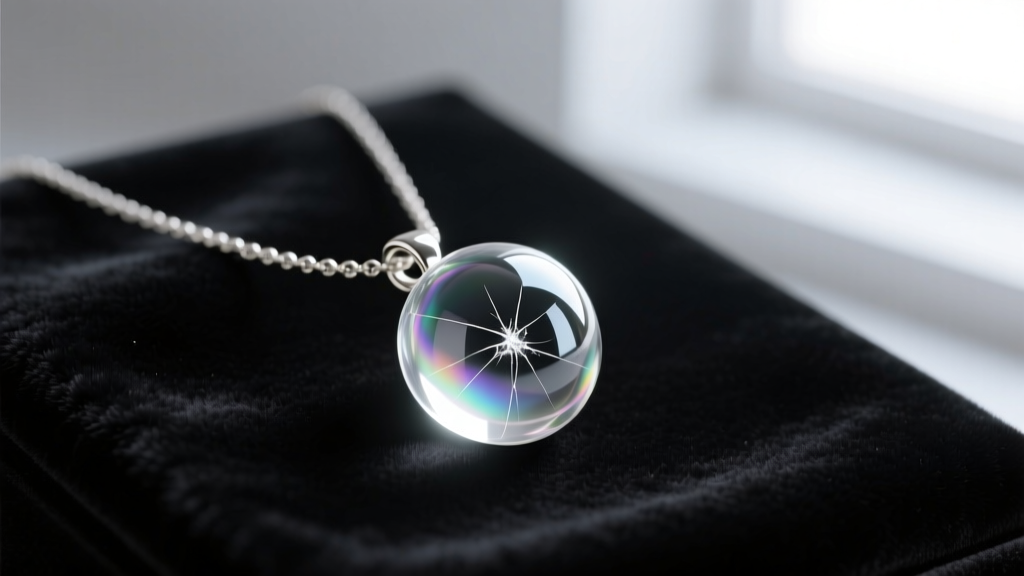
Bubble necklaces—characterized by their spherical, orb-like pendants made from blown glass, cast resin, or hollow metals—are striking statement pieces that capture and refract light beautifully. However, their unique geometry and material properties make them highly susceptible to specific types of damage. Whether you own a delicate borosilicate glass orb, a chunky hollow sterling silver sphere, or a lightweight epoxy resin bubble, troubleshooting a bubble necklace requires a targeted, material-specific approach. Generic jewelry cleaning methods, like ultrasonic baths or harsh chemical dips, can easily ruin iridescent coatings, exacerbate surface scratches, or compromise fragile adhesive bonds.
In this comprehensive guide, we break down the exact failure modes of bubble pendants and provide professional-grade, actionable solutions to restore them. By understanding the Mohs hardness and structural vulnerabilities of your specific pendant, you can safely perform at-home repairs and know exactly when to hand the piece over to a bench jeweler.
Diagnosing the Damage: Material Matters
Before attempting any repair, you must accurately identify the material of your bubble pendant. The structural integrity and surface hardness dictate which polishing compounds, adhesives, and tools are safe to use. According to the Gemological Institute of America (GIA), glass and resin simulants require vastly different care protocols than crystalline gemstones or metals. Below is a diagnostic framework to help you identify your pendant's material and its corresponding DIY repair viability.
| Material | Mohs Hardness | Common Failure Mode | DIY Fix Viability |
|---|---|---|---|
| Epoxy/UV Resin | 2.0 - 3.0 | Cloudiness, deep surface scratches | High (Wet Sanding & Polishing) |
| Soda-Lime Glass | 5.5 | Chipping, surface abrasion | Medium (Cerium Oxide Polishing) |
| Borosilicate Glass | 6.0 - 7.0 | Shattering, thermal shock cracking | Low (Requires professional lampwork) |
| Hollow Vermeil/Silver | 2.5 (Surface) | Denting, plating wear, seam splitting | Low (Professional silversmith only) |
Troubleshooting Surface Scratches and Cloudiness
Because bubble pendants are convex, they protrude outward from the chest, making them prime targets for accidental impacts against desks, doorways, and zippers. The method for removing these scratches depends entirely on whether your bubble is resin or glass.
Restoring Cloudy Epoxy and UV Resin Bubbles
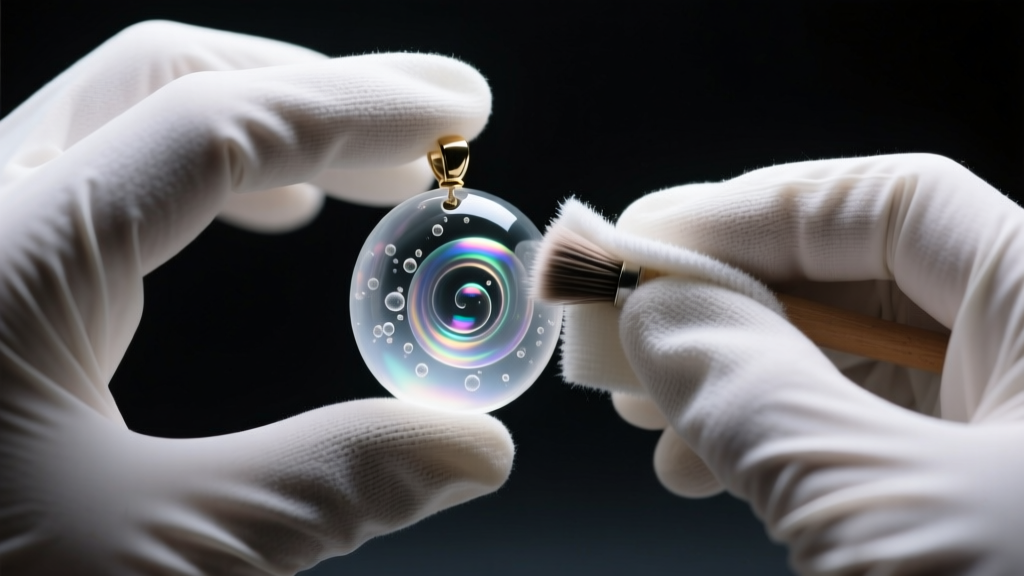
Resin is notoriously soft. Over time, friction from clothing will leave a network of micro-scratches that cause the bubble to look cloudy or frosted. To restore optical clarity, you need a multi-stage plastic polishing system, such as the Novus Plastic Polish kit. Start by cleaning the pendant with mild soap and water to remove surface oils. Apply Novus #3 (Heavy Scratch Remover) using a clean microfiber cloth, rubbing in small, overlapping circular motions for about two minutes. Wipe away the residue, then follow up with Novus #2 (Fine Scratch Remover) to buff out the haze. Finally, seal the surface with Novus #1 (Clean & Shine). Never use standard jewelry polishing cloths treated with rouge, as the abrasive compounds designed for metal will permanently scar soft resin.
Polishing Abrasions on Glass Bubbles
Glass is significantly harder than resin, meaning everyday wear rarely causes deep scratches. However, contact with harder materials like quartz dust or diamond rings can leave visible marks. For soda-lime or borosilicate glass bubbles, you must use a Cerium Oxide polishing compound. Mix the cerium oxide powder with distilled water to create a paste with the consistency of heavy cream. Apply the paste to the scratch and use a rotary tool (like a Dremel) equipped with a felt polishing bit. Crucially, you must keep the rotary tool speed below 5,000 RPM and keep the glass continuously wet. Excessive friction generates heat, which can cause thermal shock and shatter the glass bubble instantly. If the scratch catches your fingernail, it is too deep to polish out safely at home and requires professional glass re-fire techniques.
Fixing Dents in Hollow Metal Spheres
Hollow metal bubble necklaces, often crafted from 22-gauge or 24-gauge sterling silver or gold vermeil sheets, offer a bold, oversized look without the heavy weight of solid metal. The trade-off is extreme vulnerability to denting. Unlike a flat silver band, you cannot simply hammer a spherical hollow bead against a steel block.
For very shallow, localized dents, some advanced DIYers use the 'sand filling' technique. This involves carefully drilling a microscopic hole (under 1mm) in an inconspicuous area, filling the sphere with fine, dry silica sand to create internal back-pressure, and then gently massaging the dent outward using a smooth, rounded wooden or agate burnisher. Once the dent is popped out, the sand is emptied, and the hole is sealed with a micro-drop of jeweler's epoxy. However, this is highly risky. For severe dents or creases, the metal has likely work-hardened and thinned out. Attempting to push it back will cause the metal to split along the seam. In these cases, the only viable solution is to take the necklace to a bench jeweler who can use laser welding to fill the crease or cast a replacement sphere entirely.
Restoring Peeling Iridescent (AB) Coatings
Many glass and resin bubble necklaces feature an Aurora Borealis (AB) or dichroic coating to create a rainbow-like light play. These coatings are applied via vapor deposition and are incredibly thin. When exposed to skin acids, perfumes, or harsh ultrasonic cleaners, the coating can begin to flake or peel. You cannot re-apply an AB coating at home. However, you can halt the peeling process and salvage the pendant. First, gently wipe the pendant with a dry, lint-free cloth to remove any loose, already-detached flakes. Do not use alcohol or acetone, as this will strip the remaining coating. Next, apply a micro-thin layer of UV-curable jewelry resin (such as those recommended by Rio Grande jewelry supply experts) over the entire surface of the bubble using a fine silicone brush. Cure it under a 36W UV lamp for 60 seconds. This creates a permanent, optically clear protective shell that locks the remaining iridescent coating in place and prevents further degradation.
Bail and Clasp Failures: The Weakest Links
The most frequent point of catastrophic failure on a bubble necklace is the bail—the finding that connects the spherical pendant to the chain. Because bubbles are often heavy and swing with momentum, the glue-on bails commonly used in mass-produced bubble necklaces experience immense shear stress, eventually snapping off.
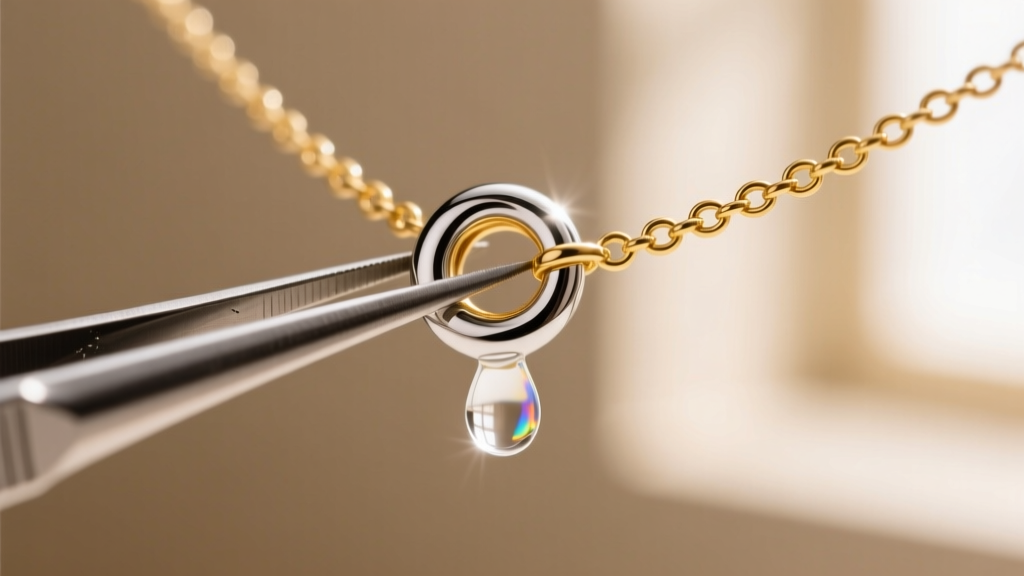
If your bail has detached, do not simply re-glue it with household super glue (cyanoacrylate), which dries brittle and will fail again upon impact. Follow this professional re-attachment protocol:
- Surface Preparation: Use a wooden toothpick dipped in acetone to thoroughly clean old adhesive from both the pendant's flat pad and the bail base. Once dry, lightly scuff both surfaces with 600-grit sandpaper to create a mechanical grip.
- Adhesive Selection: Use a flexible, high-strength jewelry adhesive like E6000 or G-S Hypo Cement. Apply a micro-drop to the bail base—excess glue will squeeze out and ruin the pendant's finish.
- Alignment and Curing: Use precision tweezers to place the bail perfectly centered on the pad. Secure it in place using low-tack painter's tape or a specialized jewelry curing clamp. Allow the adhesive to cure undisturbed for a full 72 hours at room temperature before wearing.
Preventative Maintenance Framework
Troubleshooting a bubble necklace is always more tedious than preventing the damage in the first place. To extend the lifespan of your spherical pendants, adopt a strict 'last on, first off' rule to minimize exposure to cosmetics and perfumes. Store your bubble necklaces individually in soft flannel pouches; tossing them into a communal jewelry box guarantees that harder gemstones and metal clasps will gouge the convex surfaces of your glass or resin orbs. Finally, inspect the bail connection and jump rings monthly. Catching a slightly loose jump ring or a failing adhesive bond early will save you from losing a beloved pendant down a storm drain or into the depths of a crowded room.


