How to Buy Big Necklaces on a Budget: Value & Cost Guide
Discover how to evaluate big necklaces for true value. Compare hollow vs. solid gold, vermeil, and brass to maximize your jewelry budget.

The Raw Math: Why Size Inflates Jewelry Prices
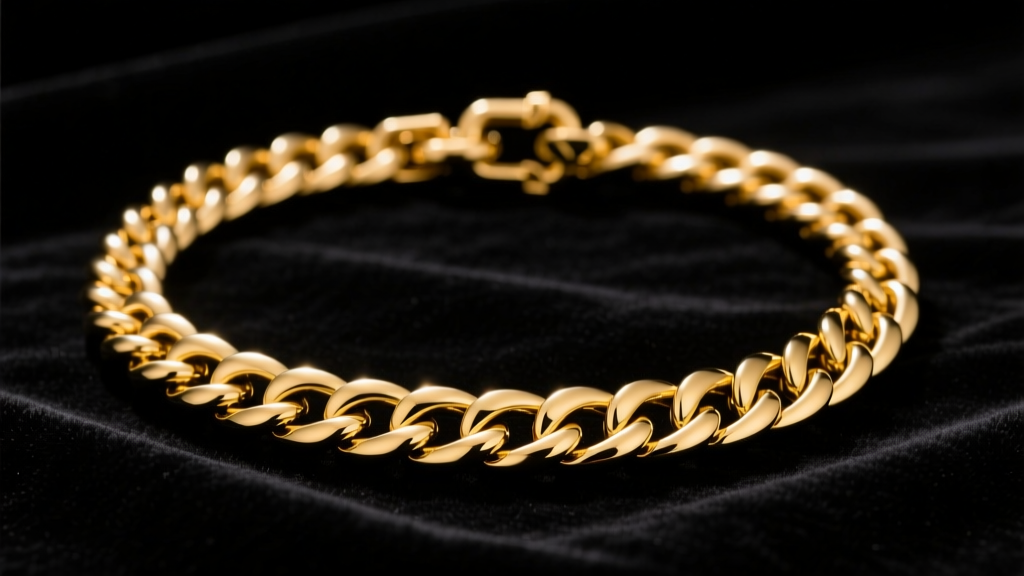
Oversized jewelry is dominating 2026 trend forecasts, but scaling up your neckline comes with a steep financial reality. When you transition from a delicate 1.5mm cable chain to a bold 12mm Cuban link or a broad, solid bib pendant, you are no longer just paying for design and labor—you are paying for sheer mass. Understanding the economics of big necklaces is the first step in making a budget-conscious purchase that doesn't sacrifice longevity.
Precious metals are priced by weight. In early 2026, with gold spot prices hovering near historic highs, the retail markup on heavy jewelry is substantial. A standard 20-inch 14k gold chain at 4mm width weighs roughly 12 grams. At an average retail rate of $65 per gram (factoring in alloy, labor, and markup), that piece costs around $780. Scale that exact same design up to a 12mm width, and the weight jumps to over 95 grams, pushing the price to $6,175. This exponential cost increase forces budget-minded buyers to look closely at alternative materials and manufacturing techniques.
Material Matrix: Assessing True Value in Heavyweight Pieces
When shopping for statement pieces, the base material dictates both the upfront cost and the long-term value retention. Below is a comparative breakdown of the most common materials used for large-scale necklaces, analyzing their core composition, expected lifespan under regular wear, and realistic price ranges for a 22-inch chain with a 10mm+ width.
| Material | Core Metal | Plating / Coating | Expected Lifespan | Price Range (22", 10mm+) |
|---|---|---|---|---|
| Solid 14k Gold | 14k Gold Alloy | None | Generations | $4,500 - $7,000 |
| Solid Sterling Silver | 925 Silver | None (or Rhodium flash) | Decades | $400 - $850 |
| Gold Vermeil | 925 Silver | 2.5µm+ 10k-24k Gold | 2 - 5 Years | $250 - $550 |
| Gold Plated Brass | Brass / Bronze | <0.5µm Gold | 6 - 12 Months | $80 - $150 |
| PVD Stainless Steel | 316L Surgical Steel | TiN / ZrN (PVD) | 5+ Years | $60 - $140 |
According to the Federal Trade Commission (FTC) Jewelry Guides, a piece can only be legally marketed as "vermeil" if it has a sterling silver base and a gold plating thickness of at least 2.5 microns. Many fast-fashion brands sell "gold plated" big necklaces over brass bases with a mere 0.1 to 0.3-micron flash plating. On a heavy necklace that experiences high friction against the collarbone and clothing, this micro-thin layer will wear through to the brass core in a matter of months, leaving you with a green-stained neck and a worthless piece of metal.
The Hollow Gold Trap: Electroforming vs. Solid Casting
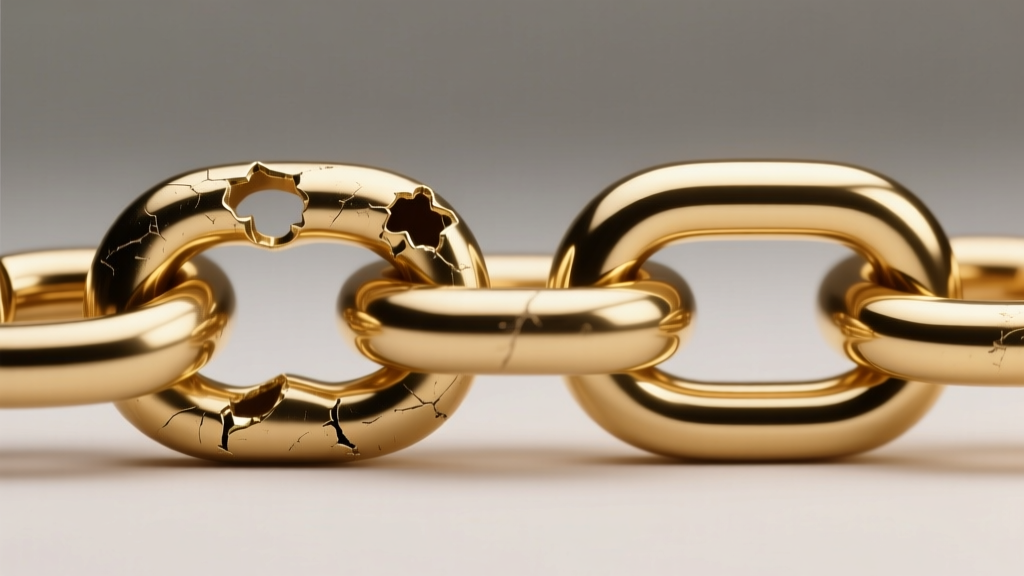
If you find a massive, 15mm solid gold chain priced at $1,200, you are not looking at a miracle deal; you are looking at electroformed hollow gold. Electroforming is a manufacturing process that deposits a microscopic shell of gold (usually between 0.2mm and 0.5mm thick) over a wax or resin mold, which is later melted or dissolved away.
This technique allows jewelers to create the visual impact of big necklaces at a fraction of the gram weight. However, the value assessment here is heavily skewed toward aesthetics over durability. The fatal flaw of hollow chains is their structural vulnerability. If a hollow 14k link is dropped onto a tile floor or caught in a heavy winter coat, it will dent. Because the gold shell is paper-thin, traditional jewelry soldering is nearly impossible—the heat from the jeweler's torch will melt and warp the surrounding links before the solder can flow. Once a hollow chain is crushed, it is usually a total loss. If your budget requires hollow gold, treat the necklace as a delicate, occasional-wear item rather than a daily staple.
Hardware and Clasp Mechanics for Heavy Chains
An often-overlooked aspect of evaluating heavy jewelry is the hardware. A clasp is the single most common point of failure on any necklace, and the physics of a heavy chain amplify this risk. A standard 9mm spring ring clasp is rated to hold roughly 15 to 20 grams of tension. If you attach it to a 120-gram solid silver chain, the constant kinetic pulling from your neck movements will eventually warp the spring ring open, resulting in a lost necklace.
When assessing the value and safety of a heavy piece, inspect the clasp. The Jewelers of America recommends matching clasp strength to the chain's weight. For big necklaces exceeding 50 grams, demand a 15mm+ lobster clasp, a sturdy toggle, or a box clasp equipped with a figure-8 safety catch. If a retailer pairs a massive, heavy chain with a flimsy spring ring, it is a red flag indicating poor manufacturing foresight.

Cost-Per-Wear (CPW) Framework for Statement Pieces
To accurately judge if a big necklace is a smart financial move, apply the Cost-Per-Wear (CPW) formula: Total Price / (Estimated Wears Per Year × Years Owned).
Statement pieces inherently suffer from lower wear frequency than delicate, everyday chains. A $4,000 solid gold bib necklace worn only to four holiday events a year over five years yields a CPW of $200 per wear. Conversely, a $150 PVD-coated stainless steel rope chain worn twice a week for three years yields a CPW of just $0.48 per wear. For budget-conscious buyers, allocating funds toward high-quality, mid-weight (6mm to 8mm) solid sterling silver or PVD steel pieces offers a vastly superior CPW compared to stretching your budget for a fragile, hollow gold statement piece that sits in a safe.
Smart Allocation: Where to Spend and Where to Save
If you are determined to integrate oversized silhouettes into your wardrobe without liquidating your savings, adopt a tiered investment strategy:
- Spend on Silver and Steel: For widths above 10mm, solid 925 sterling silver and 316L PVD stainless steel offer the best weight-to-durability ratio. You get the heavy, luxurious drape of a massive chain without the five-figure gold premium.
- Save on Plated Brass: Avoid gold-plated brass for heavy chains. The friction of a thick chain rubbing against the skin accelerates the breakdown of cheap flash plating.
- Verify the Hallmarks: Always check the end tags. The Gemological Institute of America (GIA) notes that legitimate precious metals will bear a quality mark (e.g., 14K, 925) and a manufacturer's trademark. If a heavy chain lacks these stamps, assume it is base metal.
Ultimately, the value of big necklaces lies in their architectural presence. By prioritizing structural integrity, appropriate hardware, and realistic material expectations, you can command a room with oversized jewelry while keeping your financial footprint remarkably light.


