Budget Black Necklaces: Material Value & Pricing Guide
Discover how to evaluate budget black necklaces. We break down material grades, PVD vs. plating, and price tiers to maximize your jewelry investment.

The True Cost of 'Cheap' Black Jewelry
When shopping for budget black necklaces, consumers often fall into the trap of prioritizing immediate aesthetics over long-term material integrity. The 'black tax' in jewelry manufacturing refers to the hidden costs of maintaining dark finishes, which are inherently more volatile than traditional yellow gold or silver. In 2026, the market is flooded with sub-$50 black chains and pendants, but understanding the metallurgical and gemological realities behind these pieces is the only way to ensure your money is well spent. This guide dissects the exact materials, failure modes, and price tiers to help you identify genuine value in the black jewelry sector.
Material Breakdown: What You Are Actually Buying
Black PVD Stainless Steel vs. Black Rhodium Plating
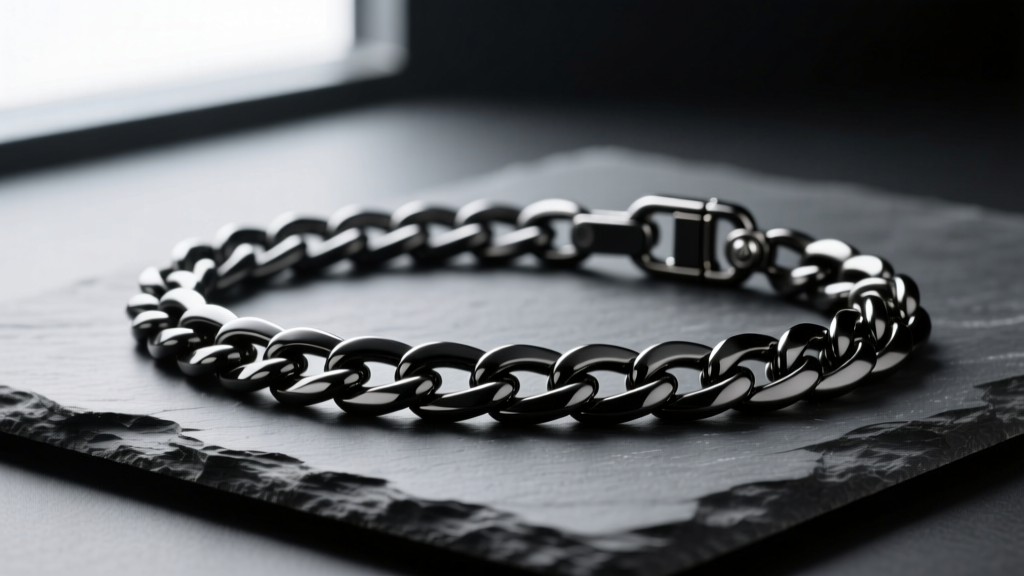
Physical Vapor Deposition (PVD) has revolutionized budget black necklaces. In this process, 316L stainless steel is placed in a vacuum chamber where titanium nitride or zirconium carbon is vaporized and bonded to the metal at a molecular level. This creates a surface hardness exceeding 2000 HV (Vickers), making it highly resistant to scratching and sweat corrosion. A quality PVD black chain costs manufacturers roughly $3 to $5 more to produce than wet electroplating, but it yields a lifespan of 5 to 10 years with daily wear.
Conversely, black rhodium is an electroplated precious metal. While it offers a deeper, more luxurious 'midnight' black tone, it has a Vickers hardness of only 130-150 HV. When applied to budget brass or silver cores, black rhodium will inevitably wear through on high-friction areas (like clasp connections and chain links) within 6 to 14 months. Re-plating a necklace costs between $40 and $80, instantly destroying the 'budget' value proposition.
Oxidized Sterling Silver: The Artisan's Choice
True oxidation in silver jewelry is actually a sulfuration process. Artisans expose sterling silver to potassium sulfide (commonly known as liver of sulfur) to create a black silver sulfide patina. This layer is only microns thick and relies on the physical texture of the piece to remain intact. Many budget brands cut corners by using black acrylic paint or cold epoxy resin in the crevices of a pendant instead of true chemical patination. To test this, apply a small amount of acetone to a cotton swab and rub an inconspicuous area; if black residue lifts onto the cotton, you are looking at paint, not oxidized silver.
Gemstone Value: Genuine Onyx vs. Dyed Imposters
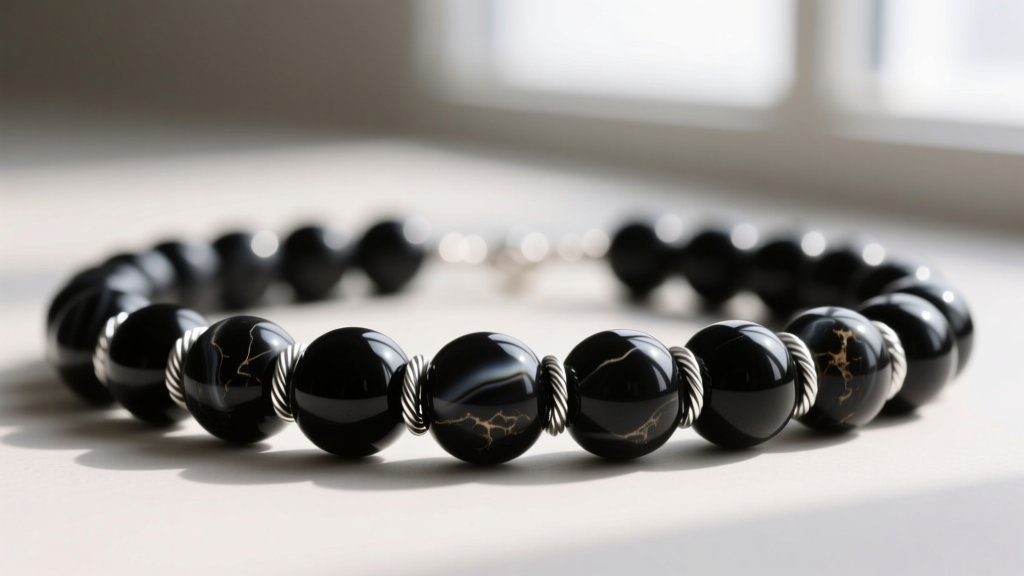
The term 'black onyx' is heavily abused in the budget jewelry sector. According to the Gemological Institute of America (GIA), natural black onyx is a variety of chalcedony with a Mohs hardness of 7. However, the vast majority of 'onyx' beads sold in necklaces under $40 are actually dyed black agate or porous howlite. Howlite sits at a mere 3.5 on the Mohs scale and will easily scratch if it brushes against a glass bottle or metal zipper.
For a slightly higher budget, black spinel is a vastly superior alternative. As noted in the GIA's Spinel Overview, black spinel boasts a Mohs hardness of 8, offering exceptional durability and a higher refractive index, which gives it a sharper, more glass-like luster compared to the waxy sheen of dyed chalcedony. When evaluating black gemstone necklaces, always demand a Mohs hardness specification from the retailer.
Price Tier Analysis: Where the Value Lies
| Price Tier | Typical Materials | Expected Lifespan | Value Verdict |
|---|---|---|---|
| Under $30 | Brass alloy, dyed howlite, black nickel plating, cold enamel | 3 - 9 Months | Poor (High failure rate) |
| $30 - $80 | 316L Steel with PVD, oxidized 925 silver, genuine black onyx | 3 - 7 Years | Excellent (Sweet spot) |
| $80 - $150 | Black rhodium over gold/silver, black spinel, vitreous enamel | 1 - 3 Years (Requires maintenance) | Fair (Luxury but high upkeep) |

Common Failure Modes in Budget Black Necklaces
- Galvanic Corrosion: When cheap brass or copper cores are plated with black nickel, micro-fractures in the plating allow sweat to act as an electrolyte. This triggers a galvanic reaction that turns the wearer's skin green and causes the plating to flake off in sheets.
- UV Degradation: Budget black epoxy resins used in pendant detailing are highly susceptible to ultraviolet light. After roughly 200 hours of direct sun exposure, these resins will yellow, taking on a sickly grayish-brown hue that cannot be polished out.
- PVD Delamination: Black PVD coatings require a mechanically rough surface to adhere properly. If a manufacturer applies PVD over a highly polished, mirror-finish steel chain without proper sandblasting or ion-bombardment prep, the coating has a 30% higher delamination rate, peeling off like a sunburn within the first year.
Pro Tip: Always inspect the clasp of a budget black chain. If the chain is black but the lobster clasp is standard silver-colored brass, it indicates the manufacturer used batch-plating shortcuts and likely skipped the PVD vacuum process entirely.
Actionable Buying Framework for 2026
To maximize your investment when shopping for black necklaces, apply this three-point checklist before checkout:
- Demand 316L or 904L Steel: For PVD black chains, ensure the product description explicitly states surgical-grade 316L or 904L stainless steel. Avoid 'alloy' or 'brass' at all costs.
- Verify Enamel Types: If buying a black pendant with colored details, look for 'vitreous' or 'baked' enamel (glass fused to metal at 1400°F) rather than 'cold' or 'epoxy' enamel, which degrades rapidly.
- Check the Stone Backing: For black onyx or spinel pendants, ensure the stone is set in an open-back bezel or has a foil-free backing. Budget brands often glue stones to a painted black metal backing to artificially deepen the color, which traps moisture and ruins the stone over time.
By shifting your focus from superficial aesthetics to metallurgical realities, you can easily identify budget black necklaces that offer lifelong wearability rather than fleeting, seasonal trends.


