Best Budget Mens Beach Necklace Guide: Value Picks 2026
Discover the best budget mens beach necklace options for 2026. We assess material durability, saltwater resistance, and true value across price tiers.

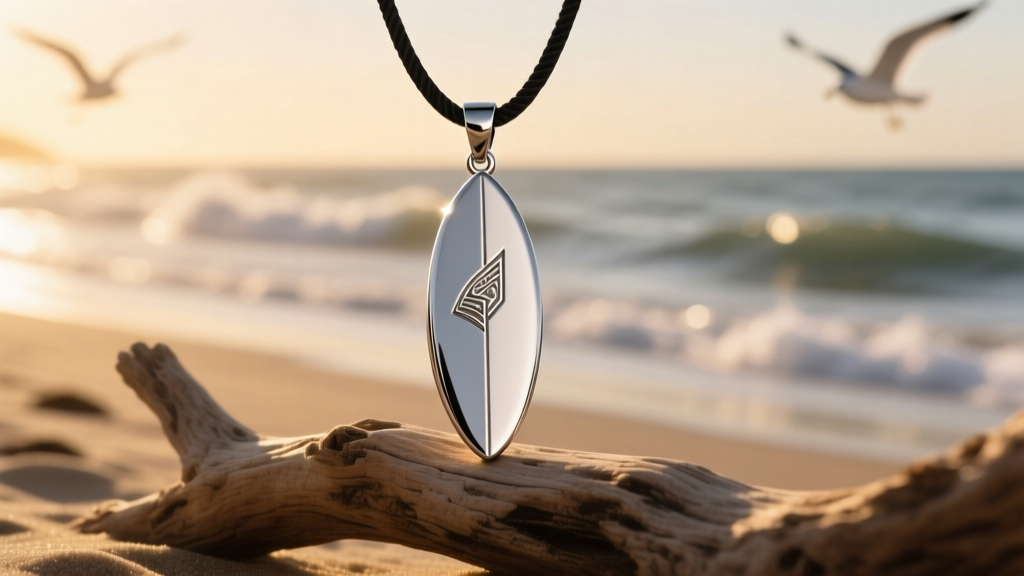
The True Cost of Saltwater: Why Material Grade Matters
When evaluating a mens beach necklace, the initial price tag is rarely an accurate indicator of its true value. The beach environment is a brutal testing ground for jewelry. Between the highly corrosive nature of saltwater, the abrasive quality of wind-blown sand, and the degrading effects of UV radiation and chemical sunscreens, cheap materials fail rapidly. In 2026, the market is flooded with ultra-cheap, mass-produced surf jewelry that looks great on day one but turns your skin green or snaps by week three. To make a smart budget assessment, we must shift our focus from the upfront cost to the 'cost-per-wear' and metallurgical realities of beach-ready materials.
Many budget brands utilize 304 stainless steel or zinc alloys plated with a microscopic layer of silver or gold. While 304 stainless steel is perfectly adequate for indoor or occasional wear, it lacks the necessary molybdenum to resist chloride ions found in sea salt. According to material science data from AZoM, the addition of 2-3% molybdenum in 316L marine-grade stainless steel drastically reduces the pitting and crevice corrosion that plagues lower-grade metals. Buying a $15 necklace that corrodes in a month is a poor investment compared to a $45 316L piece that lasts for years.
Budget vs. Premium: A Value Assessment Matrix
To help you navigate the market, we have categorized the most common materials used in men's beach necklaces, evaluating their average retail price, saltwater resilience, and overall value proposition.
| Material | Avg Price Range | Saltwater Resistance | Est. Lifespan | Value Score |
|---|---|---|---|---|
| 304 Stainless Steel | $15 - $25 | Poor (Pits quickly) | 1 Season | Low |
| 316L Marine Steel | $35 - $65 | Excellent | 3-5 Years | High |
| Sterling Silver (925) | $40 - $80 | Moderate (Tarnishes) | 1-2 Years | Medium |
| Titanium (Grade 2) | $50 - $90 | Superior | Lifetime | Very High |
| Nylon Paracord | $10 - $20 | Excellent | 2-4 Years | High |
| Zinc Alloy (Plated) | $8 - $15 | Terrible | Weeks | Zero |
Top Material Contenders for the Budget-Conscious Surfer
316L Marine-Grade Stainless Steel
If you want the look of white gold or platinum without the exorbitant price tag, 316L stainless steel is the undisputed king of the budget beach category. Priced typically between $35 and $65 for a quality pendant and cord setup, 316L offers exceptional tensile strength and will not oxidize or tarnish when exposed to the ocean. When shopping, always check the product specifications for the exact '316L' designation. If a brand simply says 'surgical steel' or 'stainless' without the number, it is likely a cheaper 304 variant that will develop microscopic rust pits after a few ocean sessions.
High-Density Paracord & Titanium Clasps
For a more rugged, utilitarian aesthetic, paracord necklaces offer incredible value. However, not all paracord is created equal. True value lies in authentic MIL-SPEC Type III 550 cord, which features seven inner nylon strands and a 550-pound minimum breaking strength. When paired with a Grade 2 titanium clasp or bead, you get a necklace that is entirely immune to saltwater corrosion, hypoallergenic, and virtually indestructible. Expect to pay around $25 to $40 for a high-quality, hand-braided paracord piece with genuine titanium hardware.
Authentic vs. Synthetic Puka Shell
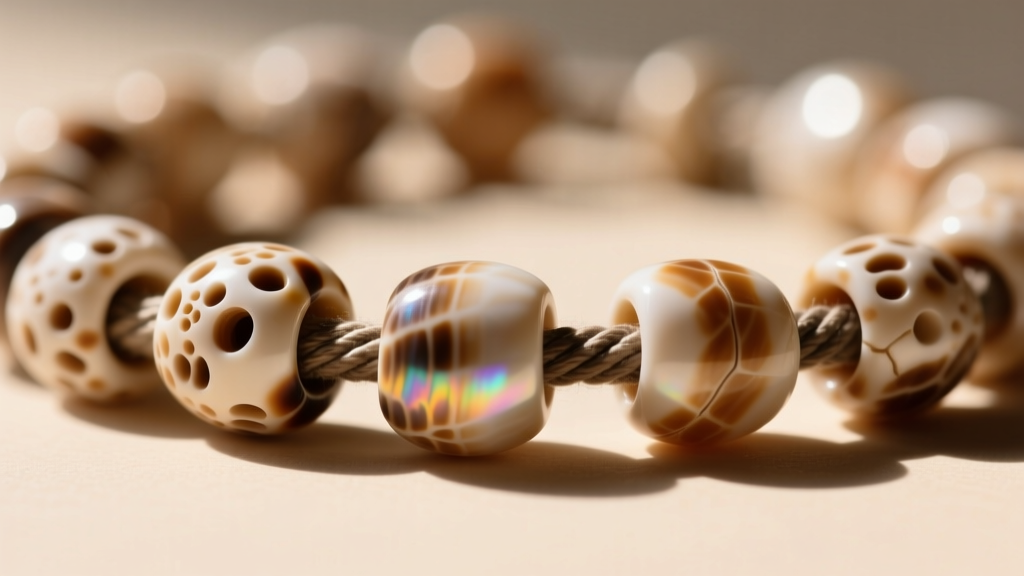
The puka shell necklace is a timeless staple, but the market is saturated with fakes. Genuine puka shells are naturally occurring cone shell (Conus miliaris) fragments that are tumbled by the ocean. They are characterized by their natural asymmetry and the distinct, off-center hole (puka means 'hole' in Hawaiian). Budget necklaces priced under $20 are almost always made from dyed howlite, plastic, or perfectly uniform, machine-punched shells. A genuine, ethically sourced puka necklace will typically start around $45 and go up to $120 depending on the bead size and sorting quality. The value assessment here heavily favors authentic shells, as synthetic alternatives chip easily, lose their dye in the sun, and lack the cultural and natural heritage of the real deal.
The Clasp Conundrum: Where Budget Necklaces Fail
A chain is only as strong as its weakest link, and in beach jewelry, that weak link is almost always the clasp. Standard spring-ring and lobster clasps rely on tiny internal steel springs. Even if the exterior of the clasp is coated or made of decent metal, the internal spring is usually cheap carbon steel that will rust and seize up after minimal saltwater exposure.
When assessing value on a budget, prioritize necklaces that utilize macrame sliding knots or magnetic titanium locks. A macrame sliding knot is a friction-based closure made from the cord itself; it costs the manufacturer nothing extra, adds zero points of mechanical failure, and will outlast the cord itself. If you prefer a metal clasp, ensure it is a solid bayonet-style or magnetic titanium clasp with no internal moving parts. Avoid traditional lobster clasps on any necklace under $50.
The 'Cost-Per-Wear' Framework for Beach Jewelry
To truly evaluate a mens beach necklace, apply the Cost-Per-Wear (CPW) formula: divide the total price by the estimated number of times you will wear it before it degrades.
- The $15 Zinc Alloy 'Bargain': Worn 10 times before the plating rubs off and the base metal turns your skin green. CPW = $1.50 per wear. (Plus the cost of replacing it three times a summer).
- The $45 316L Marine Steel Piece: Worn 150 times a year for 3 years (450 wears). CPW = $0.10 per wear.
- The $85 Solid 14k Gold-Filled on Nylon: Worn 200 times a year for 5 years (1000 wears). CPW = $0.085 per wear.
As the math demonstrates, spending slightly more upfront on marine-grade metals or high-quality gold-filled components drastically reduces your long-term expenditure while providing a vastly superior ownership experience.
Maintenance Hacks to Extend Budget Necklace Lifespans
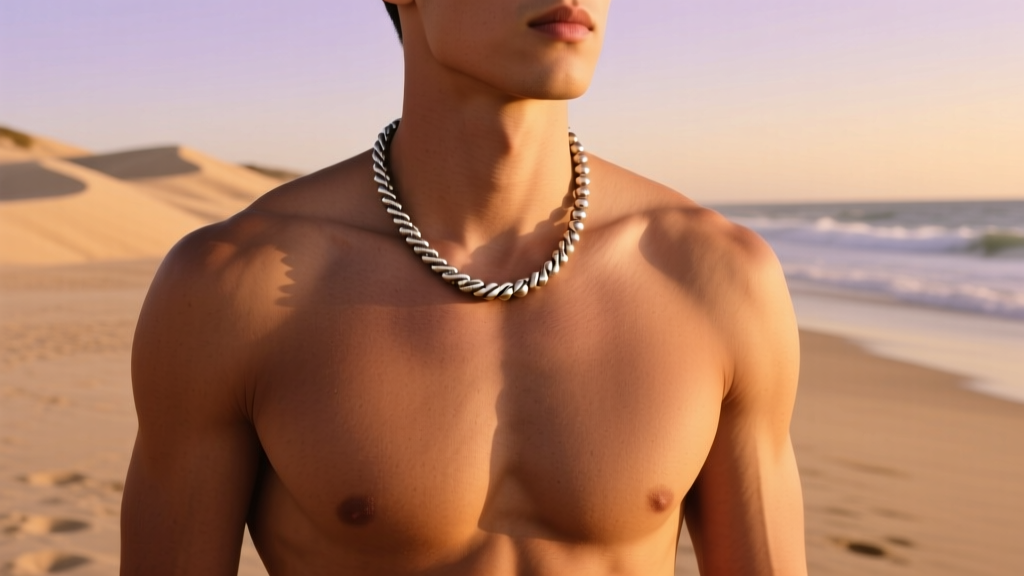
Even the most durable budget materials benefit from basic maintenance. The biggest enemy of beach jewelry isn't actually the ocean; it's the combination of sunscreen chemicals and salt left to dry on the metal. Oxybenzone and avobenzone, common chemical UV filters, can react with lower-grade metals and accelerate tarnishing.
According to guidelines from the British Stainless Steel Association, a simple freshwater rinse is the most effective way to prevent chloride buildup. After a day at the beach, rinse your necklace under tap water for 10 seconds. For paracord or hemp necklaces, occasionally washing them with a mild, non-detergent soap will remove sweat and dead skin cells that can degrade the fibers over time. Avoid ultrasonic cleaners for any necklace featuring natural shells, turquoise, or porous stones, as the high-frequency vibrations can cause micro-fractures.
Final Verdict: Where to Allocate Your Budget
If you are building a beach-ready jewelry wardrobe on a budget, allocate your funds toward material integrity rather than brand names. A $40 unbranded 316L stainless steel pendant on a braided polyester cord offers infinitely more value and style longevity than a $150 designer piece made from plated brass. In 2026, the smartest consumers are bypassing fast-fashion jewelry and investing in small-batch makers who prioritize marine-grade metals, authentic natural materials, and hardware-free sliding closures. By understanding the metallurgy and mechanics of beach jewelry, you can secure a piece that survives the surf and elevates your style for years to come.


