How to Style and Care for a Topaz Diamond Necklace
Learn how to expertly style, clean, and maintain your topaz diamond necklace. Discover layering techniques, prong care, and safe cleaning methods.

The Allure of the Topaz Diamond Necklace
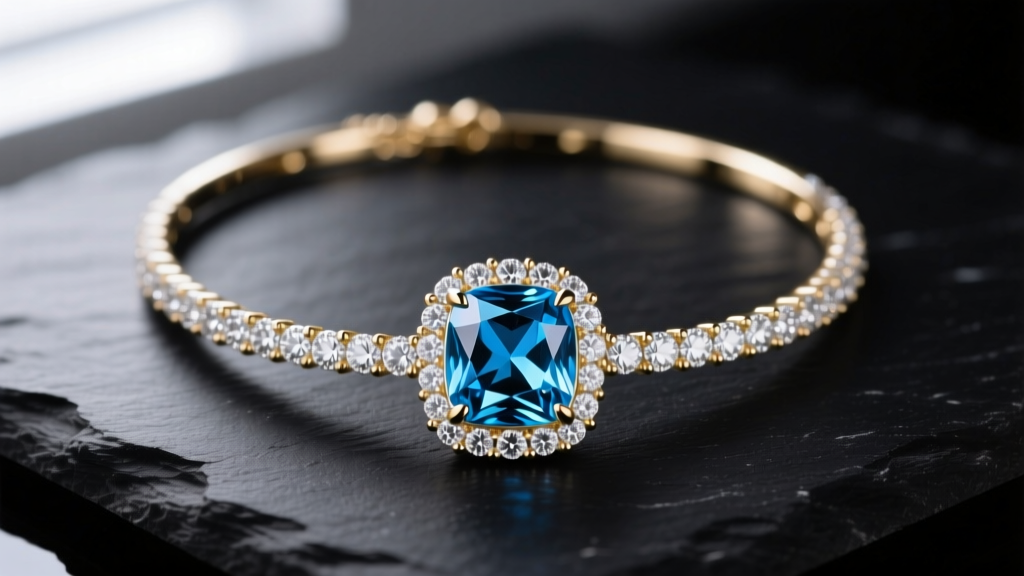
A topaz diamond necklace represents a masterclass in gemological contrast. The icy, unparalleled brilliance of a diamond serves as the perfect framing device for the deep, vitreous luster of topaz. As we navigate the 2026 jewelry landscape, this pairing has evolved from a traditional November birthday gift into a staple of curated, asymmetrical layering stacks and vintage-inspired halo designs. However, combining these two stones requires a nuanced understanding of their physical properties. While diamonds are renowned for their indestructibility, topaz requires specific care to maintain its polish and structural integrity over decades of wear.
This comprehensive guide will walk you through the exact steps to evaluate, style, clean, and store your topaz diamond necklace, ensuring it remains a breathtaking heirloom for generations.
Step 1: Evaluating the Setting and Metal Integrity
Before you even begin styling your necklace, you must understand the structural vulnerabilities of the centerpiece. According to the Gemological Institute of America (GIA), topaz ranks an 8 on the Mohs scale of hardness. While this makes it suitable for everyday wear, topaz possesses perfect basal cleavage. This means that a single, sharp impact to the girdle or culet can cause the stone to split cleanly along its crystal planes.
Choosing the Right Prongs and Bezels
When inspecting your topaz diamond necklace, pay close attention to the setting mechanics:
- V-Prongs for Vulnerable Cuts: If your topaz is cut into a pear, marquise, or emerald shape, the pointed corners must be protected by V-prongs. Standard rounded prongs leave the sharp edges exposed to chipping.
- Bezel Settings for Active Lifestyles: For those who wear their necklace daily, a partial or full bezel setting in 14k gold offers superior protection to the topaz's girdle compared to traditional prong settings.
- Diamond Halo Security: The surrounding diamond melee (typically 1.0mm to 2.5mm stones) should be set in a shared-prong or micro-pavé setting. Ensure the gallery wire beneath the diamonds is smooth to prevent snagging on knitwear.
Furthermore, consider the metal alloy. 14k white gold or platinum is highly recommended for the prongs holding the diamonds, as their superior tensile strength ensures the melee stones remain secure. For the topaz bezel or primary prongs, 18k yellow or rose gold can provide a warmer, richer contrast, particularly if your necklace features Imperial or precious pink topaz.
Step 2: Mastering the Layering and Styling Technique
In 2026, the solitary pendant has taken a backseat to the curated "cascade" stack. A topaz diamond necklace acts as the perfect anchor piece due to its substantial visual weight and vibrant color saturation. To style it correctly, you must adhere to the geometry of neckline spacing.

The Cascade Layering Framework
To prevent your chains from tangling and to ensure each piece is visible, follow this exact length progression:
- The Anchor (14 to 15 inches): Start with a delicate diamond solitaire or a simple gold chain choker. This draws the eye to the collarbone.
- The Centerpiece (17 to 18 inches): This is where your topaz diamond necklace sits. An 18-inch princess length allows the topaz pendant to rest perfectly in the hollow of the throat or just above the sternum, depending on your anatomy.
- The Terminator (22 to 24 inches): Finish with a longer, heavier chain, such as a diamond station necklace or a textured rope chain. This creates a V-shape that elongates the neck and torso.
Matching Necklines to Pendant Proportions
The scale of your topaz stone dictates the ideal garment pairing. A massive 20-carat Swiss blue topaz pendant demands a wide scoop neck or a structured blazer lapel to provide a visual canvas. Conversely, a subtle 2-carat London blue topaz surrounded by a micro-pavé diamond halo is best showcased against a high crew neck or a delicate silk camisole, allowing the diamonds to catch the light without competing with busy fabric patterns.
Step 3: The Safe Cleaning Protocol
Cleaning a multi-gemstone piece requires balancing the needs of both minerals. While diamonds can withstand harsh chemicals and ultrasonic vibrations, topaz is far more sensitive. The GIA Diamond Care Guide emphasizes that while diamonds are resilient, the treatments applied to companion stones often dictate the cleaning method. Many blue topaz stones on the market are irradiated and heat-treated; excessive heat from steam cleaners can occasionally cause thermal shock or alter the stability of fracture-filled inclusions.
| Cleaning Method | Diamond Safety | Topaz Safety | Verdict for Topaz Diamond Necklace |
|---|---|---|---|
| Ultrasonic Cleaner | Excellent | Poor (Vibration can exploit cleavage planes) | AVOID |
| Steam Cleaner | Excellent | Risky (Thermal shock hazard) | AVOID |
| Warm Soapy Water | Excellent | Excellent | HIGHLY RECOMMENDED |
| Ammonia-Based Solutions | Good | Fair (Can dull polish over time) | USE SPARINGLY |
Step-by-Step Manual Cleaning Guide
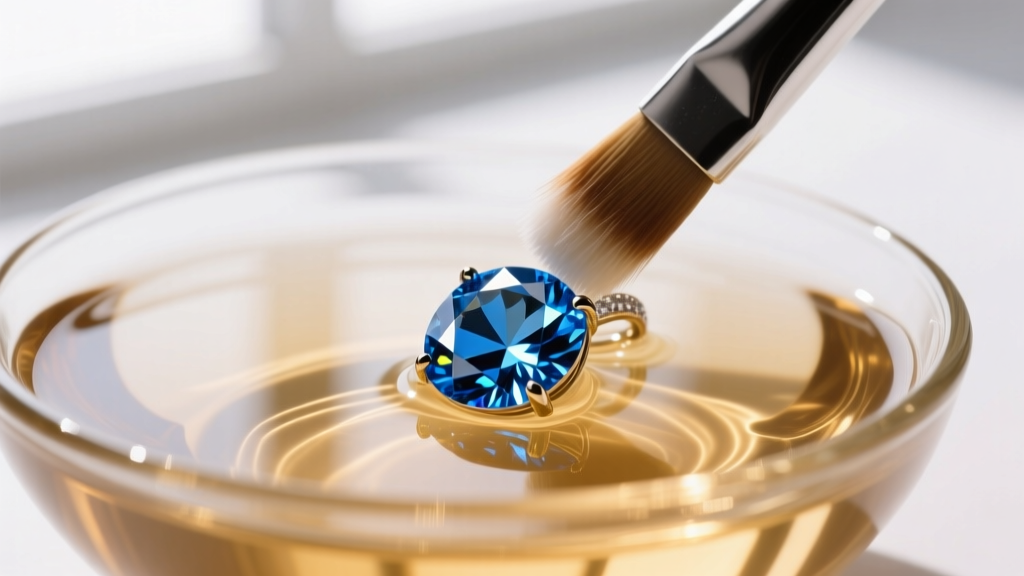
- Prepare the Solution: Fill a small glass bowl with lukewarm (never hot) water and add three drops of mild, ammonia-free dish soap. Avoid soaps with heavy moisturizers, which leave a film.
- Soak: Submerge your topaz diamond necklace for exactly 10 to 15 minutes. This loosens sebum, dead skin cells, and cosmetic buildup trapped beneath the diamond pavé and the topaz gallery.
- Agitate Gently: Using a brand-new, ultra-soft baby toothbrush, gently brush the back of the topaz stone (the pavilion) and the diamond settings. Brush in small, circular motions, moving away from the prongs to avoid bending them.
- Rinse and Dry: Rinse the necklace under a gentle stream of lukewarm water. Ensure the drain is securely plugged. Pat dry with a lint-free microfiber cloth, ensuring no moisture is trapped in the chain links.
Step 4: Strategic Storage to Prevent Micro-Scratches
The most common mistake jewelry owners make is tossing their topaz diamond necklace into a communal jewelry box. The Mohs scale of mineral hardness is logarithmic, not linear. A diamond (10) is not just slightly harder than topaz (8); it is exponentially harder. If the diamond facets of your necklace rub against the table of the topaz pendant during storage, the diamond will easily carve micro-scratches into the topaz, permanently dulling its polish and reducing its light return.
The Storage Solution: Always store your topaz diamond necklace in an individual, anti-tarnish flannel pouch or a dedicated compartment lined with soft velvet. Ensure the clasp is fastened and the chain is laid flat or hung vertically to prevent the diamond melee from acting as an abrasive file against the topaz stone. If traveling, use a hard-shell jewelry roll with individual snap-down straps to keep the pendant immobilized.
Expert Troubleshooting: Cloudiness and Loose Stones
Even with meticulous care, you may notice your topaz diamond necklace losing its sparkle or exhibiting structural warnings. Here is how to troubleshoot like a professional jeweler:
Diagnosing Cloudiness
If your topaz appears cloudy or milky, it is rarely a permanent defect in the stone itself. In 90% of cases, this is caused by a buildup of lotions, hairspray, or hard water minerals on the pavilion (the bottom facets) of the stone. Because topaz has a high refractive index, light must enter and exit cleanly to create brilliance. A layer of soap scum acts as a diffuser, killing the sparkle. Repeat the warm soapy water soak outlined in Step 3, paying special attention to the underside of the setting. If the cloudiness persists and appears internal, consult a gemologist to check for liquid inclusions or coating degradation.
The 10x Loupe Prong Test
Diamonds are heavy, and the constant swinging of a pendant can slowly wear down the metal prongs holding them. Once a year, inspect your necklace using a 10x triplet jeweler's loupe. Look for the following red flags:
- Lifted Prong Tips: If the metal bead holding a diamond melee stone is no longer flush against the girdle, it is catching on fabrics and must be re-tipped by a jeweler.
- Gallery Wire Wear: Check the metal ring (gallery) that separates the topaz from the diamond halo. If it is worn thin, the structural integrity of the entire pendant is compromised.
- The Paper Test: Place the necklace flat on a piece of white paper. Gently drag a piece of silk or fine tissue over the diamond halo. If the fabric snags, a prong is lifted and requires immediate professional burnishing.
By treating your topaz diamond necklace not just as an accessory, but as a precision-engineered assembly of distinct minerals, you ensure that its fire and brilliance remain undiminished. Whether you are layering it for a modern 2026 aesthetic or preserving it as a family heirloom, these meticulous care protocols will protect your investment for a lifetime.


