Top Necklace Jewelry Boxes 2026: Budget & Value Guide
Discover the best necklace jewelry boxes in 2026. We assess budget vs. value, comparing anti-tarnish linings, hardware, and storage capacity.

The True Cost of Tangled Chains: Why Box Quality Matters
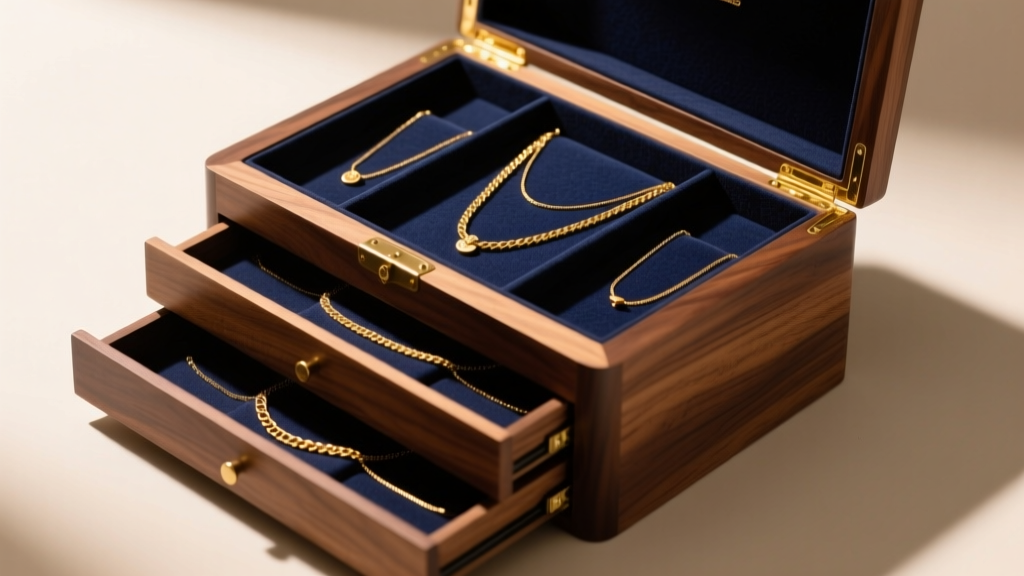
For serious jewelry collectors, the frustration of untangling knotted chains is more than a minor annoyance; it is a direct threat to the structural integrity of your pieces. Delicate snake chains and fine link necklaces are highly susceptible to permanent kinking when stored improperly. As we navigate the 2026 market, the sheer volume of storage options can be overwhelming. However, evaluating necklace jewelry boxes strictly through a budget and value lens requires looking past superficial aesthetics. A budget-friendly box might save you $40 upfront, but if its interior lining traps moisture and accelerates silver sulfide formation (tarnish), or if its hinges fail within a year, the long-term cost to your jewelry collection is severe. This guide deconstructs the materials, hardware, and spatial geometry of necklace storage to help you calculate the true return on your investment.
Material Breakdown: MDF, Solid Wood, and Vegan Leather
The outer shell of a jewelry box dictates its durability, weight, and, crucially, its chemical off-gassing profile. Understanding these materials is the first step in assessing value.
Medium-Density Fiberboard (MDF) and PU Leather
The vast majority of budget boxes (under $35) are constructed from MDF wrapped in polyurethane (PU) vegan leather. While visually appealing, MDF is manufactured using urea-formaldehyde resins. According to the Gemological Institute of America (GIA), prolonged exposure to volatile organic compounds (VOCs) and harsh chemicals can degrade the nacre of porous gems like pearls, coral, and turquoise. If your necklace collection features organic gemstones, MDF boxes offer poor long-term value unless they are heavily sealed and lined with an impermeable barrier.
Solid Wood and Baltic Birch Plywood
Mid-tier to premium boxes ($60–$200) often utilize kiln-dried solid walnut, oak, or high-grade Baltic birch plywood. Solid wood provides superior structural rigidity, ensuring that the frame will not warp in high-humidity environments (above 60% relative humidity). Warping is the primary culprit behind misaligned drawers and doors that fail to latch properly, exposing your necklaces to airborne sulfur and dust.
The Anti-Tarnish Lining Test
The interior lining is where the true value of a jewelry box is won or lost. Standard poly-flannel feels soft but holds ambient moisture, creating a microclimate that accelerates tarnishing. High-value boxes utilize specialized materials like Pacific Silvercloth or zinc-impregnated flannel. These linings act as a sacrificial anode, trapping hydrogen sulfide gas before it can react with your sterling silver chains. When assessing a budget box, check if the lining is merely glued-down felt (which degrades and peels within 24 months) or tightly stretched, stitched anti-tarnish fabric.
2026 Price Tier Analysis: Where Does Your Budget Fit?
To accurately assess value, we must categorize the current market into distinct price tiers. This framework helps you identify the sweet spot where material quality and hardware durability intersect with reasonable pricing.
| Tier | Price Range | Primary Shell Material | Lining Quality | Hardware & Hinges | Expected Lifespan |
|---|---|---|---|---|---|
| Budget | $15 – $35 | MDF / Cardboard core | Standard poly-felt (non-treated) | Plastic stop-hinges, magnetic clasps | 1 – 3 Years |
| Mid-Tier | $40 – $85 | Engineered wood / Thick PU | Anti-tarnish flannel, stitched edges | Brass-plated piano hinges, wood glides | 4 – 7 Years |
| Premium | $90 – $250+ | Kiln-dried solid wood / Glass | Pacific cloth, suede, specialized inserts | Solid brass piano hinges, metal ball-bearing glides | 10+ Years |
For most collectors holding a mix of fashion jewelry and solid gold or sterling silver pieces, the Mid-Tier offers the highest value proposition. It avoids the off-gassing risks of cheap MDF while providing adequate anti-tarnish protection without the luxury markup of premium heritage brands.
Hardware & Hinges: The Hidden Failure Points
When conducting a budget assessment, buyers often focus on the exterior finish while ignoring the mechanical hardware. The hinges and drawer glides are the most common failure points in necklace jewelry boxes.
Hinge Mechanics
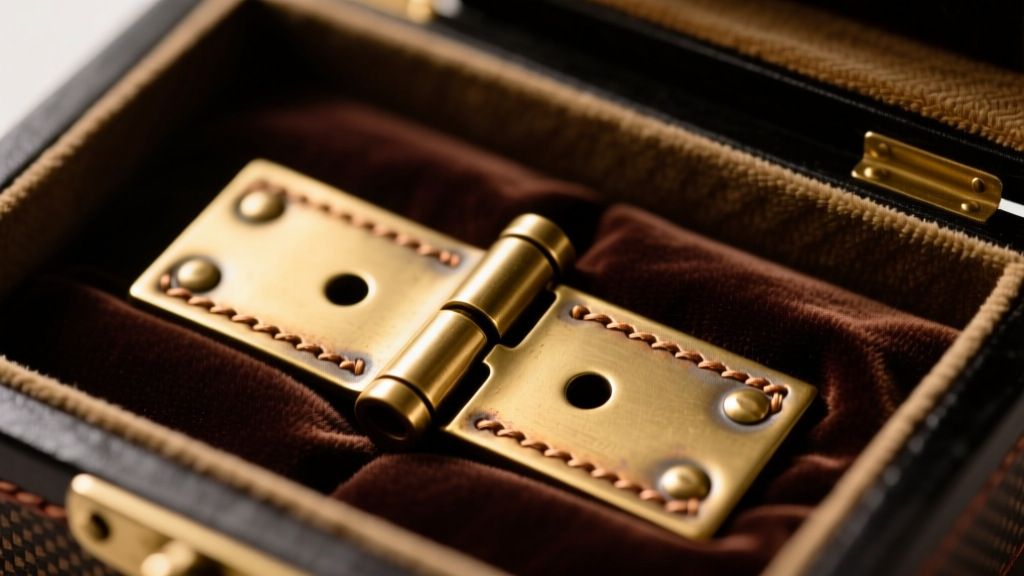
Budget boxes typically use small, stamped-metal stop hinges. These hinges bear the entire weight of the lid, leading to metal fatigue and eventual snapping. Furthermore, they allow the lid to fall shut abruptly, which can jolt the box and cause necklaces to slip off their hanging hooks and tangle on the floor. High-value boxes utilize continuous piano hinges. A piano hinge runs the entire length of the lid, distributing the weight evenly and providing a smooth, controlled opening motion. If a box under $50 features a genuine metal piano hinge rather than a fabric strap, its value rating increases significantly.
Drawer Glides and Latches
If your necklaces are stored in pull-out trays, the glide mechanism is critical. Wood-on-wood drawers are traditional but prone to swelling and jamming in humid climates. Metal ball-bearing glides add roughly $15 to the manufacturing cost but ensure buttery-smooth operation for decades. Regarding latches, avoid cheap neodymium magnetic closures. Over time, low-grade magnets lose their pull strength, and the metal casing can rust, staining the exterior leather. Opt for mechanical brass clasps or high-tension hidden magnetic snaps encased in stainless steel.
Capacity vs. Footprint: Calculating Storage Value
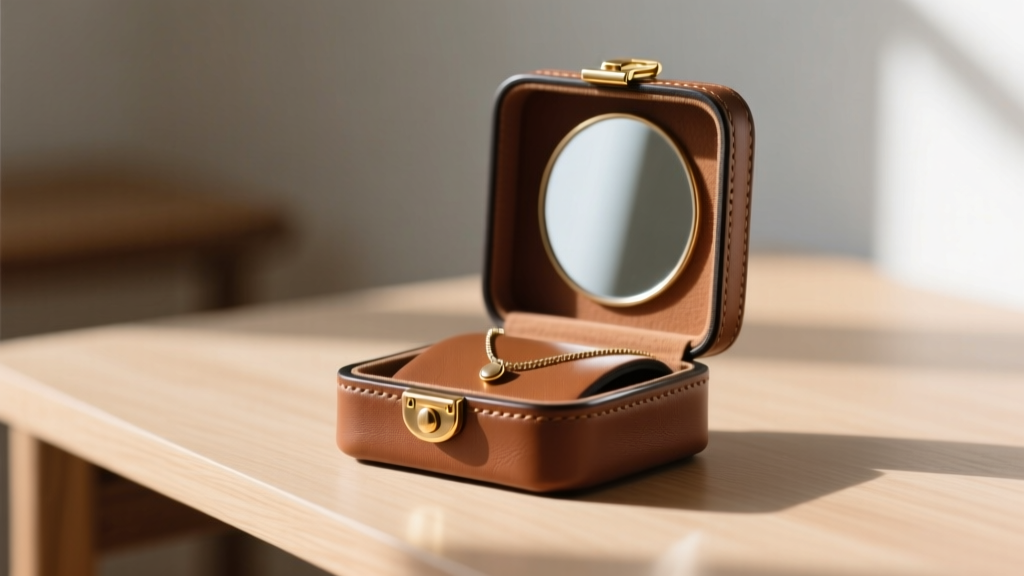
A common mistake when buying necklace jewelry boxes is evaluating capacity purely by the number of hooks or compartments. A box might boast 30 necklace hooks, but if the vertical drop is only 4 inches, it is functionally useless for anything beyond a choker. To truly assess value, we use a metric called Cost Per Usable Hanging Inch (CPUHI).
The Geometry of Necklace Storage
Different necklace lengths require specific vertical clearances to prevent the pendants from resting on the bottom of the compartment, which bends the chain and stresses the clasps.
- Chokers (14" - 16"): Require a minimum 7-inch vertical drop.
- Princess (18"): Require a minimum 9-inch vertical drop.
- Matinee (20" - 24"): Require a 12-inch vertical drop.
- Opera & Lariat (28"+): Require specialized deep drawers, double-door hanging compartments, or the ability to hang the necklace doubled-over on dual hooks.
When evaluating a $60 box with a 9-inch hanging door versus a $40 box with a 5-inch hanging door, the $60 box actually offers superior value because it accommodates standard Princess-length chains—the most common necklace size—without crushing the pendants. Always measure the interior vertical clearance of the hanging compartment before purchasing. According to The Silver Institute, proper storage that prevents metal-on-metal friction and chain kinking is essential for maintaining the polish and structural links of silver jewelry.
Final Verdict: Maximizing Your Investment
The market for necklace jewelry boxes in 2026 is saturated with visually stunning but structurally deficient options. To maximize your budget, prioritize interior geometry and lining chemistry over exterior embellishments. A mid-tier box ($50–$85) constructed from sealed engineered wood, featuring a stitched anti-tarnish flannel lining, continuous piano hinges, and a minimum 9-inch vertical drop, represents the absolute pinnacle of value. By applying the CPUHI metric and scrutinizing the hardware, you can secure a storage solution that not only organizes your collection but actively preserves the metallurgical integrity of your most cherished necklaces for years to come.


