Ultimate Care Guide: Cleaning Your Cable Chain Necklace
Learn expert tips to clean, untangle, and maintain your cable chain necklace. Discover metal-specific care routines to prevent tarnish and link stretching.

The Anatomy of Cable Chain Wear and Tear
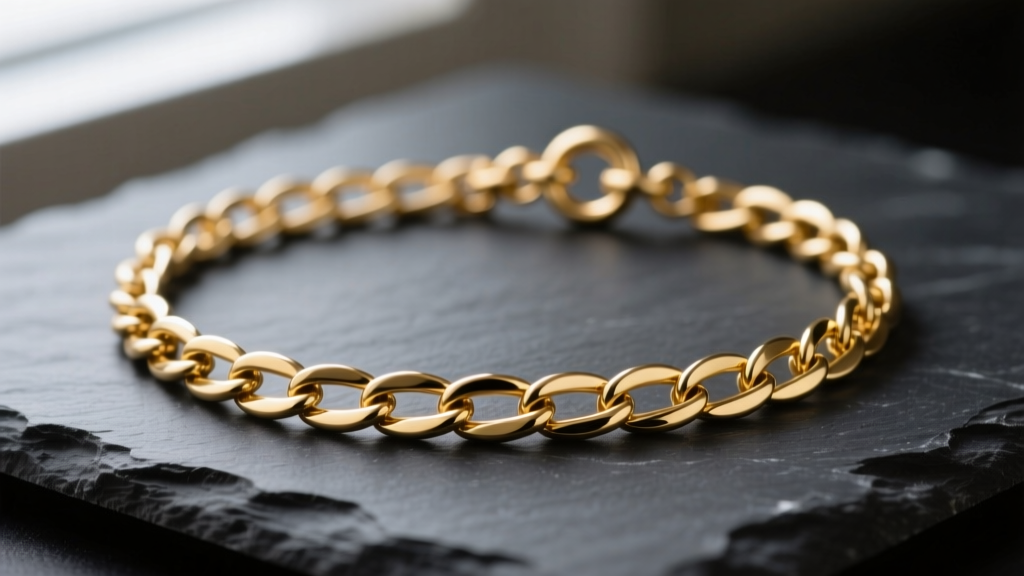
The cable chain necklace is a cornerstone of modern jewelry design, prized for its classic interlocking oval links and versatile drape. However, the very geometry that gives the cable chain its structural elegance also makes it a magnet for environmental debris. The uniform links intersect at precise 90-degree angles, creating microscopic crevices at every junction. Over time, these interstices trap sebum, dead epidermal cells, cosmetic residues, and airborne pollutants. If left unaddressed, this buildup not only dulls the metal's luster but can also accelerate chemical tarnishing and cause friction-induced wear on the inner surfaces of the links.
Furthermore, the gauge of your chain dictates its vulnerability. A delicate 0.8mm to 1.0mm cable chain is highly susceptible to link distortion if snagged, while a heavier 2.5mm to 4.0mm version is more robust but traps significantly more debris due to its larger surface area. Understanding these structural nuances is the first step toward implementing a professional-grade maintenance routine that preserves both the aesthetic and mechanical integrity of your jewelry.
Metal-Specific Cleaning Protocols
Not all metals react identically to cleaning agents. Using the wrong chemical compound can strip protective platings or cause irreversible oxidation. Below is a definitive framework for treating the most common metals used in cable chains.
| Metal Type | Tarnish Risk | Recommended Cleaner | Application Tool | Critical Warning |
|---|---|---|---|---|
| 925 Sterling Silver | High (Silver Sulfide) | Mild Surfactant + Baking Soda Paste (for heavy tarnish) | Microfiber, Baby Toothbrush | Never expose to chlorine or bleach |
| 14k/18k Yellow Gold | Low (Alloy oxidation) | Warm Distilled Water + Surfactant | Soft Lint-Free Cloth | Ultrasonic safe only if free of porous gems |
| 316L Stainless Steel | Negligible | Isopropyl Alcohol or Glass Cleaner | Cotton Swab | Avoid prolonged bleach exposure |
| Rhodium-Plated Silver | Medium (Plating wear) | Distilled Water Rinse Only | Air Dry / Microfiber | Never use polishing cloths (strips rhodium) |
The Surfactant Soak Method
For routine maintenance of gold and unplated silver cable chains, the surfactant soak is the gold standard. According to the Gemological Institute of America (GIA), mild dish soaps containing sodium lauryl sulfate are highly effective at breaking down lipid-based body oils without damaging precious metals.
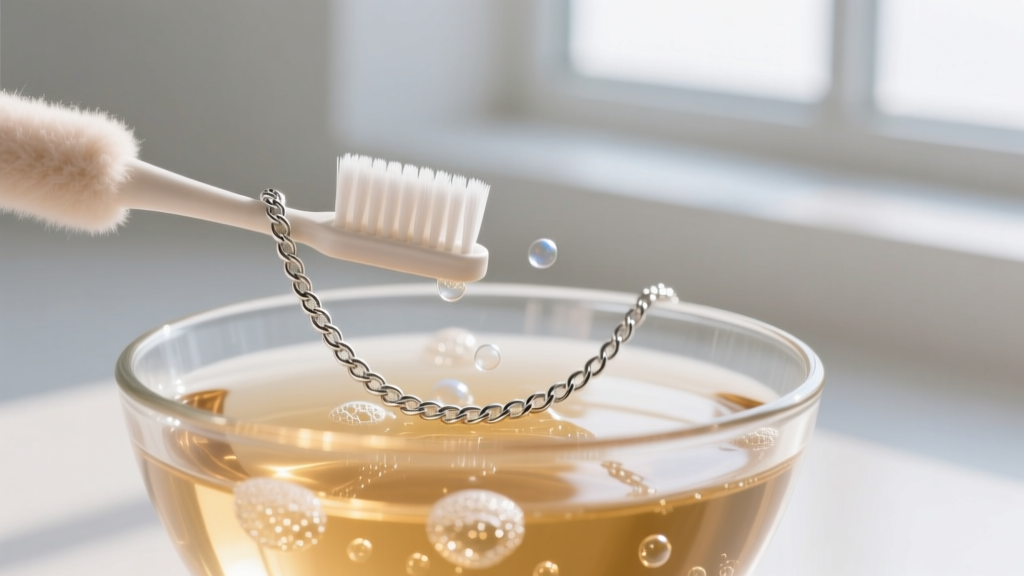
The Protocol: Mix one cup of distilled water (tap water contains calcium and magnesium ions that leave mineral deposits) with three drops of mild dish soap. Submerge the necklace for 15 minutes. Use a soft-bristled baby toothbrush to gently agitate the links, brushing parallel to the chain to avoid bending the oval loops. Rinse thoroughly with distilled water and pat dry with a lint-free microfiber cloth. Never air-dry on a paper towel, as wood pulp fibers can snag on the clasp mechanisms.
Addressing Structural Vulnerabilities
The most common point of mechanical failure on a cable chain necklace is not the chain itself, but the spring-ring clasp and the soldered jump rings that attach it. The spring-ring contains a microscopic internal coil and a tiny lever. Hand lotions, sunscreen, and soap scum frequently infiltrate this housing, causing the lever to stick or fail to retract completely.
Troubleshooting the Clasp: If your clasp feels sluggish, do not use a metal needle to clear the debris, as this will scratch the gold or silver housing. Instead, use a wooden toothpick or a soft interdental brush dipped in isopropyl alcohol to gently dissolve and dislodge the hardened sebum. Work the lever back and forth until the spring action is snappy and responsive.
Inspecting Solder Joints: The jump rings connecting the clasp to the cable chain are typically soldered shut. Over time, repetitive stress can cause micro-fractures in the solder. Once a month, hold your necklace taut under a bright LED light and use a 10x jeweler's loupe to inspect the seams of the end jump rings. If you see a visible gap or hairline fracture, cease wearing the necklace immediately and take it to a bench jeweler for a quick laser weld or re-soldering.
Advanced Untangling Techniques
Because cable chains consist of uniform, identically sized links, they are notoriously prone to knotting, especially when stored loosely. Pulling on a knot tightens the links and can permanently stretch the metal, altering the chain's gauge and structural integrity.
The Baby Oil and Twin-Pin Method:
- Place the knotted cable chain necklace on a hard, non-porous surface like a glass table or ceramic plate.
- Apply a single drop of mineral oil or baby oil directly to the center of the knot. This eliminates the friction between the metal links.
- Using two fine-tipped sewing needles or straight pins, gently insert the tips into the center of the knot.
- Slowly push the needles away from each other to loosen the central link, working outward. Never pull the ends of the chain, as this will only constrict the knot further.
- Once untangled, wash the chain using the surfactant soak method outlined above to remove the oil residue.
What to Avoid: The Enemies of Cable Chains
To maximize the lifespan of your jewelry, you must understand the chemical environments that cause rapid degradation. According to Tiffany & Co. Jewelry Care guidelines, exposure to harsh chemicals is the leading cause of premature metal fatigue and discoloration.
- Chlorine and Hot Tubs: Chlorine reacts violently with the alloy metals in 14k and 18k gold (such as copper and zinc), causing a phenomenon known as stress corrosion cracking. This can cause a cable chain to literally snap under its own weight.
- Ultrasonic Cleaners: While excellent for diamond rings, ultrasonic cleaners use high-frequency sound waves that create cavitation bubbles. On delicate cable chains (under 1.5mm), this intense vibration can weaken poorly soldered jump rings or cause existing micro-fractures to propagate.
- Abrasive Polishing Cloths: Jeweler's rouge cloths contain mild abrasives designed to remove a microscopic layer of metal to reveal the shine underneath. If your cable chain necklace is rhodium-plated sterling silver, using a rouge cloth will strip the rhodium layer, exposing the underlying silver to rapid tarnishing.
Long-Term Storage and Tarnish Prevention
Proper storage is just as critical as active cleaning. Sterling silver tarnishes when it reacts with sulfur compounds in the air, forming a black layer of silver sulfide. To halt this chemical reaction, you must control the storage environment.
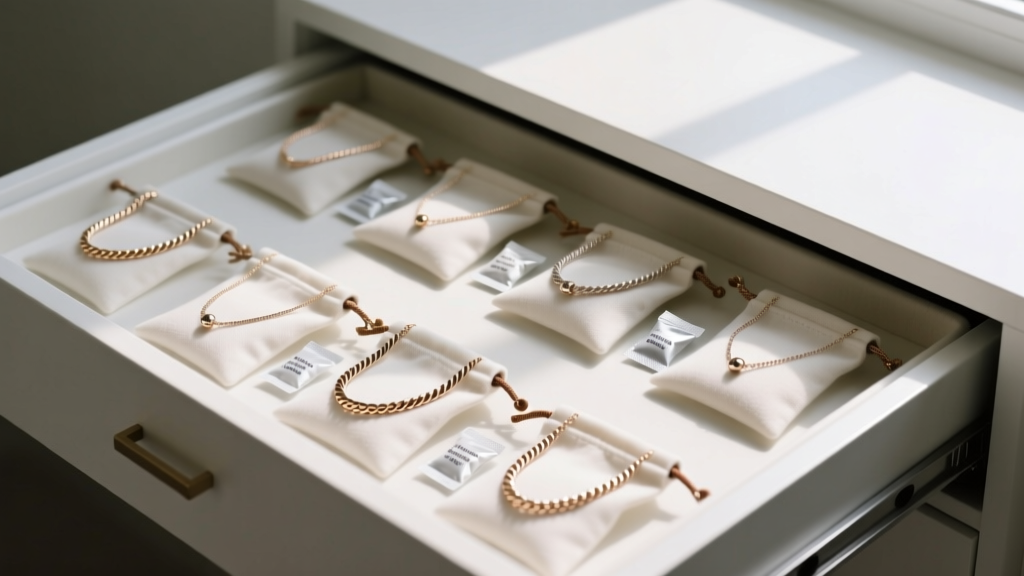
Store each cable chain necklace individually in a sealed polyethylene zip bag. Avoid PVC or vinyl plastic bags, as these materials off-gas sulfur and acidic compounds that accelerate tarnishing. Place a 3M anti-tarnish strip inside the bag; these strips contain activated carbon and silver nitrate that absorb and neutralize airborne sulfur gases before they can reach your jewelry. Finally, ensure the clasp is left slightly outside the zip seal or fully unclasped to prevent the spring-ring mechanism from being compressed and weakened during long-term storage.
Conclusion
Maintaining a cable chain necklace requires moving beyond generic jewelry wipes and adopting a targeted, material-specific approach. By understanding the mechanical vulnerabilities of the spring-ring clasp, utilizing distilled water and mild surfactants for cleaning, and employing anti-tarnish storage protocols, you can ensure your chain retains its pristine drape and brilliant luster for decades. Treat your jewelry with the precision of a bench jeweler, and it will reward you with enduring elegance.


